






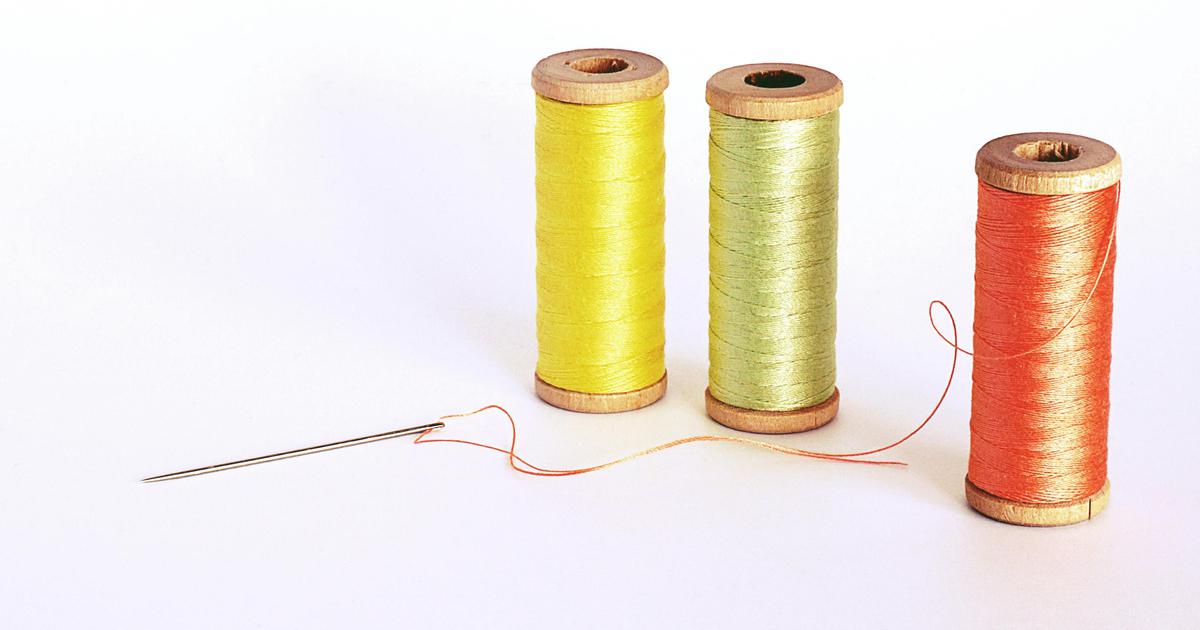
For any piece of clothing to be loved and lived in longer, grandmothers used two methods of mending – invisible and visible – with their needle and thread or Bharati aunty’s weapon soodhi dharam. Let us look at the first one, which was the chosen one, through a relatively modern Indian lens. Mending in the past was about wrapping a cloak of invisibility over the damaged and “dishonoured” part of the fabric. Most women (and some men) in a family knew the basics of this technique that could revive their or their family’s honour. But when this technique could not be perfected as a skill at home, experts were summoned. Local tailors worked on ordinary and everyday clothing – elementary repair like fixing tears, zips, buttons, seams and more. More skilled artisans called rafugars took over complex repair and revival of nostalgic, occasional or expensive pieces of clothing that were dunked in stories of honour or pride.
Rafugars studied each textile or garment’s patterns minutely and understood their emotional narratives, too. They used matching threads or pieces, sometimes removed from the piece itself (another example of organic reuse and recycle), to recreate a design that was symbolic of the individual’s or the family’s status, culture or clan. Rafūgari, the ancient form of darning, was prevalent in various parts of Central Asia, Iran, Samarkand and north India. It involved craftsfolk of Kashmir embroidering intricate designs on clothes and repairing antique shawls.
It was an art form that was done precisely, slowly, mindfully and artistically, using two tedious techniques – patchwork and tana-bana – the former is applique using scraps of the base fabric for overlay defects and the latter is yanking threads off the textile to seal the hole. The repair now, in all its hidden glory, had to merge with the cloth and become almost invisible. The artists believed that the hallmark of a good rafu overlay was its specialty to blend into the background design so much so that even the maker himself (it was mostly men who would do this professionally with unsaid and unacknowledged help from the women in their families) should get confused where the damage was if asked to point out later.
Rafu originally was more than just physical repair for the torn textile or clothing owner and the torn textile or clothing repairer. It was concealed healing that encompassed rebuilding memories and sometimes even honour. It held emotions and economy for both concerned. “Fallen” illustrious families across princely states in India secretly repaired their wearable heirlooms to present a “raised” and “well-to-do” front to the outside world, even though they may have crumbled on the inside. The rafugars would be sworn to secrecy with the blue-blooded secrets stuck permanently like thorns in their throats and hearts. Even though the aristocrats sometimes denied connections with the rafugars or even their existence. These points, I remember, were raised by New Delhi-based textile artist, designer and researcher Priya Ravish Mehra at an exhibition. Mehra, who is unfortunately no more, worked extensively in this field. She called this group of artisans one of the most ignored and hidden lots, unfortunately laced with social shame that was not their own.
When, in Hazrat Ganj, a busy market complex in Lucknow (Uttar Pradesh), I met zardozi artist and former rafugar Shahid bhai, who refused to be recorded or captured on video. He used to work full-time at a dry cleaner’s shop mending formal clothing. He said, “Maine zardozi ke saath rafugari Abba or apne Ustadji se sikha. Who bahut accha kaam karte the. Rafugari mein paise kam hain lekin sukoon milta hai. Kisi tute cheez ko sundar banana karigari hai. Bahut waqt lagta hai. Aaj-kal kaun paise deta hai us kaam ka? Turant se log naye kapde karidte hain. Utne hi paise mein naya milta hai na. Ya phir nayi embroidery kara lo [I learnt rafu along with zardozi embroidery work from my teacher and dad. They used to work perfectly. There is less earning in rafugari but it gives us peace of mind. To mend something broken and make it beautiful is an art. It takes a lot of time. Nowadays, who pays for such fine work? People buy new clothes immediately. You get clothes at the same cost. Why spend on repairing? Instead, most people get new embroidery done].”
Speaking to Shahid bhai made me realise this invisible skill was revered but has become invisible today. It is sometimes forgotten in the name of fast fashion. Susan Strasser, a professor of history at the University of Delaware, in her book, Waste and Want: A Social History of Trash, traces “progressive obsolescence” of clothing. According to her, before that (during World War I), clothing was repaired, handed down or recycled. Today, a tear here and there for us means a dash to the mall or a swish of the fingertip on our phone to buy new sets. We have no love lost for that old piece with a torn heart. It is here that I realise there is another angle to this story of torn clothing. Of late, the visible form of mending has gained stardom. The art of visible mending is about showing off the repair than hiding it. Many tag it as an act of pride. We love letting our tears and tears grow. We love meandering with it. Our heads are held high in the process. There is honour in flaunting torn clothing. Just like stretch marks, birthing scars or tattoos.
Technically, mending using a needle and thread is a worldly act that sits on a fence with many views. It means repairing old clothes or textiles that have broken or lost closures, tears, tears, holes, stains, burns or defects to make them reusable, and even better than before. It connects art, craft, engineering, therapy, collectivism and even spirituality. Mending needs a few ounces of textile knowledge and science if one wants to do it perfectly like in rafu. Then we can shift this into the space of self-healing fabrics, which pops itself into textile engineering. Now, if done collectively with others, it can become therapeutic – a feel-good and a release. The idea has been discussed before: “‘Why are you stitching flawlessly, alone?’ Stitching collectively while sealing memories on kantha rids fear of imperfection”. It talks of how sisterhood or brotherhood of mending or stitching while co-creating textile art can be healing for the group. And when done with mindfulness individually, it can be meditative – like any other form of flow-based artwork. And finally, when the tear or tear is reimagined creatively as a design using other forms of art, it can be shoved into the basket of abstract or conceptual textile installation art with some profound, unspoken meaning tucked into its core. Quite like kintsugi, the Japanese art of repair using gold dust, which prolongs the life of a broken thing, shuns newness, embraces imperfections and, of course, saves money. Each piece always carries a story of the material object, the maker, and the emotion and connection of both.
Mending anything (including clothes), on the other hand, in any part of the world, in both ancient and modern cultures, was initially need, life and driven by the local situation and not trendy or art-based unless it wanted to be so or was desired by the maker. And it stayed so till the industrial revolution and mass production changed everything – where everything was standardised and perfect. The change with time is: This love for perfection in earlier times made invisible repair a type of textile skill, while the love for imperfection today is making visible mending a form of textile art. T
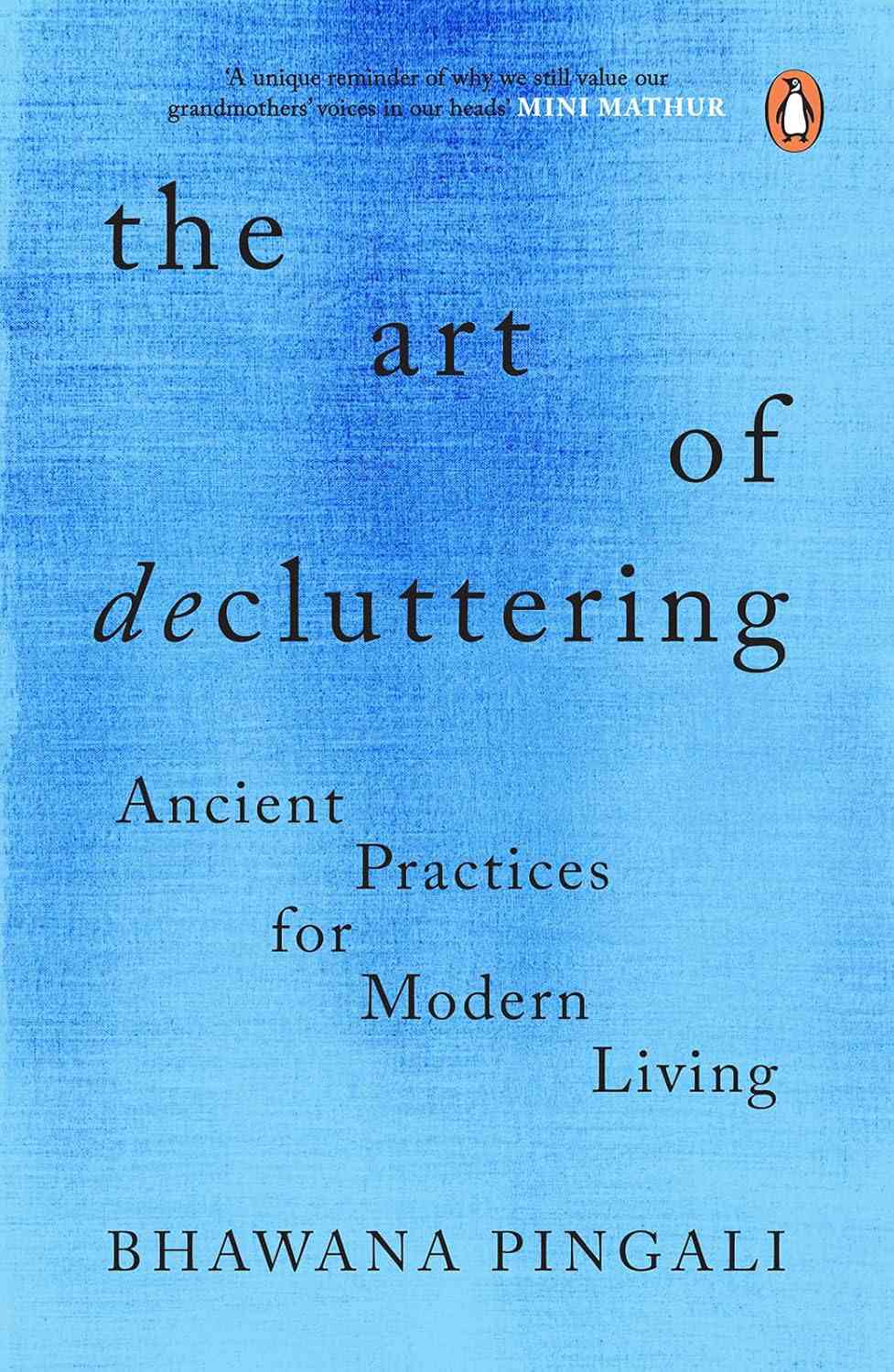
Excerpted with permission from The Art of Decluttering: Ancient Practices for Modern Living, Bhawana Pingali, Penguin India.
