






There was one Brahmin teacher who took a great liking to the boy. The teacher was quite obliging, kind and affectionate. On some days, during recess time, he would offer Bhim a share of boiled rice, rotis and vegetables from his box. The teacher’s surname was Ambedkar. While Bhim’s father, that is, Ramji’s surname was Sakpal, Bhim drew his surname Ambavadekar from his native village Ambavade. The teacher liked his pupil so much that he changed Bhim’s name to Ambedkar after his own surname, in the school records. That’s how the name “Ambedkar” stuck to Bhim; it was indeed a peculiar act of kindness and appreciation of the boy’s personality by the teacher.
Bhim was doing well in his studies. He enjoyed a degree of freedom at home and indulged in his hobbies and fancies. For a brief period, he developed a fascination for gardening and spent his pocket money on buying seedlings and new plants. And then for some time, fed up with the monotonous routine and studies, he cut classes to try his hand at tending cattle and rearing goats. Once he even did some “coolie” work at Satara railway station, which, of course, invited strictures from his aunt.
Around this time, Ramji married again, breaking the resolution that he would never bring a stepmother home. Bhim resented the idea of another woman taking the place of his mother and was repulsed at the sight of her wearing his mother’s jewels. This appears to have been a difficult and depressing period for Bhim. He seemed to have hated his father for going back on his promise and marrying again. He was not too happy staying at home, and did not want to depend on his father for his maintenance and education.
He knew from his friends and sisters that boys from Satara had found jobs in Bombay Mills. Taken up by the idea, he planned to go to Bombay. And in order to secure some money to meet his bus fare and food expenses, he decided to steal money from the purse of his aunt who was, incidentally, dear to him and in whose company he slept on the floor every night. According to Ambedkar’s own confession, for three successive nights he tried to remove the purse tucked up at her waist while she was asleep, but without success. On the fourth day, however, he did get hold of the purse only to be disappointed to find a mere half anna, with which he couldn’t have gone anywhere near Bombay. The experience was quite nerve-racking and he was filled with shame at what he had tried to do.
Repenting over his foolishness, he reached another decision, which, in his own words, “gave an entirely different turn” to his life. “I decided,” he said later, thinking over the episode, “that I must give up my truant habits, that I must study hard and get through my examinations as fast as possible, so that I might earn my own livelihood, and be independent of my father.”
It was a profound change in the life of young Bhim and he took to his studies with the zeal of a scholar, which was to last till his death.
Then came another change. Ramji moved his children to Bombay, to a chawl at Lower Parel. The place was predominantly inhabited by the labour class, that is, mill workers; also, it was then a centre for the notorious Bombay underworld. By the time the family moved to Bombay, the sisters had already been married and with their families they too resided in Bombay.
Bhim joined the Maratha High School. Studious that he had become now, under his father’s guidance, he did the Howard’s English Reader, and tackled translated works. These exercises enabled him to develop his vocabulary and have a hold on the language. And his passion for books (his father ungrudgingly bought books for him, even if it meant borrowing money from his married daughters), eventually, laid the foundation on which Bhim would go on to build his name as a writer of extraordinary calibre and range.
The next year, Bhim moved to the Elphinstone High School, which was one of the leading schools in Bombay at that time. Bhim now studied hard. The one-room tenement crammed with household articles, firewood and kitchen things, which at once served as a kitchen, a drawing-cum-study-cum-sleeping room, often noisy and smoky, and in the evenings a tethered goat bleating away, could hardly be a congenial place for any student to transact his studies. Still, determined to succeed, Bhim would wake up at two in the night and study under a kerosene lamp till the break of dawn.
The High School atmosphere, to add to Bhim’s problems, was not entirely free of caste prejudices. One day, it so happened that when the class teacher called him up to use the blackboard to solve a mathematical problem, there was an uproar in the class. The caste-Hindu boys had kept their lunch boxes behind the blackboard. Before Bhim could reach the blackboard, the boys dashed up and removed their lunch boxes from behind the board, for the touch of the Mahar boy was deemed to pollute their food. Generally, the atmosphere in the school was quite discouraging and humiliating to the pride of a young, upcoming student.
To add to the insult, he was not allowed to study Sanskrit as the second language. Traditionally, the shudras and ati-shudras were forbidden from learning Sanskrit, which was the language of the Vedas, and believed to be the language of the gods. So against his will, Bhim had to study Persian as the second language. Years later, Ambedkar took up the study of Sanskrit with the help of a tutor. For he could not afford to ignore the language which was a virtual treasure house of epics, politics and philosophy, of logic, dramas and criticism.
Notwithstanding these galling caste prejudices and insults, by dint of hard work and encouragement by his father, Bhim prosecuted his studies and passed the Matriculation Examination in 1907. This was indeed an event to be celebrated in a Mahar family. A congratulatory meeting was conducted under the residentship of SK Bole, who was a well-known social critic and reformer. At this meeting was another social reformer, who was also a writer in Marathi and a teacher, namely KA Keluskar.
He had taken a great liking to the boy and admired his studious nature. Keluskar spoke in praise of the Mahar boy’s achievement and presented him with a copy of his new book, Life of Gautama Buddha. Four decades later, Ambedkar was to go back to the life and teachings of Buddha to find a new hope, a new refuge and vocation for himself and his people.
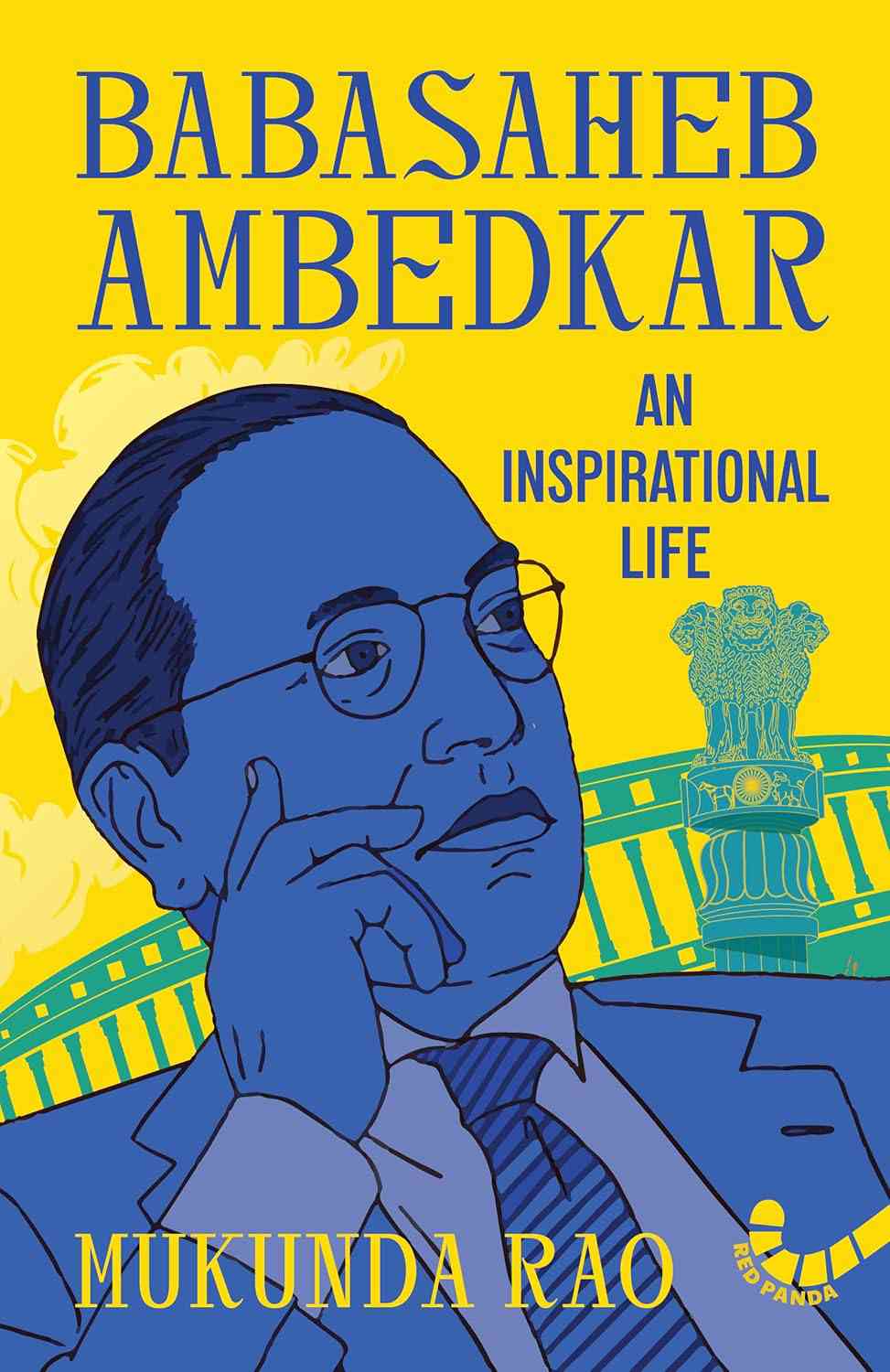
Excerpted with permission from Babasaheb Ambedkar: An Inspirational Life, Mukunda Rao, Red Panda.
