





Months into US President Donald Trump’s second term, India has been in the news for reasons Indian-Americans never wished for. Long priding themselves on their high rates of education and success in the business world, the community now faces hostility unseen before.
Digital harassment targeting South Asians increased by 75% between December 2024 and January, according to a report by the nonprofit group AAPI Equity Alliance.
From viral videos mocking Indian festivals to angry online posts about being “job stealers”, the image of Indian-Americans is under strain. How did a community viewed itself as a “model minority” become a target of hate – and why are many too fearful to speak out?
The Indian-American population has surged to over 5 million – a 174% rise since 2000, making them the second-largest Asian group in the US, according to Pew Research Center.
It has a median income of $151,200 – far above the national average of $74,580. About 77% of Indian Americans hold a bachelor’s degree or higher, more than double the national average of roughly 36%, according to Pew Research Center’s 2023 analysis. Forty five percent of community members have post-graduate degrees, compared to the national average of 14%.
These successes, say observers, are fueling resentment.
“American politics always needs scapegoats,” said Yogesh Joshi, director of the India Center at the University of Central Florida. He believes that the stereotype of Indian Americans as wealthy, high-achieving professionals now carries deeper political undercurrents.
“Today, if Indians boast about their income, it puts a target on their back,” he said.
Among the factors that has prompted hostility is the discussion on H-1B visas that allow US companies to hire skilled professionals. In 2024, Indians received about 71% of all approved H-1B visas, far surpassing every other nationality. China was a distant second at around 11%.
It has created the impression that Indians, especially in the software sector, are being hired on the cheap – depriving American workers of jobs. Trump’s decision in September to increase the H-1B fee to $100,000 for new applicants has been framed for his MAGA base as protecting Americans from foreigners. Before this, the cost for an H1-B application ranged between $2,000 and $5,000.
Adding fuel to the negative perceptions are the tariff disputes between Washington and New Delhi, which have created the impression that India is taking advantage of the US.
Celebration to backlash
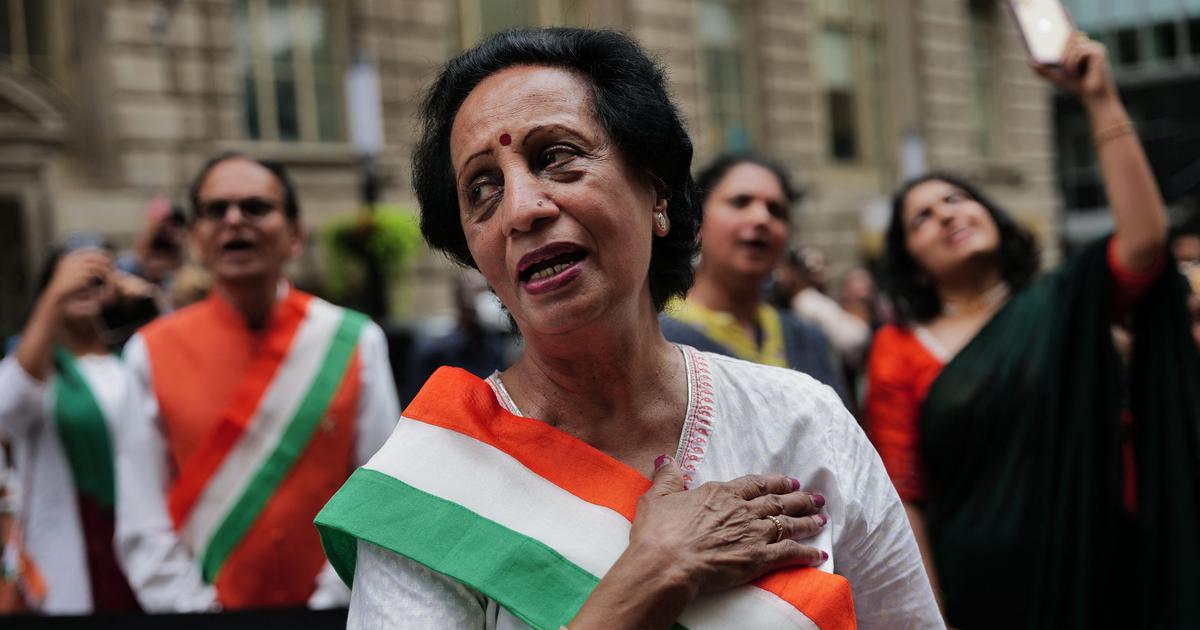
These political debates are having real-world consequences. The Indian-American community has long celebrated its India Independence Day parades and colourful religious festivals publicly. But this year, some events faced a backlash.
In Dallas, Texas, a coffee shop owner shot a 47-second clip mocking Ganesh Chaturthi celebrations, captioning it: “Typical view in my neighborhood outside Dallas. We have to cancel the H-1Bs. I want my kids to grow up in America, not India.” The video sparked a heated debate about immigration and assimilation.
The man deleted the post days later after facing backlash.
“For years, we had assumed that we were better than Blacks and Hispanics in the country because of our educational and financial status,” said Saba Haider, a member of the board of DuPage County and Democratic Party candidate running for State Assembly elections in Illinois. “But it is a rude awakening.”
For many Trump supporters, perceptions of immigrants were never about whether they had entered the country legally or were free of criminal records, she said. “When the leader of the free world makes fun of minorities, it gives everyone else permission to do the same,” she said. “Today, the fear of being brown and a minority is very real.”
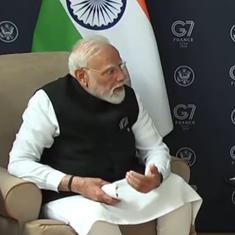
Trump has made several remarks that many perceive as mocking or disrespectful toward Indian Americans. In February, during a press conference with Prime Minister Narendra Modi, Trump interrupted an Indian journalist’s question, stating, “I can’t understand the accent.”
Trump has also referred to India as a “dead economy” and criticised its trade practices, remarks that were seen as demeaning of the country and its people, feeding into negative stereotypes about Indian Americans.
Janak Bedi, who has been organising community events in New Jersey for the past 10 years, says Indian-Americans have been reminded that, despite friendships and success, they remain outsiders in the eyes of many of their neighbours.
The viral videos hit close to home for Chicago resident Vaishali Nagoree, who was told in a mall elevator, “Go back to your country”. As a senior data analyst at an insurance company, Vaishali avoids expressing opinions about immigration or politics. “I feel colleagues questioning my background and, with downsizing, I’m an easy target,” she said
Lack of political will
Shashi Tharoor, a Congress MP, sparked debate by suggesting that the Indian-American community has remained “silent” on issues affecting India-US relations. His observation resonates uneasily with the diaspora.
Shankha Guchait, a Houston-based business consultant, said it is difficult to raise a strong voice. “One wrong post on social media, one perceived mistake – and your visa, your job, your legal stay in the country could be questioned,” Guchait said. “People are keeping their heads down.”
Yogesh Joshi of the University of Central Florida noted that while Indian-Americans have held key positions in US administrations, the community still lacks political organisation.
This, he explains, stems from a “false sense of security” that Indian-US relations were risk-proof and would always advance naturally. This, he said, is in sharp contrast to other groups like Jewish Americans and Chinese Americans, who have sustained influence through political advocacy.
“The idea of a ‘model minority’ made Indian Americans complacent,” Joshi added. “We never felt the need to organise politically because bipartisan support seemed guaranteed.”
Is this a passing phase tied to Trump-era politics or the start of a long-term shift in how Indian Americans are perceived? The answer lies in the next election cycle, feels Saba Haider as she gets ready for the Illinois State Assembly elections. “All this hostility is really tied to Trump’s policies,” she said. “I’m hopeful that if the government changes, tensions will ease.”
But others like Joshi say that the scrutiny and resentment will extend beyond any single administration. Perceptions shaped by envy and fear, and white supremacy, are likely to endure. “Ideas take time to build momentum, and once they do, they’re hard to unshackle,” said Joshi.
For now, community leaders like Haider are calling for vigilance, solidarity, and dialogue. “We must build alliances with other minority communities,” she said.
Joshi agrees that the path forward lies in more grassroots engagement. “Indians have to engage with ordinary Americans – explain what contemporary India stands for,” he said. “Ideas have to be contested with ideas. The community needs to pull up its socks and be present where decisions are made.”
Madhu Bhatia Jha is a senior journalist based in Chicago, tracking stories across the US since 2005, with a focus on Indian American communities.
