





Mehak Jamal’s debut book, Lōal Kashmir: Love and Longing in a Torn Land, documents real-life accounts of couples, families, and friends as they navigate their relationships amid Kashmir’s volatile political landscape. The sixteen narratives featured in this book initiate an urgent question: how do militarisation and conflict impact human relationships and reshape how people navigate intimacy? Jamal addresses this question by tracing the recurring cycles of violence and state-imposed blockades in Kashmir and their impact on everyday experiences of romance, love and longing.
Jamal divides the book into three main parts. In “Otru” (day before yesterday), the stories unfold against the backdrop of the 1990s insurgency in Kashmir. “Raath” (yesterday) draws from the civil unrest that shook the region in 2010. Finally, “Az” (today) centres on narratives from 2019, when the Indian government nullified the constitutional status of Kashmir, enforcing a months-long lockdown.
Lōal Kashmir aligns with a growing tradition of anglophone writing from Kashmir. Previously, seminal works such as Basharat Peer’s Curfewed Nights (2008), Essar Batool et al’s Do You Remember Kunan Poshpora? (2016), or Arvind Gigoo et al’s Once We Had Everything: Literature in Exile (2019) have paved the way for nonfiction writing on Kashmir that foregrounds human dimensions of the conflict. By retelling real-life accounts, Jamal’s work also attempts to humanise the Kashmiri experience. Her collection is valuable for spotlighting lesser explored, often taboo themes of romantic relationships within Kashmir’s cultural context. Lōal Kashmir, therefore, pushes boundaries and brings marginal conversations into focus.
Challenging mainstream narratives on Kashmir
The book’s strength lies in Jamal’s attempts at making the routine disruptions in daily life caused by curfews and internet blackouts in a militarised Kashmir visible. In doing so, Jamal makes a larger point. She wants her readers not to mistake such disruptions as mere anomalies, but rather to treat them as a defining feature of an absurd reality. For instance, in “Visa”, Zara’s American visa renewal is rejected, indefinitely extending her stay in Srinagar. Amidst civil unrest and sweeping internet curbs, an otherwise temporary inconvenience, however, turns into a catastrophic disruption, forcing her to reconcile her academic ambitions. Similarly, in “Fight or Flight”, a daughter’s simple wish to connect with her mother becomes fraught with impossibility and stretches into an arduous mission.
In other narratives, Jamal depicts the seemingly innovative measures Kashmiris must resort to to connect with their loved ones. In “Blue Salwar Kamees”, to reach her fiancé residing abroad, Madeeha first calls a common friend outside Kashmir, who then calls her fiancé on a separate phone just to bypass the cellular restrictions. Such adaptive behaviour portrayed underscores a stark reminder of the abnormal conditions that have become normalised within Kashmir’s militarised landscape.
Moreover, much of Jamal’s narratives unfold against the backdrop of the abrogation of Article 370, weaving in the initial anxieties, shock, and denial that pervaded Kashmir in 2019. In “Ambulance”, after the first rumours about the abrogation circulate, Iqra asks herself, “Were Kashmiris going to survive?”, mimicking the paralysis many felt. Then, in “I will walk to you if I have to”, Beena’s last conversation with her fiancé before all phone lines go dead is equally chilling. “Things could certainly not get worse,” she tells him moments before her phone is disconnected, not to be restored for many months. In this manner, Jamal’s bold depiction simultaneously counters the widespread misinformation about Kashmiri sentiments surrounding the abrogation of Article 370 that dominated mainstream coverage.
Having said that, Lōal Kashmir falters due to its lack of conceptual rigour. Jamal invokes deeply loaded terms like “romance”, “platonic love”, and “longing” with little effort to provincialise them within the wider social fabric of Kashmir. For instance, it would have been compelling how she is differentiating between other abstract ideas, such as “romance” and “desire”, considering how such categorisations have direct implications on how a body of work is interpreted.
Instead, Jamal brushes past such conceptual genealogies with the assumption that their meaning is self-evident, when it’s not. Due to this lack of interrogation, the book extends rather reductive understandings of romance, inadvertently exoticising experiences of long-distance relationships and longing in Kashmir. This is not to suggest that a book must privilege academic rigour to unpack complex themes, but it does require critical engagement with its contents to make nuanced observations.
Authors such as bell hooks have demonstrated this balance. In All About Love (1999), hooks actively draws on deeply personal anecdotes to make sense of abstract concepts of love, romance, and social justice. Jamal could have extended a similar exercise in her project. The book almost portrays militarisation and state violence as the only obstacles to romantic life and intimacy in Kashmir, underplaying the socio-cultural divisions that render romantic relationships equally fraught. Lōal Kashmir misses that opportunity, making the stories seem repetitive.
Furthermore, this lack of rigour is reflected in her writing too. Jamal assimilates vernacular words and lingo in a clumsy manner. Every Kashmiri and Urdu term or phrase is followed by its English translation in a way that breaks the flow of the narrative. Jamal could have instead trusted her readers to infer meanings from context, considering she added a glossary section in the end. This way, she could have preserved the texture of the languages without risking romanticising them.
Retelling from the margins
Jamal’s narrative style also raises serious ethical concerns. She clarifies that the accounts in her collection belong to real people across age groups, professions, and gender identities. What remains unclear, however, is her choice of adapting the accounts into third-person narratives. It begs the question of why the stories couldn’t have been presented in any other form. The question of form becomes critical, more so in the context of Kashmir, a region that is not only politically contested but where people’s agency has historically been suppressed. This is because, in “retelling” a story, a writer makes stylistic and aesthetic choices – selecting details at their discretion – thereby compromising the narrator’s agency. Such decisions are made after thoughtful considerations, and sensitivity to the contexts covered, and at a minimum, warrant discussion.
It also remains unclear how this narrative choice helped Jamal’s stated goals of “preserving public memory”. The collection would have perhaps benefited had the narrator’s original voice and inferences been retained, adding a layer of intimacy to her work. Instead, the third-person form distances the reader from those personal and private moments. Scholars such as Urvashi Butalia, in her foundational work The Other Side of Silence (1998), have demonstrated how carefully curated first-person or mixed narratives can powerfully preserve collective memory, while balancing individual agency. Jamal remains inattentive towards such concerns of representation, inadvertently replicating the very mechanisms of erasure she seeks to challenge.
Lastly, while Jamal may have obtained prior consent from the contributors, her approach begs another pertinent question: Is retelling someone’s lived experiences sufficient to claim authorship? This becomes relevant considering the absence of Jamal’s own insights in the collection. She begins her book with a brilliant introduction, arguing how documenting experiences of romance and love can provide unique perspectives on urban life in Kashmir. However, she fails to follow through on these conversations, missing the opportunity to draw more comprehensive inferences from the recorded accounts. Without any authorial reflection, the sixteen stories remain isolated anecdotes rather than parts of a cohesive exploration she initially promised.
While Lōal Kashmir marks is a bold attempt to spotlight the emancipatory powers of love and belonging amid violence and dispossession, its weak editorial choices undermine the book’s potential in fully achieving a critical scrutiny of lived experiences in Kashmir.
Sheikh Safwan is a Kashmiri writer based in New Delhi. A high-school teacher by day and an aspiring novelist by night, he divides most of his time between drafting lesson plans and literary plots.
Also read:
‘To make them undeniable’: Why Mehak Jamal wrote stories of romantic love set in Kashmir
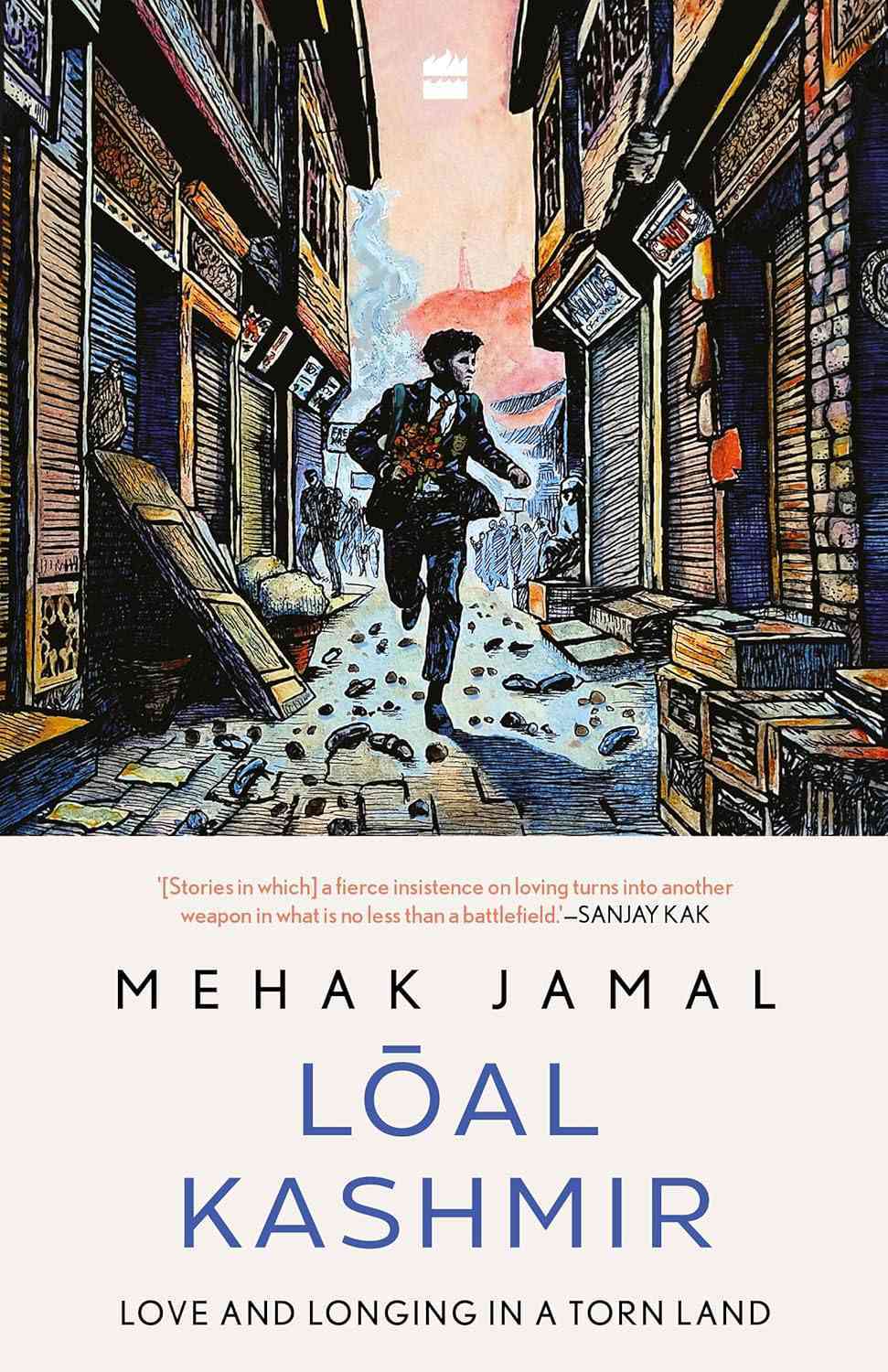
Lōal Kashmir: Love and Longing in a Torn Land, Mehak Jamal, HarperCollins India.
