











“In this county, the seventeenth century coexists with the twentieth century; similarly, education, refinement, and generosity dwell alongside pettiness, selfishness and a total lack of civic sense.”
Bani Basu’s debut novel Janmabhoomi Mātribhoomi was originally published in 1987, in the Bengali periodical Anandalok’s Durga Poojo issue. It was brought as a book the next year. Debali Mookerjea-Leonard’s translation of the novel, titled The Continents Between, was published in 2024, with the publisher’s blurb introducing it as “reminiscent of Jhumpa Lahiri’s The Namesake”, which it is and isn’t.
Sudeep and Kamalika Mukherjee are two well-educated, well-off, fairly privileged Calcutta Bengalis living in the US in the 1980s. Their son, Swadesh, is an Indian, while their daughter, Aratrika, who was born in the US, is an American citizen. The children bred and brought up abroad are more Bengali than their counterparts in Calcutta – they speak the language, are culturally refined, and proud of their heritage. Neither has allowed their American friends to shorten their names or christen them with English nicknames. When Aratrika moves to Calcutta with her family, she’s appalled when her Bengali classmates insist on calling her Trixie and Trinca.
While Sudeep exists in a haze of permanent nostalgia for the city he has left behind, Kamalika is glad for her freedom. She feels no particular affection for Calcutta, and although some aspects of life were more welcoming, more familiar, she decides it’s a small price to pay for the liberty that America promises everyone who arrives at its shores.
It’s a mostly happy existence for the Mukherjees, with minor disagreements stemming from the generation gap and the eternal East–West culture clash. A strong sense of community and individual identity proves helpful for any momentary imbalance in their happiness. Thankfully for them, the children haven’t gone wayward and the parents are wise enough to exercise authority within limits.
Onwards to Calcutta
So when Sudeep decides to move back to Calcutta, the family follows him without much protest. Even Kamalika, who once was strongly against the idea, gives in – valuing filial duties and blood ties higher than personal freedom. The shift from America to Calcutta is overwhelming in every way – the children just vaguely remember the extended family, Kamalika is once again reminded of the complications of a big, joint family, and Sudeep finally knows why he never truly felt at home abroad – he has too many obligations to fulfil here.
Aratrika is uprooted from her private school in the US and enrolled at an international school in Calcutta, where her classmates come from fine pedigrees and plenty of money. The world of the Mukherjees – which comprised only four people till now – explodes into relations encompassing several grandparents, aunts and uncles, and all manners of cousins. With property disputes, petty strife, and estranged relationships making themselves known, Sudeep and Kamalika realise that the home they had come in search of had long since disappeared.
Bani Basu carefully recreates a Calcutta that now only exists in memory. Aratrika’s foray into the city, rudely interrupted by leering men and well-wishing relatives, is a coming-of-age saga in its own right – there is no easy way to be a woman in a city where personal freedoms are of no value. Yet, she finds small joys for herself, and in some ways, manages to even love the city despite its aggression and poverty. With terror and trepidation, she reacquaints herself with Calcutta, which, thus far, she had only experienced from a safe distance.
Between a rock and a hard place
The 1980s were a difficult time to be in Calcutta – this is most acutely felt by Sudeep. Determined to do honest work, Sudeep is shocked by the political chokehold on the city’s education system. More precisely, in state-run universities. As a principal at one such college, he’s not only disheartened by the pettiness of his colleagues but also by students’ blatant disregard for discipline. Strikes and gheraos are part of daily life at the college, and the students see Sudeep as less of an educator and more of an oppressor – holding him responsible for all the discontents of their political and private lives.
As most Bengalis will know, the state universities were some of the most hostile hotbeds of political unrest in the state. Basu, who is a professor herself, must have witnessed some of it up close – and this is evident in her clear-eyed depiction of these terrifying times. She has an unsavoury view of youth netas and student goondas, many of whom have received sympathy from larger political powers. Through Sudeep, we witness the other side of the story – of helpless teachers who fought against odds to ensure quality education for their students, many of whose attempts met with a tragic end.
I have always enjoyed joint family drama, and The Continents Between delivers it in plenty. There’s scandal, redemption, and finally reconciliation – a neatly done subplot which adds depth and complexity to the Mukherjees’ own complicated saga.
Meanwhile, the winds of Aratrika’s sail blow the other way. She’s away from home, and her heart is in the US. Calcutta has taught her some hard lessons, reconnected her with the family but she’s merely a guest – her return to America, almost epic in its eventuality, disrupts any singular understanding of home. Her Bengali identity, enriched by her short in Calcutta, is under no threat in the West – a strong reminder that preservation of culture and heritage is a matter of intent. To paraphrase what Manmohan Mitra says in Satyajit Ray’s movie Agantuk, you cannot forget yourself unless you wish to.
Debali Mookerjea-Leonard’s translation is finely attuned to the American sensibilities and boasts of delightful cadence and elegance. There’s a line comparing the American sun to a golden fried shrimp, which evoked some lovely visuals in my mind. She also does a superb job of rendering Bengali poetry and songs into translation, and in her words, the Calcutta of the 1980s comes alive with remarkable precision.
Jhumpa Lahiri’s The Namesake is a landmark immigrant novel, empathetic to the anxieties of those who stayed on, whereas Bani Basu’s The Continents Between is considerate of those who came back – it encapsulates the futile desire to belong when what you once considered home has long left you behind and moved on.
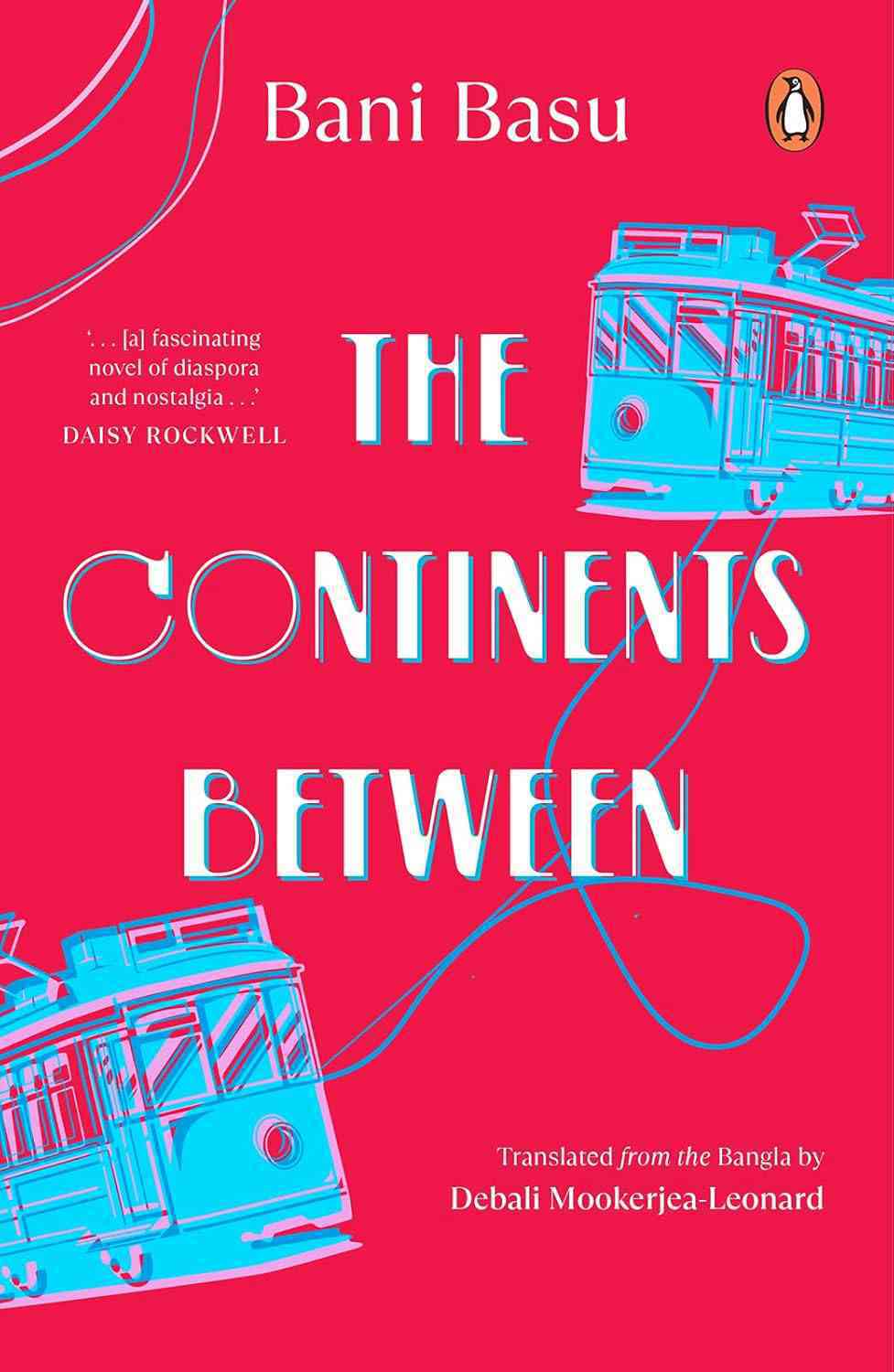
The Continents Between, Bani Basu, translated from the Bengali by Debali Mookerjea-Leonard, Penguin India.
