




At a loss on how to revive the struggle when it was unproscribed in August 1945, the issue of the INA (Indian National Army) fortuitously fell into the Indian National Congress’s lap. The INA was vanquished in battle. Knowledge about its attempt to liberate India by force, though, had been suppressed from the Indian people by British wartime censorship. When information about the saga began pouring out after the post-war ungagging of the Indian press, the Congress adroitly seized on the resultant public anger.
The party was extended an even bigger windfall when British authorities embarked on courts-martial of defectors from the British Indian Army to the INA on charges of treachery. Indian newspapers rendered saturation coverage to a rousing performance by advocate Bhulabhai Desai as he defended three INA officers in the first of the trials.
Civic demonstrations against the trial, cutting across communal lines, turned violent, particularly in Calcutta; the Royal Indian Navy (RIN) mutinied.
The British viceroy in India, Lord Archibald Wavell, and General Sir Claude Auchinleck, commander-in-chief of the armed forces in the country, beat a hasty retreat. Under the British Indian Army Act, only a death penalty or transportation for life could be administered for treason. Eventually, no INA soldier was subjected to this.
Contemporaneously, the process of granting complete independence to India – previously only dominion status had been on offer – unobtrusively gathered pace in London.
The unified public fervour on the INA phenomenon, fuelled by the Congress, was almost unprecedented in Indian history. The charismatic Jawaharlal Nehru toured the length and breadth of India to relate riveting tales of heroism of the INA and eulogise it to vast audiences.
The INA trials have generally been a footnote in the cataloguing of the Indian independence movement. This book examines to what extent they actually impacted the final phase of India’s quest for freedom. In so doing, it unveils that, although the Congress’s extended odyssey was essentially about a passive push-back, at a critical juncture of its campaign to extinguish British hegemony in India, it endorsed and embraced Subhas Chandra Bose and the INA’s use of force.
The landmark trial kicked off at the Red Fort in Old Delhi on November 5, 1945. Five miles away at the epicentre of the British-built capital of New Delhi, the viceroy’s palatial premises, Wavell was again busy corresponding with the secretary of state (for India in the British government, Lord Frederick Pethick Lawrence). This time, he said, “The Congress and nationalist Press are still concentrating on the INA trials. The attitude of Congress being what it is, I am not sure that any action we might have taken in advance would have been effective in forestalling Congress propaganda and producing a favourable or even a fair atmosphere for the trials, but we were undoubtedly slow off the mark. During the war, and especially while India was threatened with invasion, we decided for obvious reasons to say as little as possible about the INA. But once India was out of danger, we ought to have begun to feed the Press with correct information, and some at least of the nationalist newspapers might have committed themselves, if not to condemnation of the INA, at least to a more critical line. We failed to do this, partly because the war ended much sooner than anyone expected, and editors of almost the whole of the Indian Press are now committed to the theory that those who joined the INA were the only true patriots. The implication is that the loyal soldiers of the Indian Army were the reverse.:
Nationwide inter-party electioneering for seats in the Central and Provincial Legislative Assemblies reverberated as the court martial got underway. “The trial was held in a large room on the second floor of the building, which had been in use as a dormitory since its construction in 1868.” At ten o’clock in the morning, the pass-holders were urged to be silent. The seven military officers acting as judges – none in wigs or gowns – then trooped in and took their seats. The accused appeared in khakis but without badges of rank. Oaths were administered. “Before they sat, they turned and gave Nehru ‘a smart salute’.”
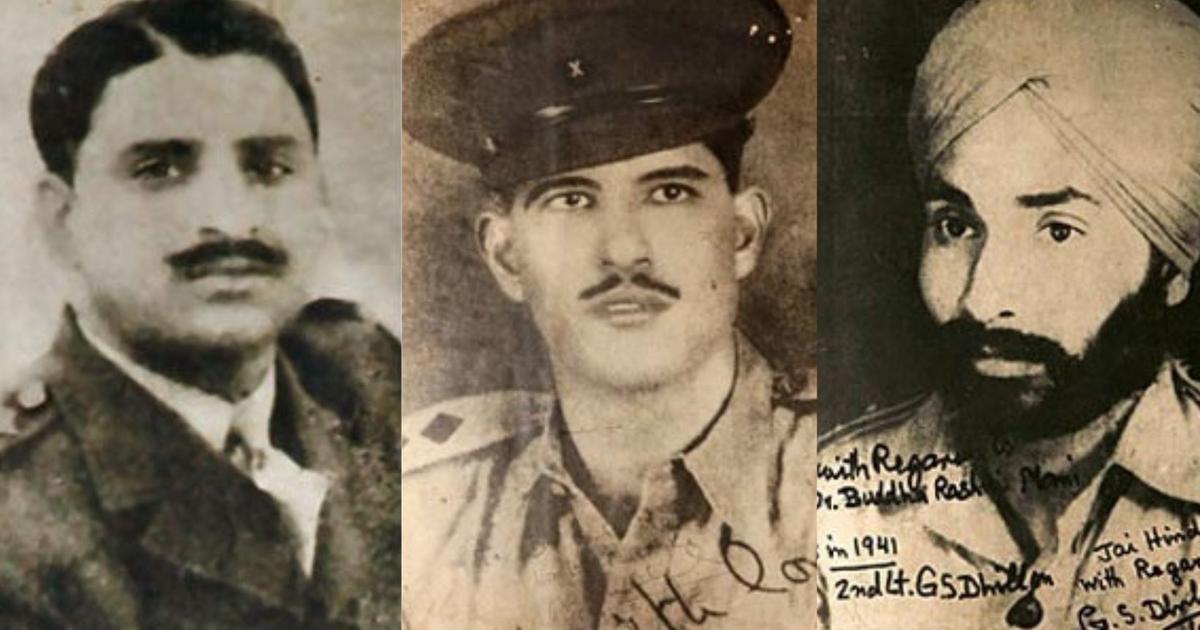
“… the prosecution charged the three INA officers, Captains Shah Nawaz (Khan) and (Prem) Sahgal and Lt (Gurbaksh) Dhillon, with waging war against the [British] King [George VI, grandfather of King Charles III] and causing murder and abetment of murder of five sepoys who were caught deserting the INA.
The original charge of being members of an anti-British movement was not pressed… All three INA officers emphatically answered ‘not guilty’ to all the charges.”
“… In the United Kingdom, The Times captioned, ‘INDIAN OFFICERS ON TRIAL’, ‘RECRUITMENT OF A “NATIONAL ARMY”’, ‘ALLEGED MURDERS’. Its introduction laid out, ‘The first trial by court-martial of three Indian Army officers who went over to the enemy was begun to-day in a barrack-room within the Moghul Red Fort in Delhi, where, as appeared from the Advocate General’s opening speech, Subhas Bose’s ‘Indian National Army’ had intended to hold their victory parade.”
(Advocate-General Sir Naushirwan Engineer) opened his argument by emphasising, ‘The motive with which the war is waged is immaterial. Whether the persons charged with the offence did the act with what they considered to be a patriotic motive or with a mercenary motive, the offence is nevertheless committed according to law… The offence in question is committed against the “duty of allegiance’. The allegiance the accused owed to the Crown at all times and in all circumstances.”
Desai rose to contest Engineer’s claims… His opening salvo was, ‘My submission to the court is that substantially there is really one charge before the court, because in so far as the charge of murder is concerned it is a part of the first charge; and I say so for this reason that it would be quite possible, in the case of a charge of waging war against the King, to be able to charge every single act of firing a shot, which would be, I think, reductio ad absurdum.
“… Therefore, the case before the court is not a personal case of any kind or sort. The honour and the law of the Indian National Army are on trial before this court. What is now on trial before the court is the right to wage war with immunity on the part of a subject race for their liberation… My next submission to the court is that this trial is wholly illegal.”
On December 31, 1945, the judges found the three accused “guilty of the charge of waging war against the King Emperor”. No rationale was proffered by the judges regarding reaching their findings. The sentences were transportation for life rather than death penalties. On January 3, 1946, though, a Gazette of India Extraordinary published Auchinleck’s clemency as the confirming authority.
Nehru wrote, “No trial in India, either by Court Martial or in the Civil Courts, has attracted so much public attention or has dealt with issues of such fundamental national importance… The trial dramatised and gave visible form to the old contest: England versus India. It became in reality… a trial of strength between the will of the Indian people and the will of those who hold power in India. And it was that will of the Indian people that triumphed in the end.”
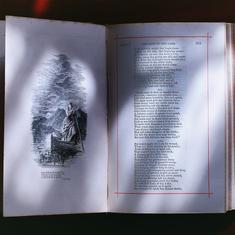
The last word, indeed the last laugh, radiated from another consummate wordsmith; Sarat Bose (Subhas’s older brother)… he chose to quote Lord George Byron:
Freedom’s battle once begun,
Bequeathed by bleeding sire to son,
Though baffled oft, is ever won.
Auchinleck was conscious of a section of British officers in the Indian Army being resentful about his approach to the first, showcase trial that had taken place. He now addressed this head-on. On February 12, 1946, he circulated a comprehensive six-page paper to all general officers commanding-in-chiefs, which was “Strictly Personal & Secret” to the recipients… He stressed that “having considered all the evidence and appreciated to the best of my ability the general trend of Indian public opinion and of the feeling in the Indian Army, I have no doubt at all that to have confirmed the sentence of imprisonment solely on the charge of ‘waging war against the King’ would have had disastrous results, in that it would have probably precipitated a violent outbreak throughout the country, and have created active and widespread disaffection in the Army, especially amongst the Indian officers and the more highly educated rank and file. To have taken this risk would have been seriously to jeopardise our object.”
(The final chapter documents how the British government swung into action to conceive concrete measures to meet the enhanced Indian aspiration for freedom triggered by Khan, Sahgal and Dhillon’s trial – as became evident from the public reaction Iin ndia and from within the British-controlled Indian armed forces. This culminated in the British Prime Minister, Clement Attlee, himself accepting the principle of complete independence for India in a speech in the House of Commons on March 15, 1946. The British position up to the trial was to concede conditional dominion status.
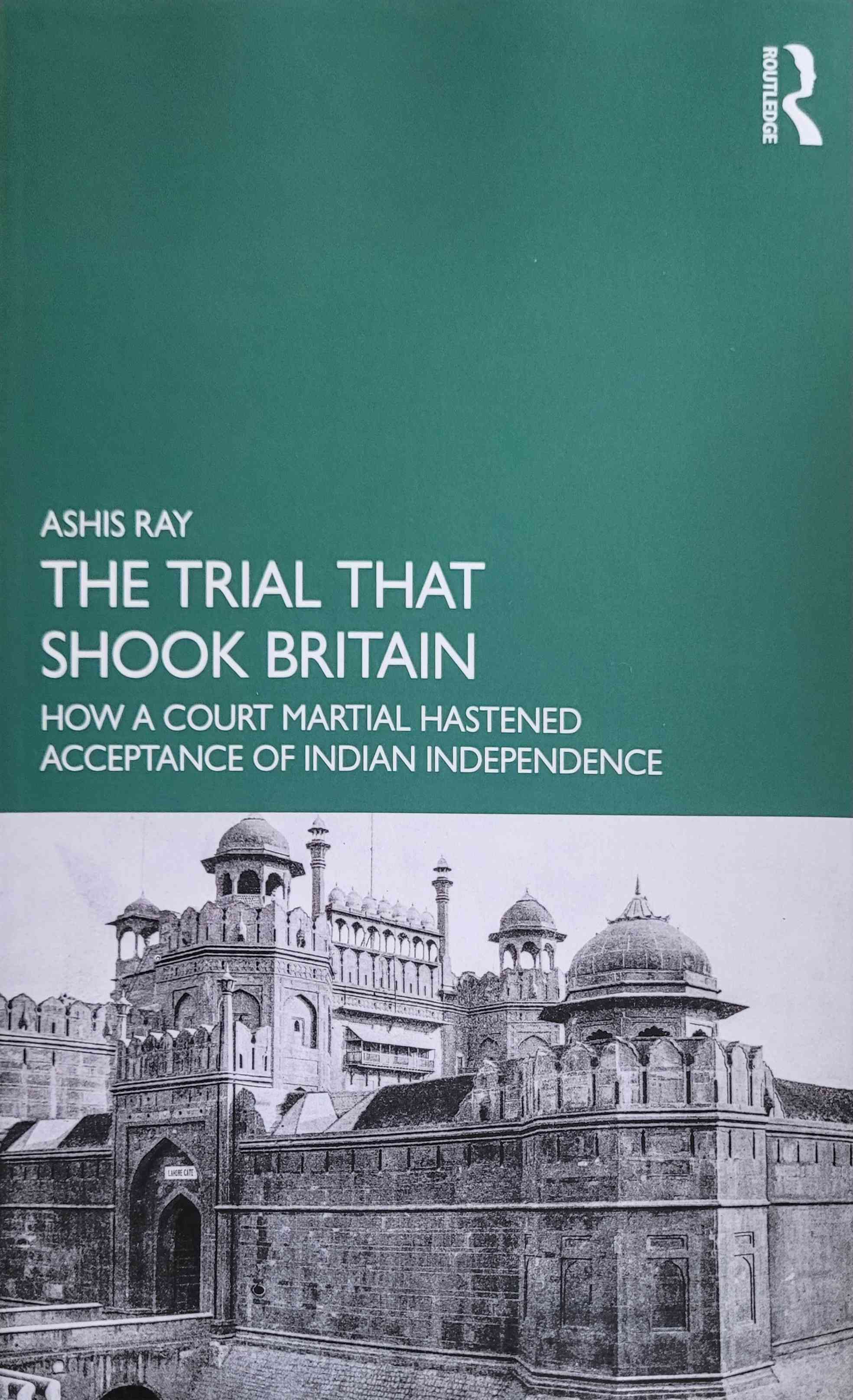
Excerpted with permission from The Trial That Shook Britain: How a Court Martial Hastened Acceptance of Indian Independence, Ashis Ray, Routledge.
