





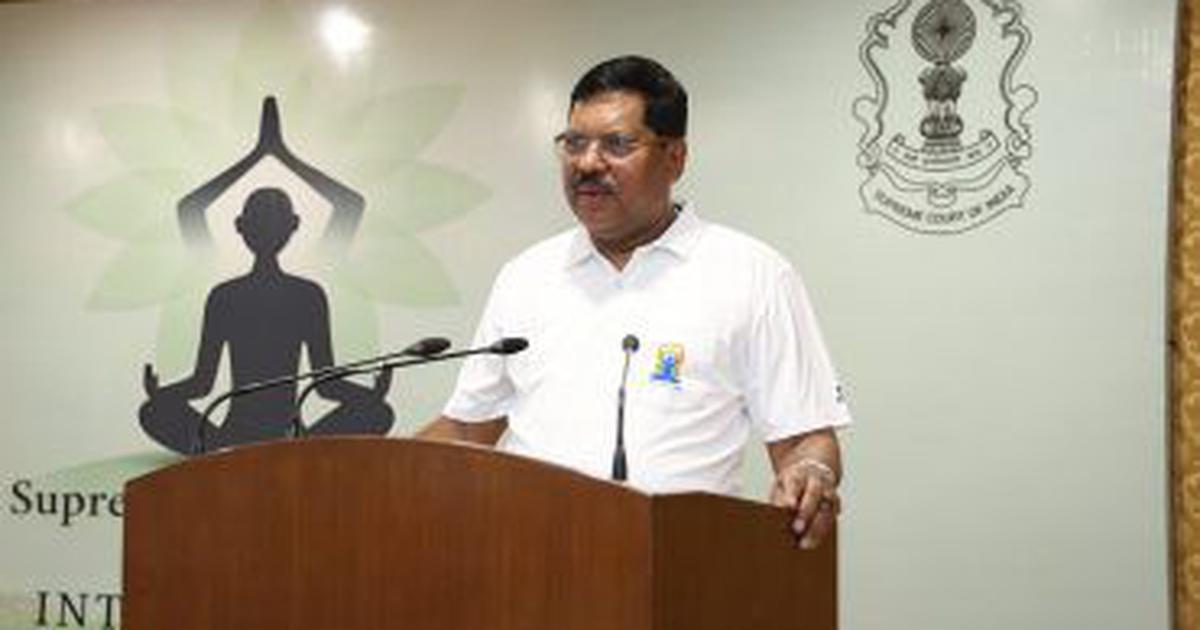
When Bhushan Ramkrishna Gavai assumed office as the 52nd chief justice of India on May 14, expectations ran high. Only the second Dalit to rise to the highest judicial office in the country, Gavi was widely seen as an independent voice who was not afraid to take on the powers that be.
This perception assumed greater meaning since his tenure followed soon after the retirement in November 2024 of DY Chandrachud, whose time in office as the 50th chief justice, has come in for much criticism for a perceived willingness to play ball with the government. (Sanjiv Khanna served a six-month term as chief justice between Chandrachud and Gavai.)
One stark example of this was Chandrachud’s record of judicial appointments (and non-appointment, as in the case of Justice Muralidhar). Another was his exercise of his powers as “master of the roster”, where important cases involving highly politicised arrests and prosecutions were allocated to benches that were seen as being favourable to the government.
Chief Justice Gavai on several occasions pointed out that he was not Chandrachud – by a wink and a nudge, if not by name. He wasted no time in undoing the changes to the Supreme Court logo made by Chandrachud and removing the glass partitions (and concomitant air-conditioning project) in the Supreme Court’s corridors.
He made unflattering allusions to the fact that Chandrachud had continued to occupy official quarters after his term had ended. Gavi declared that he would vacate his residence within the time permissible under the rules.
Barely a week before his retirement, delivering a judgment where one of his colleagues had dissented in strong terms, Chief Justice Gavai made sure that everyone knew that he had not adopted Chandrachud’s tactic of writing a rebuttal (as Chandrachud did in response to Justice Ravindra Bhat’s majority opinion in the same-sex marriage case).
A request for reconsideration
But does Gavai’s performance match up to this projection? Far from ushering in any meaningful reform, Gavai’s legacy is simply a perpetuation of the status quo – most concerningly, with respect to the unaccountable use of the chief justice’s power as “master of the roster” to allocate cases to benches of his choice and his role as the head of the collegium that chooses judges for the court.
Examples abound of Chief Justice Gavai’s heavy-handed use of “master of the roster” powers. When a bench of Justices JB Pardiwala and R Mahadevan issued strictures against a judge of the Allahabad High Court who had heard a criminal case on 4 August, Gavai wrote a letter to the bench seeking that it reconsider its order.
The bench ultimately modified its order and removed these strictures on August 8. The order records that this was done so “in due deference” to a “request in writing” by the chief justice.
Similarly, when the same bench took up, as a public interest litigation, the issue of stray dogs in Delhi and ordered that they all be housed in shelters within eight weeks, Chief Justice Gavai shifted the case to a newly constituted three-judge bench – which proceeded to stay portions of the two-judge bench order.
More along the same vein was the hearing on the presidential reference on the question of “deemed assent” to bills that were being kept pending by governors in Opposition-ruled states.
The five-judge bench led by Chief Justice Gavai conducted itself virtually like a superior court, sitting in appeal over the original decision by a two-judge bench (also headed by Pardiwala) that set timelines for the governor to act on bills. This was despite decades of legal and judicial scholarship viewing an opinion on a presidential reference as not binding law but a mere expression of the Supreme Court’s views.
Controversial appointments
The unseemly controversy over the appointment of a judge to the Supreme Court also raised eyebrows – especially on account of the strongly worded dissent of collegium member Justice BV Nagarathna and the fact that two members had dissented against the appointment in an earlier round.
At the same time, a relative of Gavai was sworn in as a judge of the Bombay High Court. The fact that the Gavai collegium chose to regress from the practice of the Chandrachud court of publishing detailed reasons in support of its recommendations also reinforced the judiciary’s image as a closed-off institution, whose membership continues to be decided by opaque means.
Even if there were sound reasons for appointing these judges to their positions (as there may well be), the public at large will never know them. This was a far cry from his promise in a speech before the Bombay Bar Association on July 5 assuring “complete transparency” in judicial appointments.
Chief Justice Gavai’s tenure continued to mirror the inconsistencies of the Chandrachud court – leaving a legacy of idealistic sound-bytes and cosmetic changes. As Chief Justice Surya Kant assumes charge over a court facing over 90,000 pending cases (with nearly 9,000 being added during Gavai’s tenure alone), one can only hope that his tenure ushers in meaningful reform.
Shourya Dasgupta is an advocate practising in Delhi.
