









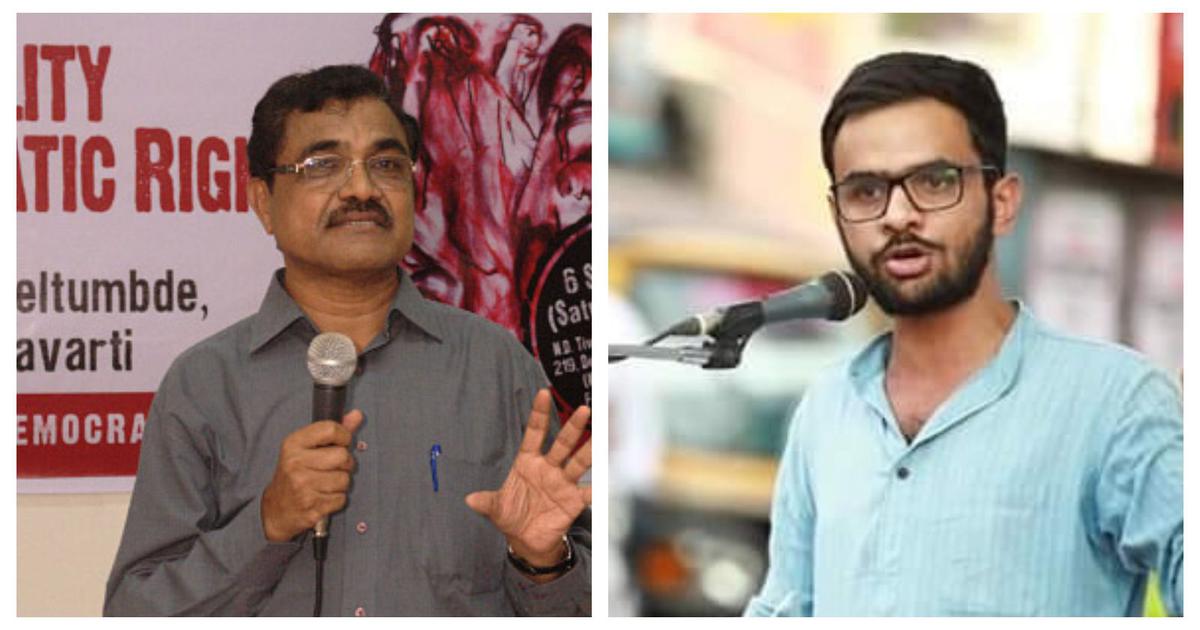
In The Cell and the Soul: A Prison Memoir, Anand Teltumbde notes that incarceration does not only test the body – it also tests whether the mind will refuse to surrender.
That observation sounds a little abstract until one remembers what he endured: months of humiliation, surveillance and the slow discovery that in India’s prisons, time itself is punishment. His reflections are not about one man’s endurance. They are about a republic’s ability to live comfortably with the confinement of some people.
Teltumbde spent 31 months in jail under the Unlawful Activities (Prevention) Act before being released on bail in 2022. His ordeal, like that of many others, exposes a legal order that converts waiting into guilt and procedure into penalty.
The National Crime Records Bureau’s Prison Statistics India 2023 shows that nearly 73.5% of India’s prisoners are undertrials – people not yet convicted of any crime. Behind that abstraction lies a quieter truth: for most who enter the system, justice never arrives; only waiting does.
‘The victim card’
This politics of waiting defines an entire generation of prisoners of conscience. In recent weeks, the Supreme Court has been hearing bail petitions of Umar Khalid, Sharjeel Imam, Meeran Haider, Gulfisha Fatima, and Shifa-ur-Rehman – all accused of playing a role in the Delhi riots of 2020 and charged under the same anti-terror law under Teltumbde.
On October 27, the court declined the Delhi Police’s request for more time to respond. By October 31 and November 3, senior lawyers for both sides argued again before the bench. It fixed November 6 for the case to continue. Each date a step forward on paper, a standstill in practice.
The state blamed the accused people for “playing the victim card”. In truth, it is the state that plays the calendar—stretching time until hope itself becomes sub judice. The matters are now listed again for December 2 – an administrative rhythm that keeps liberty negotiable and converts endurance into evidence.
Indian jurisprudence has long known better. In Hussainara Khatoon v State of Bihar in 1979, the Supreme Court read a speedy trial into Article 21 of the Constitution, which guarantees the right to life and personal liberty. In Sanjay Chandra v. CBI in 2012, it reminded us that pre-trial detention cannot be punitive.
AR Antulay v RS Nayak in 1992 recognised that delay itself is a denial of justice. Under the Unlawful Activities (Prevention) Act, the Union of India v. KA Najeeb in 2021 held that prolonged incarceration can itself justify bail. In Shoma Kanti Sen v State of Maharashtra 2024, the court granted interim bail to a 66-year-old individual accused under the Unlawful Activities (Prevention) Act, emphasising her age, health, and delay.
The doctrine is clear; what has changed is the country’s appetite for applying it. Law still speaks the language of liberty, but power uses the grammar of postponement. When law begins to delay what it is meant to deliver, power learns to hide behind procedure.
Justice in two speeds
That concealment has consequences. Consider how quickly courts can move when they wish to: television anchors facing contempt, film stars seeking urgent relief or high-profile politicians invoking “public interest”.
In recent years, relief was granted within days, even hours – most visibly in television personality Arnab Goswami’s interim-bail order by the Supreme Court in Nov 2020 and Aam Aadmi Party chief Arvind Kejriwal’s interim bail during the 2024 Lok Sabha campaign.
Yet bail hearings under the Unlawful Activities (Prevention) Act – where liberty is truly at stake – stretch over years, adjourned on grounds as slight as a missing counter-affidavit. This is not about comparing offences; it is about comparing priorities.
Justice today moves at two speeds: express for the influential, terminal for the dissenter. The difference is not in the law but in the moral speed with which justice travels.
Digital allegations, physical punishment
The prosecutions in the Bhima Koregaon case, in which a group of 16 lawyers, activists, writers and others have been accused of conspiring to organise a riot in 2018, show how easily that happens. Independent forensic experts found that malware had been used to plant incriminating files on the devices of the people accused.
Yet several defendants spent years in prison before these revelations entered the public record. The alleged crime was digital, the punishment physical. The fabrication was digital, the punishment, real.
Anand Teltumbde’s own extended period of incarceration unfolded within that same machinery of distrust – a system where accusation replaces proof and adjournment replaces verdict.
These revelations deepen, not dilute, the moral dimension of these prosecutions. To call them political prisoners is not to romanticise them – it is to name a moral fact. As Teltumbde has written elsewhere, political prisoners are kept in jail not to reform them but to send a message to the world. When liberty depends on obedience, prison becomes a metaphor for citizenship itself. What once was an emergency exception has become a daily administrative habit.
The logic of preventive detention has quietly migrated into ordinary criminal law. This situation was warned against in Khudiram Das v State of West Bengal in 1975, where the court held that even preventive detention is reviewable for mala fides. Again, in Rekha v. State of Tamil Nadu in 2011, the court ruled that such detention is impermissible when ordinary criminal law suffices. The Constitution’s presumption of innocence now coexists with a presumption of distrust.
Corrosion of moral memory
The Constitution never promised a crime-free state – it promised that even the accused would not be forgotten. Article 21 was meant to restrain the government’s impatience, not legitimise it. Yet every fresh adjournment erodes that promise.
A person who spends five years behind bars while the prosecution refines its theory of guilt suffers a visible loss; the Republic suffers a quieter one – the corrosion of its own moral memory.
BR Ambedkar, the architect of the Constitution, once warned that political democracy without social conscience would degenerate into tyranny by law. The long pre-trial wait of today’s prisoners proves him right: our courts have constitutional power but shrinking moral bandwidth.
If the past decade has taught us anything, it is that evidence can lie. Digital forensics demand independent scrutiny and institutional humility. An honest criminal process would welcome that; a fearful one prefers adjournments.
When courts allow delay to become routine, they do not merely fail individuals – they normalise punishment without conviction. The current hearings in the case against Umar Khalid and the others test more than the fate of five accused – they test whether the Supreme Court still remembers that the burden of the Constitution lies not in its words but in its waiting citizens.
And yet, there is still a kind of hope in remembering. This is where The Cell and the Soul transcends memoir and becomes a moral document. Teltumbde wrote that in the smallest cell, freedom survives as critical consciousness – a term he uses to describe the mind’s capacity to remain awake even in captivity.
That consciousness – the ability to see what has become normal – is the last liberty left to us. We cannot all break the bars, but we can refuse to forget who is behind them.
Sahil Hussain Choudhury is a lawyer and Constitutional Law Researcher based in New Delhi. His X handle is @SahiHChoudhury and his Instagram handle is voxjuris_.
