









Indian independent cinema is everywhere except where it needs to be – in the cinemas.
Year on year, the presence of Indian directors at prestigious international film festivals is increasing. Homegrown productions are garnering accolades at Cannes, Venice and Berlin. Why then is it so difficult to watch these movies in India?
An open letter recently released by a group of directors revealed the long-standing hurdles to the distribution of alternative cinema in India. These include screening slots at inconvenient timings in theatres at inaccessible locations. Shows are cancelled without advance notice because of poor ticket sales. Films are taken off in mere days, rather than being allowed to complete a week’s run.
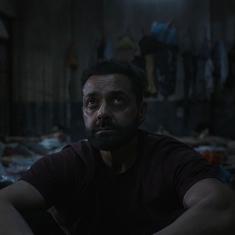
The provocation for the communique, signed by 46 filmmakers, was the inadequate showcasing given to Kanu Behl’s Agra. Behl’s psychodrama had waited two years for distribution after its premiere at the Cannes Film Festival.
When Agra finally turned up in cinemas, it was allotted barely any shows, Behl said in the letter that was also signed by directors such as Payal Kapadia, Vikramaditya Motwane, Nandita Das, Ashim Ahluwalia, Rima Das, Varun Grover and Vasan Bala.
“The film – acclaimed internationally, awarded at festivals, and embraced by cinephiles – has struggled to secure fair and accessible showtimes across multiplexes despite significant audience interest, extensive media coverage, and organic buzz,” the letter asserted. “But this is not about one film. This is part of a long-standing systemic pattern affecting all independent films in India.”
The signatories include filmmakers working within Bollywood. Others on the list are behind movies made on modest budgets, tackling atypical themes and led by relatively lesser-known actors. For this lot, which is working in an idiom far removed from the conventional, getting a spot in a theatre has always been a Herculean task.
For decades, artistic cinema has been labouring in the shadow of mainstream film industries, compelled to lower expectations in terms of exposure and financial returns. The situation is now more cruel because there are options – at least in theory.
When multiplexes came up in the late 1990s, they held out the promise of variegated programming. A multiplex, by definition, has several screens of various sizes. In the early days, it was believed that some screens would be given over to films that were less instantly viable but equally important.
These movies could be liberated from box-office pressures. They could sit there for several weeks until they found their audiences through positive reviews and word-of-mouth publicity.
The reality is vastly different. Multiplex screens are crammed with the latest potential money-spinners. Multiplex chains are loath to devoting even the smallest-sized screen to releases that don’t fit the formula. In Mumbai, for instance, even movies made in Marathi – the state language – struggle to be showcased against Bollywood behemoths.
The time accorded by chains to a movie to justify its presence in a cinema is so brutally short – less than a week – that even conventional releases barely survive. Independent cinema has even less room to manoeuvre.
In the mid-2010s, another magic bullet appeared: streaming services. Producers who were unable to release films in cinemas found refuge on such platforms as Netflix, Prime Video and Sony LIV. A steady pipeline of direct-to-streaming productions emerged, giving creators a solid alternative to the orthodoxies of theatrical distribution.
However, this pipeline has been steadily drying up in the past few years. While streaming platforms (commonly referred to as OTTs) continue to acquire titles for exclusive premieres, they are demanding that producers first release their films in theatres.
“OTT platforms have also become harder to access, as they depend heavily on box office numbers – creating an unfair cycle where indie films get fewer shows but are expected to ‘perform’,” the open letter points out.
The streaming industry’s position is based on a few factors. They believe that they are paying too much money to acquire films that don’t convert into subscriptions. They don’t want to spend on marketing and publicising streaming-only titles. They want tried-and-tested movies, rather than punts.
All of this is driving independent filmmakers back into the unwelcoming arms of cinema chains. In the open letter, one of the demands made by filmmakers is to “establish pathways for independent films where theatrical performance is not the sole determinant for streaming acquisition”.
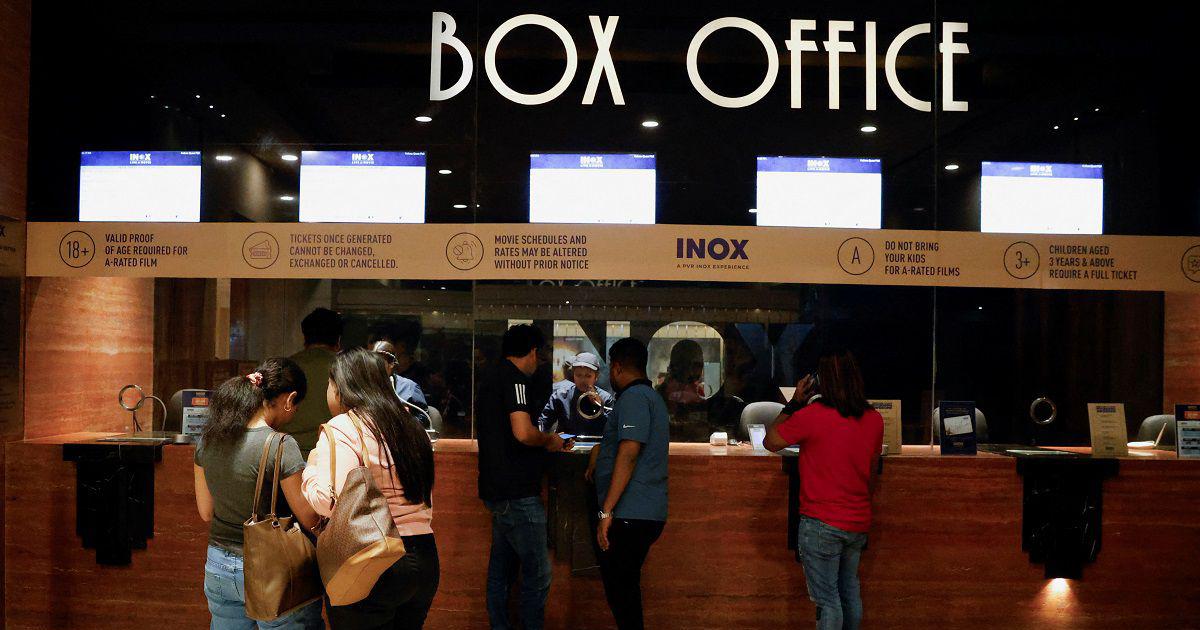
Any doubts over whether there are takers for unorthodox, risk-taking narratives is quickly dispelled at film festivals, special screenings or film clubs. But the long queues at such events are rarely matched by lines outside a theatre’s box office window. Cinephiles like the idea of critical darlings being released in cinemas. But by the time they turn up, it’s often too late for the film.
The movie-going behaviour that sustains mainstream productions – the eagerness to watch films soon after they are released, the willingness to trek distances or catch late shows of buzzy titles – is largely missing when it comes to independent cinema. This culture barely exists, and it isn’t being allowed to emerge or evolve.
Since multiplexes have proven to be adversaries, rather than allies, of independent filmmakers, the solutions lie beyond these profit-oriented entities.
One way to get around the problem could be to set up speciality cinemas dedicated to supporting offbeat cinema. For instance, Mumbai used to have one such theatre that was located at the All India Radio building and screened award-winning or critically acclaimed films. The theatre was eventually shut down.
In their missive, the filmmakers too suggested a partnership with “state-run cultural centres, art institutions and alternative screening venues to create a national circuit for independent films”.
Prohibitive government taxes, the cost of setting up and running theatres and the prospect of low short-term earnings are among the reasons these spaces don’t exist in large numbers.
This is a muddle without a simple or easy resolution. Deep pockets, generous hearts and visionary souls are needed to ensure that independent cinema is seen where it needs to be seen – on a big screen, in a darkened hall, along with popcorn and cola too if required.
“India’s independent films have shaped the way the world sees us,” the filmmakers state in the letter. “It is time for us to shape a system where our own audiences can see us too.”
Here is a summary of last week’s top stories.
State surveillance? The Union government withdrew its November 28 order that directed smartphone manufacturers to mandatorily preload a government cybersecurity app on all devices. The decision was taken “given Sanchar Saathi’s increasing acceptance”, explained the Ministry of Communications.
The announcement came hours after Union Communications Minister Jyotiraditya Scindia told Parliament that the app cannot be used for snooping. He had also said that the government is willing to make changes to the order based on public feedback.
Opposition leaders and technology policy experts had expressed concern about the directive, stating that it amounted to expanded surveillance without safeguards.
Ratna Singh explains why the Sanchar Saathi app order raised privacy fears.
The economic troubles. The rupee fell to an all-time low of 90.4 against the United States dollar on Thursday amid the continued outflow of foreign capital from the equity market. The Indian currency has come under pressure because of punitive tariffs by the United States and uncertainty about a trade deal between New Delhi and Washington.
The rupee has fallen about 5% in 2025, putting it on track to record the sharpest decline in a year since 2022.
However, Chief Economic Advisor V Anantha Nageswaran said that he was “not losing sleep” as the fall in rupee’s value was not impacting inflation or exports.
IndiGo’s woes. The Directorate General of Civil Aviation withdrew its new weekly rest rules for crew that disrupted IndiGo’s operations for the fourth consecutive day. The regulator said it was necessary to review the provisions in view of the requests from airlines to ensure stability of operations.
The revised rostering norms issued by the regulator in January 2024 were meant to take effect on June 1. The airlines asked for delayed implementation, citing operational challenges, and the key changes were eventually introduced on November 1. IndiGo had not made sufficient adjustments to its roster to accommodate the new regulations.
The country’s largest airline by market share on Friday cancelled all its domestic flights from Delhi till midnight. Its services in other cities were also affected, leaving passengers stranded at airports.
‘Pushed’ into Bangladesh. A pregnant woman and her eight-year-old son who were “pushed” into Bangladesh were brought back to India. Sunali Khatun, her son Sabir and husband Danish Sk, who are residents of West Bengal, were forced into Bangladesh by the Indian authorities in June on claims that they are undocumented immigrants. The husband was not brought back.
The Bangladeshi authorities arrested them on August 21 for illegal entry. They were released from the Chapainawabganj jail on Monday after a lower court granted them bail on humanitarian grounds.
This came on the same day that the Supreme Court asked the Union government if Khatun and her son could be returned to India on humanitarian grounds, taking note of her advanced pregnancy. The government told the court on Wednesday that it will bring back Khatun and her son to India.
Watch: Anant Gupta and Raghav Kakkar investigate the Modi government’s crackdown on ‘illegal immigrants’.
Also on Scroll last week
- Assam tabled two Nellie reports. This Japanese scholar says neither addresses question of justice
- What Election Commission data says about ‘vote chori’ in the Bihar elections
- How Delhi’s rich are escaping air pollution
- ‘Better to die than remain in a hospital’: Nilgiris’ Adivasis face health neglect
- When Sikhs chased a new world in Argentina – and found a nightmare instead
- Rage bait: Oxford’s word of the year reveals our digital exhaustion
- Anand Teltumbde: How India’s new labour codes dismantle worker protections
- Reinventing India’s carb-heavy diet with protein, indigenous foods
- What’s influencing the Indian box office: ‘Gen Z is driving a lot of the consumption decisions’
- ‘Dhurandhar’ review: A techno-jingo gorefest
Follow the Scroll channel on WhatsApp for a curated selection of the news that matters throughout the day, and a round-up of major developments in India and around the world every evening. What you won’t get: spam.
And, if you haven’t already, sign up for our Daily Brief newsletter.
