






In June last year, Jakia Begum found an elderly woman sitting by a road in a neighbourhood in Dhaka, the capital of Bangladesh.
She was drenched in the rain, and weeping. She appeared to have injured her hand.
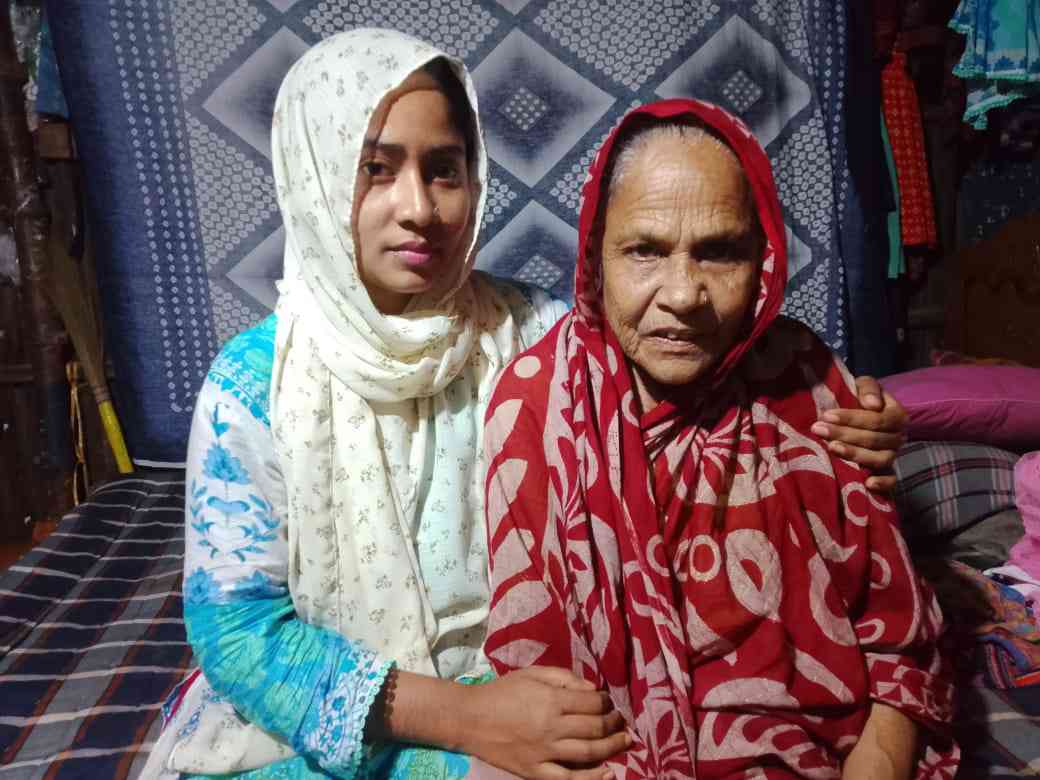
Jakia Begum’s daughter Klanti Akhtar told Scroll: “She could not tell us how she had ended up here. When we asked her about her home, she said she was from Nalbari.”
Akhtar, a 28-year-old woman from Dhaka’s Mirpur locality, had never heard of Nalbari before. “We thought it was a place in Dhaka or somewhere in Bangladesh.”
Moved by her plight, Jakia and her daughter brought the woman home. It was only later that Akhtar googled Nalbari and realised that the woman they had rescued was from Assam, India.
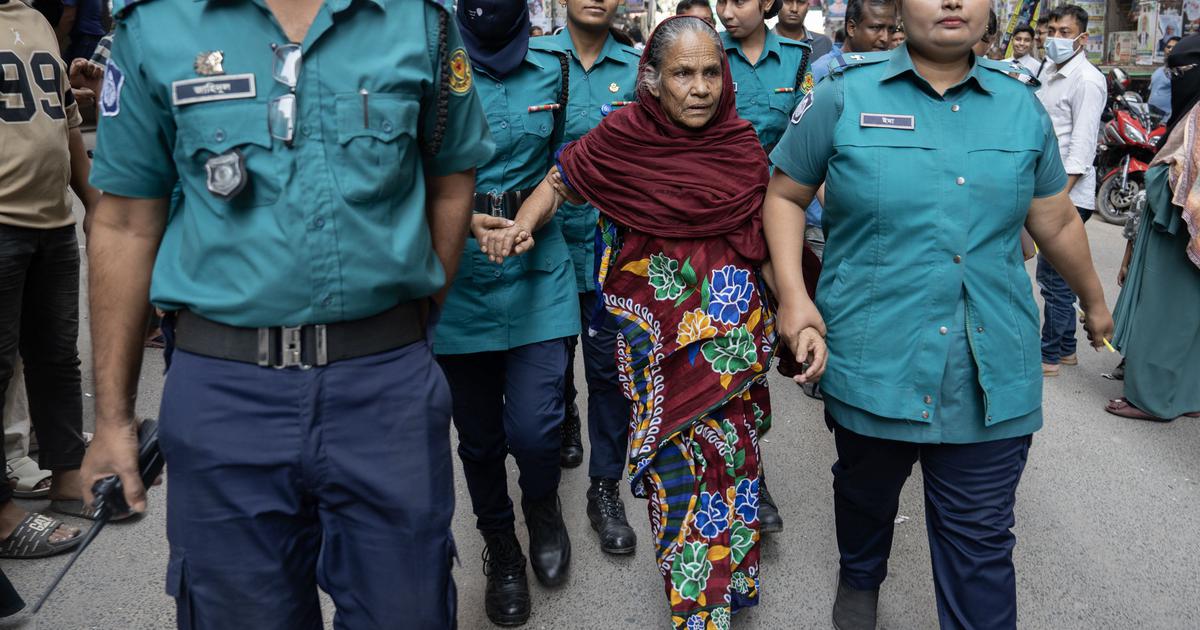
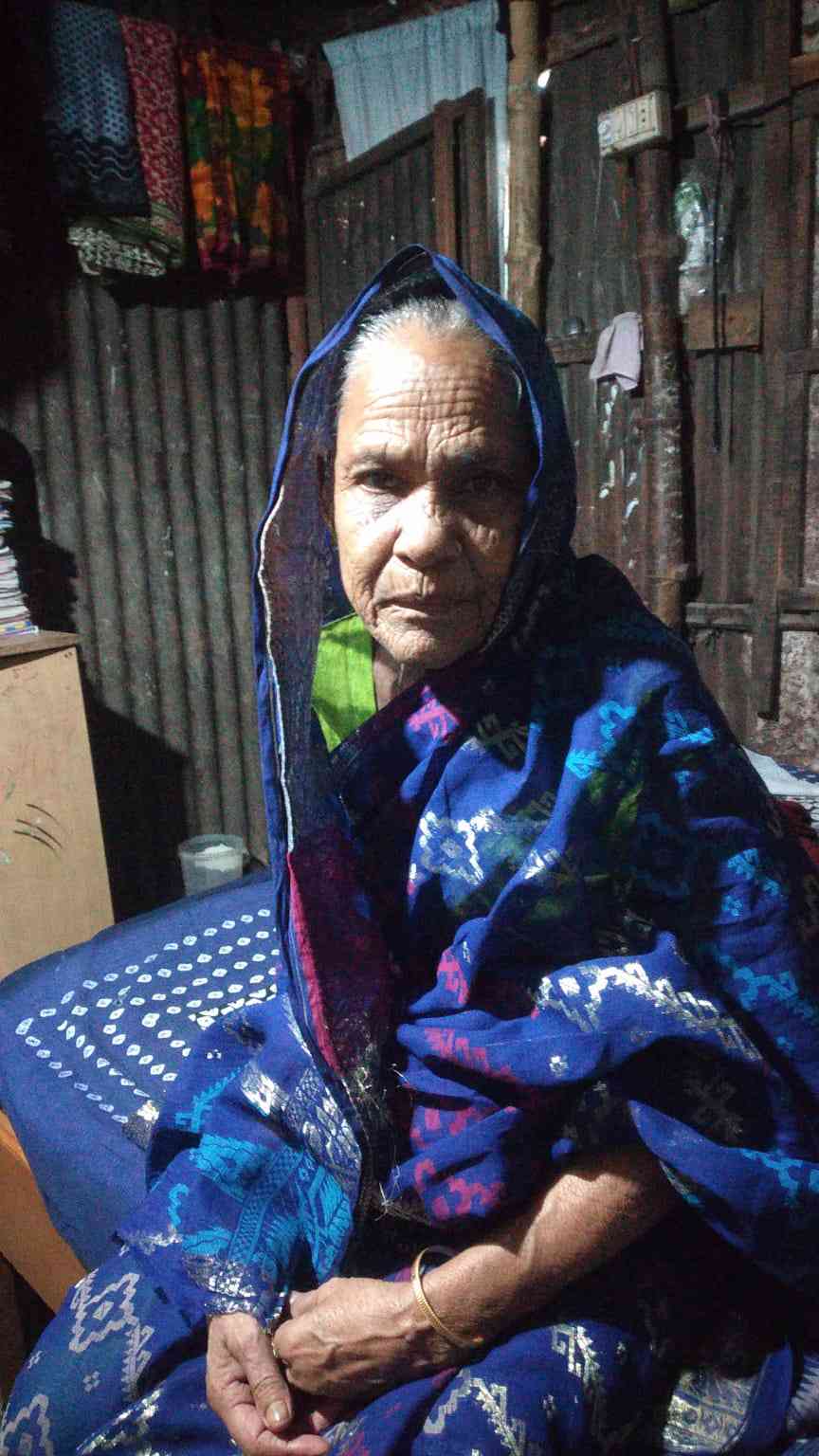
Sakina Begum, the 69-year-old woman from Nalbari, does not remember how she ended up in the Dhaka neighbourhood of Mirpur.
All she remembers is being taken from a police station in Assam to India’s largest detention centre in Matia – and then pushed across the border near Dhubri district into Bangladesh.
The days after are blurry in her memory. She boarded a bus and asked the conductor to take her to Nalbari – and somehow made it to Dhaka, over 500 km away.
“I told them [Jakia and her daughter] that I don’t know where I am,” Sakina Begum told Scroll over a video call. “Before they took me in, I had been outside in the rain for many days. I was hungry and cold. They said I could live in their home. They fed me, gave me space to offer namaz. They even helped me have a bath when my arm was broken. ”
Akhtar added: “She is a helpless, old woman. So we felt sympathy for her. She is an Indian, not a thief or dacoit. We had to help her.”
Sakina Begum, who speaks only Assamese, now lives with Akhtar’s family, even though she was briefly jailed in Bangladesh.
A year after she was forced out of India, she is desperately waiting to return to Barkura village, Nalbari. Her family back home, say, they have no means to get her back.
“I am an Assamese person, I am not from Bangladesh,” Begum said. “I don’t even know how to speak Bangla. The [Assam] police put me in danger by pushing me here. They should not have. I have not committed any crime.”
An ‘indigenous’ Muslim
In May last year, the Bharatiya Janata Party government in Assam launched a crackdown on “declared foreigners” like Sakina Begum, picking them up from their home across the state and dumping them in Bangladesh in the dead of night.
“Declared foreigners” are not people caught while trying to illegally enter India’s borders. They are typically long-term residents with families and properties in Assam, who assert that they are Indian citizens – but who have failed to prove their citizenship in Assam’s foreigner tribunals.
These tribunals are unique to Assam, and they decide on citizenship cases on the basis of documentary evidence. They have declared 1.6 lakh residents as foreigners, as of March 2025, through a process criticised for being arbitrary and biased.
Those who lose their cases at the foreigners tribunals have the right to challenge the orders in the higher courts. Sometimes, they have been sent to the state’s detention or holding centres. But, until May last year, they were rarely deported to Bangladesh, as a tribunal order is not proof that they are citizens of another country.
As Scroll has reported, Assam’s “pushback” regime has separated families like Sakina Begum’s and left them devastated.
While the government has not put out a list of those expelled, nearly all forced out in this fashion last year were Muslims of Bengali origin.
The community is often vilified in Assam as “Bangladeshis” and “illegal immigrants” even though they are descendants of peasants settled in the region by the British four decades before India became independent.
Sakina Begum was the exception among those “pushed back”.
She is a Goria Muslim – a community that has been designated by the Himanta Biswa Sarma government as “indigenous” to the state and is considered native to Upper Assam. But her family members say that no Goria Muslim or Assamese Muslim leaders have spoken up for Sakina Begum.
Begum was declared a foreigner in 2012 by a foreigners tribunal in an ex parte order – the judgment was pronounced in her absence or without hearing her claim. Close to 64,000 people in Assam have been adjudged as foreigners in ex parte orders, according to the Union home ministry.
Begum’s appeal against the order was rejected by the Gauhati High Court and she spent five years in the Kokrajhar jail from 2014.
“My mother is not a Bangladeshi,” her eldest daughter Rasia Begum, who lives in Darrang district, told Scroll. “If she were a foreigner, how are her three siblings Indian? The police did not check any documents.”
Scroll has seen Sakina Begum’s name on the state’s 2005 and 2018 voter lists, as well as the name of her father Mokbil Ali on the 1965 and 1970 voter lists.
Jailed in Bangladesh
For four months after she was picked up from Nalbari by the state police, Sakina Begum’s family had no news of her.
“We went to the Matia detention centre three times, but they said my mother was not there,” her eldest daughter Rasia Begum told Scroll.
In Dhaka, Klanti Akhtar and her mother had little idea about how to contact her family in India.
“She repeatedly told us that she is not Bangladeshi. She said she is Axomiya,” Akhtar told Scroll. “My mother and I took her to the local police station so that we could send her back to her family. But the police told us to keep her in our home. They said they will find a way.”
In September, a BBC Bangla crew got wind of Begum’s presence in Mirpur and contacted her family.
“We broke down as soon as we saw her on video call,” Rasia said. “We never imagined that my mother would be in another country. It was a relief to finally see her after four months but we were shocked to see her in Bangladesh.”
The news report of her presence in Bangladesh had grim consequences for Sakina Begum.
The local police station took her into their custody. She was produced in court and charged for entering Bangladesh without a passport or visa and jailed for two months. “I suffered a lot in jail,” she said.
Two months later, Akhtar’s family pooled together money to secure her bail.
“Onar proti maya hoiya gesilo,” she said. We had grown attached to her.
Akhtar added: “We collected about Rs 7,000 from our locality and my mother and I spent Rs 3,000 more to release her from the jail.”
The bail condition mandated that Sakina Begum must report to the police station once a week. Two local guarantors stood surety, including Jakia, Akhtar’s mother.
Since the news of her expulsion, Sakina Begum’s story has been covered by several news channels in Assam.
“So many stories were done asking why they sent an Assamese woman to Bangladesh,” she told Scroll. “I was born there. Everything that I have is there.”
“I am from Assam and I will go to Assam. I am not from Bangladesh,” Sakina Begum told @scroll_in. “The [Assam] police put me in danger by pushing me here. They should not have. I have not committed any crime.”
— Rokibuz Zaman (@ZamanRokibuz_) June 4, 2026
Read here:https://t.co/Ml0aiquad6 pic.twitter.com/iAQNL0ztQC
Years ago, Sakina Begun had married a Bengali-origin Muslim man from Barpeta district. She was arrested and sent to Kokrajhar jail while her husband was still alive.
However, Sakina has found little support from ethnic Assemese groups and organisations.
“Some leaders of Goria organisations have come to our home and talked with us,” her daughter Rasia said. “However, apart from that, nobody has protested or created pressure on the government to bring her back. The leaders did not even check on us whether she had returned home or not.”
Hafijul Ahmed, the BJP-government appointed chairman of the Goria Development Council, refused to speak on the matter, saying it was a legal issue.
“It has become an international matter and the foreign ministry has to take a call,” said Moinul Islam, who heads the Sadou Asom Goria Jatiya Parishad, a group which represents Assamese Muslims in the state.
Islam said that Sakina Begum had not submitted documents stating that she was a Goria Muslim to the foreigners tribunal, which is why she was declared a non-citizen. “Her lawyer told us that they had not turned up at the foreigners tribunal and said the family did not cooperate,” he said.
Since Sakina Begum was reported by Assam’s border police in 2006, the family has spent their savings in fighting the citizenship case.
“We have already sold our ancestral land and home to fight the case in the tribunals and high court,” Rasia Begum said.
As she waits for news of her mother, Rasia Begum said she is in an “impossible situation.”
“We can’t go there to bring her,” she said.
She added: “Our lawyers have told us that we will move the Supreme Court soon. We don’t even have money to fight the case.”
The All Bodoland Territorial Council Minority Students Union has been helping the family in their legal battle, she said.
‘Why this punishment?’
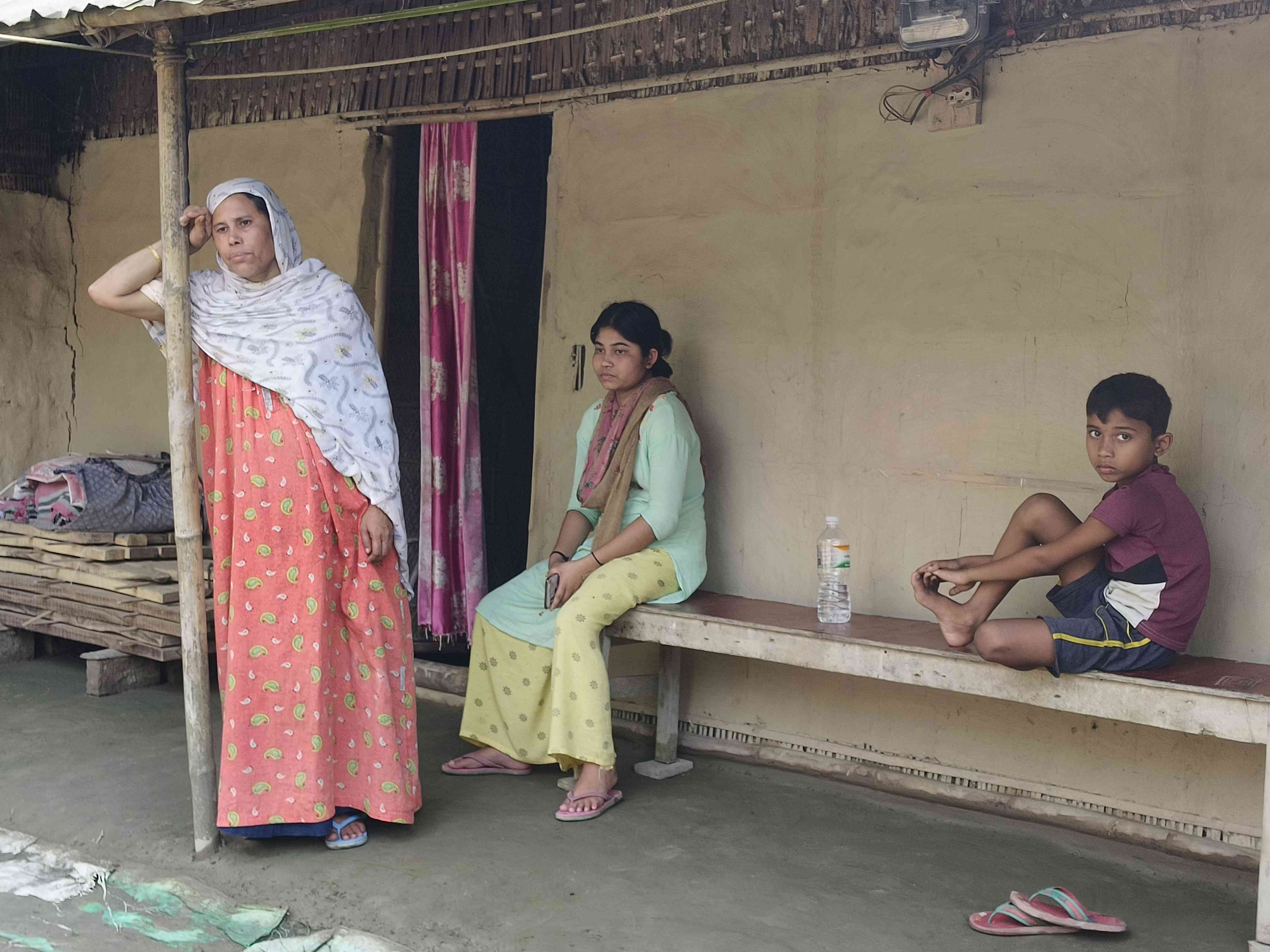
In Dhaka, Akhtar’s family rued that there have been no efforts by the Indian government to take Sakina Begum back.
“She cries every day,” Akhtar said. “She cries whenever her son and daughters call her. How long can she wait? It has been a year.”
Akhtar’s husband is a driver, with a large family to care for. “We are a poor family, we are helping her as much as we can,” she said. “We are providing her with whatever we eat.”
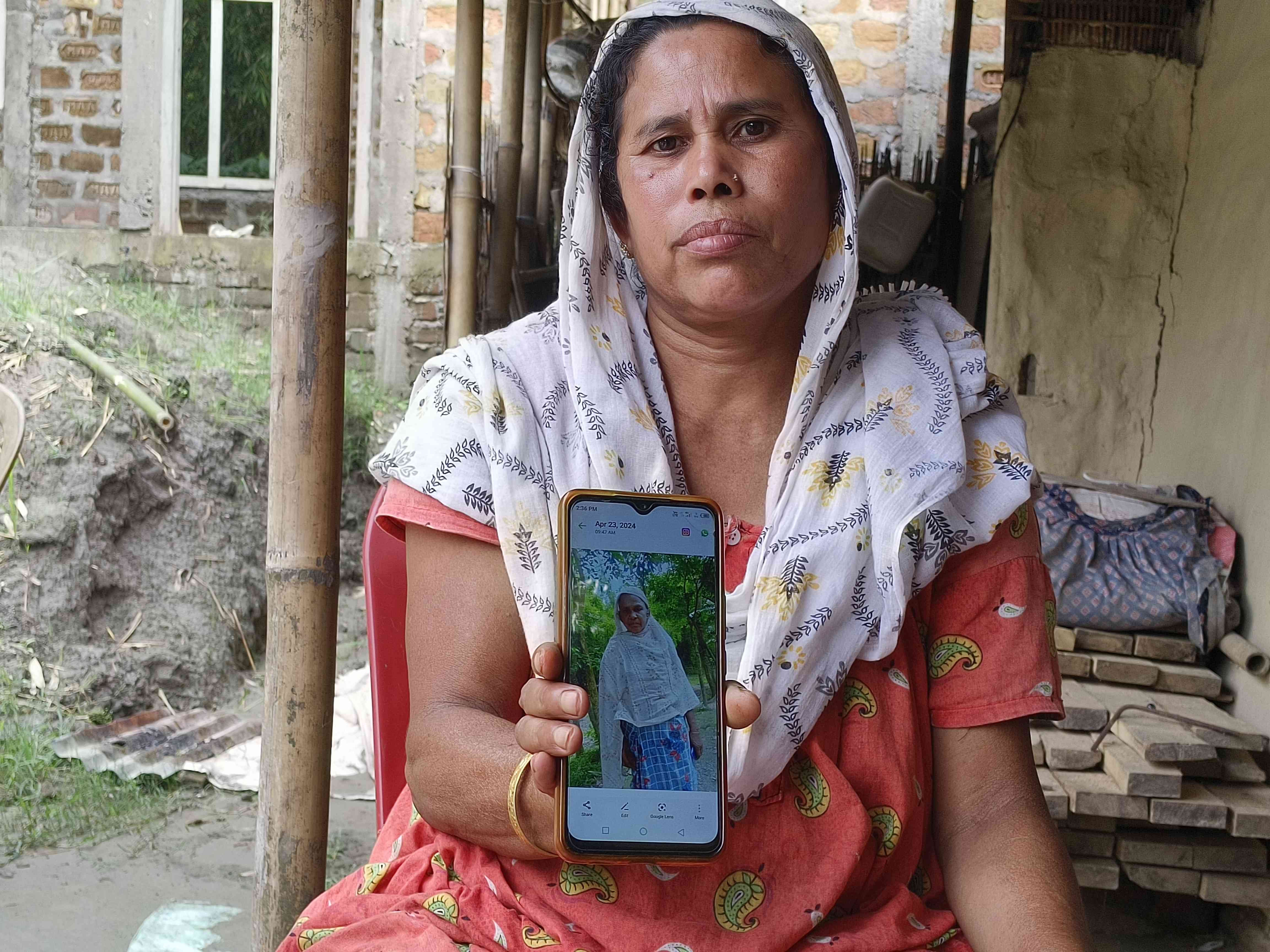
Sakina Begum said she was thankful to her hosts, who came to her aid when she was lost. “I did not have anyone to protect me other than Allah,” she said. “But they found me and not only gave me shelter but also food, respect and love.”
But, she added, she wanted to return home. “I can’t stay here, I can’t tolerate this. Only Allah knows how I am staying here,” she said, breaking down. “Why are people of Assam being punished like this? They brought me here today. Tomorrow, they will bring another one.”
She pleaded with the Assam government to allow her back home. “We are poor people. We have already sold our home and land. We should not be given such punishment.”
