



The Malhotras were known for their unique approach to brand name registration. RK and SN, a dynamic duo of creative thinkers, shared a common habit of envisioning the future and preparing for it in advance. They would conjure up potential names for products that were mere figments of their imagination but held the promise of becoming a reality down the road. With meticulous planning, they would stash these names away, building a reserve of options for their future endeavours.
SN managed the legal aspects of their business pursuits with a keen eye for detail and thoroughness. He meticulously registered their chosen names to ensure they were available for their exclusive use. Back in those days, companies were allowed to register multiple names without the obligation of manufacturing products to match them, as long as the names were not already claimed by others. SN, armed with his legal acumen, took on the responsibility of bringing their visionary brand names to life on paper.
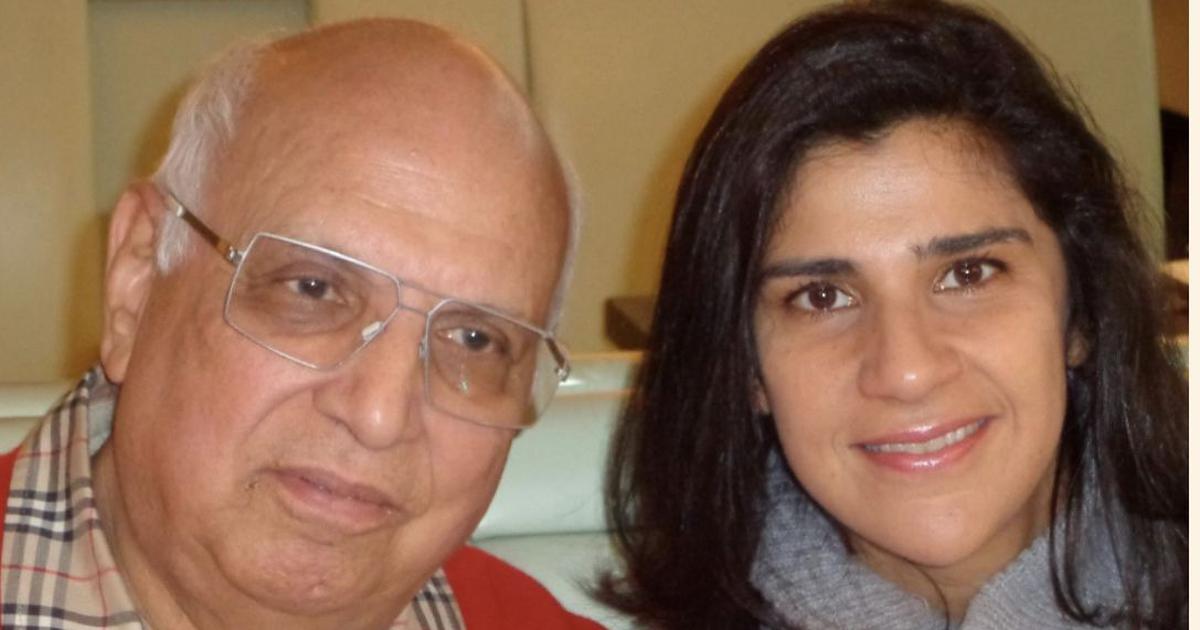
In the early 1960s, SN’s legal prowess came into play as he registered the name “Prince” for their future product. It was a bold move, to choose a name that exuded regality and commanded attention. Four years later, in 1965, he repeated this feat by registering the name ‘Ashok,’ a moniker with connotations of strength and resilience. And in 1968, his astute legal mind struck again as he secured the name “Topaz” for a potential product, a name that evoked images of brilliance and allure.
The “Topaz” name, which stood out among the others, was the brainchild of SN’s wife, Suman. Inspired by Leon Uris’ 1967 novel, she had suggested that HLM and Sons develop a new blade and name it Topaz.
In 1965, the Malhotra Group’s first stainless blade rolled off the line, and a new era in the quest for Indian self-sufficiency exploded onto the scene. When RK picked up that first blade, the light flashed off it like the dawn of creation itself. The gleaming edge on that thin piece of steel reflected all of his life’s work in a single brilliant moment. It was the reason he had chosen to pursue mechanical engineering, the reason he had returned to India, and it was the impetus behind his relentless drive to build the business. The stunning accomplishment was as monumental as it was unexpected. Many in India spoke of creating a completely self-reliant swadeshi industry, but no one before RK had gone as far as to actually make it happen.
The blade, christened “Ashok,” was RK’s homage to his ambition and determination. To herald this groundbreaking innovation, RK took to the newspapers, the primary medium of the era. In the absence of visual advertising experts, the ads relied on compelling narratives of efficiency and quality. They proudly declared Ashok’s collaboration with Swedish technology, a strategic move that not only validated the blade’s superior quality but also positioned it as a pioneering Indian- manufactured product.
The advertisements made bold promises, assuring men more shaves per blade than any other local product. In a market sceptical of new entrants, RK’s strategy was to blend assurance with affordability. With his engineering expertise and keen marketing savvy, RK sparked a market revolution. While competitors peddled their carbon blades at 15 paise, the Malhotras undercut them all, pricing Ashok stainless at just 13 paise. This pricing wasn’t just competitive; it was a statement, a challenge to the status quo, and a nod to the common man’s aspirations.
The launch of the new Ashok blade marked a seismic shift in the Indian market. The product’s promise of durability was swiftly validated by the first customers, propelling its ascent. Ever the visionary, RK set the price of Ashok stainless slightly higher than the already familiar Prince and Panama, capturing diverse market segments in one masterful sweep. As the 1960s drew to a close, the Malhotras adeptly juggled these three brands, not just maintaining their market share but continuously expanding it.
Yet, despite these triumphs, RK’s restless ambition saw beyond the current success. He envisioned a product that would further redefine excellence, a premium blade that would elevate the Malhotra name and further India’s self-sufficiency narrative.
With a determined gleam in his eyes, RK stood before his brothers, ready to present his ambitious plan. VP, the cautious and pragmatic karta, listened attentively as his younger brother spoke with fervour about his intentions. VP, also ever the sceptic, responded with his typical practicality, cautioning RK against his proposed venture. “We do not need another blade. Three is enough.” VP crossed his arms over his chest, his furrowed brows revealing his concern. “They are doing well for us, and we can manage them without too much difficulty. If we were to add a fourth, it would only complicate things and jeopardise our existing business.”
RK, undeterred by VP’s scepticism, stood tall and confident. He countered, his voice filled with conviction, “I do not agree. Anything that expands our business and enriches our reputation is not a threat to our existing business. It enhances it.” His eyes shone with excitement as he laid out his vision. “If we are going to establish our dominance in this market, we will need to service every corner of it from the highest end to the lowest end and every sector in between.”
VP shook his head, his face etched with concern. “You are not thinking clearly, my dear Babboo,” he retorted. “What you are talking about is impossible. In order to produce a superior product, you need to have a level of engineering skill that does not exist here.”
RK’s gaze turned resolute and he took a step forward. “Then we must import better engineers – possibly from Gillette or Wilkinson Sword,” he declared, determined.
VP raised an eyebrow. “And what will that cost us?” His tone was tinged with caution.
RK, ever the visionary, strode across the room to an armchair and dropped into it, exuding confidence. “The cost is not a concern. It is simply an investment that will give us a handsome return.”
SN, who had been perched on the arm of a sofa and listening quietly as his brothers debated, finally spoke up. His calm and measured voice carried weight. “I see a bit of sense in what he is saying, Ved bhai sahib. Foreign companies cannot export to India, but they all want to be involved in the enormous market here. They would be quite willing to collaborate if given the chance, although I would forget about approaching Gillette. Wilkinson Sword is more accessible to us.”
VP was deep in thought, his apprehension still evident. “Do you not think other companies here are already approaching Wilkinson with offers to collaborate? We would find ourselves in a bidding war that could ruin us.”
RK knew that VP was exaggerating the risks as usual, but his essential point was valid. Wilkinson Sword indeed had an eye out for any Indian company that had an advantage in steel businesses. The Malhotras’ Calcutta manufacturing neighbour, the Amin Chand Pyarelal Group, was on Wilkinson’s shortlist. The company produced steel goods for construction and infrastructure, and they were looking to expand. A collaboration with Wilkinson would pave the way for them to branch out into the consumer goods sector. Another group on the shortlist was the collaboration between Escorts and Hindustan Lever, which was already producing Erasmic blades. The quality of their blades was indisputable, but they were carbon steel. Collaboration with Wilkinson would enable them to move into the stainless steel market.
RK leaned forward in his chair, his eyes shining with excitement. His sharp mind was already at work, calculating the advantages they had over their competitors. “I am sure that others are vying for their help, but we have advantages they do not,” he said confidently. “To begin with, my personal engineering skill is better than virtually anyone else’s here. I have the ability to produce the quality they would expect to see once they teach me their methods. And secondly, we already have a stainless blade, so they would not have to waste time nurturing us through the development of one. I am sure Hindustan Lever would welcome collaboration, but they would never get it before us. They may produce one of the best blades in the market, but it is still carbon, which is ancient history now that we have stainless. And thirdly – ”
“Thirdly?” VP interrupted. “The other companies being considered were in the market decades before us. Do you think your long list of reasons why Wilkinson should choose us cancels out that fact?”
As the discussion unfolded, RK reached for his black file, pulling a piece of paper from it. With a deliberate, almost theatrical slowness, he tore off the edge, his face breaking into a knowing smile. Methodically, he rolled the scrap of paper into a small tube between his thumb and forefinger. This simple action, understated yet profound, was a clear signal – RK was not just participating in the conversation; he was several steps ahead, orchestrating his next move in the intricate chess game of business strategy. “I do think exactly that,” he said. “You are right that those companies are well established, but we have something they do not have.” He held up the tube of paper. “We have a rolling mill, and we can cold-roll steel strip ourselves rather than having to buy it elsewhere.”
VP frowned, still not fully convinced. “What does that have to do with anything?”
RK clapped his hands in glee. “Do you not see? It literally has everything to do with everything!” he exclaimed. “If we can roll our own steel, we can reduce our costs. So, if we create a premium blade, we have an option that others do not have. We can either price the new blade higher or price the others lower – whichever suits us. None of our competitors can produce their own steel, so they will have to virtually cut their own throats to compete with us. And that is without considering that we would have total control of the manufacturing process from beginning to end. We could limit variables and therefore maintain quality. And we would not have to rely on outside vendors who can be bribed to muck us up. And again, only we will have that edge.”
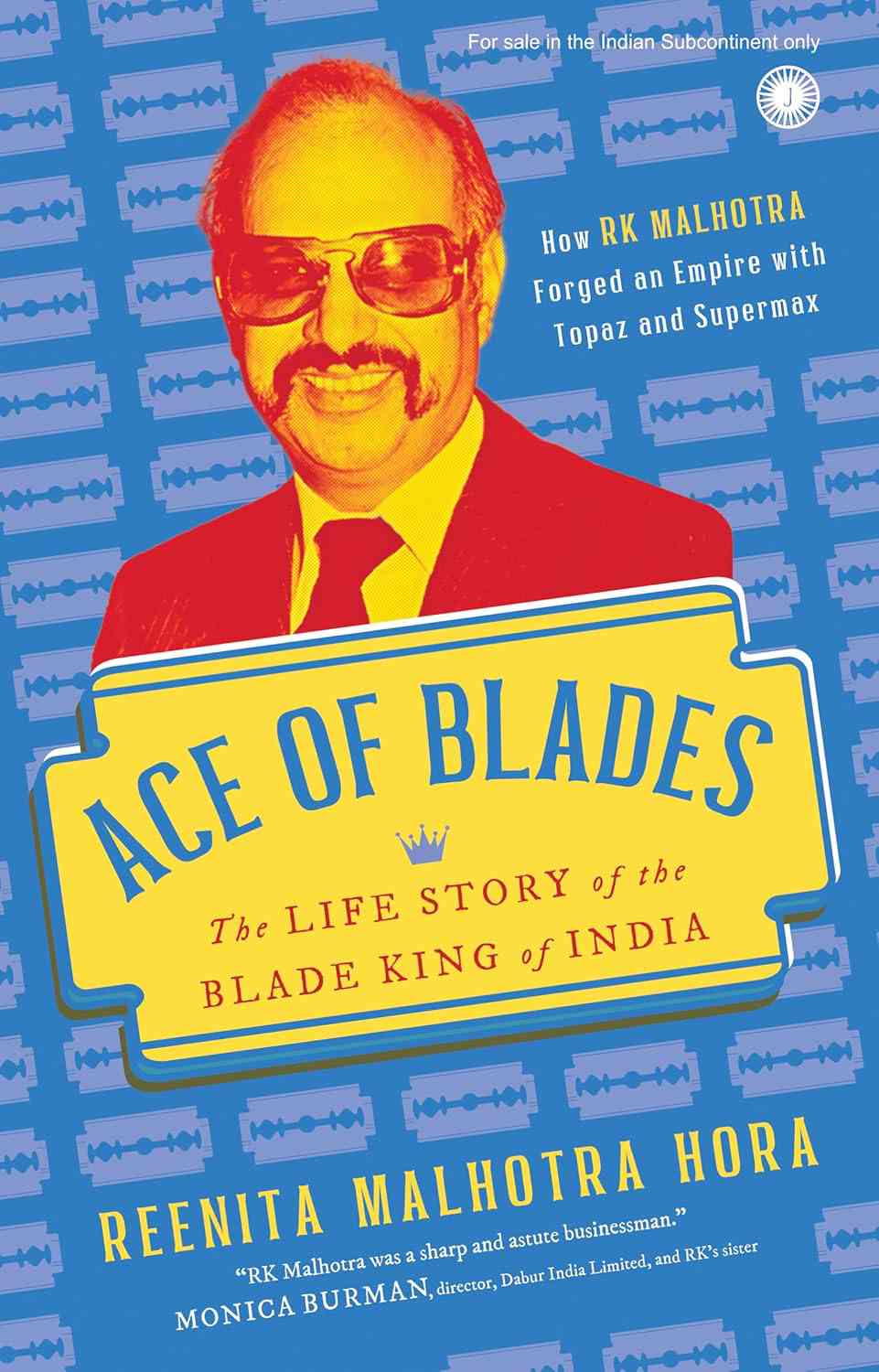
Excerpted with permission from Ace of Blades: The Life Story of the Blade King of India, How RK Malhotra Forged an Empire with Topaz and Supermax, Reenita Malhotra Hora, Jaico Publishing House.
