





That July, I was on an Iron Age pilgrimage. After Mayiladumparai, I took an overnight train south to Tirunelveli, a distance of nearly 500 kilometres, in an attempt to visit South India’s largest Iron Age burial site at Adichanallur. The site is located halfway between the renowned halwa of Tirunelveli and the delicious macaroons of Thoothukudi, on a long stretch of high ground on the banks of the Thamirabarani River, also known as the Porunai River. It was a place where caste was on everyone’s lips and Tamil branched out into dialects. The locals referred to this high ground as parambu, meaning open space, and the gusty winds that blew across it as peikathu or ghostly winds.
Over the course of two centuries, a German, a Frenchman, a Briton, and several Indians explored Adichanallur’s high ground. The site was believed to be an ancient, multinational, multiracial cemetery that was at least 2,000 years old. It yielded the largest collection of antiquities from a single site in Tamil Nadu, indicating a complex and advanced culture, and revealed hundreds of urn burials, iron and bronze artefacts, and even gold diadems. Some artefacts eventually found their way to museums in Chennai, Kolkata, Berlin, and Paris.
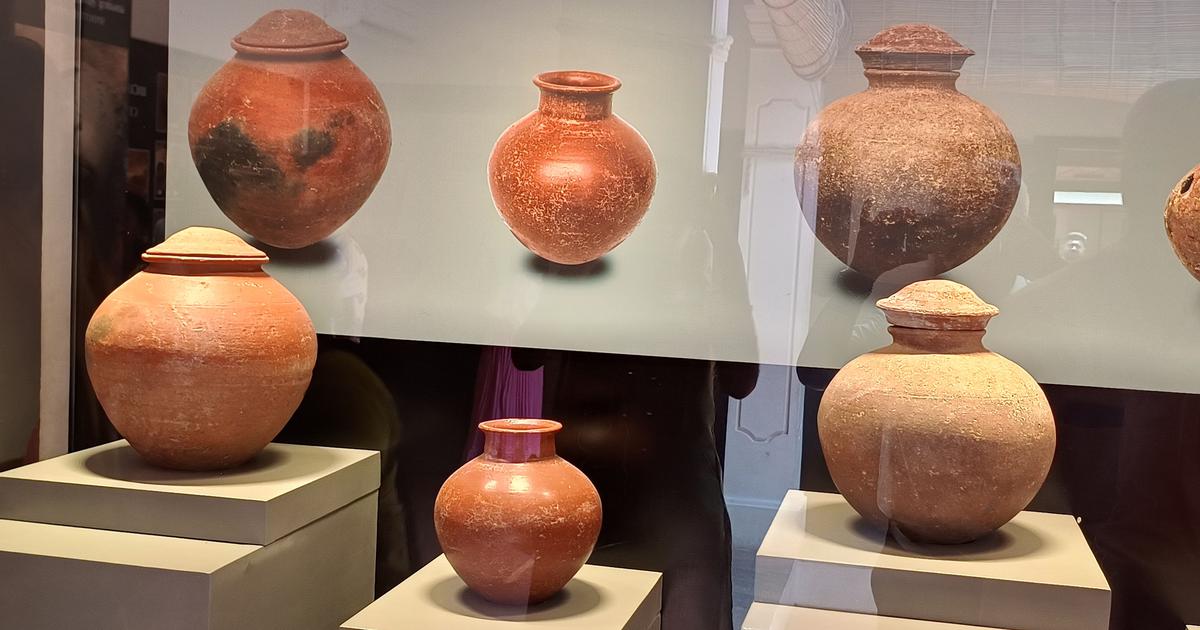
At the time of my visit, the Archaeological Survey of India, which was excavating the site, had discovered a 3.5-centimetre gold diadem, folded on both edges, inside a large burial urn. The urn, found in a pit at a depth of four metres, also contained bronze and iron objects. The iron items included arrowheads, spearheads, a hanger, an iron plate, a chisel, and a long spear with a decorated handle. These implements were believed to be used in the afterlife, to which they were travelling. The bronze had been fashioned into a circular sieve, a cup with a stand, and two bowls. These funerary practices suggested a cult of the dead or ancestral worship. On that visit, I was denied permission to roam around freely and take photographs, and told off that I should have requested permission before my visit. The ASI officials had become much more cautious about interacting with journalists after what had happened in Keeladi.
Unlike me, in 1876, the German explorer and ethnographer Andreas Fedor Jagor had casually roamed the Adichanallur high ground. He excavated what he termed an Iron Age urn field. When he and the acting district collector of Tirunelveli walked across the banks of the Porunai, they discovered twenty baked earthenware pots varying in size, more elegant than anything available in the local bazaars at the time.
The men found that the locals had dug gravel from the ground for agricultural use but had left the urns untouched out of superstitious dread. This suited Jagor, as he found urns left standing with a rich collection of objects inside, ready for removal. He unearthed bones, bronze and copper items, iron weapons, knives, swords, hatchets, and skulls. The iron weapons were pointing downwards as if the attendant mourners had thrust them into the surrounding earth. His companion later wrote that they had uncovered part of an “extensive ancient cemetery or a catacomb” in which the dead were interred in this “singular manner”.
From Adichanallur, Jagor took home both artefacts and skeletons. These were the first human remains from this period to be transported to Europe for study. All the bones had a red tinge, stained by the soil in which they had been buried – a laterite belt soil, rich in iron deposits. One set of bones consisted of fragments of more than one individual. The other, believed to be an adult male, was preserved in a single block of soil. It had been lifted directly from an urn on site, with bits of shells and pottery protruding from it.
The European collector L Lapicque from the Muséum d’Histoire Naturelle, Paris, followed Jagor to Adichanallur. He came in search of evidence to support a popular racial thesis at the time that certain contemporary Indian populations were thought to be “Negroid”. Lapicque had previously spent time measuring the skulls of tribal communities of the Nilgiris and Cochin. From Adichanallur, he took back the remains of an adult female, which he thought represented a “typical” primitive racial element of the subcontinent.

Finally, prompted by the string of foreign visitors, the colonial officers of the Archaeology Department ordered an excavation of the 114-acre Adichanallur site. Alexander Rea, a British archaeologist, was appointed to lead the excavations.
Rea’s rough estimate pegged the number of urns at Adichanallur at an astonishing one thousand urns per acre. The urns were placed at an average distance of about six feet from one another and lay three to twelve feet below the surface. Some were even positioned one above the other in intriguing ways. Rea discovered that the burials were located exclusively on high ground and found that portions of human bodies had been interred in narrow-mouthed urns.
Of all the explorers who visited Adichanallur, Rea left behind the most detailed notes. His catalogue of artefacts from Adichanallur and Perumbair, a site nearby, showed off an impressive Iron Age assemblage in South India. Adichanallur’s inhabitants had left behind a variety of weapons used in warfare and hunting, such as iron swords, daggers, spearheads, arrowheads, and barbed spears. There were also identifiable tools used for agriculture and some that were harder to classify – like tridents and unusual hangers.
Rea also discovered bronze articles which were crafted with greater skill than the iron ones. There was even a connection to the Harappans: the copper artefacts found inside the urns contained arsenic as an additive, presumably to reduce brittleness, just like the Harappan ones.
On a muggy afternoon in Chennai, I went to see the skulls that Rea had retrieved from Adichanallur, which were now housed at the Anthropology Wing of the Madras Government Museum. Soft instrumental Tamil film music floated from the overhead speakers as visitors and their children wandered past the exhibits. I had read about the adventures the skulls had been on, which made their current existence seem almost anticlimactic. The skulls had travelled far and wide so scholars could study the medley of “primitive” features they exhibited. After these acts of classification, the skulls now rested on small boxes, staring blankly at visitors. The museum audio tour informed me that only “eight per cent of the skeletons were from the ‘local Dravidian race’ while the rest were a mix from Europe, Africa, and the Far East.”
I stared closely at the four skulls on display and noticed two of them had a pronounced depression on the forehead, just between the eyebrows. It was like a deep third eye artificially bored into the skull. The researcher who had looked into it, a Sri Lankan-born Tamil palaeontologist named P. Raghavan, had identified it as a Pott’s puffy tumour, a benign tumour caused by excessive sinuses, that was prevalent in seafarers and deep-sea divers. In the early 2000s, Raghavan visited Adichanallur when a research grant brought him to India to explore the connections between the Australian Aboriginals and the South Indians. He was convinced that Adichanallur had once been a bustling coastal port city and argued that the skulls had abnormalities, nutritional deficiencies, and even sexually transmitted diseases that were commonly found among seafarers. The traders, in his opinion, probably came in through the Maritime Silk Road,† and the excavated burial ground was a cemetery exclusively for foreigners.
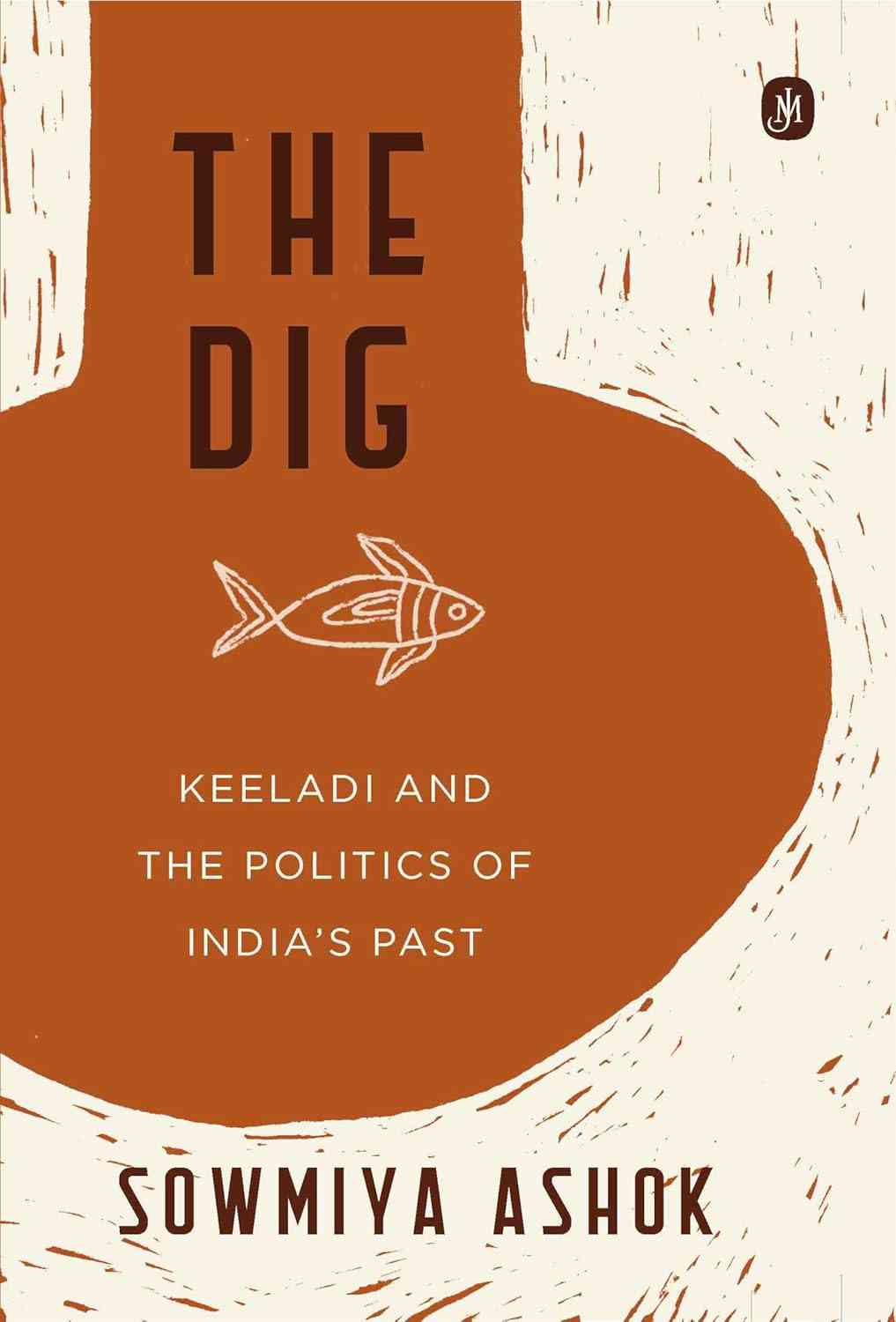
Excerpted with permission from The Dig: Keeladi and the Politics of India’s Past, Sowmiya Ashok, Hachette India.
