


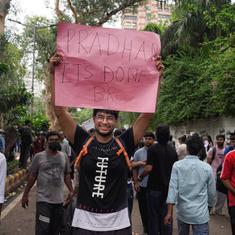
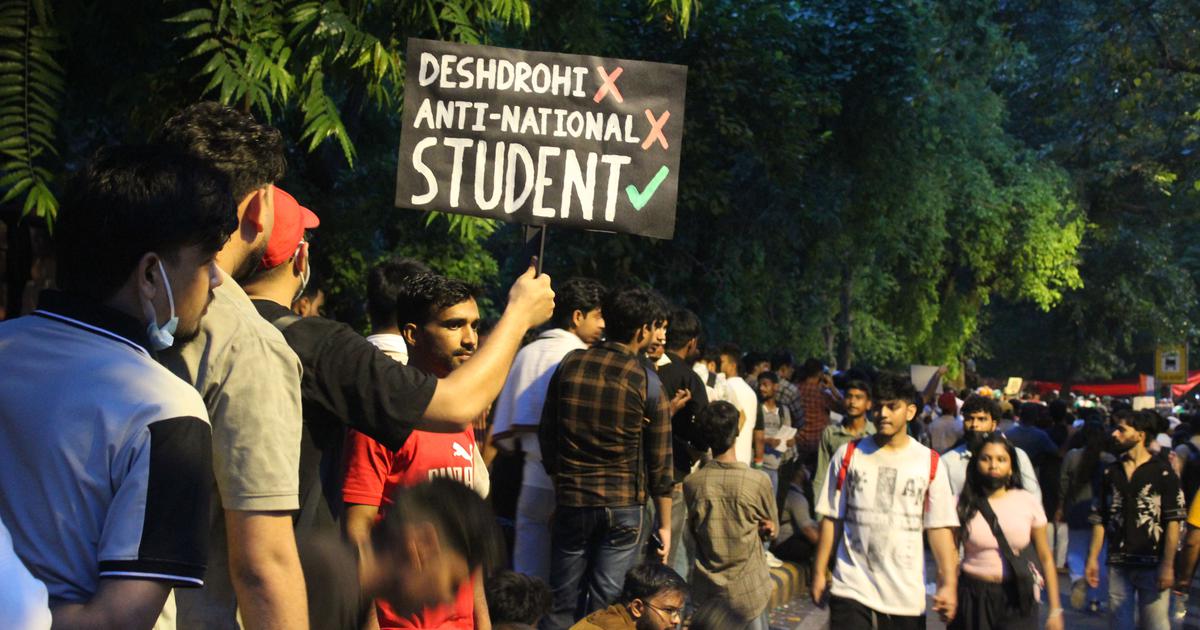
When Narendra Modi came to power in 2014, Kiran was a Class 4 student.
She grew up in a rural household of Rajasthan’s Bikaner district where child marriages are common. But Kiran was lucky. Her family supported her education.
“I am the only girl in my extended family to have left home for education,” said Kiran, 20, who lives in Delhi.
As a child, Kiran said, she did not have much political awareness. It hardly mattered who ruled the country. “My parents aren’t so privileged and educated to have a political preference,” said Kiran, whose father retired from the Army. “But they did vote for Modi. For a long time, I also felt that everything was fine and the Modi government is good.”
The doubts began when Kiran came to Delhi to study for an undergraduate degree in political science two years ago.
She was not only introduced to a more cosmopolitan world, but also to the experiences of other people. She read about marginalised groups, for whom little has changed in the past decade. She also came to know how the ruling government had villainised the Muslim community in the country.
“In our class of 72 students, only one was Muslim,” Kiran said. “Whenever I spoke to her, she would always say it would be better if she studied in Jamia [Millia Islamia]. She felt really uncomfortable.”
When she heard Bharatiya Janata Party supporters “talk numbers”, that this or that scheme “benefited so many people”, she realised they were missing an important point.
“What they don’t say is that this government is not afraid of anything,” Kiran said. “They don’t care about human rights or fundamental rights of the citizens.”
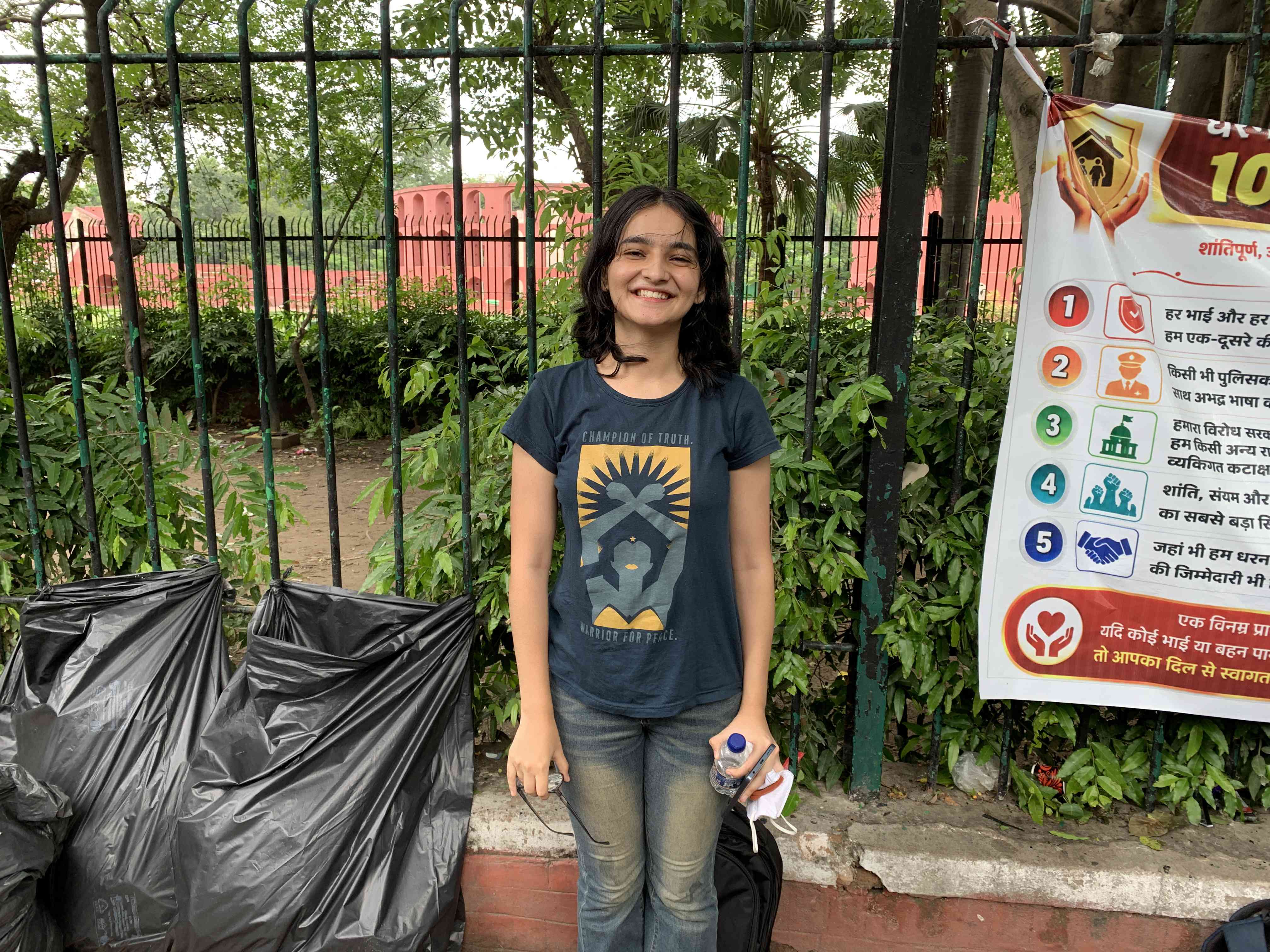
But most frustrating was her experience with the National Education Policy that was implemented in 2022 across universities. “It’s crazy how there’s little alternative perspective in the NEP,” she said. “We are studying the philosophy of Kautilya every semester. It just doesn’t make any sense.”
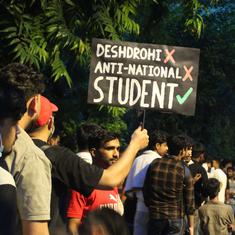
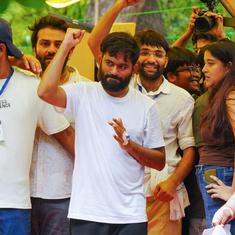
With all this discontent jostling inside her, Kiran said she did not think twice when the Cockroach Janta Party satirical student outfit announced a protest in Delhi’s Jantar Mantar last month. She soon became a regular at the protest site.
Her parents phoned her every night, she said to ask if she was headed there. She did not tell them that she was. “I ask myself if there are people fighting for a cause, how can I sit in an air-conditioned room and do nothing?” said Kiran.
Like Kiran, thousands of young people who turned up in Central Delhi for the Cockroach Janta Party protest with their trusted phones, memes and fierce irreverence, grew up in Modi’s India – in homes devoted to the Bharatiya Janata Party and the prime minister, surrounded by a mainstream media that silenced all questioning of the government.
And yet, they demanded accountability from the BJP government – and forced the Education Minister Dharmendra Pradhan to finally resign on Saturday afternoon.
For each of them, the journey to political awareness began with doubts, acrimonious arguments with parents and learning to think for themselves with the help of social media.
As Girisha, a 20-year-old who grew up in an orthodox Hindu family, told Scroll during a protest in Pune: “Asli protest to ghar pe ho raha hai.” The real protest is at home.
‘For my parents, the government can do no wrong’
Subodh Gaikwad has been on the frontlines of that agitation for years now. The 24-year-old has been trying to show the “reality” to his parents, for whom the government can do no wrong.
“They say, ‘Everything is good’, but I tell them that I can see clearly that everything is wrong,” Gaikwad told Scroll at the protest outside the district collector’s office in Pune on Friday evening.
Gaikwad and his friends had joined nationwide demonstrations demanding the resignation of Education Minister Dharmendra Pradhan, responding to the call of the Cockroach Janta Party.
Among the central issues raised by the CJP and other student organisations was leak in May of the question paper for the National Eligibility-cum-Entrance Test, or NEET-UG, forcing lakhs of medical college aspirants to reappear for the exam in June.
Some of Gaikwad’s friends are NEET aspirants and some are pursuing their MBBS. “We are all in the same situation; we [want to know why] the question of accountability does not even arise,” said Gaikwad, who is studying to become a chartered accountant. “But my parents still think the students are in the wrong.”
Gaikwad said his friends, too, say their parents do not listen to reason. He squarely blamed the media for this. “They mostly watch TV and TV only tells them that the government is right and students are wrong,” he said.
It was not this way, always. When they were younger, Gaikwad and his peers heard dinner table conversations that criticised the bekaar, or “terrible” Congress government, “which did nothing for the country”.
“Now, we are being told that a lot is being done for the country, and that the previous government looted the country,” he said.
Gaikwad said he has pointed out to his parents that institutions like the All India Institutes of Medical Sciences and the Indian Institutes of Technology were built before the Modi government. “It is not like they have built new colleges and hospitals,” he said. “They have only made [the Ram] mandir.”
Social media helped Gaikwad realise that TV news was not telling him the full story. “My parents don’t even know what ethanol is, who is producing it and whose company is benefitting from it,” he said, referring to the widespread claims that the ethanol-blended petrol is damaging vehicles and affecting mileage. “We have all got knowledge from social media, which has opened our eyes.”
‘Instagram has no filters’
Puneet Hindlekar, a 21-year-old resident of Mumbai, had a similar experience.
In the days leading up to July 20, he been following the updates of the Cockroach Janta Party protest in Delhi on television and social media.
“I usually consume news first on TV and then I go to Instagram to check both sides – what the right wing has to say and what the left wing offers – before I reach my own conclusion,” he said.
When the police cracked down on the students’ march to Parliament, Hindlekar, an engineering graduate looking for a job, found the gap between the two versions troubling.
The television channels showed protestors were assaulting Delhi police. “But on Instagram I saw that even the police beat up the protestors and they did so terribly. See that is the thing: Instagram has no filters.”
The images of the police brutality, he said, finally drove him to his first protest at Mumbai’s iconic Chhatrapati Shivaji Park along with his friends. Even the fact that the police had detained over 1,400 protestors and filed several FIRs did not prevent them.
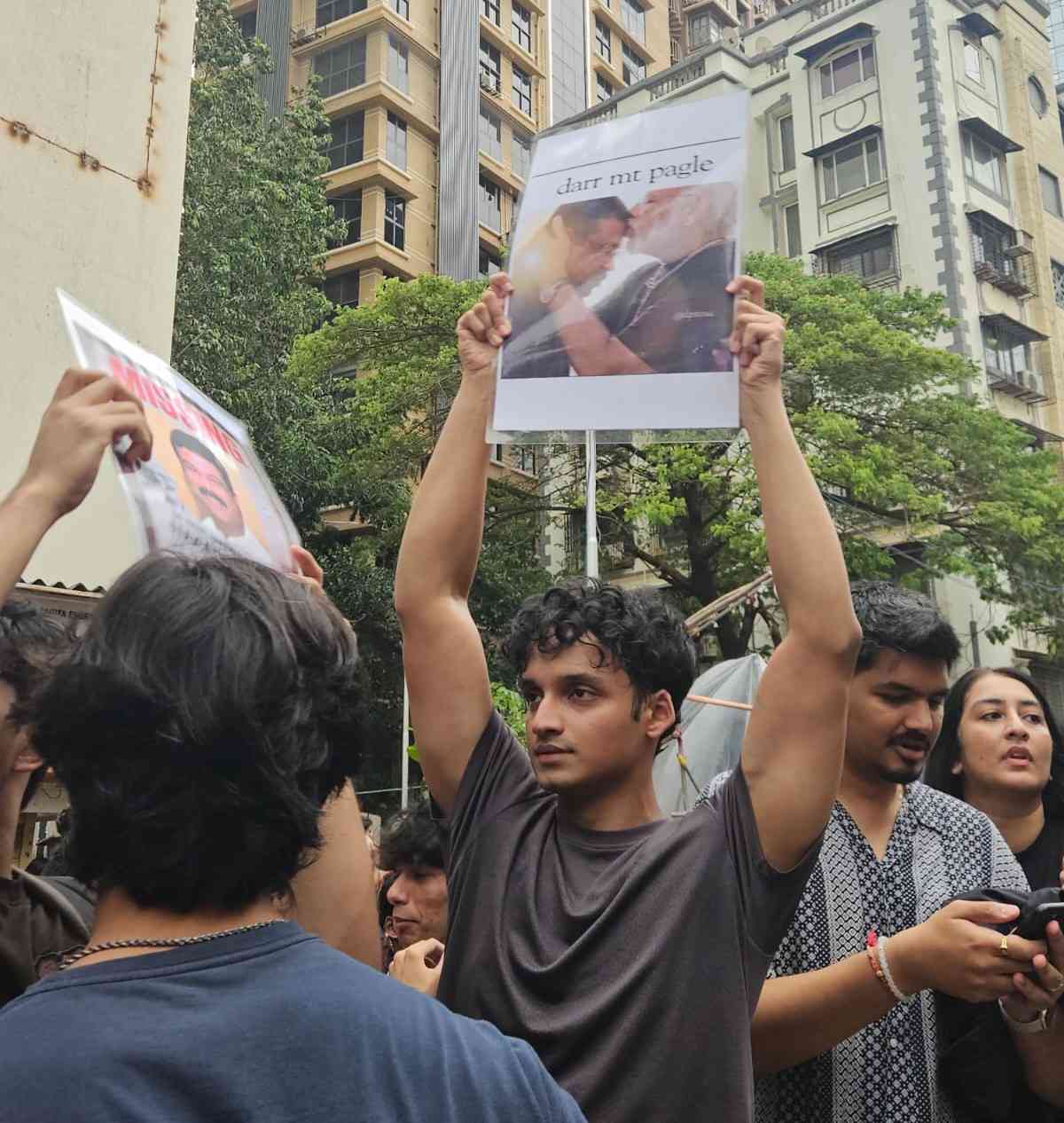
“What pushed me was the unfairness in handling protestors at Jantar Mantar,” said Hindelkar. “I saw videos of women and kids being beaten up,” he said. “Abhi to jana padega, ab nahi gaye to kya kar rahe hai phir hum?” he told himself. If we don’t protest today, then what are we doing?
Hindlekar’s decision did not please his parents, who are staunch BJP supporters. “They are religious,” he said. “They vote for BJP because they support the Hindu cause. But for me development comes before religion.”
Other young protestors learnt from those around them to question the consensus.
Take Ujjwal Kelkar, 29, who grew up in Maharashtra’s Chandrapur district and joined the protest in Pune.
Through his childhood, he has been associated with the Rashtriya Swayamsevak Sangh, the ideological parent of the BJP, taking part in festivals and blood donation campaigns it organised.
When Kelkar began his engineering studies in Amravati, he inadvertently got cut off from TV news channels. He was also surrounded by friends who were studying for public service examinations and were reading various newspapers every day. “I compared all the news and everyone had their own perspective,” he said. “So, if the news is the same, why is it different?”
It also helped having friends he could constantly debate with, and who did not label him as “anti-national” for having different opinions.
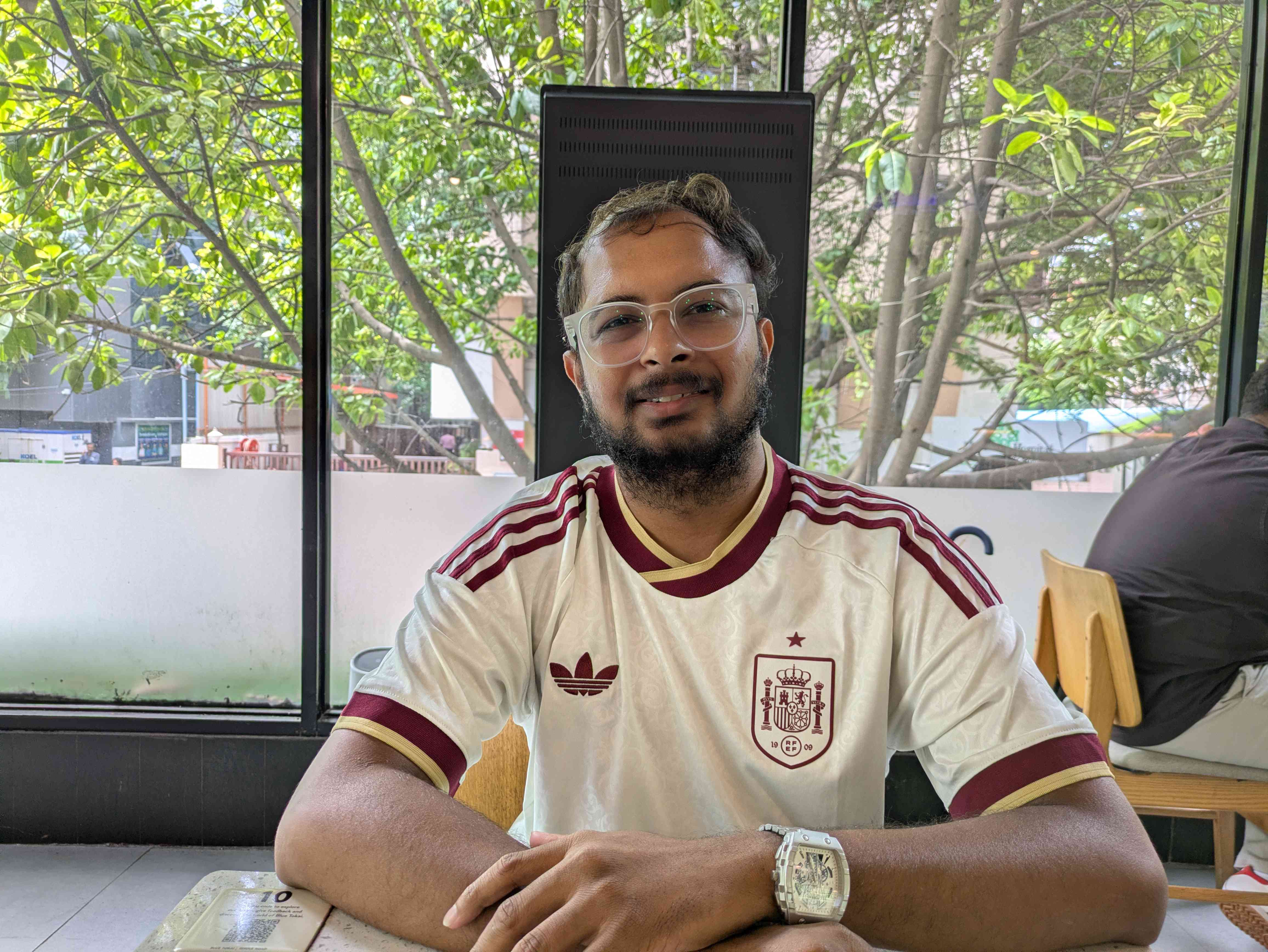
Girisha, the 20-year-old from Pune, credited her teachers and friends for the maturity in her political opinions. “I've been lucky my entire life to study under educators who do not shy away from radical opinions,” she said. “You have to rely on your peers. You have to rely on those who are educating you and not just WhatsApp forwards and social media.”
She said having discussions with her friends and constantly educating herself has been important in shaping her beliefs. “We have discussions in college, our friends groups, sitting outside the juice centre. I am wrong in several places, but at least I’m aware of where I'm wrong.”
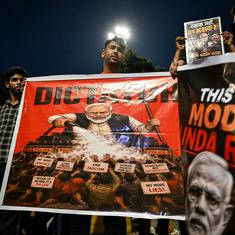
Many of the protestors said they were worried about the unchecked power in one party and person. “There is no MP left in Parliament to raise their voice against the PM,” Kelkar said. In Maharashtra, he said, all parties are becoming a part of the ruling BJP. “If there will be just one party, that will be a dictatorship.”
He said he saw an echo of 2013 in the Narendra Modi government. “The Congress was then at the peak of egoism. They were like, ‘we don’t need to do anything. We will just get elected’,” said Kelkar. “The BJP is doing the same thing.”
Maybe in 2029, any other government that is elected may also behave similarly, said Kelkar. “But we need to give them a chance. It’s high time. We need change.”
