




What do our clothes, coffee preferences, choice of jogging location, or untameable shopping habits say about us? A whole lot, shows journalist Shefalee Vasudev’s latest book, Stories We Wear: Status, Spectacle and the Politics of Appearance.
Every person, from the vulnerable child labourer to billionaires at airports, is desperate to stand out, either through what they wear, how they interact with their surroundings, and most crucially, how consistently they can put up the act. It is an act – humans are hardwired in their desire to look good (you may interpret it as signalling prosperity and well-being) but this comes at a cost. “Curating” a look is an expensive affair – not just on our pockets, but its human cost is immense, sometimes even fatal. In this book, Vasudev breaks down the propensity for wanting to look “good” and the invisible forces that shape this desire. She takes a hard look at why certain brands inspire envy, the ethos that drives consumer behaviour, the indelible mark of caste and gender in fashion, and how almost everything we see (and buy) feeds something nefarious.
What’s in a look?
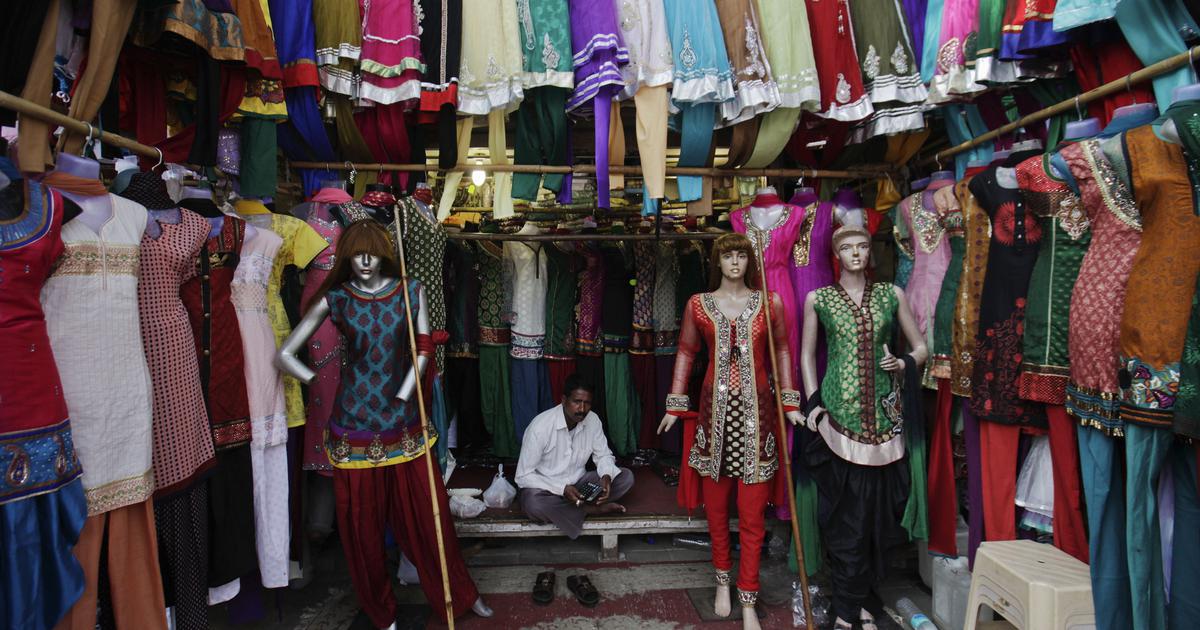
The cover of the book gives a different idea – I assumed I’d be reading about clothing and attire, and the politics of it. This is especially interesting in the Indian context, which, from invaluable handlooms to ultra-fast fashion, produces everything. There is no doubt that we consume apparel, cosmetics, and lifestyle products at horrifying quantities and speed. Online shopping has liberalised fashion, bringing the latest trend to every pin code and possibly to every demographic. There’s a dupe of a dupe of everything one might desire. My presumptions were dashed to some extent – while Vasudev does talk about how fashion and style have evolved in India, she also broadens the definition of “appearance”. I was not only reading about clothes and their life-cycle, but also about how social media, coffee spots, and even death have become useful tools in claiming a spot in the social hierarchy.
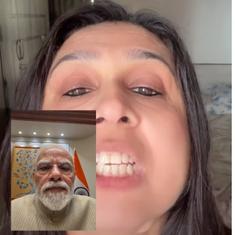
Divided into ten chapters, Stories We Wear encapsulates the fascinating, mindboggling aspirations of Indians vis-à-vis how we look and what our “dream look” might reveal about us. The story begins on New Delhi’s austere Kartavya Path – India’s most iconic road is for the “culturally cross-fit” in the dawn and for the “aam aadmi” at dusk. The desires on Kartavya Path change cyclically every twelve hours – the socially and politically well-connected hit their fitness goals in the morning as their bodyguards watch on, while in the evening, the poor and homeless make picnic spots out of the very same road. Vasudev follows a young boy (he sells water bottles on this road) whose life has been shaped by severe poverty and forceful grit. Kartavya Path naturally leads to the Parliament, where style is best described thus: “absence has a presence.” Through careful observations of India’s political who’s who, Vasudev examines what Mahua Moitra’s Louis Vuitton handbags, Kangana Ranaut’s muted sarees, Mayawati’s drab salwar kameez, or the “Modi jacket” on the prime minister might mean for their political messaging. Of course, she’s most interested in Modi and what he chooses to wear, or doesn’t (the prime minister has never worn a skullcap), in his public appearances. Did the prime minister in the last fifteen years never have the chance to don a traditional Muslim attire? The omission feels deliberate.
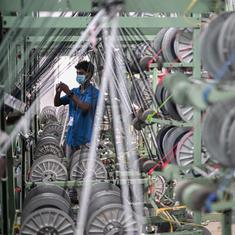
Among the most revelatory sections is the one on Khadi, once India’s pride and now a story of permanent WIP. In “How Khadi Became Uncool”, Vasudev travels to weavers’ quarters in different parts of the country to ascertain the ground realities of the “Khadi wave”. While indeed there have been concentrated efforts to revive the humble khadi, the truth is that “pure” Khadi, priced at startlingly high rates, remains out of reach for most consumers. The claims of “100% natural” are also dubious, with machine-made textiles and synthetic polymers inundating the markets. The shockingly natural finish makes it difficult even for the most trained eyes to spot a fake. This corruption is waved off as “economics” by many middlemen.
This circle of lies closes in on even the most well-meaning consumer. As Vasudev shows in the chapter “The Devil Wears Green”, it is almost impossible to be a “sustainable” consumer. The terms are at odds with each other, of course, but most importantly, as studies have repeatedly shown, the market simply does not reward sustainability. “Greenwashing” is rampant, especially in the unregulated markets of South Asia. The trash that is manufactured here is exported to the first world, and it is returned as non-recyclable, non-biodegradable landfill material. The injustice is well-documented, but there is little legal recourse. If H&M and Zara are routine offenders, so are many small, “green” brands. The only way out is to stop buying. Reading this in the first months of the new year has proven useful – I want this to be my new year’s resolution. Stop buying, you already have more than enough.
The now-boring airport look also attracts Vasudev’s attention. Of course, it is fake, I said to myself but I was definitely curious about the curatorial efforts behind this particular look. Vasudev scratches my itch – she pulls up PR companies that manage the look of some of its most popular faces. The candid admission of how, why, and how much was a revelation of its own. This section almost has the page-3 feel to it and by the end, I was quietly shaking my head at just how frivolous this media circus is.
The circus of the rich also plays out at cafés. Unacceptably priced coffees and complex brewing preferences have become clear markers of the cool and the uncool. Conversations with self-declared “coffee enthusiasts” reveal that just liking coffee isn’t enough; one has to be knowledgeable about its production too. The behind-the-scenes is the scene, and consumers, unlike ever before, are treating a beverage as social leverage instead of simply a drink. However, as Vasudev points out, this enthusiasm does not always translate into caring about who prepares these expensive, bespoke coffees – from tribal plantation workers to baristas, essential workers are systemically invisibilised. The author sets out in search of fair trade coffee in India and how certain entrepreneurs are indeed committed to making coffee a just experience for all. Fortunately, her search yielded happy results, and I was cheered up by the genuine efforts to make Indian coffee equitable, while never compromising on the quality.
Fashion statement
While many of us might be watching OTT shows with only a passing interest, it has been quietly revolutionising how women in villages, small towns, and from lower castes and classes think of femininity. Vasudev gets into conversation with Chumki, a masc-woman who, despite working odd jobs at people’s homes, has a strong sense of style and gender identity. She claims to “have sex” with women and clearly states that even though she prefers to dress like a man, she’s not a hijra. By her own admission, she adores the loudspoken, tomboy characters of small-town-based OTT shows. Not just fashion, the OTT revolution has made speaking back, standing up for oneself, and even thrashing ill-behaved men acceptable. The inspiration comes from not Bollywood starlets anymore, but from the “relatable” women characters that are whipped up by the dozen in writing rooms.

It’d have been unforgivable not to take into account the active caste- and gender-based exploitations that keep the wheels of style and fashion running. In the chapters “Last Rights” and “Fire Exit”, Vasudev offers a new way of seeing “appearance” – it is not only a matter of how we look but also what we can afford to ignore. Manual scavenging allows the privileged savarna to go about their lives without ever worrying about who keeps their neighbourhood clean. Similarly, an Indian man might never have to worry about scarring himself from an acid attack or being burned to death from dowry harassment. Disfigured bodies, untouchability, the lack of safety gear, and even how we are laid to rest are politically loaded – a manual scavenger is routinely denied proper last rites, whereas a woman scarred by fire is robbed of a chance to pursue a normal life. Where the deaths of celebrities have become a fashion spectacle of their own, a majority of Indians must fight innumerable social and bureaucratic battles to depart in dignity.
Stories We Wear, at times, digresses from its core ideas, but Vasudev’s journalistic rigour and conversational writing style make these detours as pleasant as ever. The wide variety of perspectives she includes in each section successfully gives a panoramic view of “Indian style” – its successes and failures, the small changes sparking big ideas, the shakers and the movers, the unbearable burden of caste, and ultimately, why the Indian look, with all its complexities and beauty, is impossible to categorise.
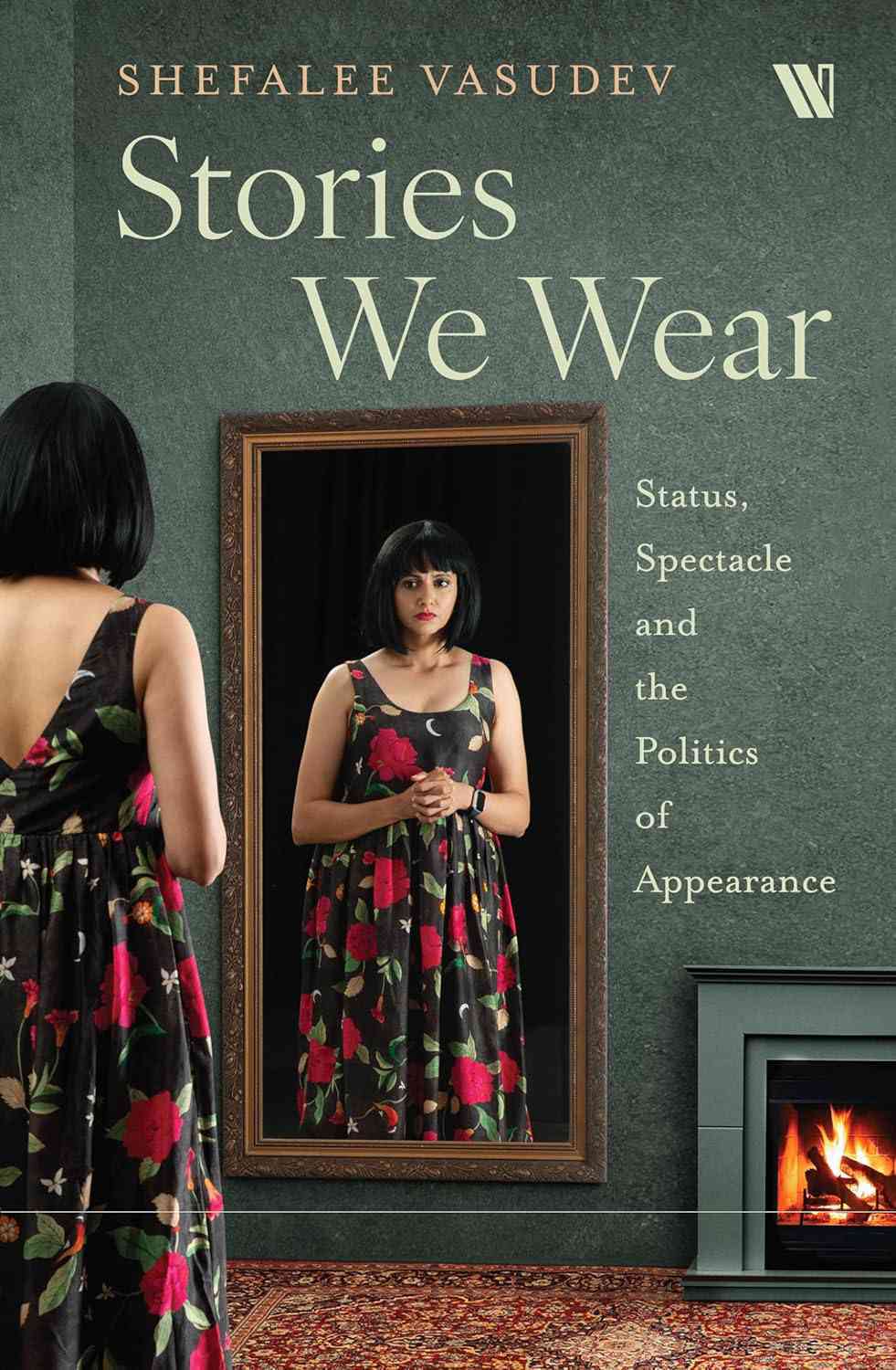
Stories We Wear: Status, Spectacle and the Politics of Appearance, Shefalee Vasudev, Westland.
