










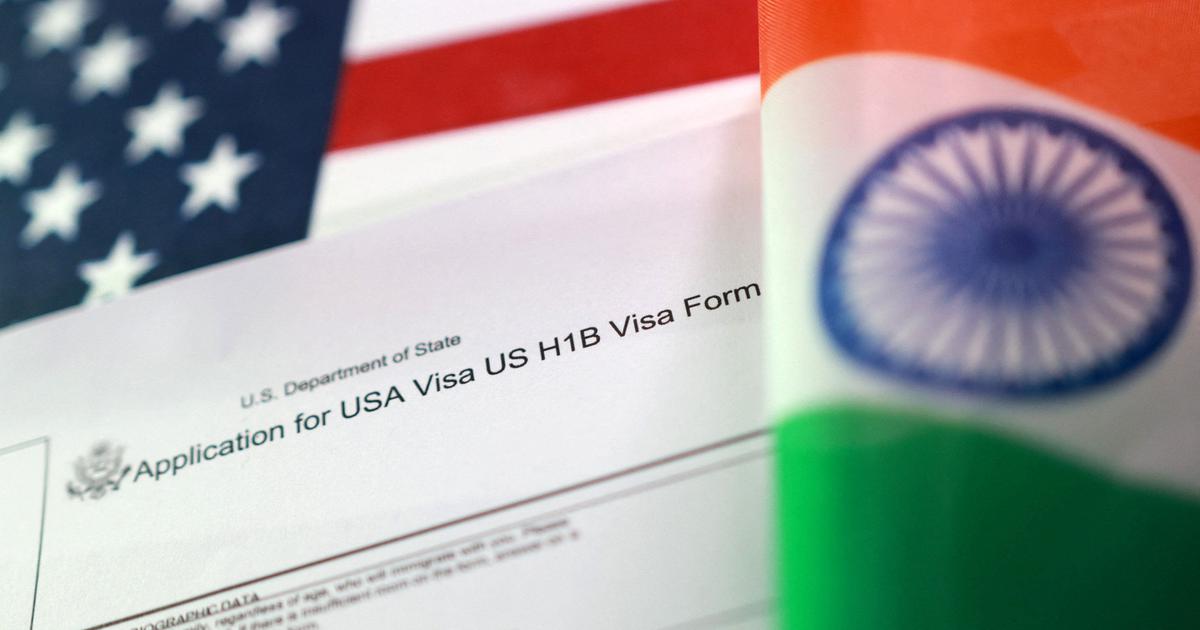
When Rajesh Kumar’s* visa stamping appointment was canceled on December 8, he had already landed in Delhi for what was supposed to be a two-week trip home. The software engineer, who has lived in the United States since 2016, had timed his visit around the Christmas holidays – a window that many on H-1B temporary work visas use to renew their status.
But instead of flying back to his job in California, Kumar now faces a rescheduled appointment in July 2026, seven months away.
He is one of hundreds of Indian H-1B visa holders stranded after US consulates in India abruptly postponed their appointments following the Trump administration’s implementation of new social media vetting procedures.
The Trump administration had announced the new vetting procedures on December 3, saying all H-1B applicants and their dependents seeking H-4B visas would now be subject to social media screening as part of what the US State Department called “expanded screening and vetting”.
The policy was introduced for student visas in June and has now been extended to cover skilled workers and their dependents.
Visa stamping appointments scheduled from December 15 were rescheduled to dates between March 2026 and January 2027, according to affected workers.
WORLDWIDE ALERT FOR H-1B AND H-4 VISA APPLICANTS
— U.S. Embassy India (@USAndIndia) December 22, 2025
Beginning December 15, the Department of State expanded online presence reviews to ALL H-1B and H-4 applicants as part of standard visa screening. This vetting is being conducted globally for ALL applicants of ALL nationalities… pic.twitter.com/qMrMrOvqy0
In emails sent to affected applicants, the State Department said appointments were being delayed “to ensure that no applicants … pose a threat to US national security or public safety”. A spokesperson said consulates were now “prioritizing thoroughly vetting each visa case above all else”.
India has long been the biggest beneficiary of the H-1B programme, accounting for 71% of visa holders, according to an April 2025 report from US Citizenship and Immigration Services. As of September, Amazon, Meta, Microsoft, Tata Consultancy Services and Google were the five largest sponsors of H-1B workers, USCIS data shows.
Scroll spoke to five H-1B workers affected by the postponement, all of whom requested anonymity for fear of jeopardising their immigration status. They are now applying for expedited visa stamping appointments even as they negotiate with their employers to allow them to continue working remotely from India.
One worker, employed at a tech company on the West Coast in the US, said his employer agreed to let him work from India until March. “They said we’ll assess the situation then,” he told Scroll.
Another worker said she traveled to India with her husband for visa renewals. Both had appointments scheduled for the same day and time, but only hers was rescheduled to June while her husband’s went ahead as planned.
A third worker said that the lease for his apartment in the US expires in April. “I’m not sure if the property manager would allow me to renew if I’m not in the US,” she said. “Everything is an added expense at this point.”
Thousands of horror stories from H1B holders whose stamping appointments were postponed by US Consulates in most arbitrary fashion. They are stranded for no fault of theirs. @DrSJaishankar @narendramodi @PiyushGoyal
— Tamirabharani தாமிரபரணி (@iluvindia2014) December 21, 2025
India-US trade deal when US is targeting innocent citizens?
Emily Neumann, an attorney at Reddy Neumann Brown, a Houston-based immigration firm, has at least 100 clients stuck in India. “Companies we are in touch with are trying to work with their employees to allow them to work remotely,” she said. “But there are those who don’t have that option and in these cases, the employers are trying to hold out as long as they can.”
Ana Gabriela Urizar, an attorney with Manifest Law, an immigration law firm in the United States, said workers who get laid off while stuck in India cannot return under their prior H-1B approval and would need a new employer to file a fresh petition.
While a $100,000 charge for new applications announced in September could apply in some cases, Urizar said it may be early to assume that. She added, “In many cases, the fee does not apply.”
Workers can apply for expedited appointments if they can demonstrate urgent business needs, but they are allowed only two attempts. One worker said that his requests for an expedited appointment had been rejected, leaving him with an appointment date in June.
Some large employers have tried to accommodate stranded workers. Amazon, one of the largest sponsors of H-1B workers, stated in an internal memo sent to its employees on December 17 that those stuck in India could work remotely until March 2. The note also specified a list of restrictions: workers cannot write code, make strategic decisions, negotiate contracts or interact with customers.
The cancellation of appointments are the latest in a series of restrictions on H-1B visas. In July, the State Department announced that H-1B holders would no longer be able to renew their visas remotely or in third countries requiring them to return to their home countries for processing. In September 2025, Trump signed a proclamation imposing a $100,000 fee on new H-1B applications.
The Trump administration is also close to approving a wage-based weighted lottery system for H-1B visas, which would prioritise applicants with higher salaries over the current random selection process.
*Names withheld at the request of those interviewed.
