









I understand one of the reasons why young working women prefer other forms of attire to the sari – it takes time and effort to drape a sari right. Nevertheless, there are ways around this problem. Mothers in the 1990s got tailors to pre-stitch the pleats of a sari, so that their young ladies could zip it up and throw the pallu over their shoulder. Voila! The young girls were ready for Diwali, temple or puja functions, or graduation and dance recitals. Gen Z relies on these instant, pre-draped saris that I continue to supply to my daughters and now to my granddaughter.
As a staunch sari-believer who, however occasionally, migrates into jeans, salwar–kameez, skirt and blouse, and lehengas herself as the spirit moves and occasion demands, I understand this dress promiscuity, but always keep hoping that the fundamental fidelity to the sari is not lost to Gen Z. I have sought to gauge the views of Gen Z on the sari through interviews, social media impressions, and personal interaction. There is no doubt that Gen Z in India – both women as wearers and most men as observers, is romanced by the sari but like in the often fleeting relationships they experiment with, there seems to be some commitment hesitancy.
I was pleasantly surprised, however, to find that most young men interviewed appreciated the sari’s cultural and civilisational worth as opposed to thinking it reflected the wearer’s conservative temperament or her wanting to fit into societal expectations of so-called modesty or good character. They thought saris were beautiful and gorgeous, the soul of Indian culture, and felt that young women wearing it looked “crazy pretty”, “no less than a goddess”, and some even said it’s one of the sexiest dresses they would like their girlfriends or wives to wear.
The Gen Z women interviewed could be divided into those determined to go forward and even lead a growing Gen Z movement to reembrace and reinvent the sari for the twenty-first century and those who viewed it with some scepticism. As noted, many of them were intimidated by the time and effort required to drape a sari properly and were loath to learn how to do it properly. Others found it cumbersome for an active lifestyle, for mobility and work. It is also because regrettably, it is no longer a rite of passage among many households to teach and learn how to drape a sari.
Then there is the matter of how cool it is to wear a sari. Some seemed to think that wearing a sari somehow dockets them into the less sophisticated category of youth, or portrays them as coming from conservative, less cosmopolitan family backgrounds. Fortunately, there are self-assured young women who consider it super cool to wear a sari and favour it as a confidence booster, one that flatters you, and makes you look elegant and attractive.
My survey of these young women showed their appreciation of the sari went up if it was validated by their boyfriends, husbands, and others. Others donned saris to be taken seriously in professional, academic, and social situations, to look older and more mature, especially if they were petite and looked too young.
Then the question arises: who are their role models—TV news anchors; YouTube, X, and Instagram influencers; film and OTT show stars – and are they wearing saris and extolling its virtues or mocking their sari-wearing sisters? A whole generation of TV soap operas glorified the sari and its women characters wearing it. Even today, most long-running TV series – comedies as well as serious dramas – still give primacy to sari-wearing characters.
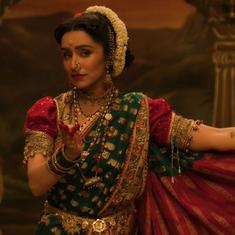
Some OTT shows, barring the period dramas, portray liberated young women characters wearing Western-style bare essentials rather than saris. The Indian take on Sex and the City – Four More Shots Please – on Amazon Prime has been, I am told, a trendsetter for both professional women and those privileged women who don’t have to work for a living to follow their designer dress code which mostly excludes saris. Among other shows popular with Gen Z, such as Made in Heaven, about wedding planners, the sari gets to play a role, like in shows like The Royals on Netflix and Kull on JioHotsar, about the struggles of Rajasthani royal families to brand their traditional lifestyle, which includes the sari, to make a living in the present.
Fortunately, social media platforms like WhatsApp, Facebook, Instagram, and X have become vehicles of awakening millennials to the importance of the sari in their lives. Recent surveys have noted that the sari has been experiencing a resurgence among Gen Z as a result and has enabled a re-imagination of its narrative.
Travel and lifestyle influencer Larissa D’sa has been skateboarding in a sari and sneakers.
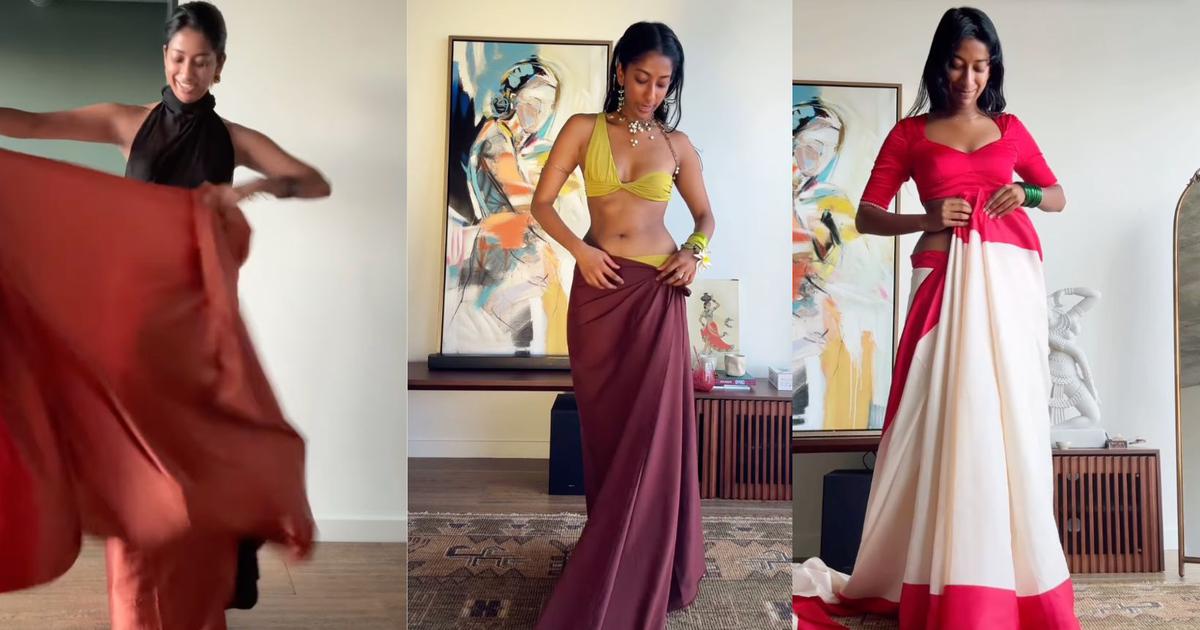
Influencer Natasha Thasan (with roots in Sri Lanka, but with a global following) releases one-minute-long Instagram videos that she calls “drape therapy”, in which she talks about her life while draping a sari.
In making “drape therapy” a trend, Gen Z is wrapping mental health in fashion. I was moved by what one college student, a sari aficionado, said on the sari’s therapeutic power as a comforting garment that feels like a hug, like being held gently and in peace. It’s more than getting dressed – it’s a small way of coming home to yourself. She could well be me expressing this!
Sagrika Rai, founder of the sari brand Warp ’n Weft, told The ESTD, “Gen Z is about 50% of our customer base; the bigger the occasion, the bigger the spend.” #SariTwitter and #SariNotSorry are popular hashtags on X, where women share their photos in saris. The sari has also found its way onto Etsy through the hands of a few visionary creators. Now, with its first order from France, the epicentre of haute couture, it begins to cross continents, as attire, as a refined expression of India’s evolving sartorial voice and renewed excellence.
Excerpted with permission from The Sari Eternal: A Tribute, Lakshmi Murdeshwar Puri, Aleph Book Company.
