










“When I was an undergraduate, amoxicillin was the drug of choice. It doesn’t work anymore… Now everybody knows that resistance is only increasing,” Dr Krish Nair told us when we visited his hospital in Hyderabad several years ago.
Nair was not simply describing the failure of one drug. He was pointing to a wider crisis in which antibiotics are losing their force even as hospitals have come to depend on them more heavily. His statement that amoxicillin “doesn’t work anymore” may be an exaggeration: the drug likely still retains some efficacy in certain situations. But his concern captures something real. In India’s public hospitals, antibiotics have become a crutch for a health system buckling under patient load, scarce diagnostics, limited infrastructure and the everyday pressure to keep people alive.
Many of India’s public hospitals are severely overcrowded, underfunded, and equipped with only the barest infrastructure. These ever-present constraints fundamentally influence approaches to antibiotics in hospital settings. Physicians are confronted with an overwhelming and increasingly daunting task: to “optimise” and address “overuse” in the epoch of rising resistance while also doing their job by giving the person in front of them the best chance of survival today and into the future.
Antibiotic resistance is both a biological process and a social problem. It occurs when bacteria are exposed to antibiotics and some survive. Those survivors can adapt, multiply and, in some cases, pass on the traits that make them resistant. In a hospital, this process becomes entangled with overcrowding, scarce diagnostics, overstretched doctors and poor infection control. Antibiotics are not only treating infections; they are also being asked to compensate for an overwhelmed health system.
The long lines of patients in Indian public hospitals are just one symptom of the constraints under which health-care professionals toil in hospitals. As Hyderabadi general physician Dr Rishi Gupta noted, day-to-day work decisions involve an ever-changing interplay of compromised facilities, variable training, and unmanageable patient loads, which combine to influence the role of antibiotics in hospitals. He told us, “The way facilities are available. The cleanliness, the sanitation, the number of beds, the quality of doctors are not good…Whenever a good doctor is available in the government sector, the doctor is taken by the corporate hospitals… One doctor will see how many in an eight-hour period? He has to see 300 to 400 patients in a government hospital. How can he handle?”
Seeing hundreds of patients daily will tip the scales in favour of rushed antibiotic dispensing, as there is no time or place for watchful waiting. Diagnostics are virtually nonexistent, and there is no opportunity to educate patients who have waited hours, days, or months on the likelihood of self-resolving infections. Add to all this, unhygienic facilities and the constant exodus of well-trained doctors lured away to corporate hospitals. Antimicrobial medicines are omnipresent in this context as both succour and scourge, their use shaped and made necessary by immense pressures and constraints. Landing in a hospital in India can be risky business. Not only are patients already likely very ill to warrant admission, particularly to an intensive care unit (ICU), but estimates suggest at least 10 to 23% of hospital patients will acquire a new and potentially resistant infection during their stay. Housing people at their most vulnerable, India’s hospitals are where the changing efficacy of certain antibiotics and the rising pathogenicity of the Indian environment are most vividly apparent. If the available hospital antibiotic usage data is correct, 50 to 70% of all patients hospitalised in India receive antibiotics during their stay. Many receive more than one course of antibiotics or multiple regimens, a trend exacerbated by the rising risks of resistance. Compare these figures to the estimated global average of roughly one-third of all hospital patients receiving antibiotics, and you begin to see the vicious cycle India is stuck in. It is most often broad-spectrum antimicrobials that are prescribed, because they are the most useful when doctors aren’t sure of the particular bug and there is a need to cover a variety of gram-negative and gram-positive bacteria.
Broad-spectrum antibiotics are powerful because they act widely. But that is also the problem. They may target the infection, but they also wipe out beneficial bacteria alongside the harmful ones, clearing the way for resistant strains to survive and multiply. The result is a form of bacterial collateral damage, which allows some bacteria to survive and potentially creates problems for future patients. Like a pesticide that kills the clover only to make way for more noxious companions, “going broad,” or hospitals being increasingly awash with antibiotics, is a temporary fix that worsens the wider problem. The linked surges in resistant bugs and in the use of broad-spectrum and last-line antimicrobials represent, as one of Hyderabad’s hospital doctors put it, a “catch-22 situation.” You are damned if you use more and broader antibiotics, because they increase selection for resistant bacteria, and damned if you don’t, because you may very well lose your patient. The everyday use of antibiotics as a stopgap measure functions like a makeshift bandage, temporarily concealing deeper problems but ultimately giving way to ever-growing microbial threats in Indian hospitals and beyond. Given India’s scale and significance, understanding the everyday logics underpinning antibiotic use in its hospitals is a critical piece of the global puzzle of managing antimicrobial resistance.
But it is all too easy to cast the problem as that of overuse or misuse of antibiotics. The terms are morally laden and convey inaccurate ideas about the choices made by individuals, including doctors, patients, and institutions. By focusing on individuals, the language of antibiotic use tends toward a simplistic narrative of individual culpability, failing to account for the web of social, economic, and systemic factors that shape antibiotic distribution and circulation.
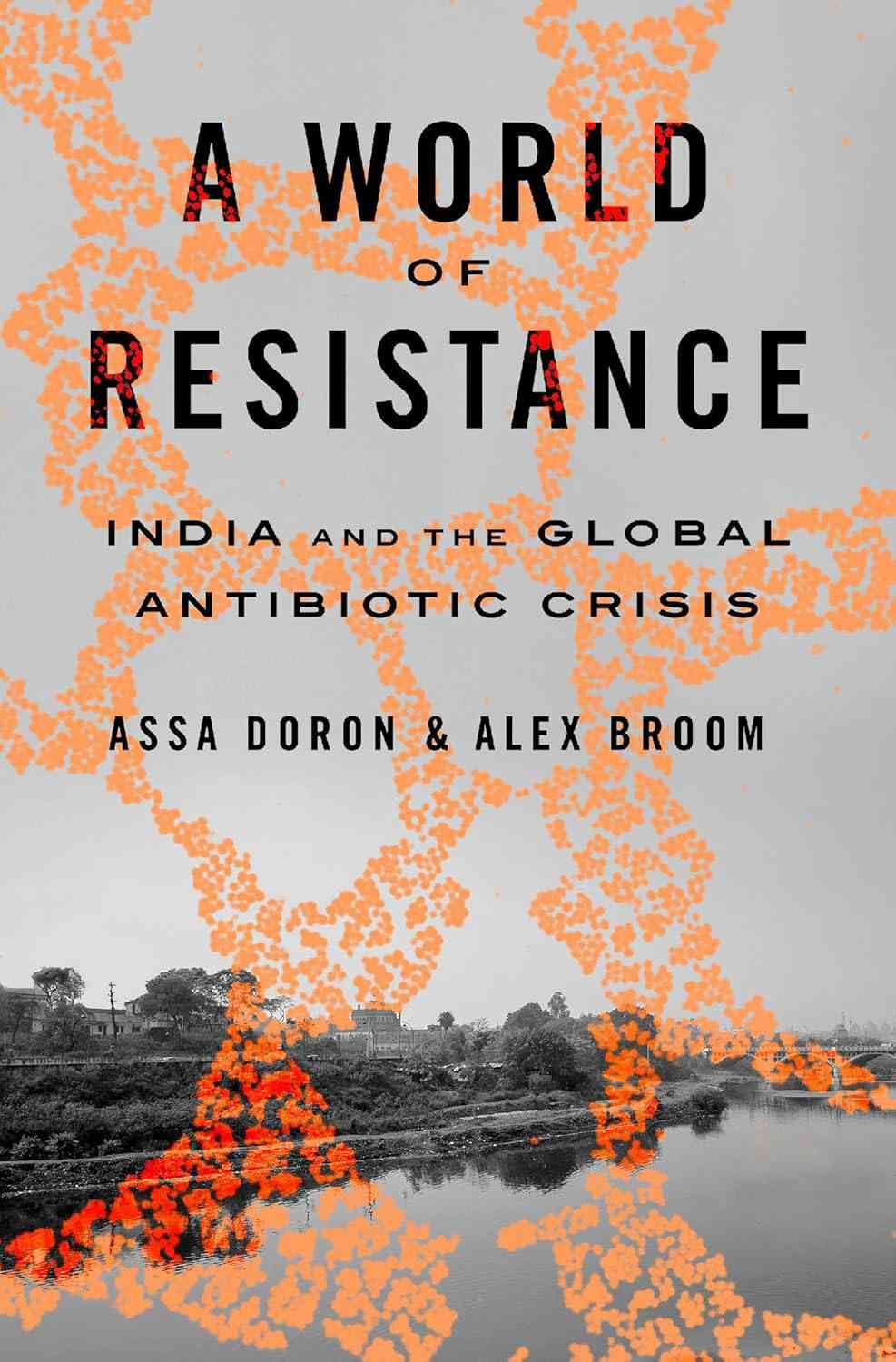
Excerpted with permission from A World of Resistance: India and the Global Antibiotic Crisis, Assa Doron and Alex Broom, Belknap Press.
