


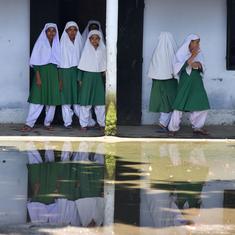
Based on research, we estimated that there were well over 7 million primary-aged girls who were missing from India’s classrooms and who should have been in school. If we wanted to make sure we weren’t going to lose another generation of girls to poverty and illiteracy, we had to act fast and identify where the problem was greatest – where did a majority of the out-of-school girls live? I wanted to use the government’s gender gap list to help me decipher where to start.
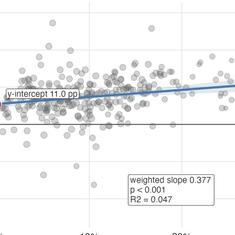
The World Economic Forum first published an annual report that looked at the gender gap in 2006 and studied four dimensions: economics, education, health and politics. It’s perhaps no coincidence then that when I first started looking for data, this is what we were talking about. And the ‘gender gap’ in education was quite simply the gap in enrolment numbers between girls and boys in primary school. Essentially, in many areas, there was a 10–20% gap between the number of girls and the number of boys going to school. And of course, the number of girls going to school was a lot lower than the number of boys.
In 2007, India was divided into around 600 districts and 26 had what was described as the “worst gender gap in education”. Of those, a majority of nine districts were all in Rajasthan. So there I had my first piece of the puzzle. This was where I had to start. I had, with one list, managed to narrow down the problem from everywhere across the country to one state, and from a haystack of 600 districts to what I believed were the nine worst districts in the country. I might not have found our needle yet, but I’d already cleared out a lot of the hay!
Heeding the MHRD minister’s advice, I went to meet the Rajasthan state education minister in Jaipur, and together we decided to officially start in the district of Pali, one of the worst of the nine. These nine districts on the government’s list formed a “V” shape if you plotted them on a map, and at the centre and lowest point sat Pali, somewhat like a pendant hanging on a necklace. If I started in Pali, a kind of hotspot or epicentre, I could then move in both directions, north-east and north-west, and cover the next eight districts with ease. This was my thinking.
Administrative districts in India are further divided into “blocks” before you then get down to the village Gram Panchayat level. So, within Pali, the education minister allocated three of these areas, deemed as “development blocks”, in which to start work, work that had his valuable approval. These were areas where rain-fed agriculture was the major source of income, but as a drought-prone area, infertile soil and a shortage of water forced large numbers of people to migrate all the way to Madhya Pradesh or Gujarat for six to eight months every year. This focus area also had a population overwhelmingly from what was first described in 1980 as OBC, the population that still makes up 40–45% of India’s 1.4 billion people. When I first went to Pali, the government told me that a mere 44% of women in the district were able to read. And in my mind’s eye, I could immediately see the other 56%. As I write this now, I can see Jassi’s mum, who nearly lost her savings to the bank she thought she could trust, and Poonam, who lost her land to a scheming nephew, all because she couldn’t read. This plan was for them.
I had, in just a few pivotal meetings, confirmed that Rajasthan was the right state in which to expand this work, the state with a majority of the country’s most gender-unequal districts. It might seem unbelievable, but this is how government meetings go sometimes. Meeting the right person at the right time with the right introduction can work magic. I had been given enormous insight into the districts in which we should start our work, and then the government data even showed me the right blocks in which to start outreach! This was about as strategic as it got and, most importantly, it was a plan backed by the government!
But as the gaps in Mr Shankar’s list showed us, neither a list of out-of-school girls nor a list of gender gap districts was going to be all we needed.
We were in a white Mahindra Commander jeep, and beginning to wonder if it had any functioning suspension at all. Conversation was erratic, and our knuckles were white. 12 of us were crowded into the open-top vehicle, and two by two we dropped off the teams at the edge of each village where they were to start their school information campaign. Having left the tar road, we were now bumping along a pitted and dusty track, baked hard in the sun. Rajasthan was eight months away from the last rains, and it was still perhaps a month before the monsoon would break, so the track was sparing no one, the land was hard and thirsty.
Despite growing up in Delhi, India’s most populous city and the second-largest city in the world by population, I’m really a rural girl at heart, by necessity rather than privilege. As a full-time working mum, my mother was unable to care for me when the school doors were shut. Her village friends and relatives were far more likely to be able to accommodate me than neighbours in the city. So I was packed off on most holidays. But never was I happier than in these far-flung places, Pilibhit or Clutterbuck Ganj near Bareilly in Uttar Pradesh or Ramnagar near Corbett National Park. So many summers and monsoons were spent in those places. Simple village life had shaped my difficult childhood, despite the fact that I was essentially a city-dweller, and I was excited to be going back now, on a mission.
As you enter any village in India, you are likely to see a school building quite soon. This village was no different, and we pulled up to the low boundary wall. Peering over, we could see the children, straight-backed and seated in rows on striped rugs laid out on a polished veranda that ran the length of the building, a couple of steep steps above the dusty playground, almost like a stage. Others spilled out from the classroom, making the most of the natural light, rather than relying on the small bare light bulbs that dangled and swayed with the breath from the fan that nonchalantly moved the hot air around. Today, the fan fanned and the light was lit. But on other days when there was a power cut, the classrooms were airless and dark.
I popped my head around the door and children’s eyes stared up at me. Some eyes were apprehensive, others cheeky and curious. The headteacher took me aside after the class and we sat on two white plastic chairs at one end of the veranda, chairs that were these days as common in offices in Delhi as they were in the most remote village. One of the children’s mothers, who cooked the midday meal approached carrying a steel tray with the anticipated yet welcome cup of chai.
We had come to this village to start building our village profile. The principal secretary of education had allocated fifty schools in these three development blocks, and this was where we were starting our very first programme (25 in Pali and 25 in the neighbouring Jalore district). The job at hand now was to understand the current status of the schools and of the girls. We were going to record details about the school size, teachers, availability of learning materials and midday meals. We would list the state of the infrastructure: Did it have electricity, running water or a playground, was there a functioning toilet and a separate one for girls? How were the children’s grades?
But most importantly, we were going to look at the enrolment numbers, and as we sat there with the head teacher, the first thing she did was hand us a list before we had even asked. This felt easy! She opened up a slightly scruffy-looking A4 exercise book with a marbled cover and pale green lined pages, and as she ran her finger down the page, she explained that to the best of her knowledge, this list accounted for the girls in the village who had either dropped out or never been enrolled.
These were the lists that we used for the first year or so as we slowly made our way around the first few blocks in Pali and Jalore. We had lists, we found girls, we enrolled girls – we certainly thought the system was working.
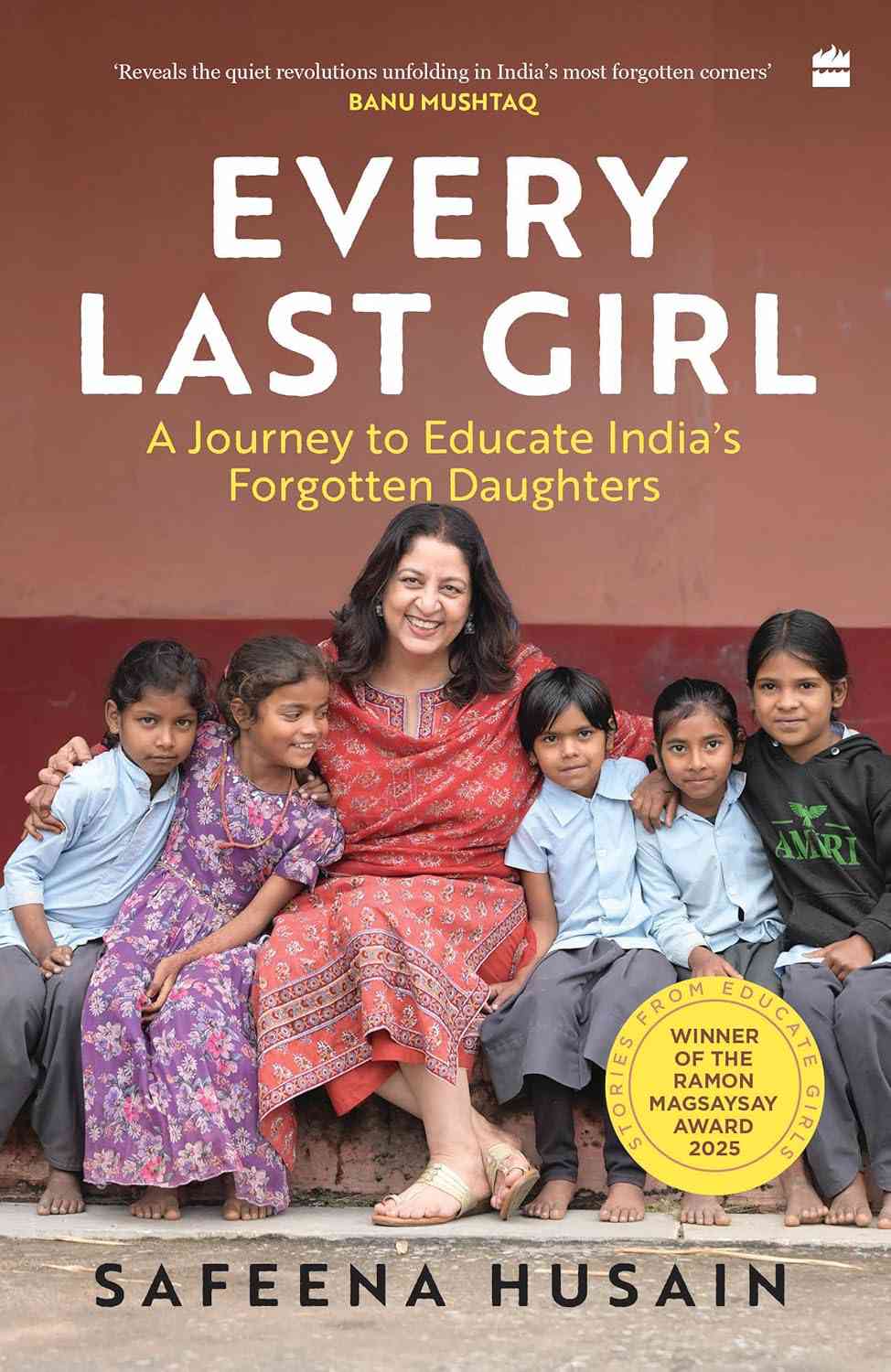
Excerpted with permission from Every Last Girl: A Journey to Educate India's Forgotten Daughters, Safeena Husain, HarperCollins India.
