





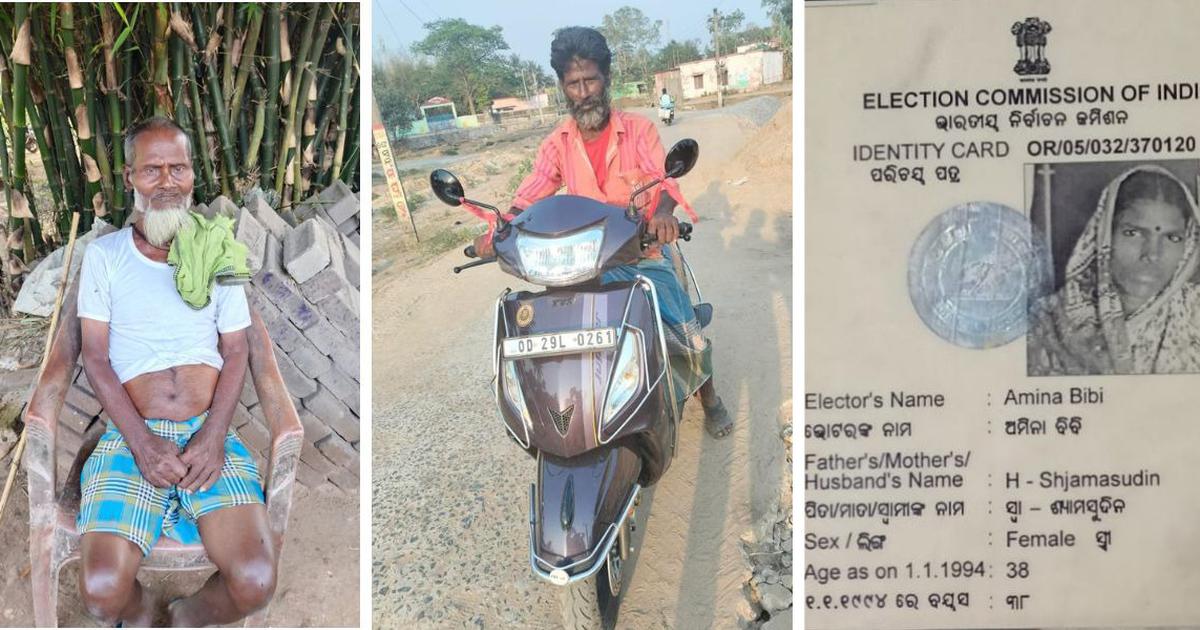
On November 27 last year, the Odisha police picked up 12 members of a family from a village in Kendrapara district on the suspicion that they were Bangladeshis.
Barring three elderly people, all were released after nine days of detention. Since then, Mukhtar Khan said he has no information about his 65-year-old father, Muntaz Khan, his uncle Insaan Khan, 59, and aunt Ameena Bibi, 70.
Unknown to the family, Khan’s father had been forced out of Indian territory and into Bangladesh, along with his uncle and aunt. This was confirmed to Scroll by the Kendrapara police superintendent on January 14.
The police official said the three had “confessed” to being Bangladeshis. Mukhtar was let go because he was an Indian by birth, he said.
Khan was incredulous when we told him what the official had said. “How could they send them to Bangladesh?” he asked. “Did they find any Bangladeshi documents on my father and uncle? What is the proof and confirmation that they are Bangladeshi? What is the official proof or confirmation that my father was indeed sent to Bangladesh?”
The official said that the three were expelled after the Odisha police contacted the authorities in Bengal – a process laid down by the Union ministry of home affairs in a May 2 notification, which said that a suspected illegal immigrant had to be given 30 days to prove their citizenship and that their home state should be asked to verify their claims.
The Bengal authorities failed to verify their claims of being Indian citizens, the Odisha police official told Scroll. But this was denied by the district police chief of Purba Medinipur, who said the Odisha police had not contacted them for any such verification. “I completely rule out the claim of Odisha police,” Mitun Kumar Dey, superintendent of police, Purba Medinipur, told Scroll.
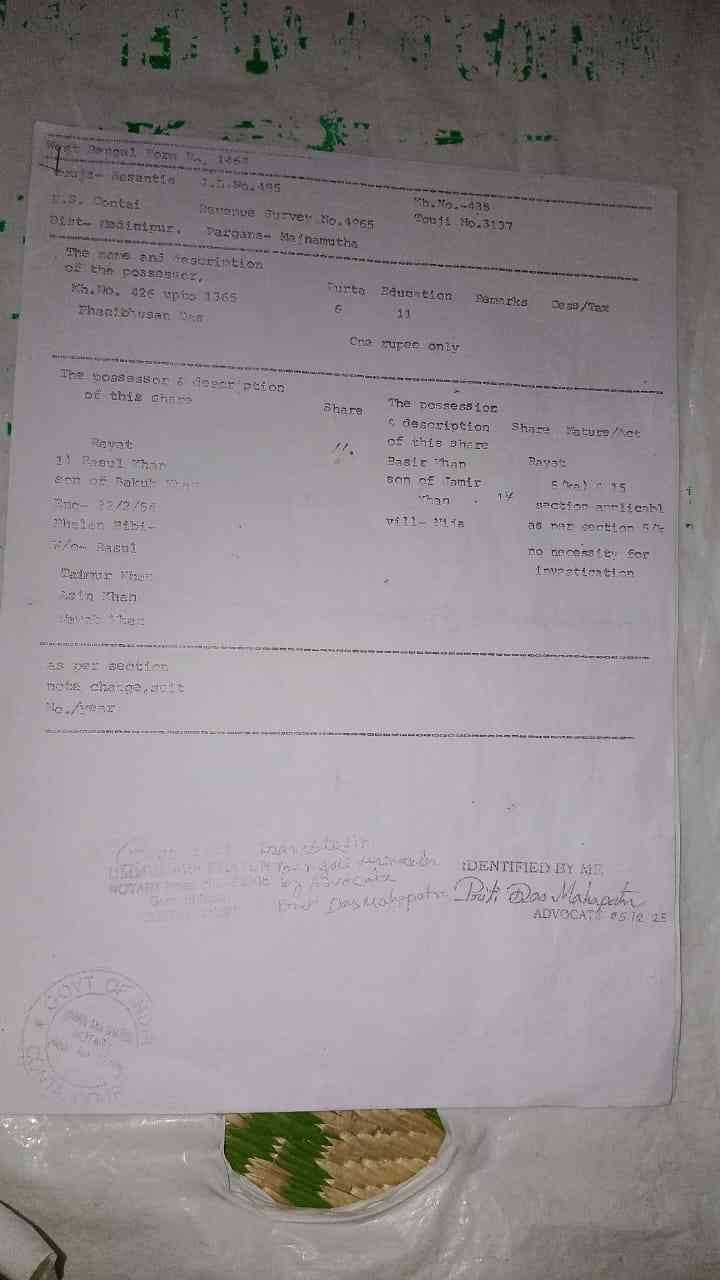
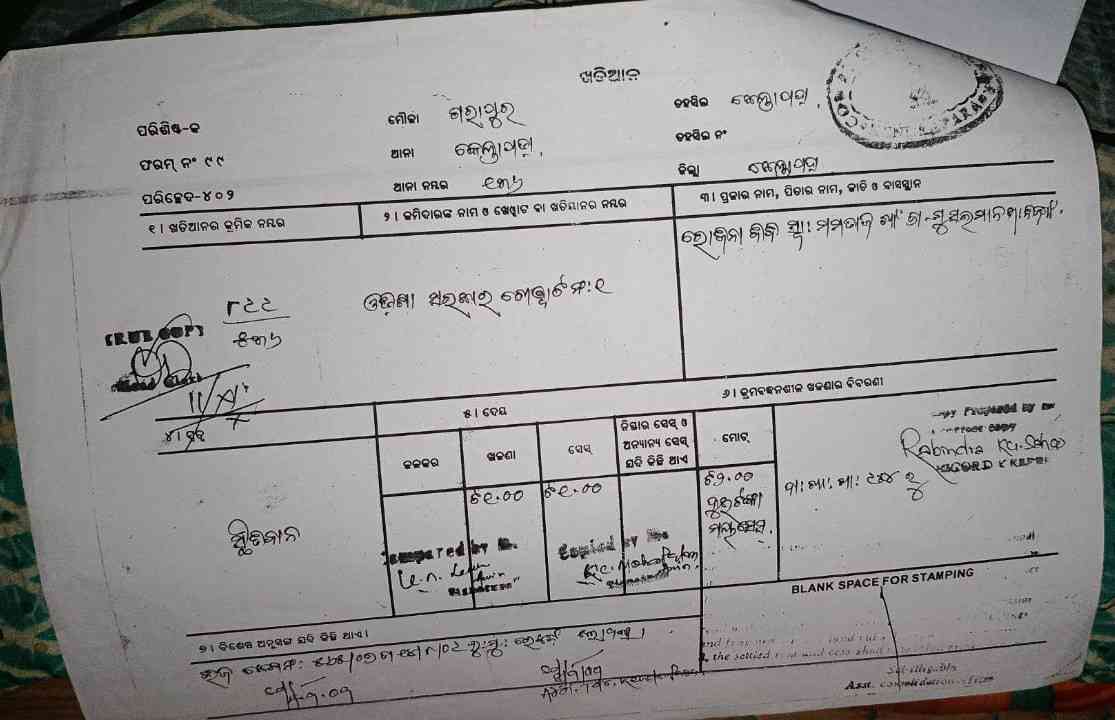
The Odisha police also claimed that Mukhtar Khan’s father Muntaz Khan was a Bangladeshi because his father, Yasin Khan, had arrived in India from Bangladesh in the 1970s. But land records with the family, seen by Scroll, show that Yasin Khan owned land in Bengal’s Purba Medinipur district in 1956.
This is at least the second Bengali Muslim family that the Odisha government has expelled to Bangladesh. As Scroll reported earlier in January, 14 members of a family, including a 90-year-old woman, were picked up from Jagatsinghpur district and forced out of India in December.
Since last year, the police in several states ruled by the Bharatiya Janata Party have accused Indian citizens of being Bangladeshis and thrown them across the border, without giving them time or opportunity to prove their citizenship – in violation of the Centre’s own rules.
The police raid
Garapur is a village in Odisha’s Kendrapara district, with about 4,000-odd Muslim residents.
Sheikh Aynul Islam, the sardar or chief appointed by Garapur’s residents, said the police arrived on November 27 to carry out a “survey” to detect Bangladeshis. “They took 12 of our residents to the police station.”
Among them were Mukhtar Khan’s father Muntaz Khan, and the 65-year-old’s two siblings – Ameena Bibi, 70, and Insaan Khan, 59.
“I was also picked up by the police and kept at the detention centre for nine days,” Mukhtar Khan, the 46-year-old worker at a motor garage, said.
Nine of them were released on December 8.
But Muntaz Khan and his two siblings were detained at a college hostel, about 4 km from the Kendrapara police station.
When Mukhtar went to the hostel after his release, “they were not there.” He went back to the police only to be told that “they had handed Muntaz Khan over to senior officials from Delhi.”
On December 7, Mukhtar’s mother, Rejia Bibi, wrote a letter to Kendrapara superintendent of police, urging the police to return her husband.
“We have repeatedly gone to your office to inquire about my sick husband, but you are not listening to us or understanding our situation, nor have you allowed us to meet my husband,” Bibi said in the letter.
Scroll has seen a document confirming that the SP’s office received the letter.
‘Odisha police did not contact us’
When asked about the family’s concerns, Kendrapara superintendent of police Siddharth Kataria told Scroll that Muntaz Khan, Ameena Bibi and Insan Khan had been expelled on the basis of a May 2 order from the Union home ministry.
“During the interrogation, they confessed [that they are Bangladeshi],” Kataria said. “They were taken to a holding centre where the other agencies also interrogated them and they confessed with them too. After that, as per the guidelines of the MHA, they were handed over to the Border Security Force. The BSF handed them to the Bangladeshi authorities.”
Kataria claimed that Mukhtar Khan and others were let go because they were Indian citizens by birth. According to Indian citizenship rules, any person born in India after 1950 but before July 1, 1987, becomes a citizen by birth. Mukhtar was born in 1979.
As Muntaz Khan was not born in India, Kataria claimed, he was deported. “We had given them around 20 days to show documents to prove their citizenship,” he said. “They had first said they were from Medinipur of West Bengal, but we verified from Medinipur authorities. It was not true.”
But Purba Medinipur district police chief Mitun Kumar Dey told Scroll that the Odisha police had not contacted them for the verification of these three people.
“This is a completely false claim,” Dey said. “Neither district police intelligence nor the local police have any sort of information on this. There is neither any official email nor a WhatsApp message. I can completely rule out the claim of Odisha Police.”
From Medinipur to Kendrapara
Kendrapara SP Kataria claimed that the father of the expelled persons, Yasin Khan, had shifted to India from Bangladesh in the late 1970s or 1980s with his children and wife.
But Garapur village chief Islam disputed that claim. He said that Yasin Khan had moved to Odisha from Purba Medinipur’s Basantia village under Contai police station six decades ago.
Mukhtar Khan, too, claimed that the family has documents that show they were original inhabitants of Bengal’s Purba Medinipur.
Scroll has seen a 1956 land ownership document in which Yasin Khan's name along with his three siblings are registered as ryots, or cultivators, in Basantia Mouza under Contai police station in Medinipur district.
Yasin Khan’s three children – who are now in Bangladesh – were eight or nine years old when they came to Garapur village from Bengal, Islam said.
Sheikh Reyazuddin, a neighbour of Muntaz Khan, told Scroll that they had grown up together in Garapur.
“I have known him for over 50 years,” Reyazuddin, the 65-year-old resident said. “They have not come from Bangladesh.”
He added that they were very poor. “The family doesn’t have money to go to the High Court. They could not even find a lawyer and it has been over 50 days,” he said “They don’t have anyone to guide them. You can understand their misery and helplessness.”
Mukhtar Khan said that they showed the police several documents to prove his relatives’ citizenship – voter lists from 2002, land documents in Muntaz Khan’s name from 2009, their voter IDs and Aadhaar cards, and even his grandfather Yasin Khan’s 1993 voter card issued by the Kendrapara district authorities.
In her letter to the Kendrapara police, Mukhtar’s mother pointed out that Muntaz Khan had been allotted a house under the Indira Awas Yojana after the 1999 super cyclone by the Government of Odisha, among other government benefits. “My husband's father Yasin Khan is a permanent resident of Garapur. He has a voter ID card and permanent land records from 2002 under Garapur Mouza.”
But the Odisha police rejected all of them.
Mukhtar Khan said the family was extremely anxious about how the three elderly people were coping in Bangladesh – and how they could be brought back. “We have to go to court now but we don’t know who will help us.”
