








When the Supreme Court of India stayed the University Grants Commission (Promotion of Equity in Higher Education Institutions) Regulations, 2026, on Thursday, it did more than pause a regulatory framework. It inadvertently put on trial the very idea that campuses in India require a modern, enforceable equity architecture responsive to the lived realities of caste, gender, religion, disability and region.
By restoring the older 2012 framework pending review, the court signalled caution about definitional clarity, procedural safeguards and possible misuse. Yet, the stay also risks sidelining a crucial constitutional commitment: that higher education spaces must actively dismantle discrimination rather than merely advise against it.
While the objections raised by petitioners deserve careful judicial scrutiny, the decision to suspend the 2026 Regulations in their entirety may have been disproportionate. A more balanced course – allowing the rules to operate with clarifications – would have preserved protections for vulnerable students while the court examined contested clauses.
Selective judicial urgency?
The irony at the heart of the controversy is easy to miss. The UGC (Promotion of Equity in Higher Education Institutions) Regulations, 2026, did not arise in a vacuum. They were framed in response to concerns repeatedly flagged before the Supreme Court in a 2019 public interest litigation which drew attention to persistent caste discrimination, student suicides and the ineffectiveness of purely advisory mechanisms on campuses.
The Court had then emphasised the need for stronger institutional frameworks to prevent discrimination and ensure accountability. The UGC’s 2026 effort can be read as an attempt to comply with that judicial nudge: to move from moral exhortation to enforceable structure.
What followed, however, revealed an uncomfortable social reality. Opposition to the regulations quickly coalesced around a shared anxiety that the rules singled out caste discrimination as a structural reality affecting historically marginalised students.
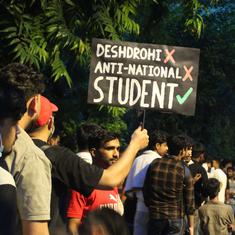
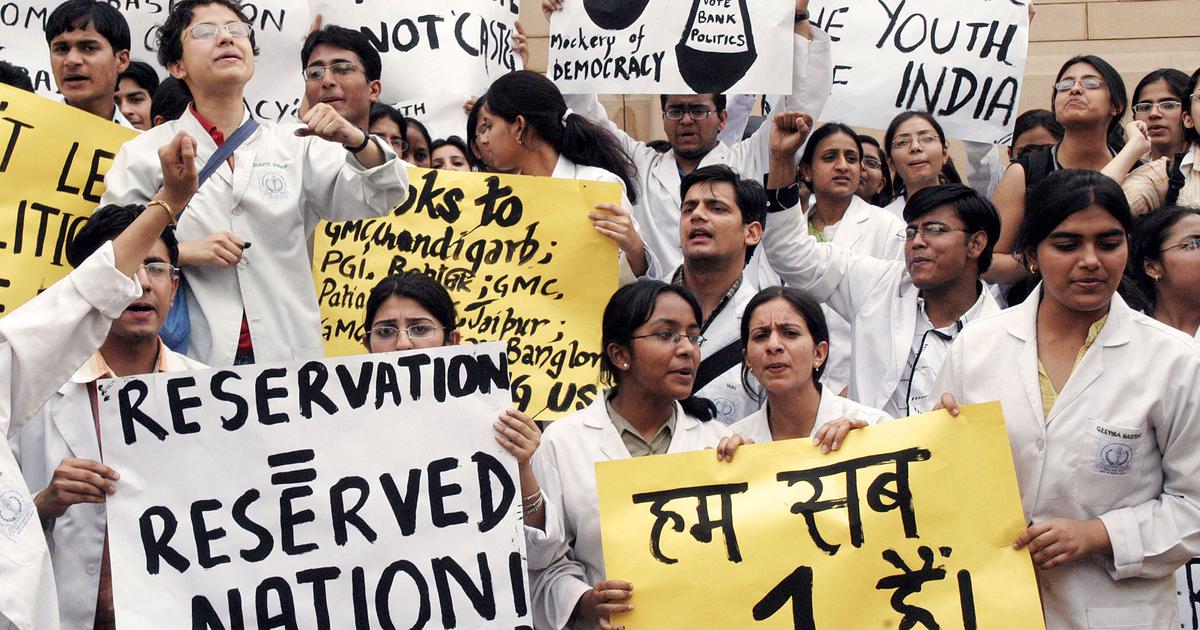
Groups identifying themselves as representing the “general category” mobilised explicitly on caste lines to challenge the rules. In doing so, they made visible the very caste consciousness the regulations sought to address. The litigation that reached the court was not framed in the language of universal campus harmony but in the language of perceived injury to upper-caste identity.
The speed with which the matter moved was striking. The petitions were listed urgently, heard almost immediately, and the regulations stayed at the threshold stage. Interim stays are a routine judicial tool, but the swiftness here stood in contrast to the long delays that typically characterise cases brought by marginalised litigants seeking relief from discrimination or by political prisoners incarcerated for years begging for bail.
This contrast raises an uneasy question about whose anxieties trigger institutional urgency.
Consider, for example, the protracted journeys in cases involving caste atrocity survivors under the Schedule Castes/Schedule Tribes (Prevention of Atrocities) Act, or the families of students who have died by suicide after alleging caste humiliation on campuses. In many such matters, hearings stretch over months and years, with interim relief hard to secure.
By comparison, the immediate judicial attention to the upper-caste petitions claiming discomfort with equity regulation suggests a hierarchy of responsiveness that mirrors social hierarchy and pervasive caste-based discrimination even in institutional conduct.
This is not to question the court’s power to stay the regulations, pending review. It is to note how the episode itself illustrates the persistence of caste as an organising principle of public action – even among those who deny its relevance. The very mobilisation against anti-discrimination norms on explicitly caste-identified lines and the rapid institutional response to that mobilisation underline the argument that caste discrimination is a living force shaping access to power, voice and urgency.
In that sense, the background to this case does more than explain the legal dispute. It exposes the social conditions that made such regulations necessary in the first place.
Core objections
Petitioners challenged several aspects of the regulations.
1. The definition of caste-based discrimination focused on Scheduled Caste/Scheduled Tribe/Other Backward Classes students, allegedly excluding the “general category”.
2. The absence of explicit penalties for false complaints.
3. Vagueness in language and scope.
4. The risk of misuse by equity committees designed to promote fairness within institutions and foster inclusive environments
5. The administrative burden the regulations would place on institutions.
6. Possible violation of Articles 14 and 15 of the Constitution due to asymmetrical protection. Article 14 guarantees equality before law, while Article 15 prohibits discrimination against citizens on grounds only of religion, race, caste, sex, or place of birth.
The court, noting these concerns at a preliminary stage, stayed the regulations.
Yet, each objection admits of a compelling counterpoint grounded in constitutional doctrine and campus realities.
1. Objection: Exclusion of General Category from definition of caste discrimination
Petitioners’ claim: Regulation 3(c) defines caste-based discrimination only as discrimination against students of the Schedule Castes, Schedule Tribes and Other Backward Classes, excluding general/unreserved category students, which is arbitrary and unconstitutional.
Counterargument: Discrimination law often has asymmetric coverage because discrimination itself is asymmetric in Indian society. Indian constitutional jurisprudence accepts that certain groups face systemic exclusion and harassment specific to their structural position, and therefore protective frameworks can be tailored to their realities.
For example, affirmative action under Article 15(4) is a constitutional exception to formal equality precisely to address historical disadvantages – meaning unequal treatment in law is not of itself unconstitutional but often necessary to achieve substantive equality.
The Supreme Court’s NM Thomas judgement in 1976 even held that reservations were not thought of as an exception to the rule of equality but as an integral part of it as it addressed systematic and structural barriers which operate asymmetrically.
Moreover, the regulations still define “discrimination” broadly on grounds of caste, religion, gender and disability. Excluding the general category from a caste-focused protective definition does not mean general category students cannot complain under the larger umbrella.
Rather, it reflects the factual reality that caste harassment disproportionately targets historically marginalised groups – just as the Prevention of Atrocities Act extends only to Scheduled Castes and Scheduled Tribes because atrocity data show structurally patterned violence against them.
2. Objection: No safeguards for false complaints
Petitioners’ claim: Because the 2026 regulations do not include penalties for false or malicious complaints, they can be misused, harming innocent parties.
Counterargument: Anti-discrimination frameworks globally separate procedural safeguards (such as confidentiality, appeal procedures, and fact-based inquiry standards) from punitive measures against complainants. Not having punitive provisions against false complaints does not automatically make a law unconstitutional; it simply reflects a common legislative choice to focus on redress and relief for victims rather than punitive litigation against complainants.
Many civil rights statutes (including workplace anti-discrimination codes in other jurisdictions) provide for remedies and fact-finding without a parallel “punish complainant” regime.
What matters is that institutions adopt due process – such as the right to hear both sides, evidentiary standards, and transparent inquiry timelines – and most draft frameworks intend to incorporate these procedural protections at the institutional level.
3. Objection: Vagueness and possibility of misuse
Petitioners’ Claim: The bench observed the language was vague and could be misused.
Counterargument: Vagueness is a real concern in any regulation, but every statutory regime requires some degree of normative judgment by institutions – that is the essence of administrative law. What matters is whether the statute provides principled standards that guide enforcement rather than subjective whim.
The 2026 regulations set out institutional structures (equity committees, equal opportunity centres, grievance channels) precisely to build procedural clarity.
Too many judicial stays in regulatory contexts have relied on preliminary notions of “vagueness” before meaningful interpretation is possible. A more balanced approach would have been to allow the regulations to operate while clarifying the schemes or issuing guidelines rather than imposing a blanket stay.
Indeed, the bench itself acknowledged the court was only at the “threshold of constitutionality and legality”, indicating that detailed analysis was premature.
4. Objection: Social divisiveness
Petitioners’ claim: The Supreme Court suggested the rules might divide society and campuses.
Counterargument: Promoting equity and addressing discrimination inevitably requires categorisation. If addressing bias were easy without targeted measures, the very persistence of caste and identity exclusion would not have necessitated new regulations.
A fallacy in the stay is to equate proactive institutional responsibility with community division. Discrimination does not cease to exist simply because a law criminalising or addressing it goes unenforced or is set aside. In fact, vacating a framework designed to protect equity risks preserving the status quo of exclusion, which itself produces division.
Empowering institutions to respond to the lived realities of caste exclusion is not social division but a constitutional imperative under Articles 14 and 15.
5. Objection: Exclusion of General Category raises constitutional questions
Petitioners’ Claim: The exclusion violates Articles 14 and 15.
Counterargument: It is as such the corollary of the first objection on account of asymmetry. The Constitution does not require formal identical treatment in all contexts. Protective discrimination and progressive measures under the Constitution explicitly contemplate differential treatment to rectify structural inequality.
The courts have upheld asymmetric protections (for example, in reservations and in the Prevention of Atrocities Act) because the object and purpose is amelioration of entrenched disadvantage – not uniform entitlements irrespective of social reality.
The stay appears to treat the asymmetric coverage itself as inherently suspect, but in substantive equality jurisprudence, asymmetry is valid if it aligns with the empirical patterns of discrimination it seeks to address.
6. Objection: Institutions burdened
Petitioners’ claim: Implementing equity cells and committees is an undue burden on institutions.
Counterargument: Higher education institutions already have myriad statutory responsibilities (anti-Ragging, sexual harassment redressal, mental health protocols). Creating mechanisms to prevent discrimination is consistent with other statutory duties. This is neither novel nor unduly onerous.
Equity cells are internally constituted, and many institutions already maintain grievance cells that could be re-designated, making implementation an administrative evolution rather than overreach.
Judicial restraint and interim stays
In interim jurisprudence worldwide, stays are typically granted only in cases where (a) a petitioner can demonstrate a prima facie case, (b) when a petitioner can show irreparable harm if the stay is not granted and (c) the balance of convenience weighs in favour of petitioner. In this instance the bench acknowledged the regulations were at the “threshold of constitutionality” and not yet fully examined before imposing a stay.
There is strong evidence the regulations respond to gaps in the 2012 framework and global best practices on campus equity. The balance of convenience does not favour petitioners.
Analysed this way, the rules did not deserve to be stayed. If the Court still had reservations, a more measured alternative would have been conditional operation with guidelines or expert input, rather than suspension.
The Supreme Court’s stay reflects legitimate procedural concerns but arguably misreads the structural and constitutional logic behind equity regulations. Rather than suspending the entire framework, a more proportionate judicial response would be to clarify definitions, integrate procedural safeguards, and allow the regime to operate while under review, preserving the substantive protection against discrimination without compromising constitutional balance.
It is particularly necessary in the context of the delays in India’s judicial system where stays have a character of permanence or a final judgement.
Writer and civil rights activist Anand Teltumbde is a former CEO, Petronet India Limited and a professor at IIT Kharagpur and the Goa Institute of Management. His most recent book is The Cell and the Soul: A Prison Memoir.
