




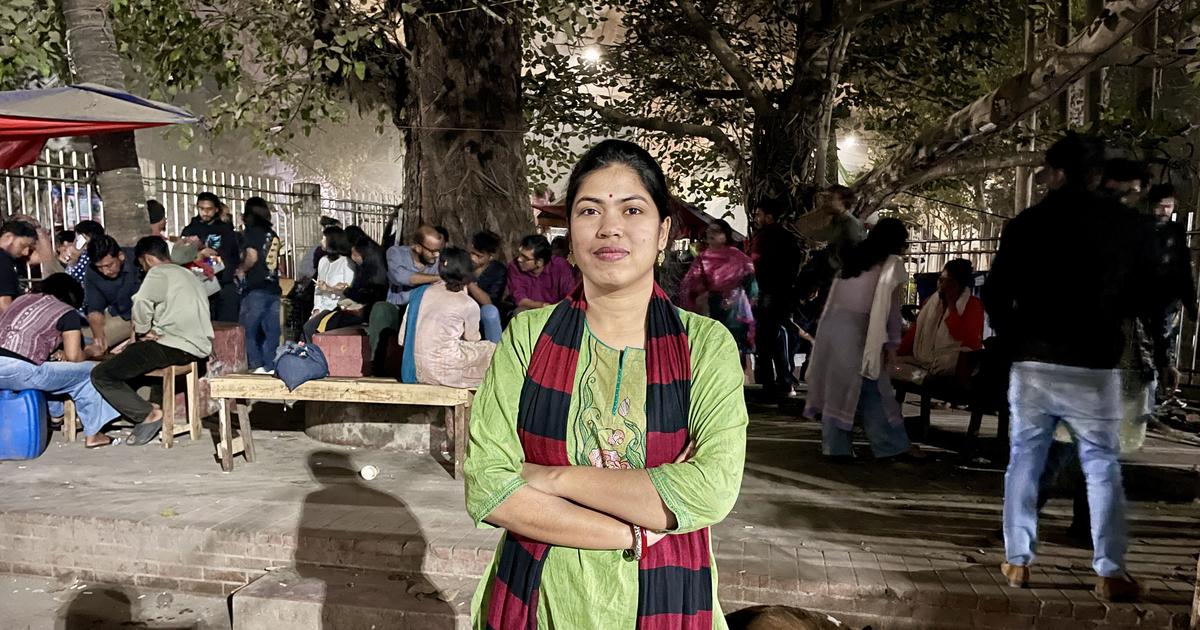
Nazifa Jannat was elated when she learnt that Prime Minister Sheikh Hasina had fled Bangladesh on August 5, 2024. She had risked her life in opposing the Awami League leader’s authoritarian rule, leading students from private universities to protest – a crucial pressure point when the government cracked down with lethal force on public universities.
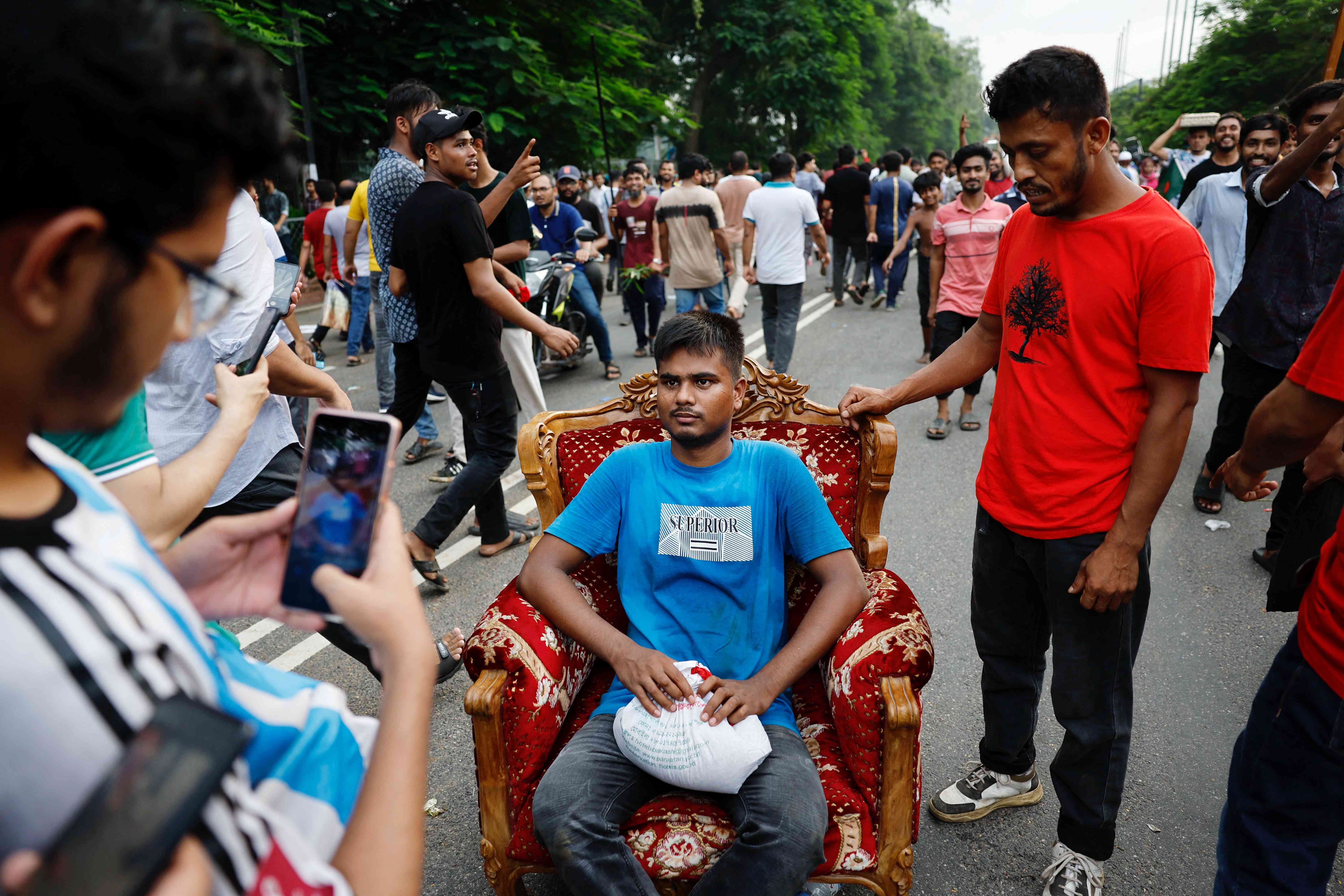
However, later that day, when Jannat arrived at Ganabhaban, Hasina’s official residence, her mood soured. The house was being looted by protesters. “I tried to stop them,” she said with frustration. “I went around on a cycle rickshaw with a mic – what I had used to direct crowds during the uprising – making announcements to stop the looting.”
None of it worked. Even her pleas to the army personnel standing there had no effect. What Jannat saw made her feel terrible.
“This is our national property,” she said. “We might hate the person inside but why should it be looted? What are we proving with this vandalism?”
The chaos in Ganabhaban she saw that day muddied what should have been a day of triumph for her. “It didn’t feel right that night when I went home,” she said.
Eighteen months after the July revolution, with Bangladesh on the brink of its first post-Hasina elections, Jannat’s change of mood is shared by a wide array of student leaders. As the euphoria of August 5 has given way to the grind of actually changing the political culture of a 170-million-strong nation, student leaders are despondent about what their protests actually achieved.
Exit Hasina, enter chaos
The past 18 months in Bangladesh have been marked by worsening law and order. Once Hasina fled, the revolution turned to excess, attacking and destroying statues and buildings associated with Sheikh Mujibur Rahman, Bangladesh’s first prime minister and Hasina’s father. On December 18, mobs attacked newspaper offices and cultural centers, acting on the unverified allegation that they were collaborating with India.
Given that many of these acts were committed in the name of the July revolution, the sheen once associated with the students and their idealism has dimmed somewhat. Mahfuz Alam, described as the “brain of the revolution” by Mohammed Yunus, the head of the interim government, admits that the past few months had sullied the reputation of the student protestors among ordinary Bangladeshis.
“Old political groups are doing these acts keeping some students in front, by paying them off,” he said.

Umama Fatema, a postgraduate student at Dhaka University and a key leader during the uprising, is harsher, accusing them directly of corruption. “I have seen student leaders take bribes from Awami leaders to prevent arrest,” she said.
After Hasina fled, the new government cracked down hard on her party. Desperate Awami League leaders often turned to Opposition parties for protection.
Even worse in Fatema’s eyes is the fact that the National Citizen Party, the political outfit that was formed by a section of the students in the uprising, allied with the Jamaat-e-Islami for the elections. The Jamaat is Bangladesh’s largest Islamist party with a controversial past: it had supported Pakistan during the 1971 War of Liberation.
Fatema argues that the National Citizen Party, whose members have been part of Yunus’ government, awarded the Jamaat legitimacy by allowing it to associate with the students’ revolution. This took away credibility from the students.
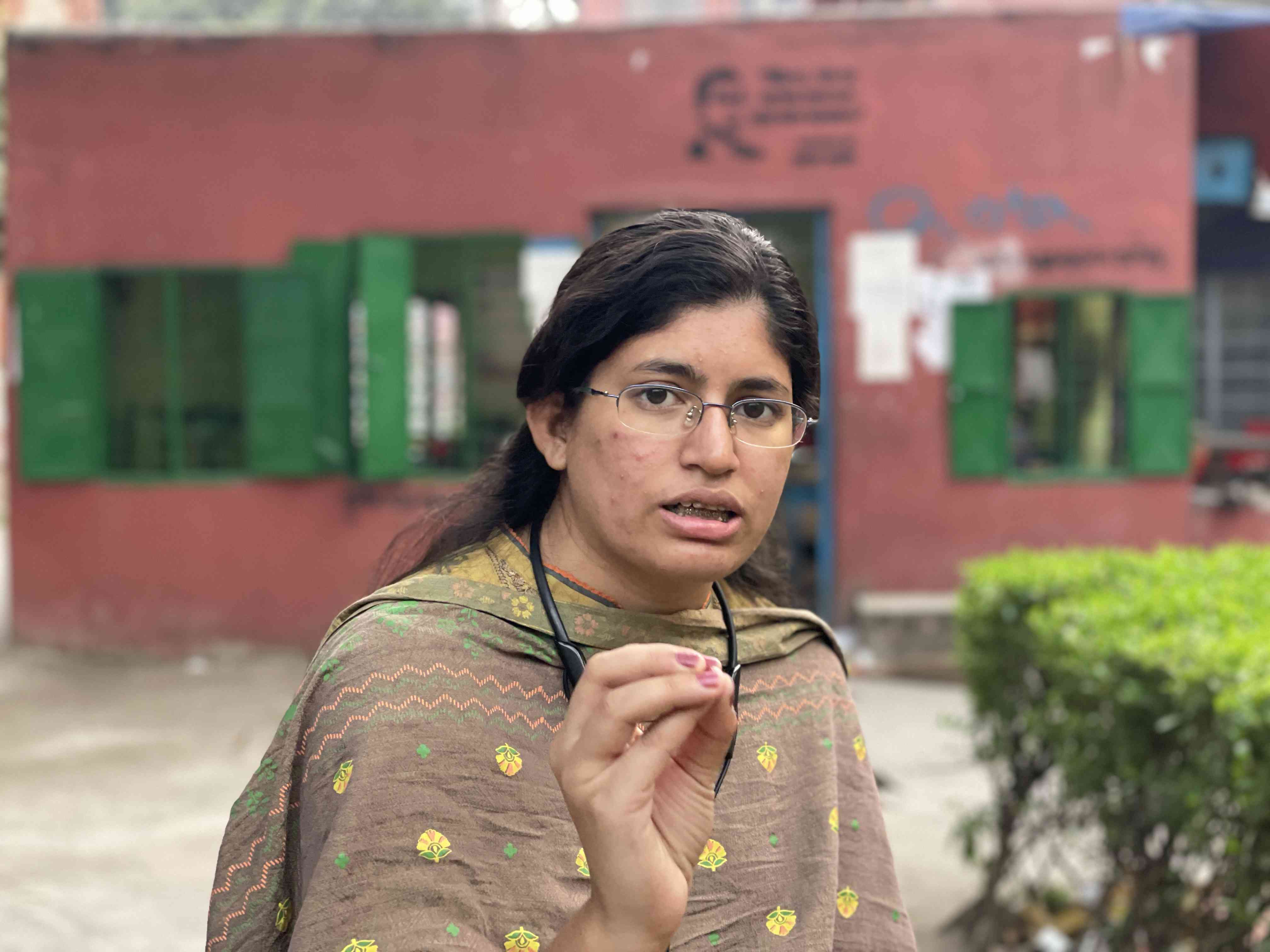
“The Jamaat is like a leech,” Fatema said dramatically, speaking to me at Dhaka University’s Fazlul Huq residential hall. “Till it sucks all the blood out, it won’t leave you. And it can finish both its friends and enemies.”
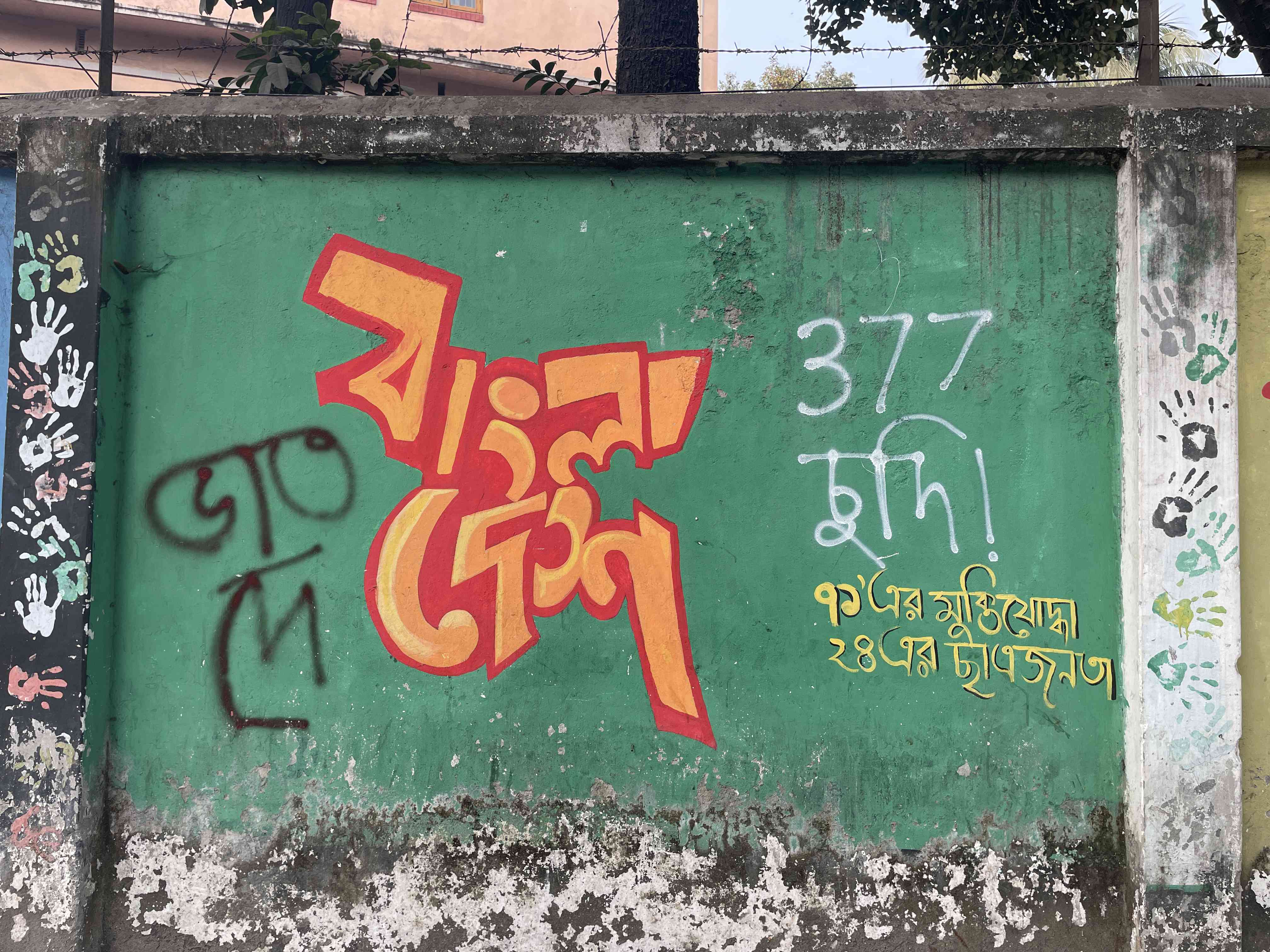
Anger against the National Citizen Party-Jamaat alliance is widespread among students, not only for associating the protestors with an Islamist force but also for linking them to the old political order – the very thing the July revolution aimed to destroy.
“The NCP should have fought independently and steered clear of the historical baggage of the old parties,” argued Mahfuz Alam. “I was born yesterday so why should I carry the sins of the past 60 years?”
Nazifa Jannat said the National Citizen Party “betrayed the spirit of July” by allying with the Jamaat. “They talked about a new politics but in the end they allied with a right wing party,” she said.
Anik Roy was a founding member of the National Citizen Party in February, 2025 but left once he realised its bent towards the Jamaat. He said that the Jamaat alliance betrayed another promise of the uprising: the hope of bringing more women into Bangladeshi politics.
“Many women were a part of the NCP as major leaders,” he said. “But after the Jamaat alliance, most women left the party since the Jamaat won’t give women roles.”
The Jamaat has no women in leadership positions and has not nominated a single woman as a candidate in these elections. On February 1, its women’s wing said that it was fine for women not to be considered for leadership positions since men were “parichalaks” or directors of women.
The question of female representation was one of the first chinks that came up after August 5. “Women were a major part of the uprising but they had no representation in the interim government,” said Umama Fatema. “This raised a lot of questions.”
Students, not leaders
Without elections, the revolution was the major source of legitimacy for the interim government that was sworn in on August 8. Yunus’ press secretary told me that the government was the “fruit” of the revolution.
However, 18 months later, the political use of the uprising by the Yunus-led interim government was a particular source of anger among the students.
“The interim government is trying to claim ownership of the uprising, they are saying it was planned,” Fatema said. “But it was not planned. We saw with our own eyes that without any central command, students across Bangladesh organised spontaneously and anarchically with only one aim: the downfall of Hasina.”
Students led this movement, Fatema emphasised, not leaders.
A year and a half after the uprising, student leaders are realising that overthrowing a government and actually changing politics are two quite different things.
In fact, Anik Roy argues that there has been little change in how the government works before and after the uprising. “For example, we have been unable to get rid of the culture of secrecy – Hasina would make secret agreements and so does this interim government,” he said pointing to the privatisation of significant parts of the Chittagong Port, Bangladesh’s largest port.
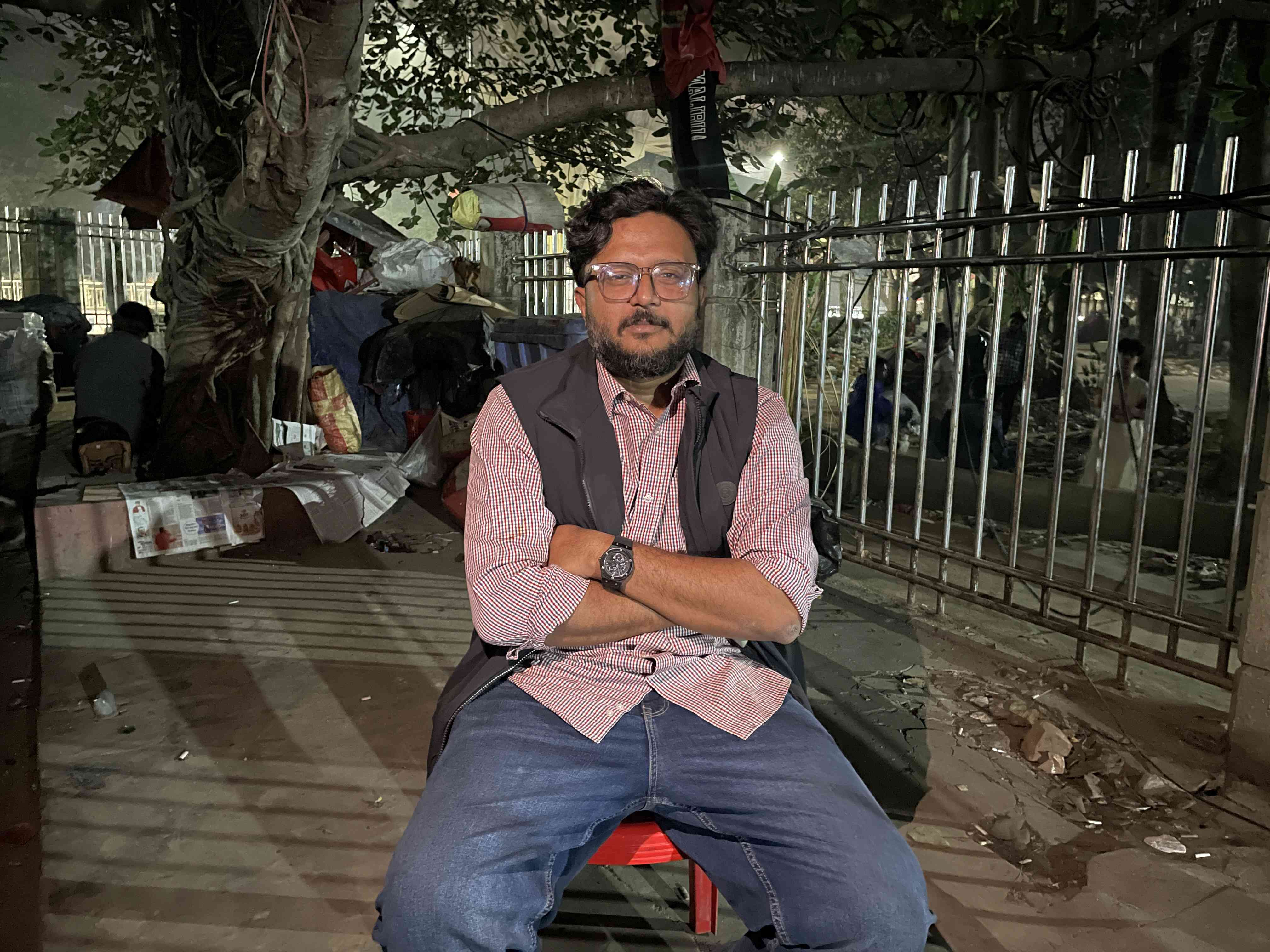
Mahfuz Alam contended that the uprising did change Bangladesh – but that change is not yet visible in mainstream politics. But he is hopeful of slow reforms in the future. “Young people are now politicised so they will set new rules and even the old political parties will be forced to at least listen to them a bit,” he said.
Roy pointed out that being disappointed that the revolution did not bring about a sudden change would be naive. “As a political activist I knew that something like this would happen after the uprising,” he said. “It happened even after 1971 [Liberation War]. So I am not surprised.”
Nazifa Jannat regrets not being more well prepared for post-revolution scenarios. “We did it and someone else is getting the benefit,” she said, smiling ironically. “Jamaat wasn’t part of this. Their student leaders were hiding. We were on the streets. We got hit with bullets. But we are nowhere now.”
Better, not worse
In spite of the dampened mood, the student leaders do not regret July.
Meghmallar Bose, a student of Dhaka University and one of the major leaders of the uprising, pointed out that one could only discuss these scenarios with the benefit of hindsight. “At that time, we were getting shot, we didn’t have the luxury to think of the future,” he said. “It was a battle to just save ourselves from the Awami.”
Even if there is little material change, the uprising brought the politics of aspiration back into Bangladesh after the 16 years of Hasina’s vice-like authoritarianism. “We had left hope in politics,” Anik Roy said, “We knew that only a mass uprising can change things in Bangladesh.”
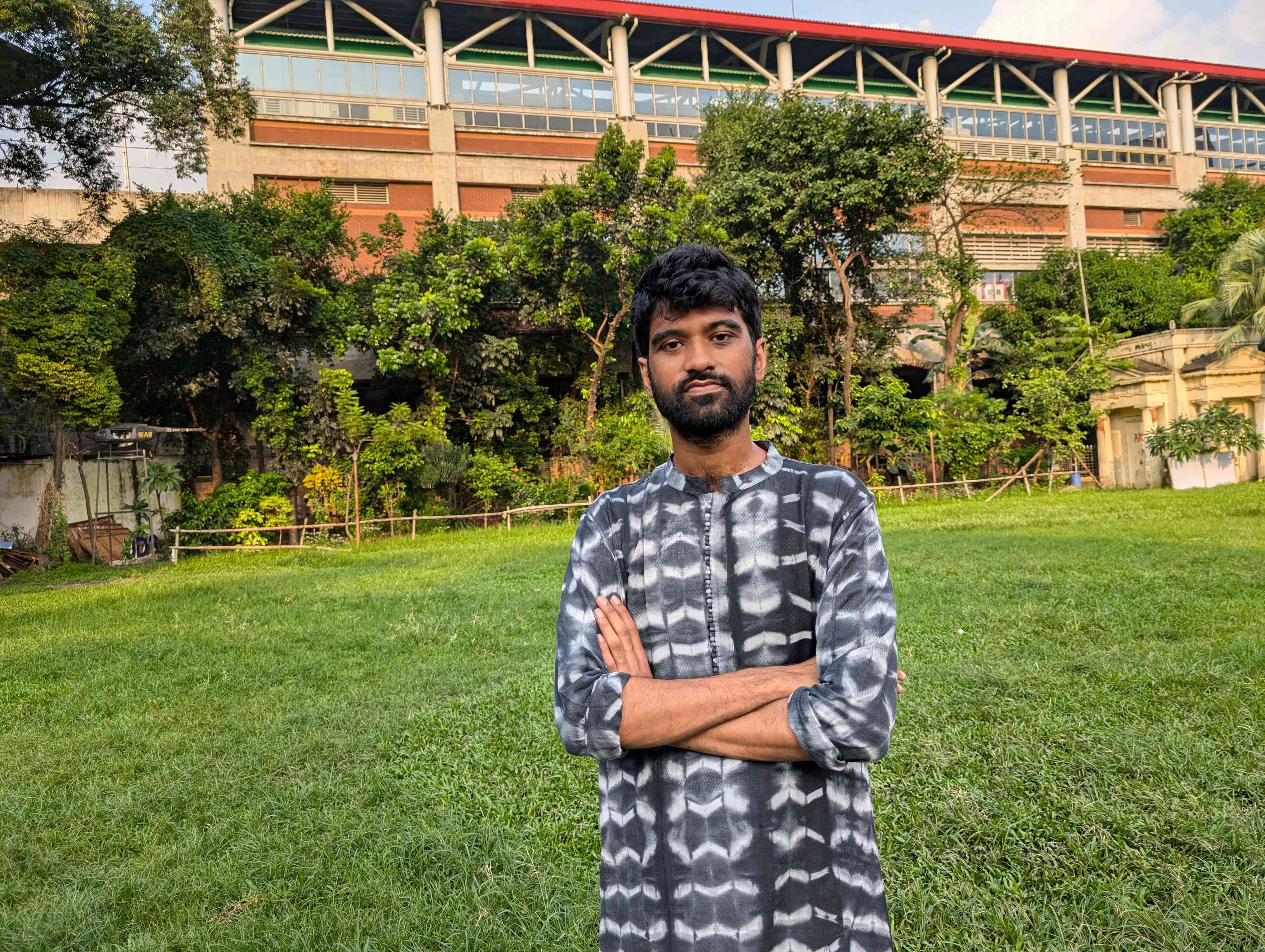
Mahfuz Alam agrees. “Bangladesh’s economic structure has not changed, labour oppression and environmental destruction continues – yet, young Bangladeshis have never been so politically engaged,” he said. “Political parties are at least having to talk about reform as a result of this. We will see how they act in the end.”
For Roy, the present moment is a sign that they must get back to work. He lays out two immediate goals for the student leaders of the July uprising: save Bangladesh from the Islamists and prevent the Bangladesh Nationalist Party from becoming another authoritarian party like the Awami, in case it wins big in the upcoming elections.
“It is likely the BNP will win big so it would be easy for it to ignore the Opposition,” Roy said. “But in that case we must be the Opposition.”
However, Umama Fatema is tired. “We have gone back to a pre-July state, the people frustrated since they are now sure Bangladesh won’t change,” she said. “Every student I know wants to leave the country.”
