


Over the last decade and a half, as vast parts of the Adivasi hinterland have been embroiled in a civil war between the Maoists and the security forces of the state, these tropes of difference have neatly coalesced with another related theme. In several writings that emerged in response to the initiation of military operations against the Maoists in 2009, the Adivasi rebel – constituting the basic cadre of the Maoist guerrilla army – was represented as a modern incarnation of a primitive rebel, who, by standing up armed in defence of his commons, epitomises the critique of modern capitalism and its individualistic values. In her celebrated essay Walking with the Comrades, based on her visit into the heart of the rebellion, noted writer Arundhati Roy sought to place the present Maoist movement within a trajectory of several tribal rebellions since the colonial period. In her words, the history of the “resistance” of the tribal people in this part of the country predated the Naxalites, and their ideological inspiration, the Chinese communist leader Mao Tse-Tung, by several centuries. In a very evocative passage, she sought to mark off the distinctiveness of these (as a police officer told her) “greedless” people, in contrast to those who are waging a war on them. Describing the annual celebrations of the Bhumkal Revolt of 1908, Roy writes:
The sound of drums becomes deafening. Gradually, the crowd begins to sway. And then it begins to dance. They dance in little lines of six or seven, men and women separate, with their arms around each other's waists. Thousands of people. This is what they've come for. For this. Happiness is taken very seriously here, in the Dandakaranya forest. People will walk for miles, for days together to feast and sing, to put feathers in their turbans and flowers in their hair, to put their arms around each other and drink mahua and dance through the night. No one sings or dances alone.
This, more than anything else, signals their defiance towards a civilisation that seeks to annihilate them.
In all these writings and invocations, by people and organisations who otherwise profess different politics and viewpoints, there are certain common presumptions that underpin their understanding of the Adivasis and their relationship with the state. In all these representations, apart from essentializing Adivasis as homogeneous communities operating through customs and traditions, there is also an externality assigned to the state in its relationship with Adivasi communities. All these different movements – be they the rebellions in the colonial period, the protests against the CNTA (Chotanagpur Tenancy Act) or even the armed struggle waged by the Maoists – are then clubbed within the same linear frame, as having been prompted by the modern state’s disturbance of the previously idyllic custom-based world of the Adivasis. These are seen as attempts by the Adivasis to save their jal–jangal–zameen (water, forests and land) against avaricious outsiders – embodied by the sarkar–sahukar–zamindar nexus in the past and the government-corporate nexus at present. The internal worlds of the Adivasis are seen as conflict-less – the only conflicts are with outsiders.
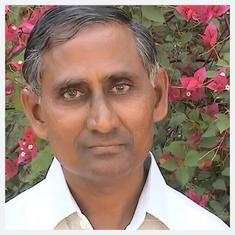
Such imageries of the Adivasis also have implications for the prescriptions that are offered to redress their problems. In light of the marginalisation and dispossession of the Adivasis from their lands and forests, several debates around democracy, governance and decentralisation in tribal tracts have also come centre stage. The interests of the “idyllic” Adivasi communities are seen as best encapsulated in their customary village bodies. Decentralisation and localised governance through customary village bodies, as opposed to top-down schemes prepared by those who have no connection or concern with the tribal population, has been a key demand of many movements fighting for Adivasi rights. In the words of BD Sharma, one of the staunchest advocates of such a framework, the right to manage their own affairs according to their customs, traditions and village bodies – that have sustained these “peripheral” communities since “time immemorial” – constitute “the most basic and inalienable right” of the Adivasi communities. The recent success of the movement in the Niyamgiri Hills of Odisha, where an organisation named Niyamgiri Suraksha Samiti (NSS) organised several gram sabhas and successfully halted Vedanta Aluminium Limited’s plans to acquire land for bauxite mining, has been showcased as an example of the efficacy of local decision-making for the interests of the Adivasis. The success of this movement, termed “inspirational” by its leaders, has in turn led many other organisations to attempt to replicate the same strategy of wielding local and customary bodies of the Adivasis as a weapon against external state power.
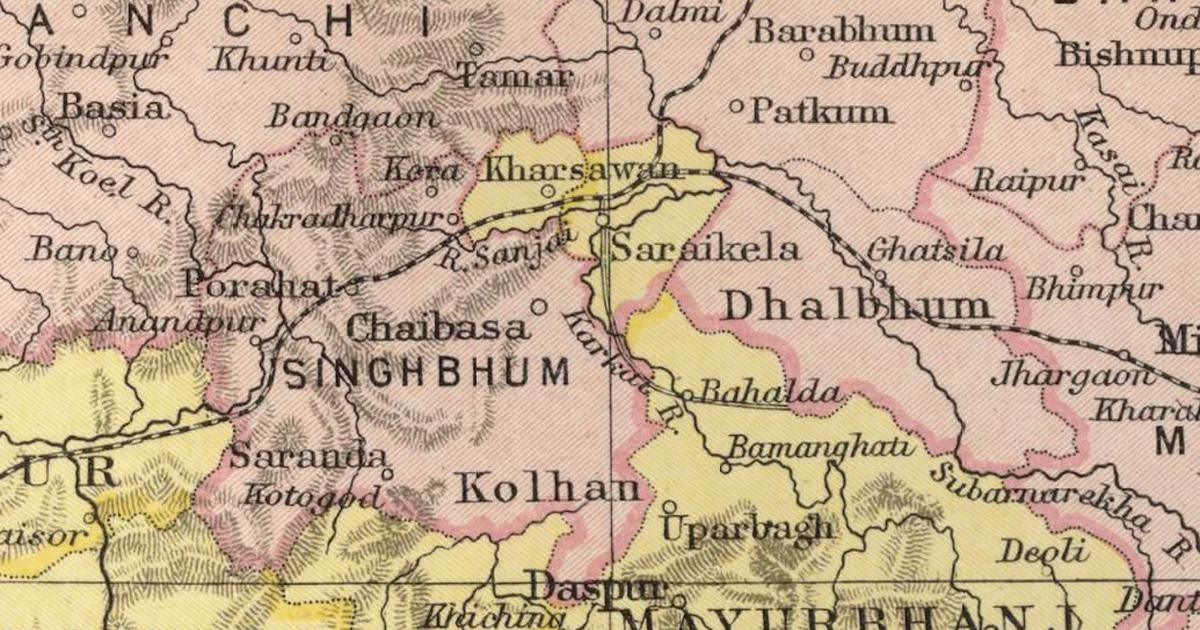
But is opposition to the state and the many “outsiders” the only response of the Adivasis? Has the Adivasi “insider” always stood in a state of antagonism with non-Adivasi “outsiders”? Have the customary claims of the Adivasis remained static over the years? Can the customary claims and village bodies of the Adivasis and the modernist paradigm of the state always be posited in opposition to each other? Has state intervention, right from colonial times, never been constitutive of local village bodies and customary claims of the Adivasis? For every example cited by the supporters of the above-mentioned framework, there are several counterexamples that question its validity. If the NSS organised gram sabhas to halt Vedanta’s attempts to acquire land in Odisha, in another Adivasi area of Singhbhum (Jharkhand), it was the mining company Rungta Mines that took the initiative to organise gram sabhas to acquire land for the same purposes. A report on the latter pointed out the manner in which gram sabha representatives were given a share in the spoils by Rungta Mines for facilitating the acquisition of Adivasi land in the villages. The Chhattisgarh government raised an entire vigilante force, in connivance with the local Adivasi elite, called the Salwa Judum, to counter the Maoists. As per Nandini Sundar, such state actions find receptive ground in the class differentiation within local communities, which they in turn promote by giving some a share in the spoils and further marginalising others. In the words of Nandini Sundar:
The formal structure of government, participatory politics and the political reality in which they operate means that for every Adivasi movement protesting against displacement or destructive mining or demanding shares in industries, there is now often a counter Adivasi movement, propped up by an opposing party.
The reality of the complex world of the Adivasis, we need to realise, does not conform to the much-romanticised picture of idyllic communities unitedly resisting the encroachment of “outsiders”. As has been highlighted in recent scholarship, the internal worlds of the Adivasis, who are differentiated within, are as much conflict-ridden and therefore include different kinds of responses to the state. Adivasis, thus, resist the incursions of the state and companies; sections of them also collaborate with it; some also negotiate to enhance their standing vis-à-vis others in their communities. The rallying call of preserving custom, as seen in the current protests against the amendments to the CNTA and SPTA (Santhal Parganas Tenancy Act), also means different things to different sections within the Adivasis. For if the CNTA safeguards lands recorded under the act from alienation and transfer, what about those who own no land or have no title deeds? Is there even a way of classifying their displacement, dispossession or loss over the years? Moreover, what have been the markers and considerations used by the state, and the strategies used by the people, to codify and record their lands in the state's documentary universe? Who has gained and who has lost out?