









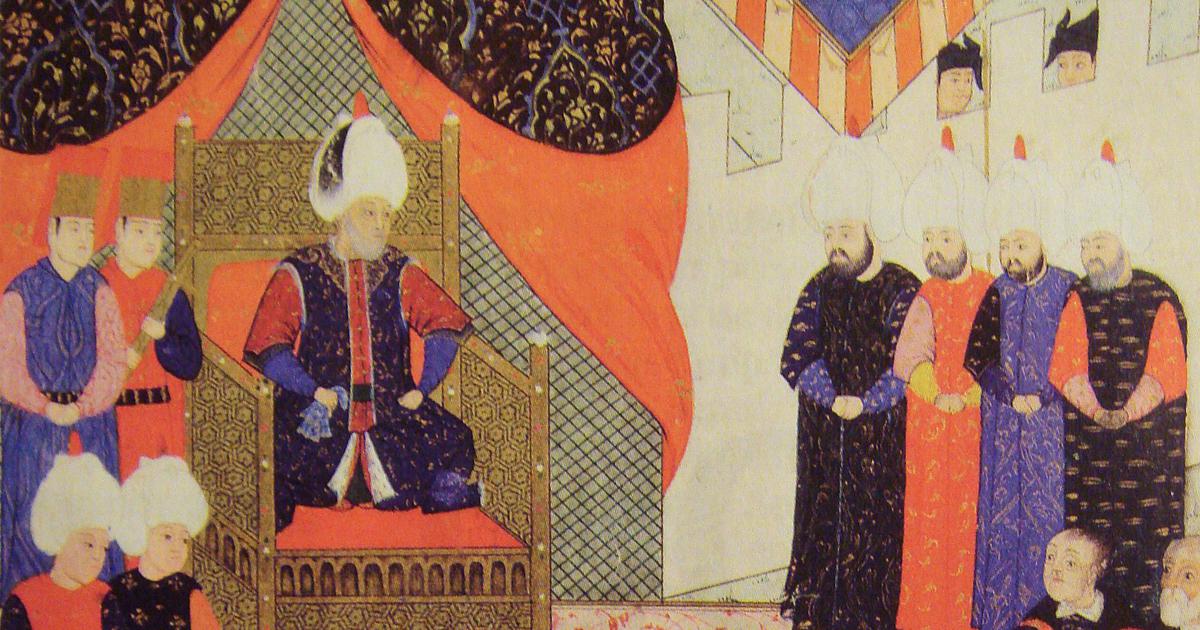
Sultan Süleyman I is called “the Magnificent” in the West and “the Lawgiver” in Turkey due to the codification of laws, both religious and secular, during his reign. Süleyman’s era is considered the heyday of Ottoman rule. His reign from 1520 to 1566 is synonymous with the greatest territorial extent of the empire. By coincidence, it began at almost the same time as the fateful encounter between Hernán Cortés and Moctezuma in Tenochtitlan (Mexico City today) that would destroy the Aztec empire and enrich the Spanish. The flow of silver from the New World to the Old that followed the Spanish conquests was already starting to upend the Ottoman economy, causing rampant inflation and weakening Ottoman superiority vis-à-vis the West, but for the moment, the Ottomans were blissfully unaware of any of this. Süleyman proceeded to expand the already impressive empire he had inherited from his father, Selim I (son of Bayezid II, grandson of Mehmed II).
In only the second year of Süleyman’s reign, Ottoman forces captured Belgrade, which would lead to more victories in Hungary. After a long siege, his armies conquered the island of Rhodes, the largest of the Dodecanese Islands lying off the southwestern coast of Anatolia. The relative power of the Ottomans under Süleyman ensured that they were heavily involved in power politics, both in Europe – where, for example, they struck an alliance with France against Hapsburg Austria – and in Asia, where he engaged with the Shah of Iran and the Uzbek Khans of Central Asia.
Süleyman’s relationship with his favourite concubine, Hürrem Sultan – also known as Roxelana because of her origins in Ruthenia in today’s Ukraine – broke with existing traditions. Previous sultans had followed the domestic policy of “one concubine, one son”, by which the sultan’s consorts were allowed no further sexual relations with the sovereign after giving birth to a male heir. Süleyman not only fathered several sons with Hürrem, including his eventual successor Selim II, but also freed and then married her, marking the first marriage between an Ottoman sovereign and a woman of slave origin. His love for her is preserved in poems he wrote to her. A few characteristic lines read:
Throne of my lonely niche, my wealth, my love,
my moonlight.
My most sincere friend, my confidant, my very existence,
my Sultan, my one and only love.
His love is also reflected in the fact that he chose to be buried by her side in a mausoleum at his imperial mosque complex in Istanbul, the Süleymaniye. Hürrem’s rise to unprecedented power provoked considerable resentment; she was blamed for the downfall of Süleyman’s key adviser, Grand Vizier İbrahim Pasha, and, more generally, for initiating a phase of Ottoman history known as the Sultanate of Women, a period lasting from 1534, the year of Hürrem’s marriage to Süleyman, until 1683, during which women of the palace, including wives, favourite concubines and mothers of the sultans, wielded substantial power. Hürrem played a formidable political role, advising Süleyman, conducting diplomatic correspondence with foreign powers, taking part in internal factions and alliances that carried direct consequences for Ottoman politics, including the sultanic succession, and establishing numerous pious endowments across the empire, including at Edirne, Istanbul, Ankara, Jerusalem and Mecca.
Süleyman’s reign was also adorned by some of the most revered architecture in Ottoman history, which is associated with the architect Sinan, one of whose major works is his patron’s imperial mosque, the Süleymaniye, which rivals Hagia Sophia in size and grandeur. It was in this period that the sultans began to think of themselves as practically divine. Süleyman was following the lead of his father Selim, who, boosted by his conquest of Syria and Egypt and therefore in control of the Muslim holy cities of Mecca and Medina, began to be referred to as a world conqueror and, even more audaciously, as a messianic leader favoured by God. Adopting the labels “Shadow of God and the Master of the Planetary Conjunction”, an epithet first attributed to Timur, and “the Renewer of the Age” (a figure who was thought to appear each Islamic century), Selim was also known as the defender of Sunni Islam for his encounter with the Shi‘i Shah Ismail of Iran.
After capturing Damascus, Selim had taken the time to locate and rebuild the tomb of the renowned Andalusian sufi Ibn Arabi, whose book The Bezels of Wisdom, which he claimed to have received from the Prophet Muhammad, describes the qualities of sainthood, the unity of existence and the perfect man who would appear at the end of time. Beginning with Selim and then taken even further by Süleyman, who as “Lord of the Auspicious Conjunction of Jupiter and Saturn” thought he was destined to usher in a universal monarch, Ottoman sultans reflected the glory of the expanded imperial enterprise. Selim was the first to style himself ‘Caliph’: literally, successor to the Prophet Muhammad, a title inherited from earlier Islamic dynasties. Indeed, the Ottoman sultans were acting as though they were breathing a very rarified air. This was perhaps to be expected, given that their contemporaries in Europe, such as the Holy Roman Emperor Charles V or Dom Manuel of Portugal, and in Asia, such as the Safavid Shah Tahmasp and their Mughal contemporary Akbar, all claimed to rule universal empires in an age of divine omens and millenarian expectations. Still, it was a long way from the humble image of Osman.
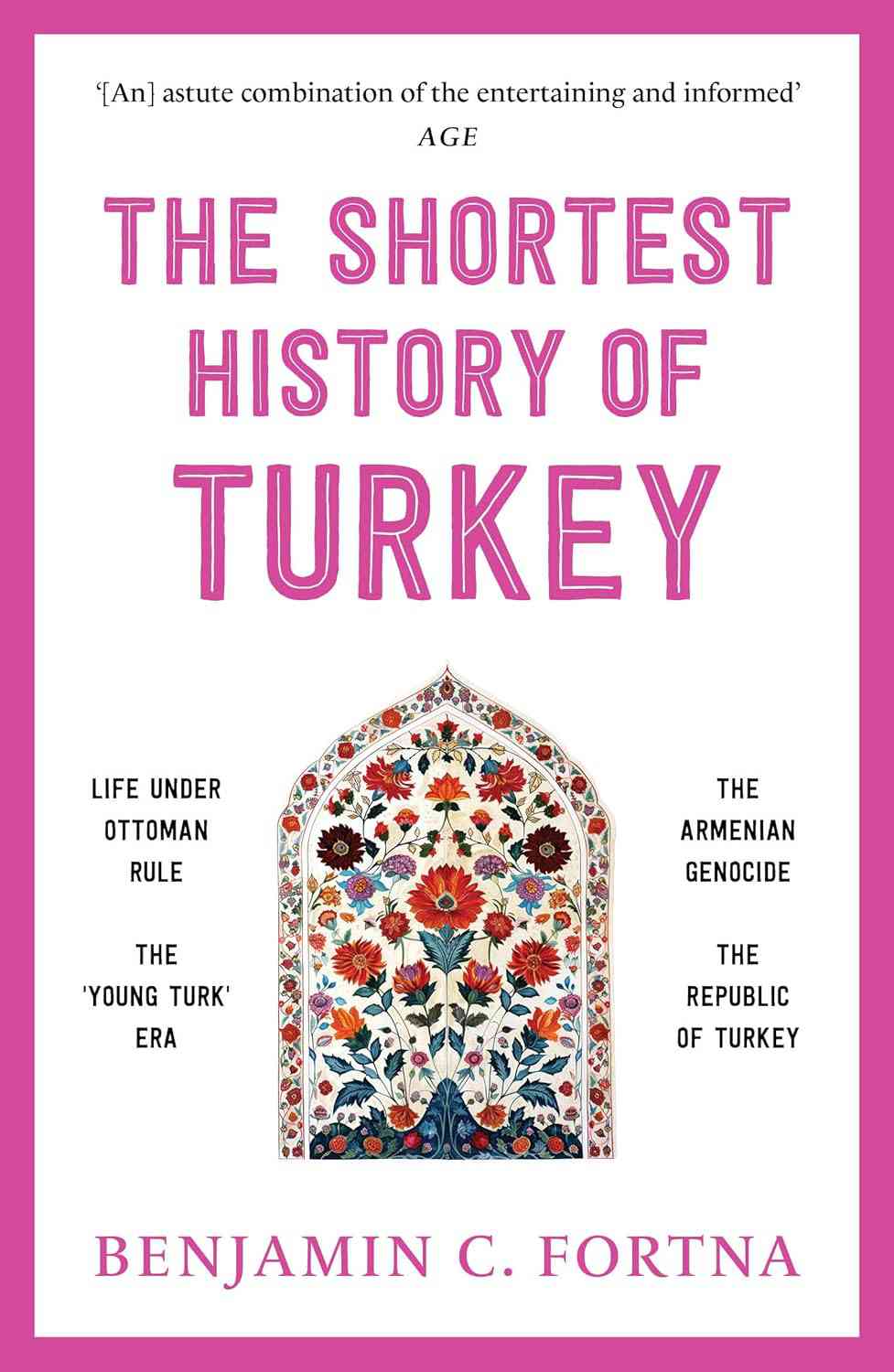
Excerpted with permission from The Shortest History of Turkey, Benjamin C Fortna, Pan Macmillan.
