



The branches of the towering American elm on Seventy-Seventh and Central Park West hang low and crooked across the pavement, some resting on the brick wall along the edge of the street. Burnished orange leaves cover the cobblestones that have been pushed upward by the roots making their way beneath.
When I close my eyes, I can see her nestled in the hollow of a tree, legs folded into herself, chin resting on her knees. I can hear frogs barking in the distance and a thick mess of dark green leaves rubbing against one another in the wind.
My favourite trees at home were the dipterocarps, the old-world hardwoods that dominated the forests, with trunks that stretched so high that the tops were barely visible from the ground, leaves that stole all the sunlight, and roots that ran riot along the forest floor. Arielle preferred the plants of the understorey: wild gingers, orchids, rhododendrons. She would forage in the near darkness and take back what she thought was edible to my father. He would show her how to trim the plants, explaining which parts you could use for cooking and which you had to discard. I only understood how much Arielle hated her father when I saw how much she loved mine.
It took three flights for my father and me to reach Thailand: New York to Dubai, Dubai to Singapore, Singapore to Phuket. On the first plane, the stewardess asked if I wanted to say hello to the pilots. I turned to look at my father and he nodded back blankly, still stunned by grief. The stewardess looked like a perfectly crafted doll – hourglass figure, shiny black hair pulled into a slick bun, ruby- red lipstick to match her crimson skirt suit – and she smelled like green apples. She offered me her hand and I took it. My father followed in silence. When we reached the closed door of the cockpit, the stewardess knocked firmly three times.
The pilot opened the door and looked down at me. I stared up at him.
Well, hello there.
This is Marissa, the stewardess said.
Hello, Marissa, come on in.
The pilot and his copilot wore navy hats and crisp white shirts. The blue sky ahead of us was laced by clouds. The pilot reached into his pocket, pulled out a cherry lollipop and a tiny model of a plane – he explained that it was the same one he was flying – and handed them to me.
Want to see something? he asked me.
He had a thick black beard and a lilting accent. I nodded. He flipped a switch above his head and put his hands on the controller in front of him. He tilted the plane to the left and the wing dipped toward the ground. My mouth fell open in surprise. Both pilots laughed.
Again, I said. It was the first word I had spoken since my mother died. I felt my father’s hand squeeze my shoulder.
Again? the pilot asked.
Again.
He tilted the plane to the right. A thick carpet of fluffy clouds obscured the ocean below us. I felt a rush of delight.
Thank you, my father said to the pilots, thank you.
When I sat back in my seat, I used my model plane to mimic the movements, tilting it first to the left, then to the right. For years after this trip, I thrilled in turbulent air. I loved feeling my stomach flip after sudden drops in altitude. I loved the rolling of the plane as it was buffeted by heavy winds. Every time I heard the wheels unfurl from the belly of a plane with a loud click, I felt a wave of disappointment. Now, when I am in the air, I want absolute stillness. I can’t tolerate anything else.
The entrance to the park at Seventy-Second Street is loud with the broken English of tourists and vendors: Spanish honeymooners trying to barter with a Senegalese man renting bikes; an elderly Japanese couple buying pretzels from a Bangladeshi man; an Indian family of five climbing into a velvet-lined horse carriage. The children look elated, the horse exhausted. Uniformed schoolgirls, a parade of hysterical giggles and tight white socks, stream out of the park closely followed by two women pushing buggies, talking to each other above the noise.
Stale pink carnations surround the imagine circle; a single fresh red rose cuts the second I in half. I weave my way through the people taking photographs and narrowly avoid a collision with a cyclist hurtling down the footpath. The green grass shimmers in the sun and makes my head ache. Finally, I find my bench by the lake. I close my eyes and listen to the birds: jays, warblers, thrushes. I open my eyes to a tanager sitting on the sign that reads: WARNING ALGAE BLOOM.
A few minutes later, a man in a dark grey coat and red scarf sits down on my bench, puts his coffee between us, and lays the Times across his knees. There’s an article on the front page about the nanny who murdered two children on the Upper West Side a few days ago. The mother came home to a bathtub full of blood. I read the first line of the piece over his shoulder: She was unraveling.
The man traces his wrinkled ring finger under each line of copy as he reads. He is a widower, this man. I can tell. Two women power walk past, dark patches of sweat on their T- shirts, pastel headbands keeping hair off their faces.
“Nothing will happen,” one says. “It’ll be like Irene.”
“CNN said it’s going to be bad.”
“They said that last year.”
They laugh in unison, and their scepticism makes my skin itch. The newspapers and news channels have been talking about a hurricane for days. No one is paying them any attention. I know I shouldn’t but I want it to come in all its fury. I want to be where the Earth convulses again, where it brings people to their knees
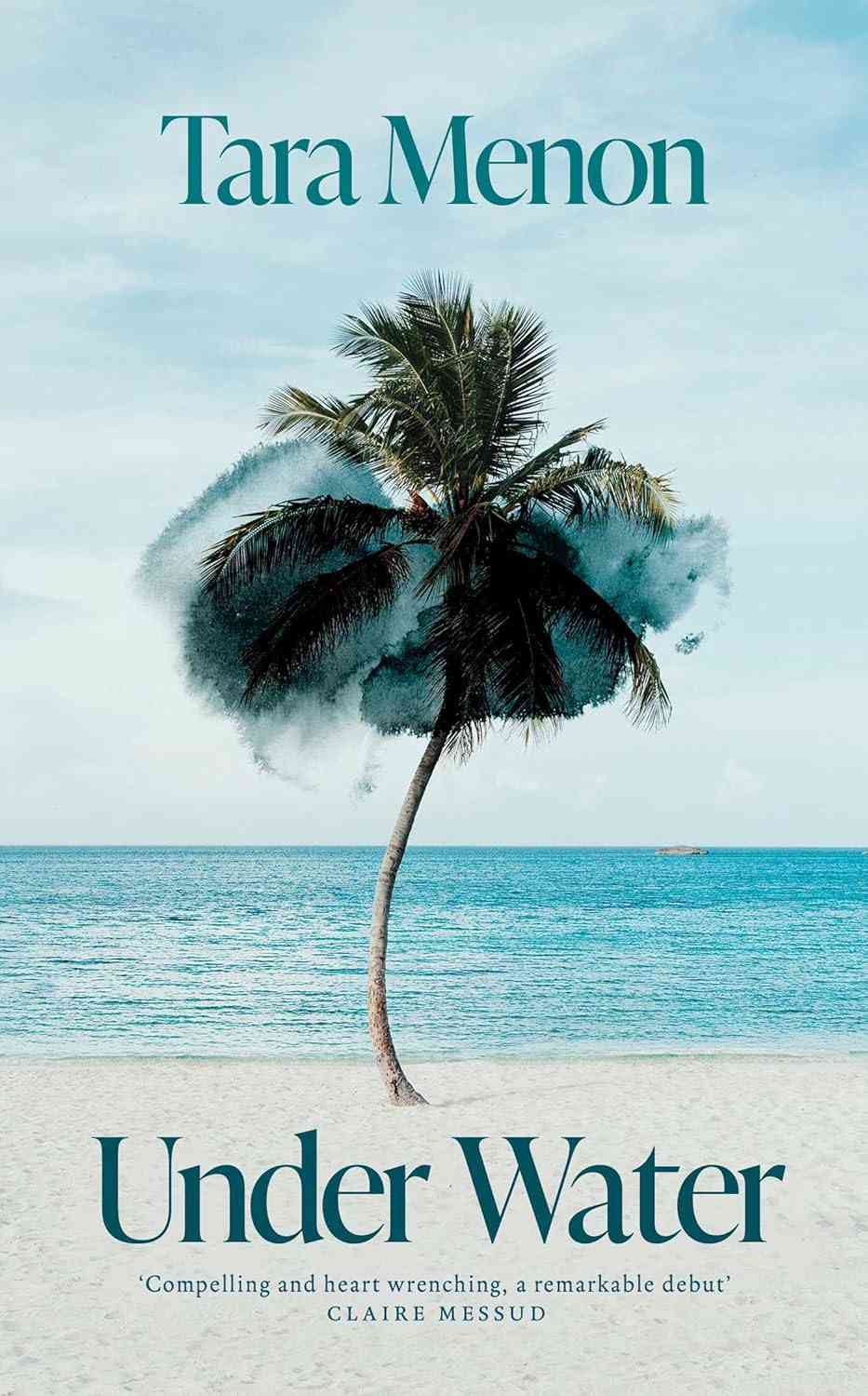
Excerpted with permission from Under Water, Tara Menon, Simon and Schuster.
