






Sometime in the initial decades of the twentieth century, an Ottoman princess and a Hindu queen exchanged photographs, letters, went on vacations to Kashmir and even became godmothers to each other’s children. This is the story of a friendship that is somewhat unusual when viewed from today’s vantage point.
Durru Shehvar (1914-2006) was born an Ottoman princess and married the eldest son of the Nizam of Hyderabad. He was arguably the richest, most powerful princely ruler in colonial India.
The Hindu princess of Kashipur, later Maharani of Kapurthala, Sita Devi (1915-2002) was one of her close friends and a global fashionista of the time. Durru and Sita were of the same age, had much in common yet, at the same time, belonged to completely different worlds.
Neither of the two women published full-length autobiographical accounts. Durru did write a memoir, but it primarily delves into her childhood and forced exile, not around her life after marriage.
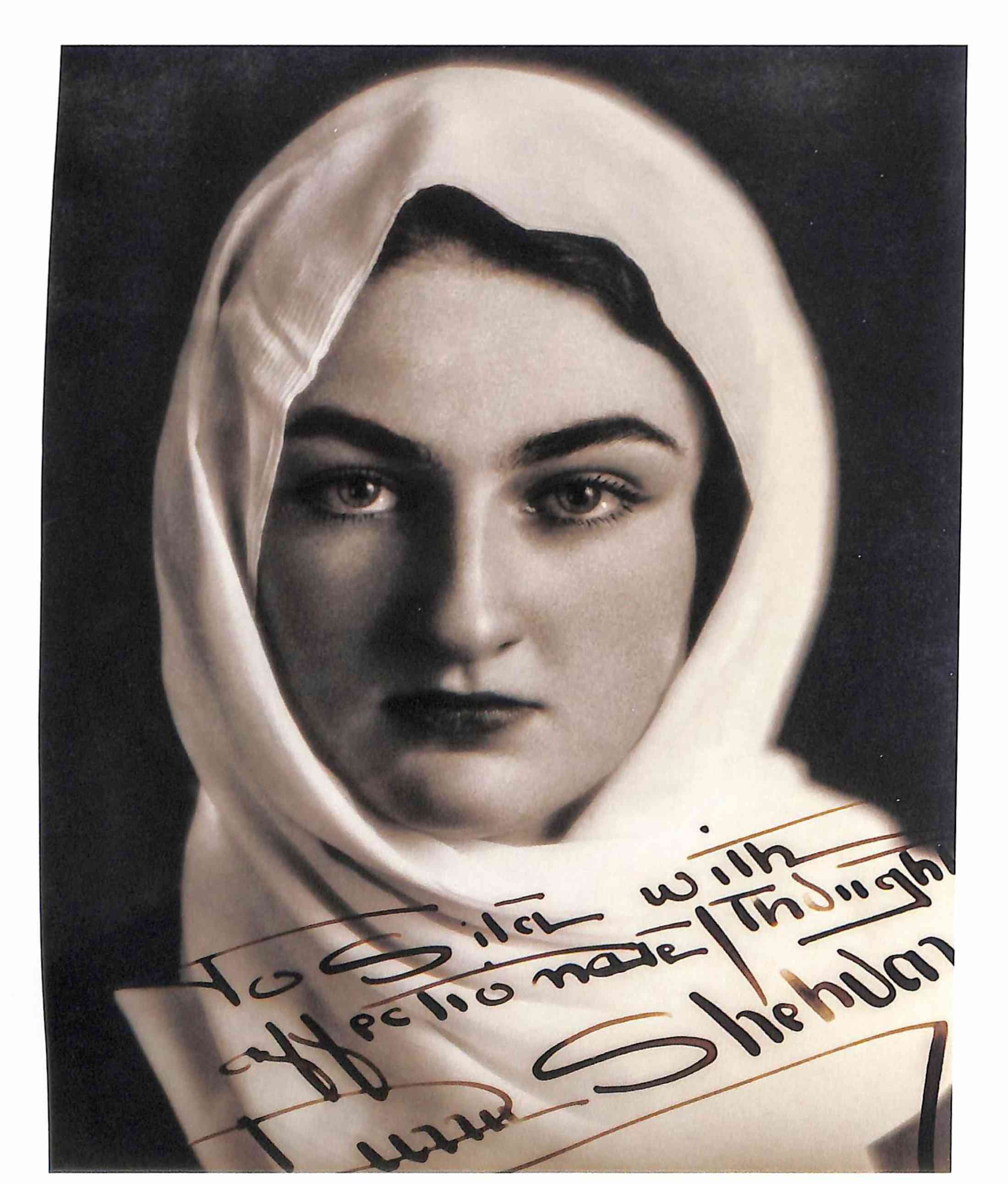
As a result, there was only one piece of evidence to substantiate the anecdotal information about this friendship that Sita Devi’s grandson told me in a telephone conversation – a handwritten note on this 1939 photograph.
“To Sita, with affectionate thoughts, Durru Shehvar,” it says.
Even a cursory glance reveals how markedly distinct this photograph is from the popular imagination of begums and maharanis in princely India. Neither is Durru draped in dazzling finery, nor does she uphold the colonial stereotypes of the sequestered zenana princess turning away from the camera.
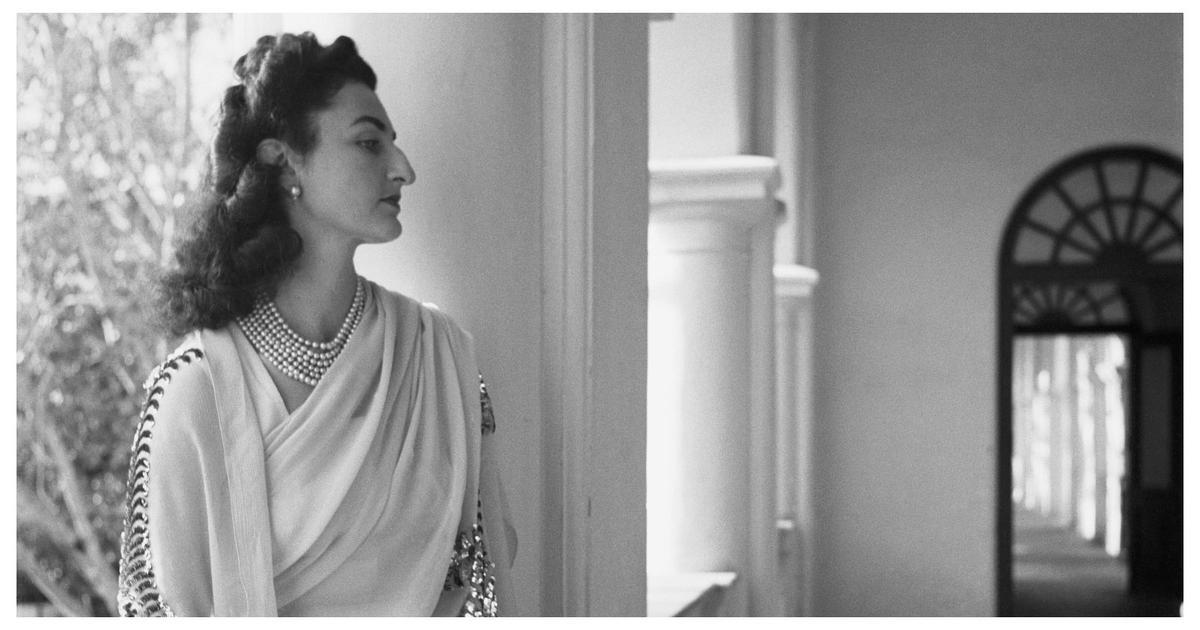
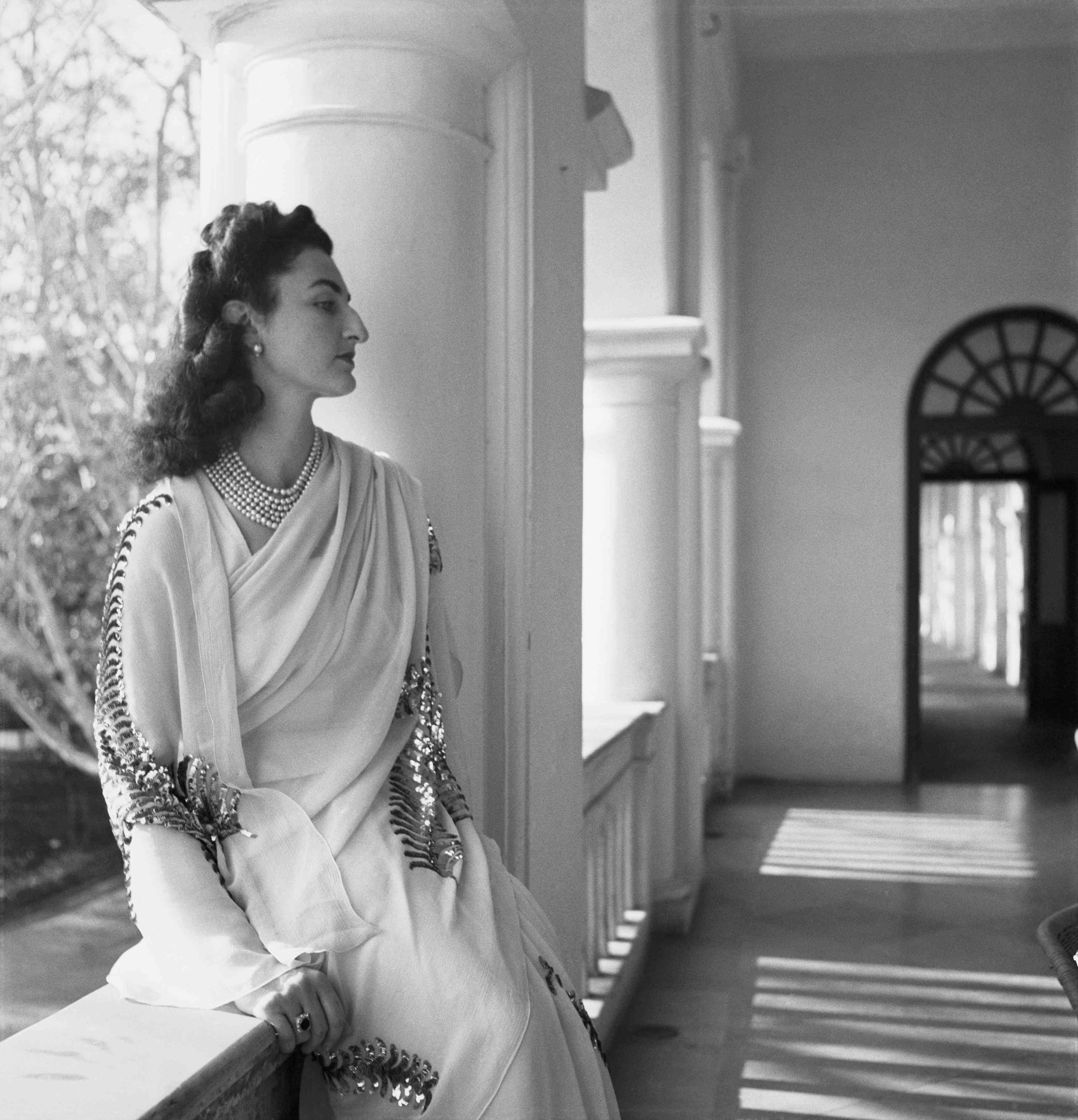
As a counter example, let us look at this photograph (Fig. 2) by the famous British photographer Cecil Beaton framing Durru’s striking side profile against the sunny corridors of Bella Vista, her residence in Hyderabad.
She is draped in an exquisite sequined saree, wearing strings of pearls and earrings. An almost melancholic silence envelopes her as she looks away from the camera, sitting perched on the balustrade in an empty, sunlit corridor.
The first photo is unequivocally intimate. Unadorned with her head covered in a plain scarf, this frontal close-up intensifies Durru’s direct, almost piercing gaze. The light frames her face dramatically, with one half almost in shadow. Her gaze seems bold yet guarded at the same time.
What fascinates me even more is the note at the bottom right, in Durru’s eloquent hand, to her friend Sita.
This keepsake exchanged between two friends serves as a key entry point not only to understanding female friendships, but also the intimate histories of photography in South Asia.
In such exchanges, what does the photograph signify? It must be borne in mind that Durru and Sita’s case is not an isolated example. Hundreds of photographic portraits from this period carry handwritten messages and autographs on the photographic surface.
It seems as if the impulse to share was imbricated in the photographic urge itself, just like others at that time exchanged postcards.
A similar urge to share images continues even today in the deluge of social media posting. However, the analogue photograph holds a special status because of its indexical quality, that is, light reflected from the sitter’s body is directly captured in the photograph.
In contrast to the digital image composed of pixels arranged in rows and columns, in a photograph the presence of the sitter is forever captive in this “painting of light” – the literal meaning of the word in Greek. When exchanged among friends, this analogue photograph thereby presents access to an intimate self.
Especially in matters of princely politics, this friendship could take on varied meanings and forms. One of the first-recorded instances of female diplomacy using photography in South Asia dates from December 17, 1875.
Nelyemma Gujputee Rao of Visakhapatnam shared her full-length photograph with the Prince of Wales upon his request (accessible here). She directly looks at the camera, holding a flower in her right hand while the other hand rests on the back of a cushioned chair.
In the letter accompanying this exchange, she refers to herself as the King’s “faithful servant”.
The diplomatic subtext in this exchange is fairly evident wherein the camera functions as an instrument of state power, ensuring political allegiance from princely states. However, the intimate charge of this photograph – with the young lady making eye-contact with the camera, and subsequently the viewer – points towards the simultaneous rise of a new kind of politics practised by princely women through photographic exchanges.
The political power of the portrait has deep-rooted histories in pre-colonial as well as post-colonial South Asia.
Art historian Natasha Eaton has elaborately researched pre-photographic practices of gifting painted portraits initiated by the East India Company, attempting to replace Mughal gifts of khil’at (robes) and nazar (tribute money) with that of “likenesses”.
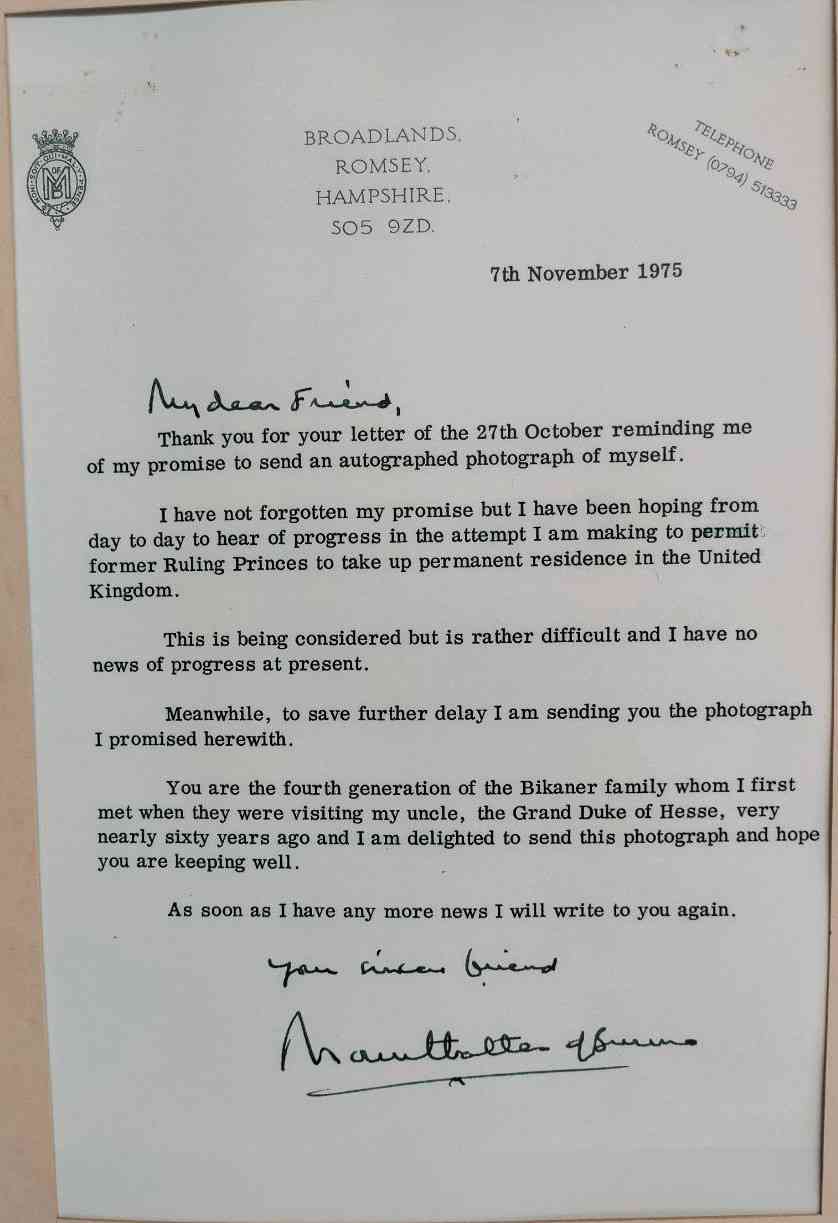
Even in the post-Independence period, exactly a hundred years after Nelyemma’s exchange, the photographic portrait retained huge potency in matters of soft politics. A letter dated November 7, 1975, from Lord Mountbatten of Burma to Maharaja Karni Singh of Bikaner contains the fulfilment of a longstanding demand for sharing an “autographed photograph” (Fig. 3).
This seemingly informal photographic exchange between “friends” is intertwined within the larger political context of the erstwhile prince’s request for permanent residence in the United Kingdom.
Moving beyond these exchanges which explicitly highlight friendships cultivated for diplomatic benefits, what conclusions can be drawn about the case of Durru and Sita? Fig. 1 hints towards a different kind of history – of the camera’s more intimate encounters and its role in forging a transregional women’s network.
The role of princely women in the regional history of women’s movements in South Asia has rarely been outlined or acknowledged. The emergence of Hyderabad as a key site for many women’s clubs and movements needs to be contextualised within Durru’s vast interpersonal networks and charismatic public presence.
A photograph in the LIFE collection (access it here), clearly staged, is crucial in understanding the centrality of Durru’s role in organising first aid training camps for women during World War II.
In a similar side profile as in Fig. 2, Durru stands at the centre of an ensemble of women demonstrating diverse first aid know-hows. All the women, except three, are dressed in a uniform white saree with a simple border.
How might this photograph have circulated? Was it meant for a predominantly female audience serving as a handbook for first aid? Further research on the channels of circulation – newspapers, ladies magazines, hand-distributed pamphlets – will throw much-needed light on the nature of such regional women’s collectives and spaces in princely states.
Most studies on princely women exclusively focus on their grand lifestyles and refined demeanour, so much so that their everyday acts of rebellion are often glossed over – stepping out of purdah, forming diverse friendships, commissioning and exchanging photographic portraits, and eventually setting up the first clubs, schools and hospitals for women.
The status of the photographic portrait as an intimate view to one’s self is an opportunity to examine its role not just in colonial and princely politics, but also within histories of friendships and diplomacy in South Asia.
With the advent of modern nineteenth-century technology – the camera, the telegraph, the postal system – both text and image could now travel at an unprecedented speed. Thus, the early twentieth century witnessed a revolutionary shift in practices of friendship, especially amongst women.
The significance of this phenomenon has already been noted in the Victorian as well as Ottoman contexts. But how it operated in the Indian socio-historical context has been vastly neglected.
Historians from this period have extensively written on the role of British memsahibs in the colony and their social networks, as well as the wider suffragette movement in England with participation of noteworthy Indian counterparts.
However, Indian women’s informal, domestic, transnational networks of friendship have been almost absent in these discussions.
It is precisely at this juncture that Durru’s photographs open a fertile, unexplored terrain of women’s networks and friendships across South Asia in the late colonial period.
Pronita Tripathi is a researcher and writer based in New Delhi, working on histories of photography, friendships and cinema.
