








Deep in the coldest months of 1979, a boisterous young postal worker called Tashi Tundup selected six Zanskari men for an ambitious expedition. He had been tasked with setting up Zanskar’s first post office. Snow blanketed the barley fields, and the mountain passes were closed. As there was no postal or telegraph system, it was almost impossible to communicate with the outside world. News was normally carried by nomadic traders who passed through Zanskar in spring and autumn. There was only one means of leaving the valley over winter. When temperatures dropped, the Zanskar River froze, creating a sinuous corridor of ice famously known as the Chadar or shroud, the ice sheet, the ice road, the frozen one.
The journey was both potent with meaning and terribly dangerous. Zanskar has two high-altitude valleys, the Stod and the Lungnak, the rivers of which meet in the plain around Padum. These rivers form the Zanskar River that continues northwards through a steep twisting gorge for about 150 kilometres until it reaches central Ladakh before spilling into the Indus. Over the centuries, Zanskaris had travelled over the icy path to carry butter wrapped in animal skins for trading in the markets of Leh. Tapping the frozen surface with sticks, they listened to the echoes enabling them to determine thickest sections and detect the safest way forward. They believed that a deity called Sharshok provided safe passage. Even so, a traveller needed to remain alert. The path was constantly moving, shifting, sinking and disappearing into seasonal ice floes. Falling into the frigid waters meant almost certain death.
Tashi chose men known for their strength and skill at reading the ice in this way. Walking carefully over sharpas-flint rocks, he joined them as they climbed down the banks of the frozen river. Tapping the ice, they spent five days travelling to Leh where Tashi purchased vast quantities of stationery, including stamps, pens and envelopes. Several days later, they strapped this enormous load to handmade sleds, lifted large bundles onto their backs and began the return journey, prayer beads trembling through their fingers as they dragged their heavy loads across the delicate surface. Five days later, they returned home and Tashi became Zanskar’s first postmaster.
The new post office was one of several landmark developments in the late seventies and early eighties. The government was under pressure to develop communication services in the badly neglected region. Although Zanskar still had no hospital or road, Padum had recently opened a cooperative store, a bank, and several schoolhouses and medical dispensaries. There was a newly installed judge, a veterinary surgeon and an administrator. Dust also filled the air every summer as workers blasted through rock to create the first motorable link with the outside world. Many people observed these activities with some trepidation. The natural spirits were believed to be easily offended and capable of retribution.
Despite these fears, the mail service proved so popular that Tashi could not walk through the main thoroughfare in Padum without fielding calls of ‘When will the mail arrive? When will the mail arrive?’ Young men were increasingly leaving the valley in search of paid work, and people were anxious to hear from loved ones living far away. Encouraged by the response, Tashi hired three men to travel across the frozen river and collect the mail from Leh twice a month. Rigsem was the eldest and most experienced traveller. Children are normally named according to their position in the family, and both of Rigsem’s companions, being the eldest males in their families, were called Norbu.
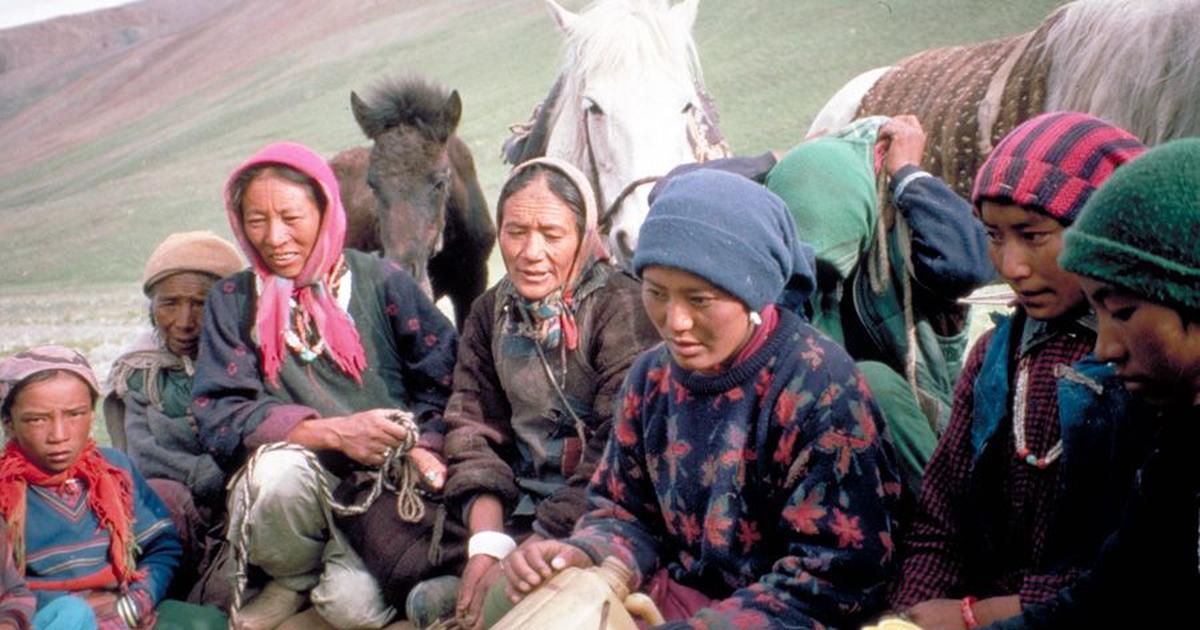
The fourth and final mail run of the winter of 1980 began like any other. An astrologer determined the hour of their departure by tracing a complex series of esoteric calculations on a tray of sand. On the chosen date, everyone rose to perform the usual offerings, burning juniper twigs that sent fragrant smoke to local gods and spirits. The postmen began packing. Their bags were fashioned from willow sticks wound with handmade rope as few mass-produced goods reached the valley. For sustenance, they carried tea, sugar and tsampa, a kind of barley meal. Hand-sewn yak-wool boots were still common, but the men wore modern white gumboots. In lieu of socks, they cushioned their feet with handfuls of grass. At the appointed hour, a crowd gathered to see them off on their journey. Most people wore yak-wool cloaks and cloth belts with handy tools, knives and spoons tucked in. Many men still had ponytails, women wore their hair in tiny pigtails drawn together and pinned to their clothing at the waist with large circular silver brooches. Women also wore peraks, impressive headdresses fashioned from leather and yak wool, and studded with precious turquoise, silver and gold. The community was close and everyone wished the postmen well as they sipped homebrewed barley beer known as chang, offering droplets to the spirits and enveloping themselves in sweet incense. Slinging charms around their necks for protection, the men promised to return within 14 days.
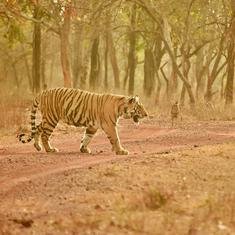
Soon after leaving Padum, the men reached the frozen river at the bottom of a deep gorge lined with cliffs made from sandstone and limestone. Snow leopards were known to haunt the ravines on either side of this gorge. Keeping to the thickest sections of ice, they passed frozen waterfalls, whirlpools and waves suspended in unearthly shapes.
Glaciofluvial mountains set against the blue-white ice of the river create a hauntingly beautiful scene. Unusual features are often seen in mythological terms. In the oldest descriptions of Zanskar, the hills and mountains of the central plain around Padum are said to resemble a reclining demoness. A small, pointed hillock in the village of Pipiting represents her breast. Her feet and head are located in the villages of Sani and Tzazar. Shrines built at certain locations are believed to have pierced the demon’s heart and pinned her down. According to legend, a one-eyed goddess watches over the valley to provide protection. One possible derivation of the name Zanskar is ‘Zan-mKhar’ or food palace – a reference to the abundance of crops in this otherwise arid region. Another possibility could be the Tibetan words for copper (zangs) and white (kar). Tibetan mythology speaks of a copper-coloured mountain. Nuggets of the precious mineral are sometimes found in Zanskar’s rivers though this natural resource is never exploited for fear of angering the gods.
Sharshok, the spiritual guardian of this river, belongs to a complex pantheon of deities that includes ghosts and other unruly entities. Lha are benevolent spirits of the mountain and sky, while lhu are spirits of the water and soil. There are tsen, red-faced spirits with hollow backs that wander the roads at night; female manmo that live in high places; as well as the beyulpa and bilingpa, the hidden people. People rarely agree on which of these spirits are real and which are not. They cannot be seen by the normal eye but might be glimpsed as phantoms in the night or reconstructed gradually through meditation. Dakinis or sky dancers can be either benign fairies, mountain protectors or female forces of inspiration who grant humans the power to fly or pass through rock and teach the language of birds. Deities are like the wind and may exist in many places at once.
Chance has no place in their understanding of life. Natural forces are believed to respond to the actions of humans, both physical and intangible. Disasters are invariably attributed to the moral failures of people or a lack of respect for the environment.
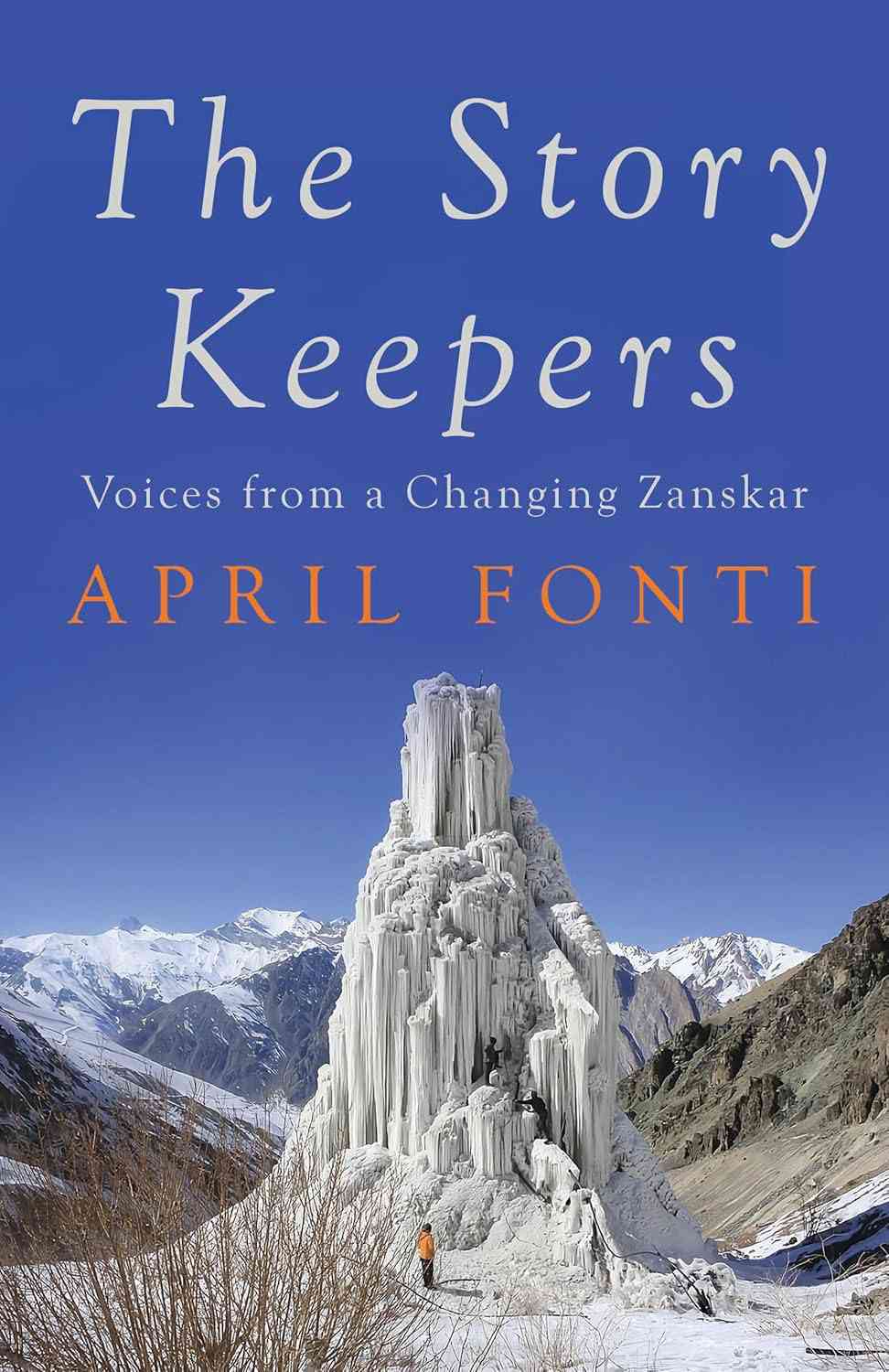
Excerpted with permission from The Story Keepers: Voices From A Changing Zanskar, April Fonti, Juggernaut.
