






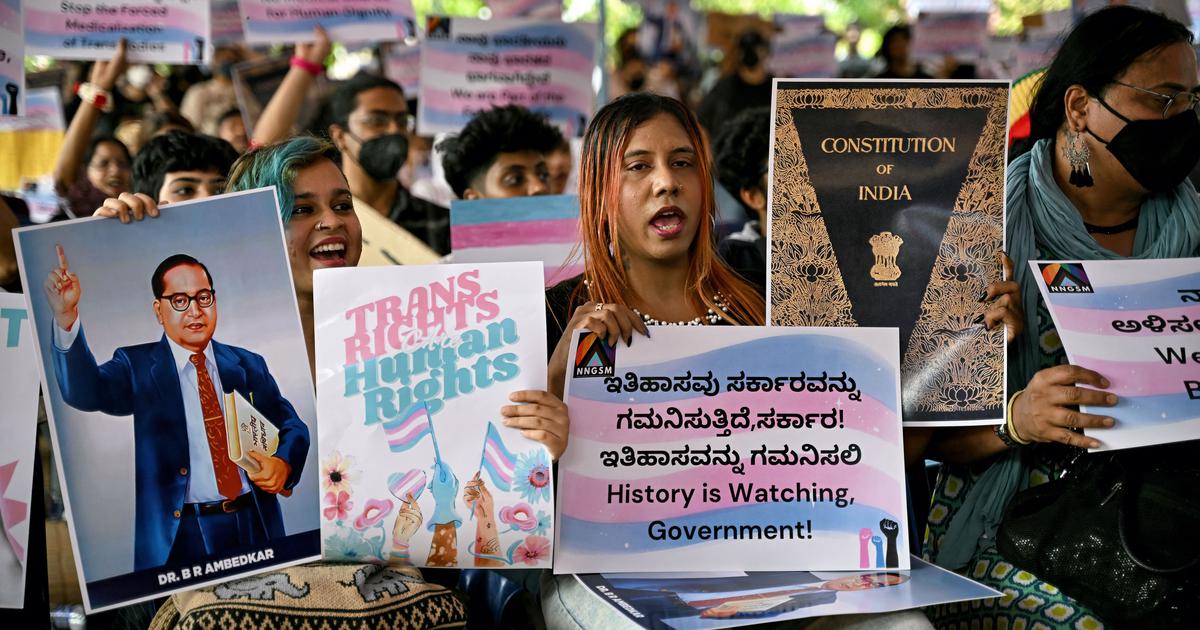
Gender transgression and alternate sexualities have a long history in the Indian subcontinent, which can be seen from the existence of trans and other various cultural gender identities, such as hijra (pan-South Asia), kinnar (northern Indian states), nupi-manbi (Manipur), jogappa/jogta (Karnataka), bhaadu/alkap/gidal/chhokra (West Bengal and Bangladesh), aravani (Tamil Nadu) and shiva-shakti (Andhra Pradesh and Telangana). The advent of colonialism across the world, and especially in southern Asia, saw the different indigenous trans and non-binary identities and expressions across cultures being treated as perversions, due to the imposition of the binary model of gender and sexuality. This manifested in the legal domain, with the enactment of Section 377 of the Indian Penal Code, which criminalised same-sex relations between consenting adults.
However, this was not the only law for the systematic marginalisation and invisibilisation of the queer and transgender communities across the country. This was made possible through the enactment of the Criminal Tribes Act in 1871, in which the British government made certain tribes and communities criminal at birth. This law was later amended in 1897 and An Act for the Registration of Criminal Tribes and Eunuchs was adopted to explicitly include trans and gender-diverse communities under its ambit. Police were directed to keep a register with names and addresses of all “eunuchs” and arrest them without any warrant, especially those reasonably suspected of castration and committing offences under Section 377.
The extreme socio-economic marginalisation of trans and other gender-diverse communities in India during the post-Independence era has its roots in the Indian state’s reluctance to accept and accommodate nonconforming gender identities, even after the Constitution was adopted to safeguard the fundamental rights of all citizens. Although the Criminal Tribes Act was repealed in 1952, de-notifying the listed tribes and communities and leading to the decriminalisation of those groups, the legal status of trans and gender-diverse communities remained, at best, ambiguous because Indian society and its laws continue to be based on the model of binary sex and/or gender and reflect regressive sexual politics. Additionally, numerous states proceeded to prosecute and regularly arrest and harass trans people who worked in their traditional professions by incorporating a section of the Criminal Tribes Act, 1871, into their state policies. The PUCLKarnataka’s (2003) groundbreaking report highlighted the systematic structural violence perpetrated by both state and non-state actors on trans and gender-diverse individuals.
Until a decade ago, the legal system deliberately denied trans and gender-diverse people their right to a life of dignity by preventing them from getting ration cards, participating in government programmes, voting, owning property and other basic rights.
The trans and gender-diverse communities in India have endured structural exclusion and social marginalisation for more than a century. This is seen in how trans persons are completely shut out of society and rendered invisible in the economic system. The acute lack of inclusive policies, coupled with the relative absence of stable sources of income that can shield them from crises in the economy, society and public health, has forced trans people to frequently turn to risky professions like challa (beggary), launda dance, badhai (blessing newborns) and sex work, even if they are willing to pursue other career paths.
It is also important to note that there is almost no data to show how the socioeconomic situation of the trans and gender non-conforming populations in India is getting worse. The report titled “Human Rights of Transgender as a Third Gender”, which was submitted to the National Human Rights Commission (NHRC) in 2017, is one of the few studies on this subject that is currently available. The report stated that a startling 92% of the trans population in India is denied the opportunity to engage in any economic activities. Of those who responded, 89% said that even those who were skilled and qualified were unable to find employment and were frequently turned down for positions because of their gender identity and/or expression. The high school dropout rate among trans and gender-diverse groups is considered to be a significant determinant behind their deteriorating socioeconomic position, in addition to the societal stigma surrounding trans identities and expressions in the workplace.
Additionally, a bleak image of India’s trans population’s weakened right to education was presented by both the census data from 2011 and the NHRC study. While census data revealed that only 56% of India’s trans population is literate, other reports claimed that 87% of trans and gender non-conforming children are forced to leave formal education at a young age because there is no redressal mechanism to shield them from the severe bullying, discrimination and violence they experience at school. The extreme lack of access to financial resources is made worse by the homelessness and lack of familial support that trans people in India experience. According to the 2017 report, 98% of trans people do not reside with their birth family and do not have access to safe housing. It does not stop there, though, as many members of the trans and other GSM communities are forced to leave their homes at a young age in order to avoid extreme violence and humiliation because of their sexual orientation, gender identity, gender expression and sex characteristics (SOGIESC). This causes havoc with their career prospects and access to financial resources, which in turn prevents them from later accessing safe spaces or shelters, making it a distant dream for them. Trans and gender-diverse groups in India are disproportionately disadvantaged in jobs, labour rights and economic justice axes as a result of all these issues.
There has been a radical shift in the legal landscape with regard to the rights of queer and trans individuals across the country. In 2014, the landmark NALSA verdict recognised the fundamental rights of trans persons under the Constitution and gave legal recognition to the “third gender”. Recognising the legacy of historical and institutional discrimination, the Supreme Court directed the Central and state governments to make provisions for legal recognition of the “third gender” in all documents, provide affirmative action to trans persons in public employment and higher education, and provide welfare measures.
Thereafter, in 2018, the Supreme Court partially read down Section 377 of the Indian Penal Code, decriminalising consensual same-sex relations, permanently altering the legal landscape for queer and trans persons. The Transgender (Protection of Persons) Act, 2019, ostensibly passed for the protection of the rights of trans persons, went against several provisions of the NALSA verdict – such as self-determination of gender identity and affirmative action in public employment and higher education – leading to outrage by trans communities across the country. It shifted from the rights-based approach of the NALSA verdict to a welfare approach, leaving trans persons at the mercy and goodwill of the State. This is evidenced by the vague provisions in the Act that outline welfare schemes for employment and economic empowerment, without giving any specifics of these schemes. This same treatment is witnessed in the Rules that execute the provisions of the Act.
The struggle does not end here. As the COVID-19 pandemic hit hard, it snowballed into a humanitarian crisis which unsettled the lives of millions of India’s trans, gender-diverse and economically underprivileged GSM individuals. The pandemic also washed away the hard-earned progress around socio-economic and socio-legal realities brought about through the trans and larger GSM rights movement in India. Community collectives, transgender organisations and larger GSM community groups, especially in rural areas, ended up losing all their limited resources in meeting the massive hunger crisis within the resource-lacking trans communities that the COVID-19 pandemic and the subsequent economic lockdown triggered. In the shadow of COVID-19 and the upcoming Legislative Assembly elections for West Bengal, 21 queer and trans groups across the state came together to draft the Bengal Trans and Queer Charter of Demands. The charter outlined the need for a more queer- and trans-sensitive education system, which centres their needs and aspirations, provides for skills training and formulates trans-inclusive schemes. The protest against the Trans Act reflects similar demands across the country.
Thus, we see that the trajectory of rights for trans and gender-diverse persons has a long history, under different forms of government and societies. We have also witnessed the dire socio-economic situation of trans and gender-diverse persons.
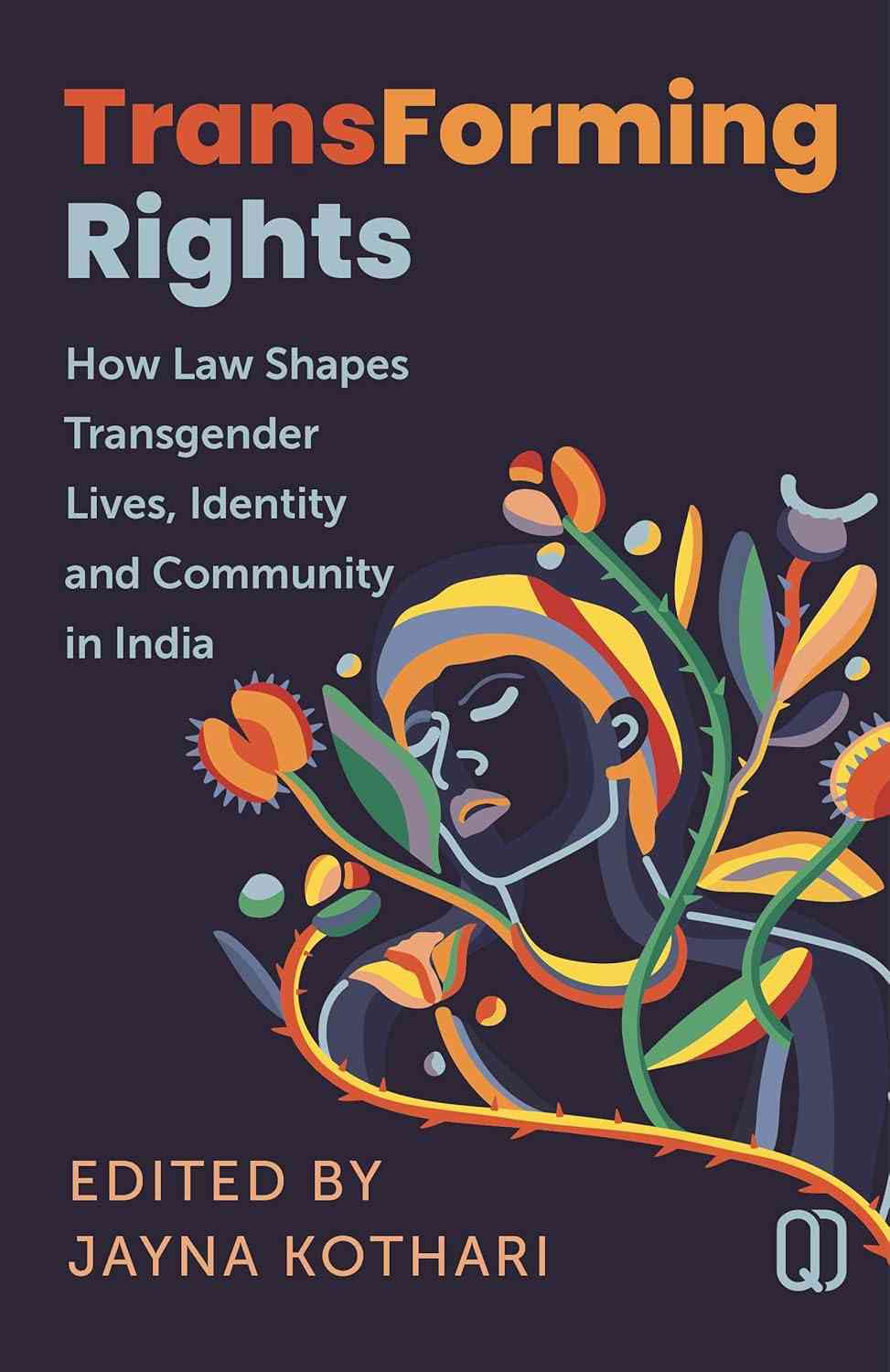
Excerpted with permission from Transforming Rights: How Law Shapes Transgender Lives, Identity and Community in India, edited by Jayna Kothari, QD/Westland.
