







There’s nothing mysterious about my sister. She wasn’t hard to find. It’s just I’d never tried. All I had to do was look up where she works and catch a few buses over there. It turned out it was quite a long way, but still. I didn’t need a passport or anything. It would have been better, I guess, to phone ahead and make sure she was working that day, but we’re not talking about some secret hideout here.
To be fair to me, she had never tried to find me, either. She didn’t send Christmas cards or any of that stuff because of Dad. Because I was round the corner from Dad all those years, and seeing him every day to take his meals and help him put on his socks, stuff like that, and she didn’t want anything to do with him. I wouldn’t argue with that. She had her reasons.
If someone asked Dad about her, he’d ignore them. If pushed he’d say, she’s nothing to do with me, what are you asking me for? I grew up putting all of that in one corner of my head. She’s nothing to do with him. But then in another corner of my head, I knew it couldn’t be true. I had to go through all his drawers to find the bank books, all that stuff, and there were our birth certificates, Caroline Marie in May 1965, Stephanie Jane in October 1966. Both births registered by their father, Stanley Cartwright.
Mum had been married before, and her first husband died in an accident at work. It was the insurance payout that meant she could keep the house. He died in 1960. She was a widow then, with no children but a house of her own. Some people thought that made her a catch. But most people said there was something the matter with her, they’d never had children even though they were married five years. Either way, there was talk about her. And there was more talk when she took up with Dad. He had a bad reputation, being a fighter, and some said he only wanted to get his feet under the table. I’d heard Nanny Marie say he knew which side his bread was buttered.
What I remember is him telling her she was lucky, he took a chance on someone else’s wife, took a chance on her being able to have kids with him. He said he never did hold with a pair of second-hand shoes. I remember him saying, that Caroline is nothing to do with me. You’re lucky I let her stay in the house. So somewhere in my head was the idea that Caroline was from Mum’s first marriage, even though anyone with basic maths can see that’s nonsense.
These things were said and not said. They were like the background, the colour of how things went in the house. They were not something you could argue about, so you couldn’t say it made no sense. It’s hard to explain. Imagine someone suddenly starts saying Tuesday comes straight after Sunday. There’s no such thing as Monday. You learn not to mention Monday. Monday is not a thing in your house. At school you might write Monday on your page, but you’d never make that mistake at home. You think when you write it out, what a stupid thing they do at school, making you write out a word that doesn’t exist. You have to have Tuesday twice in your head every week to catch up, but that’s not hard. You skip it over. We skipped over a lot of things in our house.
I didn’t find it hard to skip over the part where I found where my sister was now and told her Dad had died. I thought of finding her and telling her, and I rubbed out that thought as soon as I had it. It must be something I learned to do long ago, to think of her and then wipe that thought, all in one breath. I skipped over the concept of sister, and I skipped over her having any interest in what had just happened. I did wonder about the will, though. About what it might say. But I needn’t have worried. Firstly, because he hadn’t bothered to make a will, and secondly, there was nothing left to leave either of us. He’d borrowed against his pension all those years, for dogs, for fighting birds, for bets on sure things and bets on long shots, and nights at the dogs, and beer at the club, and there was nothing left. I was going to end up paying for the damn funeral. And if I wanted that demented old dog done away with before it savaged someone and landed me in court, it was going to cost me £138 plus VAT. They cost more to kill the heavier they are.
I’m glad the funeral was not calculated by kilo of the body. Dad was a big, square, heavy man, and sitting around all day once his knees and hips gave up had not made him any lighter. I wondered if they’d had trouble getting him out of that chair, if he’d got wedged in it and set hard. I wondered if they’d managed to get him to lie down flat on the stretcher to take him out to the body wagon. I’d find myself worrying about things like that. Like, did they have to break his legs to get him into the coffin? How did they do that?
Then I worried about what clothes he should wear. I hadn’t been there to put out his clothes or give any to the undertaker. I didn’t want him arriving in the afterlife in his braces and jumper with no proper shirt or collar. I woke up worrying about his feet. He’d been waiting to see the foot person the next week. His nails were in a right mess. Did the nails rip the socks when they put them on? Would he live forever with his toes sticking out? I don’t know why I started worrying about these things when I never go to church, and I didn’t know I believed in the afterlife. But it turns out I did, because I kept going round to the undertakers with a different set of clothes and asking about what he should have on his feet and had they brushed his hair.
They were very patient with me. They said, why not go in and see him, put your mind at rest? He’s all decent. We’ve put him in that good shirt you brought, and the V-neck and the jacket. He’s in his best trousers and new black socks. We can’t put shoes on him, because of the furnace. But I wouldn’t go in. I knew I was being a coward. It wasn’t because of seeing him dead. It was because I knew he’d be angry with me for leaving him in the house and going down the road to get drunk, for not being there when they carried him out. I couldn’t look him in the eye, even if they were closed and weighed down with pennies. I had been afraid of him too long to stop now.
Then I started thinking about the pennies on his eyes. I remembered when Nanny Marie died, we gave the undertaker silver coins to put in her pockets to pay the ferryman to cross into heaven. Should I do the same for Dad? He hated to be without cash in his pocket. I was forever stitching the linings of his trousers back together because he carried so much coin in there they ripped. He would not carry a debit card. He said it wasn’t manly. A man had to have cash. But if you’re not allowed shoes because of the furnace, what about coins? Surely they would be hard to burn as well.
The undertaker’s was along the row from work. There’s a row of shops with our dry-cleaner’s at one end, Co-op and barber’s and off-licence in the middle, and the Men in Black at the other end before the bus stop. It’s called Morris and Baines, Funeral Directors, but everyone calls it Men in Black, for obvious reasons. I’d come out on a break and go to the Co-op, or hang around the back door with a cigarette, and all the time I was fixed on that door at the end of the row, the image of him in there, waiting for me to get the courage up and go and see him. I’d walk round and round the block, and all the time I was thinking, he’s fuming by now. Get in there and face the music, Stef, you’ve never been a coward before. The thing is, I’d never been allowed to be a coward. Not while he was watching. I was wondering what kind of a person I would be now he wasn’t watching what I was doing. Would I be the kind of person who sent a message to her sister, or not? Did I even have a sister?
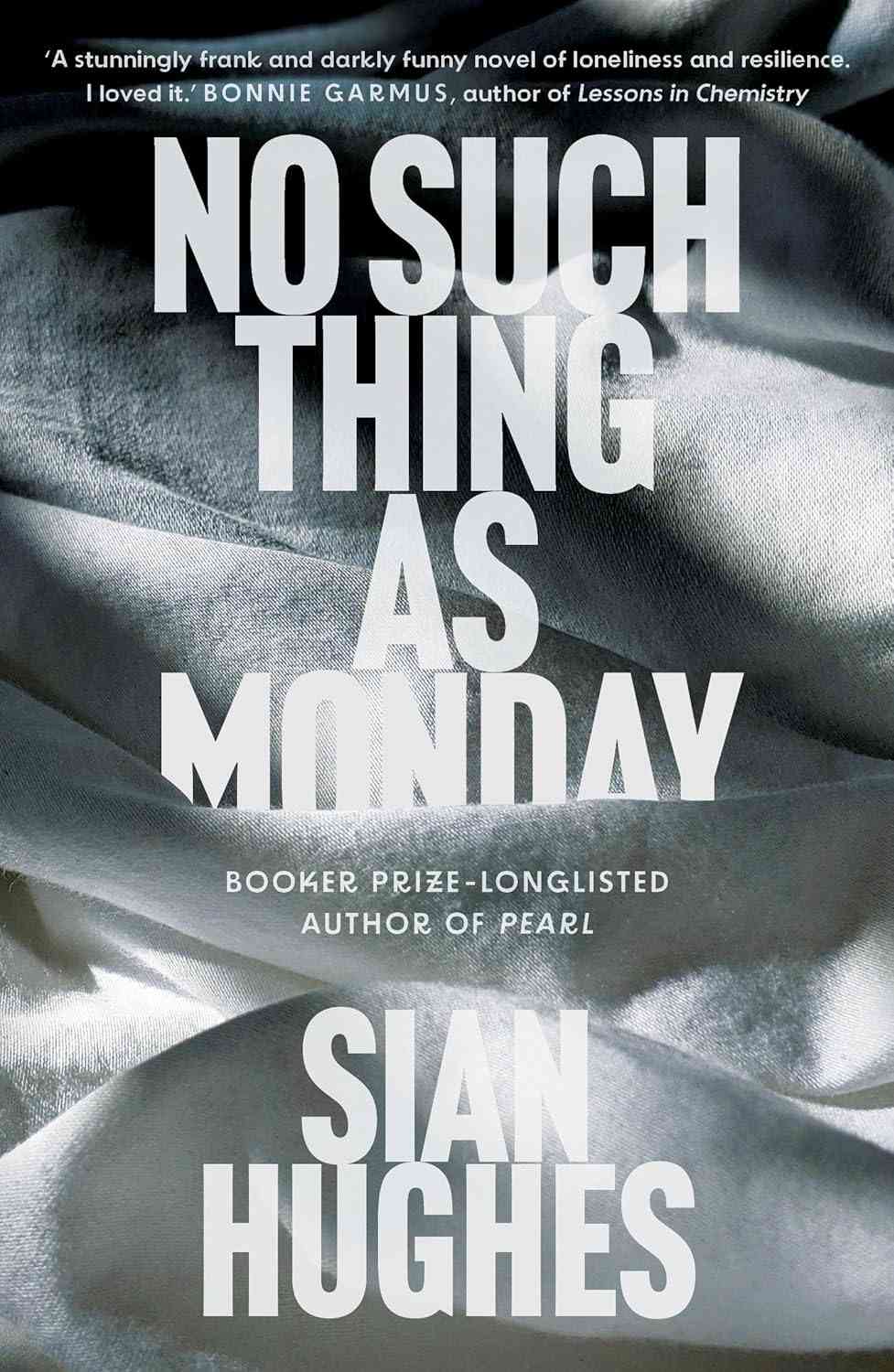
Excerpted with permission from No Such Thing as Monday, Sian Hughes, Pan Macmillan.
