



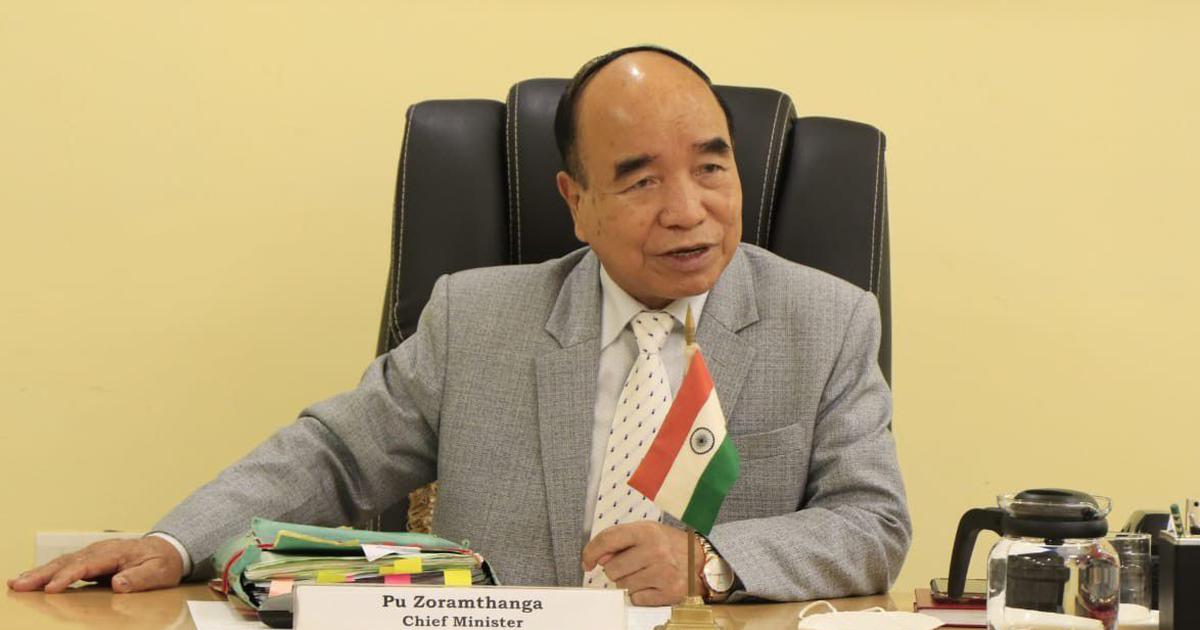
One lifestyle of the underground movement was to give and call the names of key figures by nicknames for security reasons. So, we called India “Vaiho”, Pakistan “Bawngate”, America “Pawikawia” (monied men); Burma “Kawlho” and China “Chemfawngfaia” after their white complexion. While in Dhaka, we occasionally called on the Chinese consulate. Mr Laldenga also visited China sometime in the past. Mr Lalthangliana Philips had spent several months as ambassador for Mizoram.
Having a separate and independent organisation of our own, without any source of funds or income, the daily requirement of rations, money and other essentials for more than one thousand people was not small. Arms and ammunitions were one thing, but meeting daily requirements needed close attention. And since Pakistan, our main benefactor, could not extend the needed help financially and in military hardware, we had to find another source of support. So, with Pu Laldenga, we applied for permission to visit Peking (Beijing), and at last, they agreed.
Our existence in Pakistan was clandestine, as we were hidden guests, but to go to foreign countries passports and visas were needed. Unless those rules were complied with, we were bound to face problems at the airport and with immigration. But there was one possibility: a stateless passport. In the border areas, there are always people who do not have citizenship. Such people are issued stateless passports by their host countries when they go to other countries. Well, we explored something whose existence we did not even know!
A normal passport would bear the name of the issuing country embossed with a stamp. But the passports they issued for us were simply thick, folded grey paper of the size of a normal passport; the contents inside bore my fake name with full fake particulars and a stamp. A small visa issued by the Chinese consulate was also attached. Then, personnel from the Chinese consulate and officers from ISI took us to the Dhaka airport – a real VIP treat, indeed! There we boarded Pakistan International Airlines (PIA) and took off in the direction of China.
The day was sometime in early September 1970. We first landed in the southern city of Canton and stopped there for a night halt. The following morning, we were taken around to see some important places. From Canton, we flew on Chinese Airlines. One remarkable thing that I cannot miss to mention is that the Chinese foreign minister, Mr Han Nien Lung, came to receive us at the airport! That was far beyond our expectation – we three humble underground leaders from north-east India: Mr Laldenga, president; Mr Lalhmingthanga, foreign minister; and myself, Secretary to the President. The Chinese government put us up in a very standard hotel, Hotel Peking, near Tiananmen Square, somewhere in the centre of the city.
Mr Lalthangliana had been to Peking, as mentioned earlier. He was from the same Pukpui village as Pu Laldenga, and they were good friends from boyhood. Before I joined Pu Denga’s family in Dhaka, Pu Lalthangliana had lived with them for quite some time. A thorough gentleman – well-mannered, fond of jokes, but an absent-minded man. He used to tell Mizo legendary stories and myths to Pu Denga’s children, and they liked him. His Seventh-day Adventist faith, however, always put him in an awkward position among the pork-eating Chinese when dinner was served for him. During his short tenure as an ambassador, he picked up Chinese to a good extent. Even after coming overground in Mizoram, he completed doctoral courses in several subjects. He met an untimely death in a motor accident. I really missed him after his sad demise.
During our temporary stay in Peking, we met several senior officials like top army generals, top officials of the foreign ministry and even the prime minister of China, Mr Chou Enlai. They took us to the Army Headquarters, and at one place, they even let us fire at targets with AK-47 assault rifles. Being an ex-serviceman, Pu Laldenga was a better shooter than me. Sometimes, they took us to the Air Force Headquarters and demonstrated air shows by MiG fighters. One day, as we visited an Air Force division, I put a question to the division commander – whether he was afraid or not at the beginning of his flight. He responded, “I didn’t know how to fly! I am an army commander.” He went on to say that army commanders took control of the air force. That was the 1970s; the situation might have changed now.
At the time we visited China the Cultural Revolution had passed its zenith. Their main theme was to praise Mao Tsetung and to pass severe criticism on Liu Shaoqi, Mao’s political opponent. They taught their school children like this: “My parents love me so much; but Chairman Mao’s love is greater than that.”
The Communist Party was all in China at the time, and their chairman was Mao Tse-tung. He was the founder of the Communist Party and the leader of the movement. The story of how he led the successful Long March is a significant event in world history. Next in importance to Mao was Mr Lin Piao, the chief commander of the National Red Army. He was of short stature, smaller even than me. In spite of his small physique, his voice impressed the million-strong audience gathered at Tiananmen Square on the National Day. The head of the Chinese government was Chou En-lai, a perfect gentleman, as President Bhutto truly commented. Besides these, there were Chiang Ching (Mao’s wife), Kuo Mo-jo, Tung Pi-wu and other top officials. The senior leaders in the Cultural Movement were given high respect.
We had several rounds of meetings and discussions with their army generals and senior officials in the foreign ministry. Our main appeals were for armaments, money, uniforms, medicines and rice. While they cordially and graciously agreed to give us our requirements, including more sophisticated weapons, the main hurdle was transport, since Gen. Yahya Khan of Pakistan was not willing to arrange it. On our part, we gave the Chinese authorities two possibilities. One was air-dropping which they said was impracticable. The other proposal was transportation by a Chinese ship. The ship would come to the Bay of Bengal, then enter by night into the Teknaf Bay in Burma. We would wait for it and unload it so that, before daybreak, the ship could move out into the safety of the Indian Ocean.
This latter proposal was given serious thought by the Chinese authorities. All other required demands such as medicines, uniforms, rice, etc. were sent to us as approved by the Pakistan government. Regarding uniforms, the one demand we had was the cap – a flat-top cap as worn by the Indian Army. They asked for a sample. We replied, “We didn’t bring it. Didn’t you still keep the army cap?” But they said, ‘All the arms and equipment captured in the war had been returned, including men.’ Then we told them we would send the samples once we reached Dhaka. We did send it, and they also sent back to us a good number of quality flat-top caps.
As for the military weapons, they said, “As a first step, we will give you AK-47 rifles, 40 mm rocket launchers, light machine guns, grenades and ammunition sufficient for 3000 personnel. Over and above these, we will give you as many as you can take.” After promising these things, they considered the feasibility of transportation based on our advice for almost a month and informed us of the problem when we met Premier Chou En-lai. They said, “Even if we send by ship, it has to pass through the Strait of Malacca, which is now controlled by the American group of warships known as the Seventh Fleet. It’s not possible to go through this strait, and so, transport by ship is not possible.” We felt really sorry about this.
We stayed in China for over a month, and during this time, we visited most of the important places in and around Peking, including the Great Wall of China. Two interpreters, Mr Shao (the older one) and Mr Chang (the younger one), accompanied us wherever we went, and they did their best to guide us. After spending more than a week, we asked Chang, “You recently got married – do you feel homesick?” But Chang said, in a serious tone, “I do my duty; why should I feel homesick?” It appeared they were not supposed to be homesick when doing their duty.
Once we were taken to visit politically important places west of Peking and arrived at Sian (Xi’an) city. From there, we went to Yenan by motor – the place where the Long March ended. We stayed overnight at Huangling. One memorable thing on the way was that we climbed up a hill, and instead of climbing down the opposite side as in Mizoram, we suddenly reached a tableland, the plateau. As we reached further north, the North Star was becoming higher. In those areas, we saw many poor villagers still living in caves.
When we reached Yenan, my malaria reappeared, and I spent the whole journey with illness. My sickness was reported to Peking. Peking officials scolded our guides, “Why did you make him sick? It must be because of your bad treatment.” So, they did not allow us to return to Sian (Xi’an) by vehicle. They sent for an aeroplane for our return tour. The Chinese short-term course for my treatment was to administer more tablets and more injections to me. I didn’t know what medicines they gave me except APC. They gave me heavy doses of medicine, and I recovered very early.
On arrival in Sian, we were to fly back to Peking but, because of bad weather, we had to wait till it cleared up. In the meantime, we visited the lake nearby and tried to catch fish with hooks. This time, our guide was General Wing, who liked to make jokes. He caught a fish, thinking it was big. But when he lifted it up, it was a small fish. Irritated, he threw it back to the lake, saying, “Call your father, and come again to eat this bait.” He laughed as he said so. When the weather at Sian improved, it was still bad in Peking, and so, we boarded the train back to Peking.
Before the end of our stay, the most important day in China – the National Day – fell on October 1, 1970. There was a large-scale preparation well in advance. Thousands upon thousands of people came together from all over China to Tiananmen Square. We were given a special platform on the rostrum – the wide verandah of the old royal building – accommodating the VVIPs. There were no chairs to sit on, as we had to view the parade standing. Mao Tse-tung, Lin Piao, Chou En-lai, Chiang Ching, Kuo Mo-jo, Tung Pi-wu, the Norodom Sihanouk couple and other important top officials were also on that platform. I felt elevated as we stood near and passed by Mao Tse-tung!
The parade started. The advance party hoisted the national flag and emblem, escorted by an army contingent; then followed the unarmed groups such as factory workers, school and college students, party workers and other groups, flanked on each side by the army. It appeared as if civilians paraded and the army looked on as spectators. The people sat in a well-ordered manner at Tiananmen Square and the total number of people was estimated to be well over one million. When Mao Tse-tung arrived, he waved his hands around and the parade started. When the parade was over, not Mao Tse-tung, but Lin Piao – the small man – came up to address the public. At the close of his speech, he ended with the words, “Long live Chairman Mao.” The public responded with an emotional tone, saying “Wansui” (Long live). Tears came out of the eyes of some emotive people, and it was great. In the evening, thousands of people came together to see great and beautiful fireworks.
One great event during our visit was the grand dinner hosted by Premier Chou En-lai at the Great Hall of the People. We were also guests. The Cambodian Prince, Norodom Sihanouk, and his wife also attended. It was estimated that the hall could accommodate about 3000 people.
Before leaving for Pakistan, we had one more meeting with Premier Chou En-lai for two hours. Judging from my youth, he asked me, ‘You are so young! How old are you?’ I said that I was 26 years of age. Then he said, “Well, you are 50 years younger than me. Chairman Mao is still older,” and burst out laughing. Once he also spoke in English. Privately, the interpreters told us that they had interpreted Chou En-lai’s speeches so many times, but that was the only time he spoke in English.
The next day, we left Peking and stopped over in Shanghai. From Shanghai, with only six passengers, we boarded the Pakistan International Airlines Boeing 707 and finally landed back in Dhaka.
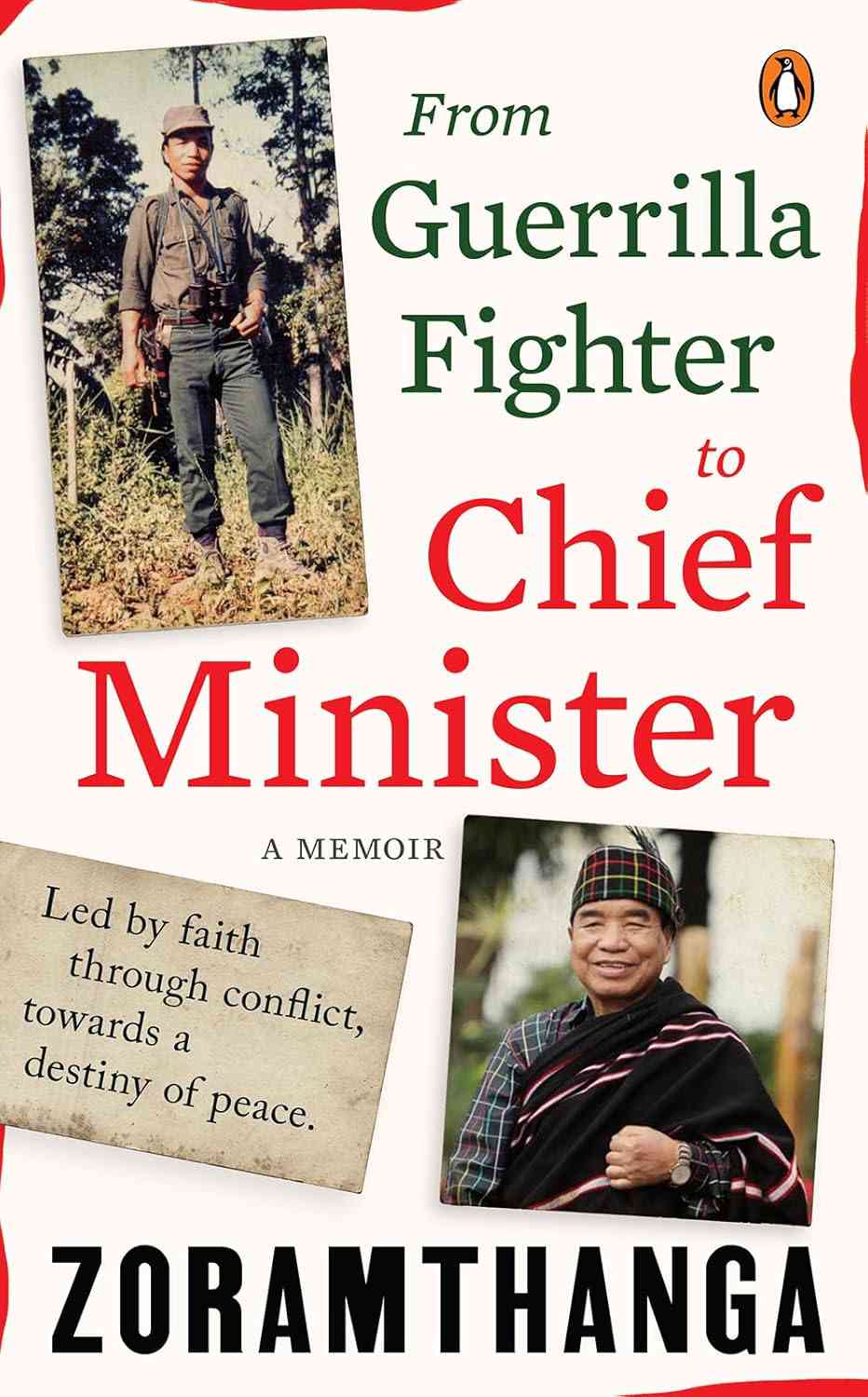
Excerpted with permission from From Guerrilla Fighter to Chief Minister: A Memoir, Zoramthanga, Penguin Random House India.
