






“Why aren’t you doing anything to bring me home?”
For nearly one year, Sajjad Ahmad of Jammu’s Rajouri district has heard this plaintive refrain from his son in Pakistan. “Every time I would call him, he would ask me this.”
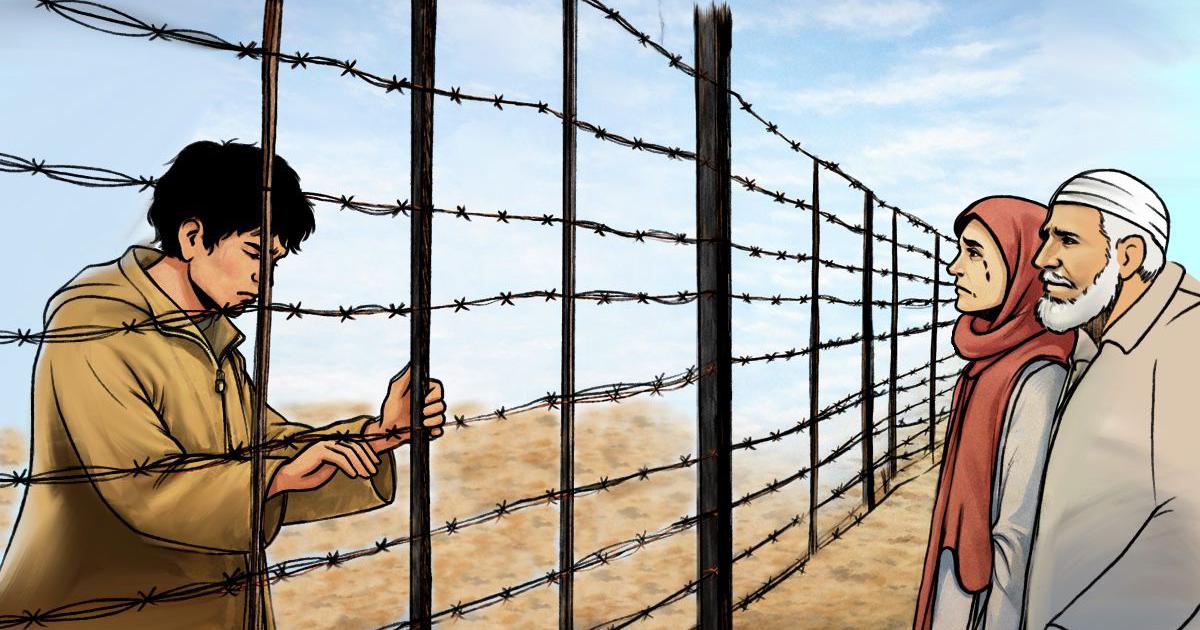
Ahmad’s 19-year-old son, Aasim Sajjad, was among hundreds of people from Pakistan asked to leave India following the brutal massacre of 25 tourists at the Pahalgam meadows on April 22 last year – the deadliest terror attack on tourists in the Kashmir Valley. At the time, Aasim’s application for Indian citizenship was still pending, his father said.
Since his deportation last year, Aasim has been living with an aunt in Gujranwala, a city in Pakistan’s Punjab province. “He is terrified and has gone into depression,” Ahmad said. “He mostly stays indoors and has quit studies. If he was here, he would have appeared in his Class 12 examination this year.”
On March 25, the High Court of Jammu and Kashmir and Ladakh came to the teenager’s relief. The high court ordered the government to “retrieve” Ahmad’s son from Pakistan and grant him Indian citizenship in eight weeks.
This is the second instance in Jammu and Kashmir where judicial intervention has undone the deportation of Pakistani citizens who had been living in India for many years and had applied for Indian citizenship.
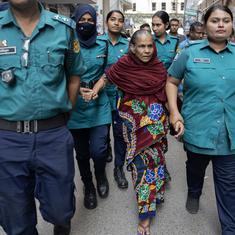
In June, the High Court ordered the Union government to repatriate a 63-year-old housewife to India. The woman, who had been married in Jammu and had been staying there for the past 38 years with her husband and two children, had also been deported to Pakistan in the aftermath of the Pahalgam attack.
Ties across the border
In 2005, Sajjad Ahmad married his paternal cousin, Shabnum Kounser, from Gujranwala, Pakistan. It is a tradition among many residents of Jammu and Kashmir’s border districts like Rajouri and Poonch to have family ties with those living across the border.
Aasim was born in Gujranwala in October 2006, which made him a Pakistani citizen by birth. Days before his first birthday, Ahmad, an Indian citizen, returned to his home in Rajouri with his son and wife. Aasim and his mother came on valid Pakistani documents. In 2013, Aasim’s mother fell ill and died in Rajouri.
“He had a very difficult childhood after his mother’s death at such a young age,” Ahmad said. “And then to be uprooted like this!”
‘Picked up in the dark’
After the Pahalgam attack, India announced a series of measures directed against Pakistan. This included the cancellation of visas granted to Pakistani nationals visiting India, who were ordered to leave India within days.
For the family of Ahmad, the impact of that decision came in the dead of night.
On April 29, 2025, Ahmad recalled, the police swooped down on his residence in Rajouri’s Rajnagar village. “It was around 4 in the morning when they took my son,” he recalled. “There was no prior notice or information provided to us that something like this was happening.”
The police officials did not even allow the family to pack his belongings, Ahmad said. “Aasim couldn't take anything with him other than what he was wearing,” Ahmad said. From Rajouri, Ahmad said, the police took his son to the Wagah border in Punjab. “I went along with him till he crossed to the other side of the border.”
‘Only option’
Faced with uncertainty about his son’s future in an environment of hostility between the two neighbouring countries, Ahmad said he went by the law. “The only option before me was to approach the court.”
In September, Ahmad approached the high court with a writ petition seeking repatriation of his son and a grant of Indian citizenship. “My son’s as well as my wife’s stay in India was legal. In the case of my son, I had applied for his Indian citizenship multiple times since 2015,” Ahmad recalled.
According to his petition, Ahmad’s wife Shabnum first arrived in India on 9 October, 2007, on a 90-day visa. “Once her visa expired, we applied for extension of her visa on marriage grounds for one year. This extension process continued and was allowed on an annual basis until her death in 2015,” Ahmad said.
After the death of his wife, Ahmad applied for his son’s citizenship on September 19, 2015. “From physically filing forms to applying online, I tried every platform to seek citizenship for my son and all of this happened years before his sudden deportation,” he said. “He had no one in Pakistan to take care of him. He has to live with me and stay here.”
‘Sacrosanct human values’
The Union home ministry, however, challenged Ahmad’s assertions in the petition by arguing that the petitioner’s son was “staying in the country without a valid visa and was under an obligation to leave India…” The authorities also asserted that the citizenship application filed by Ahmad on behalf of his son was displaying the status as “not received yet” on the portal of the Ministry of Home Affairs.
Separately, the Rajouri police submitted to the court “that the stay of the petitioner’s son was illegal and, therefore, he was deported after a notice was duly served upon him”.
The court took a different view. Taking note of the young boy’s situation and the fact that his father had applied for his citizenship after his mother passed away in 2013, the court found it imperative to intervene in the matter “…having regard to the sacrosanct human values and rights…”
The court also observed that the boy’s tragedy arises from the Partition of the Indian subcontinent which “entailed countless miseries of human tragedy wherein besides being a grave loss of lives, the families had also been divided.”
For now, Sajad Ahmad is ecstatic. He says he cannot wait any longer to hold his son. But more than him, it’s Ahmad’s mother who is eagerly awaiting Aasim’s return. “When he lost his mother, my mother, despite being old and frail, brought Aasim up,” Ahmad said. “She has really suffered in his absence.”
