

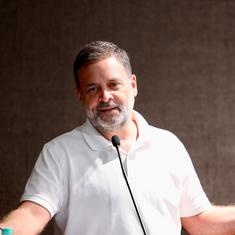





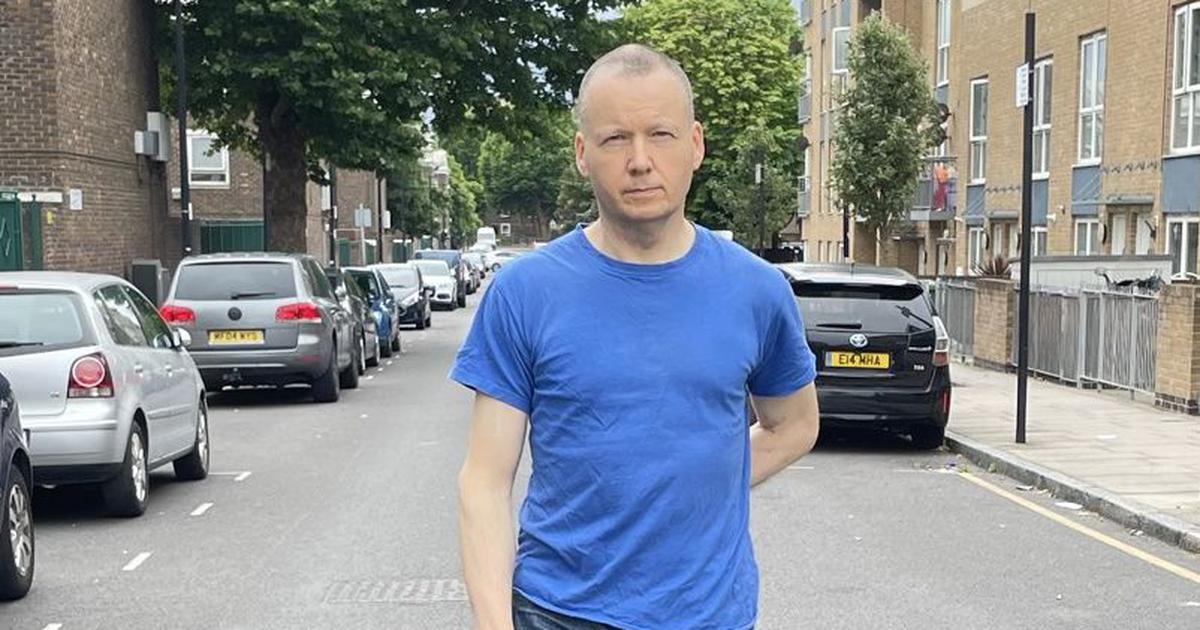
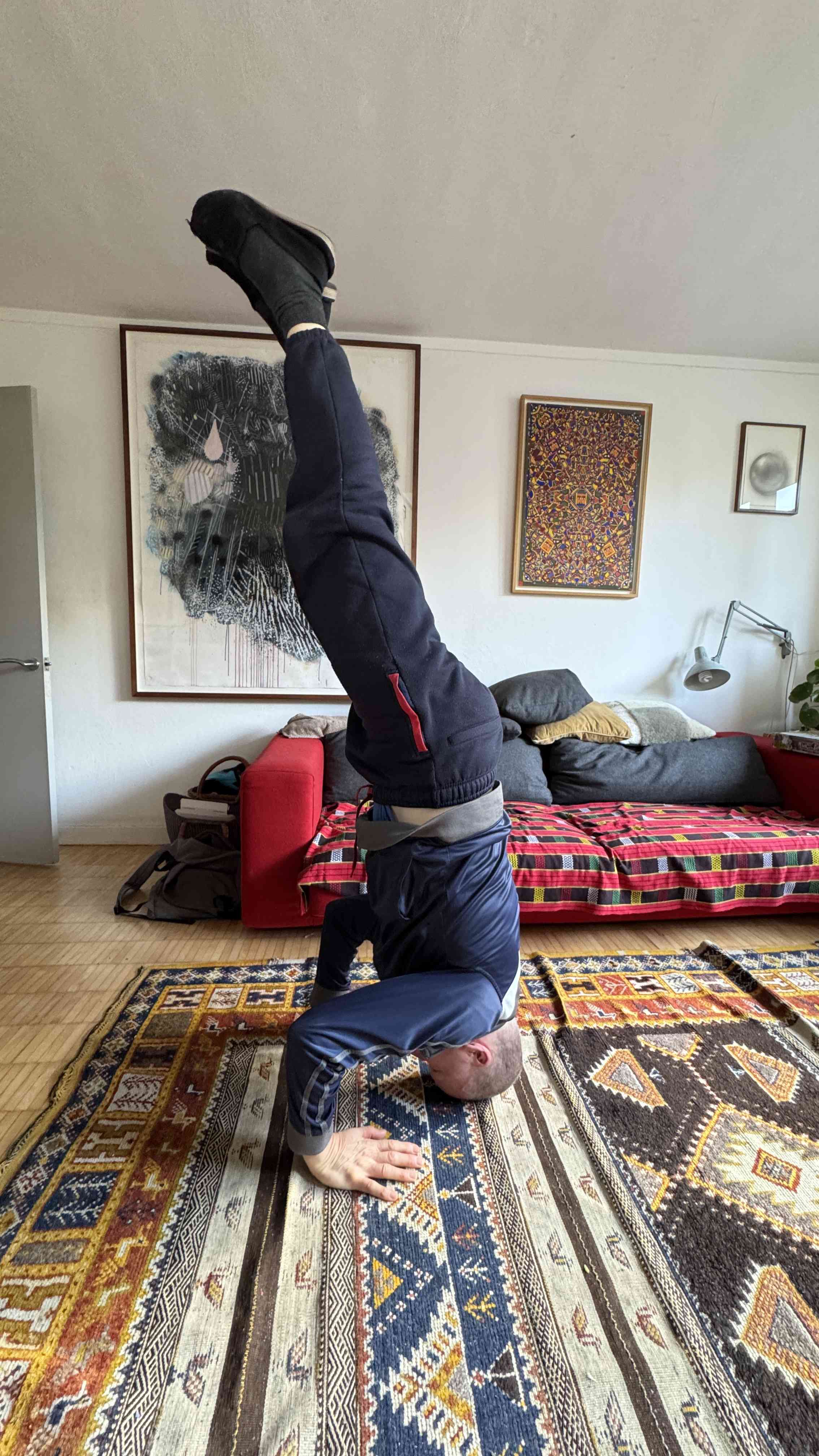
Halfway through our conversation, Stewart Home does something unexpected. We are sitting at the kitchen table in his London flat, papers spread out, tea going cold, talking about fascism, conspiracy theories and the politics of the body. To underline a point about lived practice, Home pushes his chair back, places his hands on the floor and, with practised ease, lifts himself into a perfectly vertical headstand.
He holds it calmly, legs straight, balance unshakeable. Then he comes down, matter-of-factly, and resumes the discussion.
It is a small but telling moment. Home, the author of Fascist Yoga: Grifters, Occultists, White Supremacists, and the New Order in Wellness, is not an armchair polemicist lobbing grenades at a practice he does not understand. He is, by his own admission, adept at yoga. His critique does not come from contempt for the discipline, but from a long engagement with how bodies, belief systems, and power interact.
“This isn’t about attacking yoga,” he tells me. “It’s about asking what’s been done with it.”
Modern yoga
That question lies at the heart of Fascist Yoga, a book that has provoked fascination and discomfort in equal measure since its publication. Across Europe and the United States, from Die Welt in Germany to El País in Spain, from The New York Review of Books to The Observer and The Telegraph in the UK, reviewers have grappled with Home’s central claim: that modern yoga, as it developed in the West, is entangled with histories of authoritarianism, racial thinking, occultism and, more recently, far-right wellness culture.
Home is careful with his language. He does not argue that yoga is inherently fascist, nor that practising it leads inevitably to reactionary politics. Instead, he traces how yoga was reshaped in the late 19th and early 20th centuries through European physical culture movements obsessed with discipline, masculinity and racial regeneration. In that process, fragments of Indian practice were extracted, reinterpreted and fused with Western ideas about strength, purity and control.
“What most people think of as ‘ancient’ yoga is actually a modern hybrid,” Home says. “It’s been influenced by colonial encounters, by gymnastics, by bodybuilding, by military drill. Once you look closely, the lineage myths start to fall apart.”
Central to this history is the figure of Eugen Sandow, the Prussian-born strongman often described as the father of modern bodybuilding. Sandow promoted physical training not merely as fitness, but as a moral and civilisational duty. His idealised white male body became a symbol of order and vitality at a time when European elites feared degeneration and decline. Yoga postures and breathing techniques, stripped of their philosophical contexts, were folded into this wider culture of bodily optimisation.
In Fascist Yoga, Home shows how such ideas fed into more overtly political projects. During the interwar years, certain strands of European esotericism and occultism recast yoga as a tool for awakening supposed “Aryan” energies. Nazi mystics and later neo-fascist thinkers drew selectively on Eastern practices to bolster fantasies of racial superiority. These appropriations bore little resemblance to yoga as practised in India, but they left a residue that lingers in Western wellness culture.
The book has been praised for excavating these obscure and uncomfortable histories. It has also been criticised for drawing lines that some reviewers feel are suggestive rather than definitive. Home accepts the risk. “If you wait for perfect evidence,” he says, “you end up ignoring patterns that are staring you in the face.”
Those patterns have become harder to ignore in the digital age. One of the most compelling sections of the book examines what scholars now call “conspirituality”: the convergence of New Age spirituality, wellness culture and conspiracy thinking. Yoga influencers who preach detoxification, “natural” living and suspicion of institutions can, in some cases, slide into anti-vaccine rhetoric, QAnon narratives and ethno-nationalist ideas about bodily purity.
The Covid-19 pandemic accelerated this convergence. Wellness communities that framed themselves as enlightened outsiders resisting a corrupt system became fertile ground for misinformation and authoritarian ideas. “The body becomes a site of moral judgement,” Home says. “If you’re sick, it’s because you weren’t pure enough, disciplined enough, awake enough. That’s a very dangerous way of thinking.”
The body and majoritarian politics
Importantly, Home does not argue that yoga causes fascism. Rather, he suggests that certain ways of talking about health, self-mastery and individual enlightenment can make people vulnerable to authoritarian politics, especially when combined with social anxiety and distrust of expertise.
For Indian readers, Fascist Yoga poses a different set of challenges. On one level, it exposes how Western markets have appropriated and distorted Indian practices while claiming authenticity. On another, it invites reflection on how yoga has also been mobilised within Indian nationalism itself, from early 20th-century physical culture movements to contemporary Hindutva politics.
Home treads carefully here. “Indian nationalism and European fascism are not the same thing,” he stresses. “But they can overlap around ideas of strength, purity and civilisational destiny.”
In today’s India, yoga occupies a peculiar dual role: a global commodity and a state-endorsed symbol of cultural unity. International Yoga Day, enthusiastically promoted by the government, positions yoga as both an ancient heritage and a modern soft power. At the same time, yoga’s philosophical diversity is often flattened into a singular, sanitised narrative aligned with majoritarian politics.
“What happens when a state starts prescribing spiritual practice?” Home asks. “What kind of citizen is being imagined?”
The commercial dimension complicates matters further. Yoga is now a multi-billion-dollar global industry, dominated by Western brands, influencer economies and certification schemes. Indian voices are frequently marginalised in this marketplace, even as yoga is marketed as timeless Indian wisdom. Spiritual depth gives way to performance, branding and profit.
Home’s critique is unsparing but not dismissive. His own practice gives him a certain credibility, but it also sharpens his frustration. “Yoga can be genuinely transformative,” he says. “But once it’s mythologised as beyond politics, it becomes easier to manipulate.”
The strongest responses to Fascist Yoga recognise this tension. In the New York Review of Books, critics place the book within a broader reckoning with wellness culture and conspiracy thinking. European reviewers have highlighted Home’s archival range and his refusal to offer comforting conclusions. More sceptical commentators argue that the book sometimes overreaches, risking guilt by association.
Yet even critics tend to agree on one point: Fascist Yoga makes it harder to pretend that wellness is neutral.
As our conversation winds down, Home returns to the body. “Practices don’t save us,” he says. “People do – through how they use them, who they listen to, and what they refuse to ignore.”
His headstand lingers in my mind. It is a reminder that this book is not a denunciation from the outside, but an intervention from within – from someone who can balance, quite literally, both critique and commitment. In an era when yoga is invoked to sell everything from leggings to political ideology, that balance may be exactly what is needed.
Rajesh Thind is a London based writer and filmmaker. He is also the co-founder of PinduYoga.
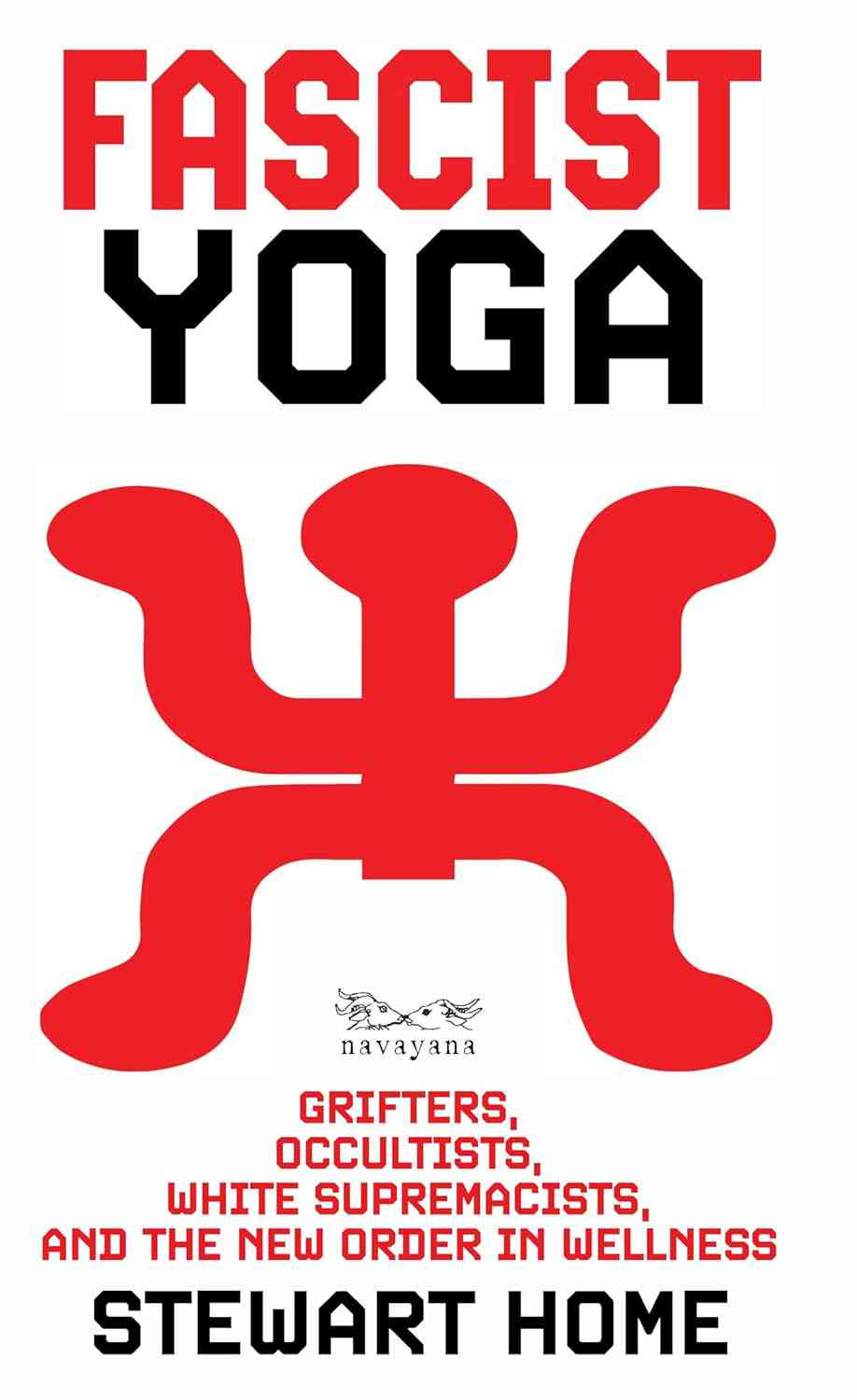
Fascist Yoga: Grifters, Occultists, White Supremacists and the New Order in Wellness, Stewart Home, Navayana.
