











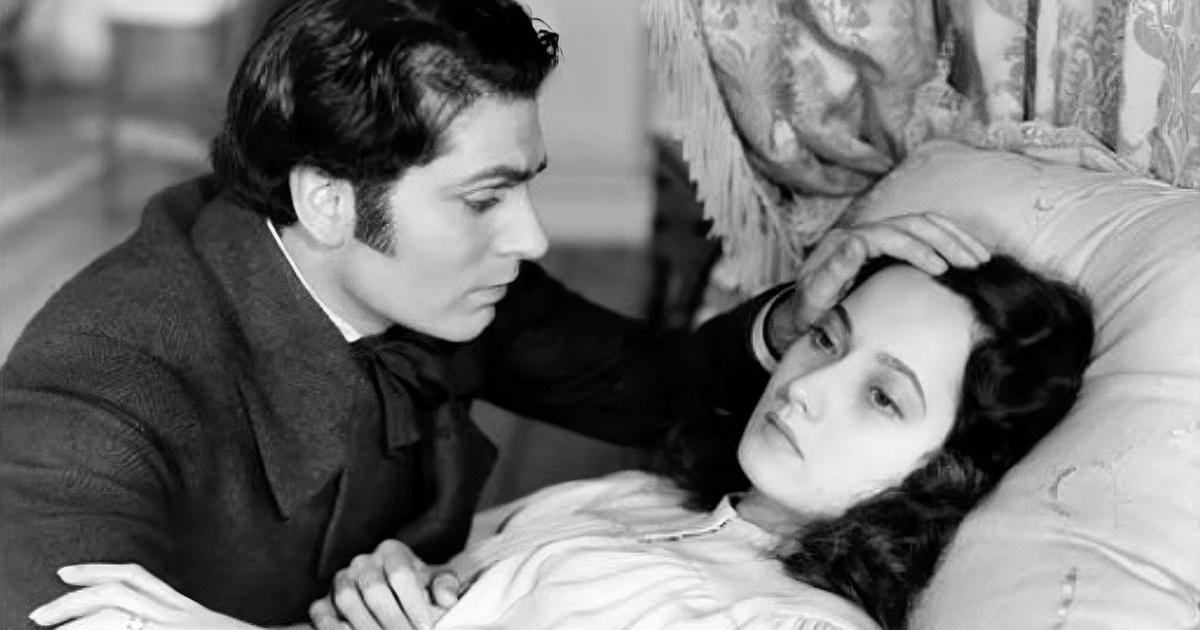
The recent obsession with Wuthering Heights, following the release of the 2026 adaptation starring Margot Robbins and Jacob Elordi, has sparked discussions about the nature of love depicted in Emily Brontë’s Gothic novel, originally published in 1847. Perhaps the reason why the novel resonates with us even today is because of its unflinching portrayal of the most degraded form of romantic and sexual obsession – something uncannily recognisable to anyone – and its underlying proposition, which is disturbing to us: that love, in its most extreme form, can drive individuals into ghastly acts of vengeance and self-destruction.
Those who are familiar with the narrative would know that both Heathcliff and Catherine suffer greatly, though the nature of their suffering differs in distinctive ways: Heathcliff’s suffering acquires a sinister proportion as he externalises his grief and trauma by victimising others, while Catherine’s tragedy is more inward and registers as psychosomatic manifestation of her trauma and guilt, eventually culminating into her premature death. What binds them is their self-annihilating, obsessive attachments, as well as the very human flaw of an inability to relinquish the past.
In contemporary popular discourse, Heathcliff and Catherine’s relationship is viewed as toxic and codependent, but deeper psychoanalytic interpretations of their behaviour become critical in studying the horrific dimensions of human attachment and desire. The themes of power, psychological disintegration and self-destructive trauma imbued in the narrative demand deeper engagement because while the characters are flawed to the point of appearing villainous, they are poignant for the fate that meets them in the end.
In this, Catherine emerges as perhaps one of the most haunting Victorian heroines, progressing from a wild and untamed young woman, to an obsessive and reprehensible heroine – an antithesis to an idealised Victorian lady – finally transmuting into a spectral apparition after her death. Her character arc resists any closure as her long sickness and prolonged suffering do not end in death, but assume unheimlich proportions as she comes back to haunt Heathcliff, disturbing the ontological boundaries between life and death.
Indeed, in the liminal space between life and death, Catherine is shown to be clinging to the past and then suffering endlessly due to it. Her despair, feelings of guilt and entrapment, progressive physical disintegration take on physical symptoms of fevers and anorexia that slowly wither her away. She becomes a tragic Gothic heroine not only for what happens to her in her dysfunctional relationships, but also for her emotional and sexual weaknesses that attenuate her in the end.
For this reason, Catherine’s physical and emotional deterioration needs to be studied as a product of a distinctly Victorian trend and aesthetic that valorised and eroticised weakness and suffering in women. She physically embodies the cultural idea of the “consumptive chic” who is fevered, emaciated and dying, as she becomes both victim and perpetrator – the haunted and the haunting.
‘Her features were sharpened, her whole form altered… and she was so reduced in flesh, that her bones seemed ready to pierce the skin’
Drawing from Gothic modes of writing, Brontë was writing with a specific focus on the themes of death and repressed psychological distress. As a Victorian literary heroine, Catherine’s status as a tortured and diminished woman aligns with the contemporary notions of women’s biological frailty on one hand, as well as the 19th-century aesthetics of feminine fragility on the other. The two are connected in the way Victorian ideals of beauty emphasised feminine delicacy, and a woman’s frail biology supposedly indicated moral and spiritual purity. In fact, women were culturally imagined to be at their most beautiful when they were at their weakest, suffering intensely due to sickness or other trials, or even dying.
The tendency to ascribe fragility and suffering to beauty had material underpinnings in fashion trends and the Victorian aesthetic regimens of feminine beauty. Tight corsets constricted organs and restricted breathing, lead-based face powders to attain the perfectly pale complexions led to toxicity, and mercury-based makeup to reduce blemishes also caused poisoning. This was worsened by inadequate dietary patterns and poor appetites to maintain slim figures, which could cause deficiencies, leading to lowered immunity and, therefore, a propensity for sickness due to poor health.
Feminist historians of the period who have studied patterns of food consumption among Victorian women have observed that (ideally), women were less likely to be voracious eaters in comparison to men. The desire to lose excess weight in favour of slender figures emerged in the 18th century, when women of all classes began to strive to lose the look of voluptuousness. As “The Fair Sex and Their Diet”, an article published in the 1850s, suggests, for Victorian women, eating was a performance, and if a woman made a mistake during this performance, it could have consequences for how men and other women viewed her character. Women were, therefore, less likely to make big demonstrations of their diets; after all, maintaining a slim figure with a thin waist was a beauty goal in the 19th century (Scarlett O’Hara of Gone with the Wind was advised not to eat before her suitors at parties, and took pride in her waist of 17 inches).
Medically, as far as women’s constitution was concerned, several external factors were believed to destabilise their health, such as exposure to extreme cold weather, travel in the tropics, certain foods, and so on. Even natural biological processes such as menstruation, childbearing, labour, and gestation were considered as signs of weakness that put the female form at a disadvantage in comparison to men. This reinforced the idea that women were physically inferior to men, but also that they were weaker and more prone to illnesses in comparison.
‘Tossing about, she increased her feverish bewilderment to madness, and tore the pillow with her teeth’
As women’s bodies were pathologised, diagnosed, and therapeutised, their emotional states also became an important focus as psychological medicine evolved in the 19th century. Women were considered to have fragile nerves, and it was common for them to carry smelling salts to calm themselves whenever excessive emotions were roused or if they were on the verge of ‘swooning’.
‘Hysteria’, a mental health diagnosis commonly associated with women, became one of the most hotly debated and deeply studied conditions in the Victorian age. It was mostly attributed to deviancy of either psychological or physiological in women, and was thought to be widespread at the time. There were many theories for its treatment, such as certain herbs, sex or abstinence, punishment and purification with fire for its association with sorcery, although it was also clinically studied as a disease and treated with innovative therapies.
Hysteria was not unique to the 19th century; it emerged as an important cultural trope that reverberated throughout the period, despite being a tenuous category and a facile medical diagnosis. The foundation of theories around hysteria was rooted in misogyny, the hypersexualisation of women, and stereotypes around ‘transgressive’ women. As Elaine Showalter argues in The Female Malady (1985), women were historically believed to be more likely to be pronounced ‘mad’ and associated with mental illness.
Victorian science frequently linked hysteria with physiological problems and other ailments, and it either became a symptom or a cause of other disorders and diseases. For instance, various medical treatises of the Victorian period about gynaecological matters often portrayed women’s health issues to be connected with hysteria. Physicians like Edward John Tilt, who wrote A handbook of uterine therapeutics and of diseases of women (1881), represented the hysterical female body as potentially inimical to the key female biological processes, such as childbearing and rearing. Medical advice on gynaecological and obstetrical processes was mostly discouraged from physically strenuous activities or intensely intellectual engagement.
Later in the century, an Austrian neurologist – who would later become one of the leading voices on the “unconscious” – took particular interest in it and categorised hysteria as a psychological disorder that stemmed from repressed trauma and pain. He became the founder of psychoanalysis and devised various untraditional therapeutic methods. His “seduction theory” offered a solution to the problem of hysteria and obsessional neurosis, though he later abandoned this hypothesis himself.
‘The little pulse of her heart fluttered visibly…’
In the context of the various pathologies of femininity in the Victorian period, Catherine’s suffering cannot be diagnosed as a precise medical condition. Bronte gave her illness great ambiguity as her ailments do not indicate a precise disease or psychological disorder with corresponding identifiable markers. However, certain descriptions of her illness, such as her “wasting away”, strongly suggest tuberculosis, referred to as phthisis or “consumption” at the time. This is a fitting conjecture considering that Wuthering Heights was published at a time when tuberculosis was a highly prevalent infection of the lungs that killed many in the 19th century.
The socio-cultural context of Victorian England is important to note here: there was massive industrial development under the reign of Queen Victoria, combined with speedy scientific growth, innovation, and medical breakthroughs. Yet, it was also a period when numerous epidemics and pandemics raged through the populations in deadly waves. Within England, various deadly infectious diseases were on the rise, and people died in large numbers because of inadequate medical knowledge about illnesses and a lack of medical treatment.
TB was not a new disease, but it was deeply concerning to the Victorians because it was one of the leading causes of death at the time, so much so that it was nicknamed the “white plague”. It had existed for centuries and was popularly known as “Captain of All These Men of Death”, but it remained something of a medical mystery through most of the 19th century. The cause of TB was discovered much later in 1882, when Robert Koch identified the bacillus, Mycobacterium tuberculosis.
By this time, TB was declared an intractable problem in the 1860s, although it was thoroughly medicalised, with diets, nostrums, diet regimes, etc. Sanatoriums eventually became common throughout Europe from the late-19th century, where TB patients were sent to high altitudes with clean air to recuperate from the miasmatic air of towns and cities. Yet, even at the end of the 19th century, in 1895, TB had a mortality rate of 249 per 100,000 people. In the period between 1700 and 1900, one billion people died of TB.
It seemed that everyone was slowly dying of consumption in the 19th century. It was a malady so ubiquitous yet inexorable that it became widely romanticised. This was mainly because it was a mysterious disease that resulted in a devastatingly glorious kind of ‘wasting away’, as it ate away at the body in a slow, romantic decline, leading to death.
Given the grip consumption had over the imagination of the Victorians, it became a recurring motif in several novels, acquiring numerous connotations due to the nature of its manifestation. In some cases, it was even used to symbolise the diseased state of society. Indeed, for Brontë and several other notable writers of the 19th century, such as Charles Dickens, Elizabeth Gaskell and Henry James, this disease served as a culturally relevant framework through which complex and suffering characters could be constructed.
‘It is hard to forgive, and to look at those eyes, and feel those wasted hands’
Consumption seemed to have affected more women than men in some regions in the 19th century. The connections of the disease with women are inevitable since ill health and its physical markers were a marker of feminine delicacy and haplessness.
In general, the “sickly woman” became a popular image in Victorian literature. Consumption was the most natural choice for the writers when it came to portraying helpless and all-suffering heroines. Firstly, it produced characteristics that made the women appear (fashionably) weak, pale and thin. Secondly, it indicated surrender. Thus, the image of the dying heroine with flushed cheeks caused by high fevers, and a frail and emaciated body, came to represent the height of aestheticised and performed femininity. This also led to consumption being glamourised widely among women of the upper classes. Indeed, the Victorian heroine was inevitably the classic consumptive figure. Charlotte Brontë herself wrote to Anne that it was a “flattering malady” (Anne later died from it).
To add to the “aesthetics”, laudanum, an opiate, was often used in the 19th century to manage consumption. It caused dependency, led to delirium and depression, as well as other severe withdrawal symptoms. So while the disease itself lent women a pallor that gave the heroine a haunted countenance for undergoing torment, both physical and emotional, the treatment also created a kind of unearthly beauty in the sufferer.
Culturally, consumption also became metaphorically linked to a purification through purgation. After all, it required some level of endurance and tolerance, as it entailed a slow and torturous progression towards death. Since there was no real cure for it, it was often accompanied by a kind of resignation towards the inevitable, creating an air of detachment that lent a saintly outlook to the victim that could appear ethereal.
In a way, invalidism and debilitation were deemed as the best means of demonstrating feminine frailty, because it operated on enhanced dependency on others, thereby emphasising the consumptive heroine’s delicate conditions as she constantly teetered on the verge of collapse or death itself. Moreover, the act of helpless endurance appears hyper-feminine as her body becomes an embodiment of corporeal dissolution as well as transcendence. As seems to be the case, consumption seemed to ennoble the woman, made her a figure of Christian suffering, and generated feelings of reverence towards her.
This perception can be traced back to the 18th century, when consumption was not only the symbolic disease of the lover or a desired condition for the dying Christian. During the Age of Enlightenment, consumption had lost its connotations of poverty and filth and became linked to an aesthetic and spiritual improvement: beauty in the case of women and refinement and creativity in the case of men. Percy Bysshe Shelly, while writing to John Keats in 1820, said, perhaps ironically, “consumption is a disease particularly fond of people who write such good verses as you have done”. Alexander Dumas once wrote that “It was the fashion to suffer from the lungs; everybody was consumptive, poets especially; it was good form to spit blood after any emotion that was at all sensational, and to die before reaching the age of 30.”
In Victorian literature, the consumptive heroine’s constant proximity to death did not just evoke pity but also created a sense of terrible awe as she hung between the states of life and death. Her suffering came to symbolise the purest form of an idealised femininity for having endured the burden of the disease. Her ability to withstand the disease, therefore signifying spiritual endurance, virtue and moral uprightness. The spectacle of her suffering, therefore, appeared to be not just martyr-like but sublime and transcendental, which was its own kind of beauty that could unsettle the readers.
Cathy, in this sense, became an alluring “consumptive chic” as well as an unsettling gothic heroine. Her body becomes a cultural symbol where the aesthetics of femininity and disease are inscribed. She is fragile, undernourished, and psychologically consumed by the mistakes of her life. The disease’s stereotypical associations with fragility, softness and sexual attractiveness not only made her more desirable and tragic, reinforcing the novel’s themes of romantic passion, obsession and fevered sexuality, but also aestheticised her decline. Her physical suffering turned her into a victim while pathologising her, thus complicating straightforward moral judgment and heightening her appeal.
In the end, Catherine – or Cathy – represents a culturally manufactured ideal where sickness, femininity, and beauty come together to produce an aesthetic formation. She is desirable yet doomed, operating as a figure through which Victorian eroticisation of frailty and decay is articulated. Her “withering away” is not merely a plot device or a Gothic trope, but is symbolic of the broader cultural fascination with degeneration and corruption, corporeal and otherwise, making her a compelling yet repellent figure of Victorian femininity.
Ipshita Nath’s forthcoming book, Diseased Empire: How Faith, Medicine, and Race Shaped British India (HarperCollins India), examines the wider 19th-century entanglements of disease with faith, medicine, and race, demonstrating how illness was never merely biological, but deeply embedded within imperial and cultural frameworks.
