






Ramaji’s house in Quetta stood on a lane that opened into a shared courtyard. The night before she and her family were to leave, the mob had reached the entrance of the courtyard. Her father had heard them approaching. While the mob was breaking down the entrance, her father took the entire family to hide in the farthest house on the street. They switched off the lights and lay face down on the terrace. Ramaji had curled up even more narrating this part of the story. Anjali, who had also learnt of this incident only the previous night, was captivated.
Thankfully, the mob that night had assumed that the houses on the lane were empty and left for the next street. It was clear to all, including Rama’s father, that staying back was not an option. They did not discuss it further. As soon as they reached home, the elders hurriedly started collecting all the cash. They gathered around Rs 22,000 (a significant amount in those days) and some precious jewellery. Rama’s mother made belts out of cotton cloth to conceal their valuables, which were worn by her elder brother and some other members of the family. They had no time or space to take more belongings. They were leaving behind a life built over decades. The men in the family, Ramaji mentioned, looked like “gore-chitte” (fair-skinned) Pathans. So they wore Pathani suits to mask their identity. Her brother hid the “Om” tattoo inscribed on his hand with an extra band of cloth.
Ramaji’s father used to keep a cow and her calf in the backyard. He had a special bond with them and used to take care of them devotionally. She vividly remembered that while leaving, her father cried and requested his Pathan friend and neighbour to take care of the cows. The friend, with tears in his eyes, said he couldn’t accept them as he was worried that the mob might assume he was Hindu and kill him and his family. As the family walked away, Rama’s father had turned around to catch a last glimpse of the two cows standing on the road by their house.
Some British people carrying out common jobs in the region also joined the loot. Rama’s mother had wrapped her infant in a blanket. On their way to the station, two British women tried to snatch the blanket without realising that a baby was swaddled in it. Her mother begged for mercy and told them she needed the blanket for her child. They let it go.
On the morning India gained independence, Rama Butani and her family left Quetta forever. A few Sikh men working as military officers came and offered to take them to the nearby gurudwara for shelter. Hundreds of people had taken refuge there as they mulled over their next steps. They all lived together in the Sikh temple for several days. Procuring food was getting difficult. Various smells permeated the halls of the temple. After a few days, they were taken to the station. No one really knew where the trains were heading. The men in Rama’s family dressed as Pathans, chanted “Allahu Akbar” to continue masking their identity, and entered the train. They were hoping the train would take them to India but it stopped at Karachi. They found themselves yet again on the ‘wrong’ side of the border. Once again, they got off the train without knowing how to cross the border. A journey without a route, without a destination, and lives at stake.
It had been around ten days since they had left home. It was like an out-of-body experience, Ramaji explained. Psychologists describe this as dissociation – a survival response that often sets in during prolonged threat. To be in a battle for survival for more than a month is harrowing, not just psychologically but also physiologically. In such traumatic events, the body gets trapped in a state of fear and emotional turmoil.
Rama’s family later heard that the Sikh military men who had helped them were also killed by the mob. Her tone was hollow when she recounted it, tainted with disillusionment. The fact that they had survived and the people to whom they owed their survival had not, left her with a feeling of intense guilt. All three of us took a moment to sit with the uncomfortable idea that goodness is not always rewarded.
Again, Rama and her family faced homelessness for several days. They stayed at different train stations, struggling to figure out an exit. Around that time, they heard the news of trains coming back, laden with mutilated dead bodies. Yet, trains were the only way to get out, so they waited for their chance. Rama’s uncle lived in Delhi and worked in the railways. They were trying to get in touch with each other. Finally, they found a train from Karachi to India’s border. “We were free!” Rama ji exclaimed suddenly. “And relieved that we had reached Hindustan.” I thought she meant free from their fight for survival, but I did not want to probe the emotional release.
People were handing out food at the platform. The family lived there for a few more days before they finally managed to get in touch with her uncle. Ramaji chuckled and pointed towards my phone that was kept next to me on the bed and said, ‘There were no mobile phones to come to our rescue those days.’ Her uncle arranged beds for them in a temporary refugee guest house—a dharamshala—in Delhi. They all left for the capital of current India on the next available train. They had all been on the road for about two months by then. Her mother had almost miraculously managed to keep the newborn baby fed and alive.
At long last, they let themselves feel some relief on having survived the ordeal. They had been hearing about horrific situations of family members being lost or killed, and women getting abducted; in that sense, their family was among the lucky ones. This is something adults in the family would remind each other of time and again as they rebuilt their lives in India, Ramaji expressed. This was followed by a pause, as if we had coordinated our need to absorb everything that was shared. Felt like an “interval”. Anjali lovingly enforced a mini break, and we sipped on some tea that had arrived while we were chatting.
The 1947 Partition has not been a static historical event. To this day, we hear about discrimination against minorities in both India and Pakistan, a living testament of its intergenerational effects. The Partition created a profound rupture that continues to breathe in our shared identity. As Urvashi Butalia, eminent author and daughter of Partition survivors, powerfully described it in The Other Side of Silence: Voices from the Partition of India, this was not merely a division of land, assets, and liabilities, but a forced division of hearts. Millions of people that survived the migration carried horrific memories of loss of family, friends, community, property, and a very large part of themselves.
Collective trauma takes different shapes and forms with each generation. Even though today’s generation may not be fully aware of the details of the Partition and it may not even be a conversation at home, the mistrust and social cynicism have percolated through successive societies and our psyche. Each new generation furthers the narrative of direct survivors. We assume that these attitudes and prejudices originate from us, reflecting our own experience and reasoning, but often, it is unresolved trauma spilling over from one generation to another,13 embedded in our everyday rhetoric. It is important to recognise it to attempt community healing.
Intergenerational trauma is also deposited in the body and passed down. Its permanence within our physiology has revolutionised how we even think of trauma. Research amongst South Asian communities has shown that centuries of colonisation and tragedies such as the Partition have added to the biological imprints of chronic stress in our bodies. This belief complements the “thrifty gene” hypothesis. It suggests that genes within specific ethnic populations have adapted to store energy more efficiently as a means of surviving periods of famine, inadequate nutrition, and long-term poverty. This explains why evolutionarily certain fat deposits are more common in certain communities. The concept was introduced by geneticist James Neel in 1962. He explained it in the context of increasing cases of type 2 diabetes. Social scientists who research South Asian populations, including those living abroad, have found that these groups tend to have an inherent predisposition to insulin resistance, hypertension, and coronary artery diseases. While these arguments have been criticised for oversimplification and lack a clear cause-and-effect association, I find there is credibility to the claim that collective trauma – such as colonisation and Partition-related chronic stress – has the ability to impact our genetic make-up intergenerationally.
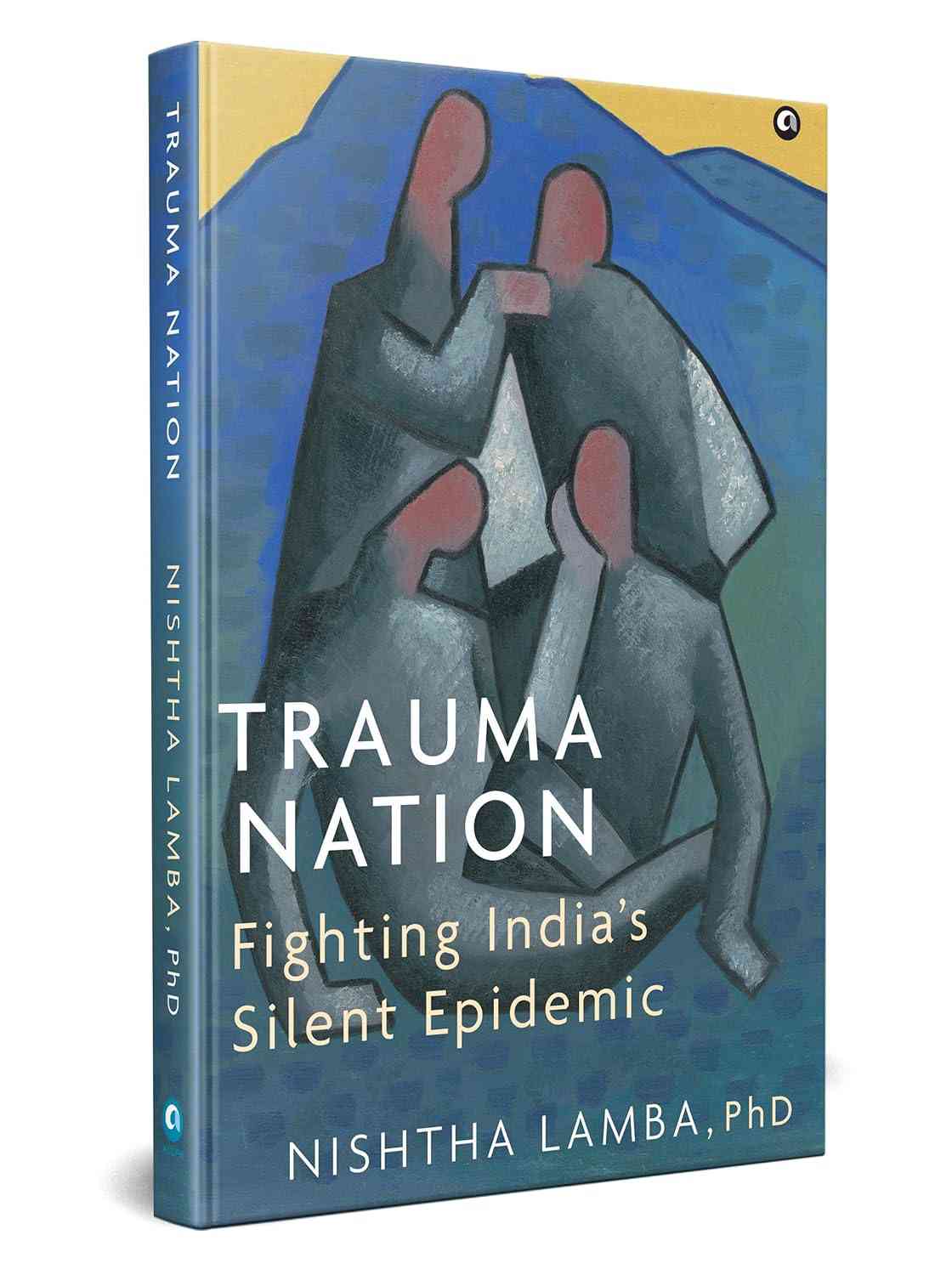
Excerpted with permission from Trauma Nation: Fighting India’s Silent Epidemic, Nishtha Lamba, Aleph Book Company.
