










Personalities clearly mattered in early modern Muslim empires, especially where a personality was powerful enough to be taken for God’s shadow, or even God Himself, acting on earth. The chronicles, court records, and cities of these times loudly proclaimed the centrality of the sultan or the shah. But the notionally absolute sovereign hand of God was able to act only through the agents of the state, its tax collectors, judges, administrators and soldiers, and these were all more than capable of pursuing their own interests, too. The sultan’s word or the shah’s decree might be law, but so were the rulings of religious scholars, who had their own claims to authority as the custodians of Sunni jurisprudence, or as the deputies of the Shi‘i hidden imam. Even the devshirme boys, who supposedly owed no loyalty to anyone but their master, the sultan, often remembered the families and communities from which they had come, and did their best for them when they came to power.
Theoretically slaves in the sultan’s extended household, the Ottoman Empire’s bureaucrats – its pashas and viziers – came to include many freeborn Muslims, whose sons followed them into official careers. These men also created their own households, dependents, and networks of patronage and influence, which became centres of power in their own right. Kingdom-building under God, whoever the builder, depended greatly on its worldly context. Its ideological claims often covered untidier realities.
Nowhere was this more obvious than in India. There, an Islamic empire was built in a mostly non-Muslim society by a dynasty whose descent from medieval world-conquerors gave them the grandest claims of all. Their own territories afforded them the greatest wealth of all, too, and yet their fortunes, to begin with, were the most fragile. The Mughals, as they would become known – though they never used this name, from the Persian word for “Mongol,” for themselves – began as one among the many Timurid families contending for preeminence in 15th-century central Asia. Zahir al-Din Muhammad Babur, descended directly from Genghis Khan on his mother’s side, and from Temür on his father’s, had correspondingly grandiose ambition but very modest beginnings. In 1498, aged 15, he was a wandering prince without a throne in the Ferghana Valley in today’s Uzbekistan. In 1501, the year Ismail I became Safavid shah in Tabriz, Babur was defeated and forced to flee from Samarqand by the Uzbeks. Seeking refuge in Kabul, Babur ruled there for the next 20 years in a sophisticated Persian style while still looking north, hoping to regain Temür’s old capital, which he saw as his rightful inheritance. Only after trying and failing three times to conquer and hold Samarqand did he turn his attention southward, to the Indus Valley and Hindustan, the land of India, beyond. But once he did so, in 1519, his fortunes changed.
Since he could not make good on his claim to be Temür’s successor in Samarqand, Babur pursued the opportunity of expanding his rule in northern India, which his ancestor had ravaged more than a century earlier. In 1526, at Panipat, north of Delhi, he defeated the Afghans who now ruled there and occupied their capital at Agra. Babur was not much taken with India or its people. The exclusiveness of caste society meant that there was no “convivial … social intercourse” of the kind he so prized in Persian court culture. The fact (as he saw it) that “in the skilled arts there is no symmetry, order, straightness” meant that there were none of the geometrically laid out gardens with neat waterways, familiar in Samarqand and Kabul, where such re ned and courtly conviviality could take place. But, on the other hand, India was, he wrote, “vast, populous, and productive.”
Babur saw India as a source of wealth and prestige for his personal and familial ambition. Unlike Temür, he stayed there after his victory, until his death in 1530. The family’s travails were not yet over: like Babur, his son, Humayun, would spend years as a throneless refugee when the Afghan princes and Rajputs – north Indian Hindu military clans – threw off Mughal sovereignty in 1540. For 15 years, Humayun sought refuge and allies in Afghanistan and Iran before beginning the reconquest of his father’s territories, with the help of Safavid troops, in 1546. A decade later, he had retaken Delhi, but within the year, he tripped and fell on the steps of his library, perhaps fracturing his skull, and died. It would be his 12-year-old son and successor, Akbar, who would reclaim and consolidate the Indian empire his grandfather had first imagined. He would reign for 50 years. By the time of his death in 1605, the Mughals were the greatest power in South Asia.
When, in his own writing, Babur referred to God, he used the Turkic word Tengri, the name of the Mongol steppe sky-deity, as well as the Arabic Allah. In Kabul, he wrote a lengthy work in verse on Islamic law. He observed daily prayer and was clearly, consciously, a Sunni Muslim. But he felt no great need to legitimise himself, as the early Ottomans did, as a warrior for the faith. Still less, though he was aided by Shah Ismail in his attempts to recapture Samarqand from their mutual enemy, the Uzbeks, did he subscribe to the Safavids’ millenarian Shi‘ism. (He did briefly endorse Shi‘ism while in Samarqand, almost certainly as a condition of Ismail’s backing, but this lost him support in the city, and did not last.) His conquest was motivated and pursued, not as a holy war to expand the frontiers of Islam, but as dynastic aggrandisement. As he himself put it, his vocation was mulkgirliq, “kingdom- seizing,” the proper pursuit of a princely family descended from the world-conquering Turkic- Mongol khans. The Delhi sultans in the 13th century had seen their state as a safe haven for Muslims fleeing the Mongols, and their Persian court historians wrote some of the most damning accounts of Mongol barbarism. Babur also had some harsh words for the disorderly and “treacherous” Mongols of his own time. But, especially in the context of competition with the Uzbeks, Safavids and Ottomans, the dynasty he founded would stress their Timurid lineage. They continued to do so down to the 18th and 19th centuries.
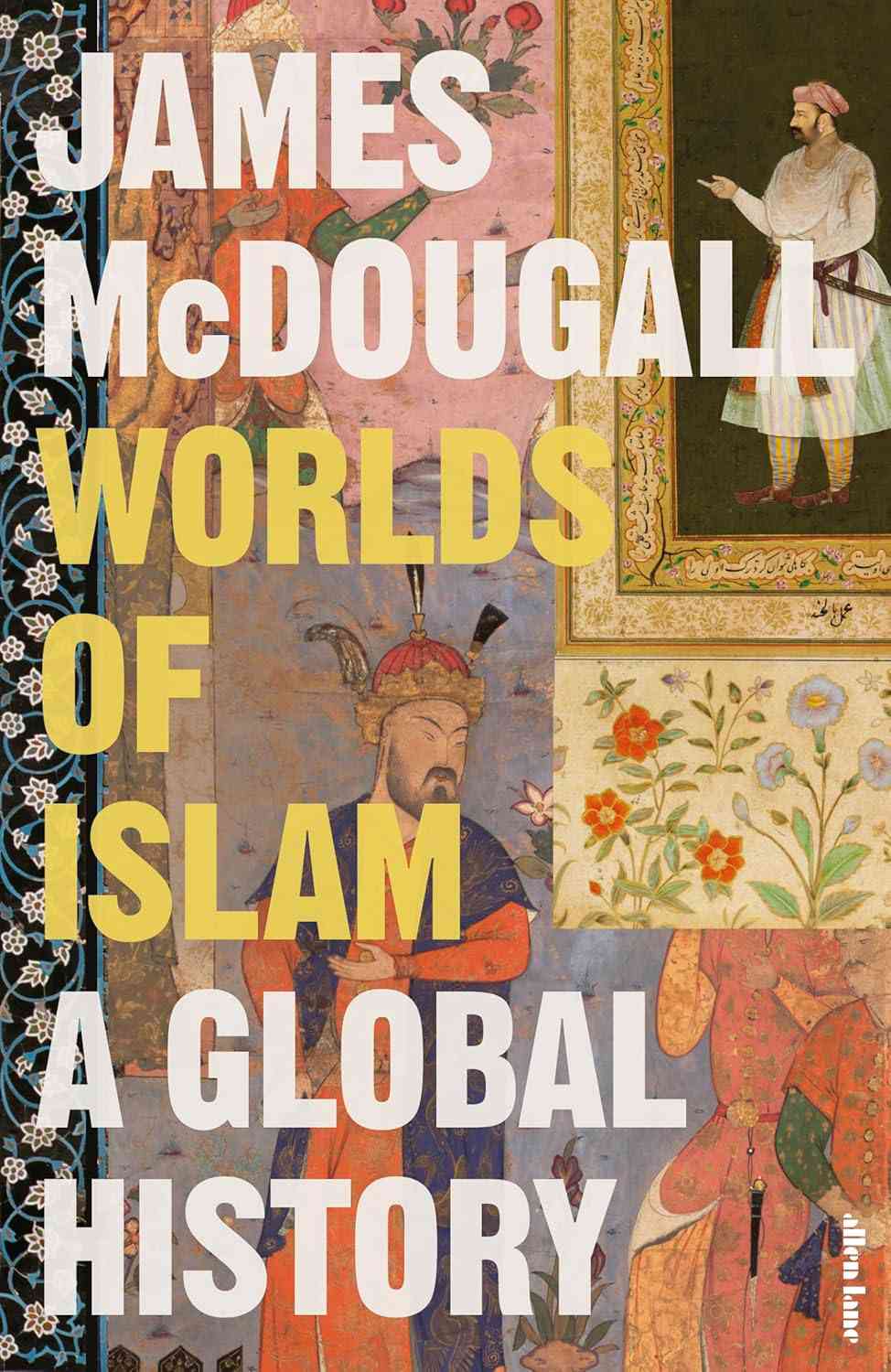
Excerpted with permission from Worlds of Islam: A Global History, James McDougall, Allen Lane.
