






In 2025, while researching the recent rapid increase in the number of medical colleges in India, I discovered that this aspect of the country’s medical education policy was based, shockingly, on a non-existent World Health Organization recommendation: the “ideal” 1:1,000 doctor-to-population ratio.
Despite there being no such “WHO norm,” Indian policymakers have been employing it in decision-making for more than a decade. Even after substantially raising the numbers of medical colleges and doctors on the basis of that imaginary norm, many policymakers and experts continue to assert that India suffers from a shortage of biomedical or “allopathic” doctors. This “permanent shortage” stance seems like a manifestation of policy amnesia; not too long ago, there was a general consensus in the country’s public health discourse that India had an adequate number of doctors.
Indeed the arc stretching from the claim by AIIMS experts in 2000 that the doctor-population ratio had “already exceeded that required by the country,” to the comment in a 2005 government report that the aggregate of doctors in India was “not very low,” to confident assertions by 2012 that India had an “abysmally low” doctor-population ratio, constitutes an extraordinary U-turn in policy discourse.
With health indicators in India still worse than global averages, and health inequalities among the worst in the world, any assertion that the country has “too many doctors” risks being dismissed as unserious and insensitive. However, such a cursory dismissal is the product of a ubiquitous blind spot in health policymaking worldwide: the unquestioned assumption of a constant and ever-positive relationship between the number of doctors and health outcomes.
This assumption neglects the equally significant impact of other healthcare practitioners (midwives and nurses, community health workers, informal practitioners, AYUSH doctors and the like) of the geographic distribution – and not just absolute numbers – of practitioners, of the organisation and infrastructure of health services, and of broader social, economic, and political factors.
Hence, “too many doctors” could mean that a region has more doctors relative to other healthcare practitioners, or that disproportionately more resources are being channeled toward training doctors relative to investments in other domains, which also lead to better health outcomes, such as nutrition, clean water, and sanitation infrastructure.
Still, considering that a well-qualified and skilled doctor is a significantly positive contributor to the community, can a country ever actually have “too many” doctors? The deep permeation of the doctor shortage narrative has meant there is little academic appetite today to consider the possibility of a region possessing an adequate number of doctors, however defined, let alone an excess. Still, there are important instances of researchers and experts taking such a scenario seriously in the past.
Measures taken to Increase Availability of Doctors
— PIB India (@PIB_India) March 27, 2026
🔹 There are 13,88,185 registered allopathic doctors and 7,51,768 registered AYUSH practitioners in the country, with a doctor-population ratio estimated at 1:811 at 80% availability
🔹 Hard area allowance provided to… pic.twitter.com/ZJ6haWI6SD
‘Doctor anomaly’
In the latter half of the 20th century, many scholars looked broadly at the relationship between the number of doctors per capita (doctor “supply”) and health outcomes. Some found what they called the “doctor anomaly”: an unexpected positive correlation found in high-income countries between the number of doctors and mortality rates in younger populations. The authors – including the renowned Archie Cochrane – did not consider this correlation as causal, but indicated that it warranted further research.
A later article with a more global scope claimed to reject this finding. Another study argued that “on the margin,” doctors most likely have “no effect upon health outcome”, ie, beyond a certain density of doctors, having more doctors does not lead to any additional public health benefits.
A scholar specifically looking at the United States argued that, with respect to health level differences among population groups, “other socioeconomic and cultural variables are now much more important than differences in the quantity or quality of medical care,” and that “there is no reason to believe that the major health problems of the average American would be significantly alleviated by increases in the number of hospitals or physicians”.
Arguments urging policymakers to re-orient the country’s “doctor-centric” and “hospital-centric” healthcare system and stressing the importance of what are called the social, political, and economic determinants of health, were also common in the health policy discourse in India during this time.
In the late 1960s, policymakers were beginning to reconsider their primary reliance on doctors to achieve the state’s public health objectives, particularly because most doctors were choosing to practice in urban India or abroad, and not in rural areas where healthcare was most urgently needed. The long-in-the-making implementation of a national community health workers scheme in 1977 – vehemently opposed by doctors’ associations – was a major manifestation of this reduced importance of doctors in the health policy discourse.
A few years later an expert committee opined that India was slated to graduate more doctors than needed by its healthcare services. There were 220,000 biomedical doctors and the committee estimated that India “will not need more than 250,000 doctors” during that decade, which gave a doctor-population ratio of about 1:2,700. By the early 1990s, India had attained a doctor-population ratio of 4.4:10,000 (ie, 1:2,300), a ratio which then-policy experts deemed to be an excess of supply. Indeed, several other countries around this time were also acknowledging an “overproduction” of doctors.
‘Optimal Quantity’
There is no universally-accepted method or statistical measure to determine how many doctors makes for an optimal quantity. The closest is the WHO calculation of the global median density of “doctors, nurses, and midwives” being 49 per 10,000 population. The most commonly used indicator, the doctor-population ratio, is difficult to accurately measure due to, among other things, significant uncertainties in determining the number of practicing doctors and the relative proportions of primary care physicians and specialists. Besides, the definitions of an optimal ratio differ in different countries and time periods.
In the context of the current discourse on the shortage of physicians, we must also remember thatthere is “little rigorous research measuring the extent to which increasing the supply of physicians promotes greater utilization and even less evidence on whether it ultimately translates into improved public health”.
The research that does exist, like studies from Brazil and Bangladesh, has shown that physician supply has little effect on crucial health indicators like the infant mortality rate, with “other healthcare professionals, such as trained health workers, midwives, and qualified birth attendants” capable of providing “basic neonatal health services” potentially as well as doctors.
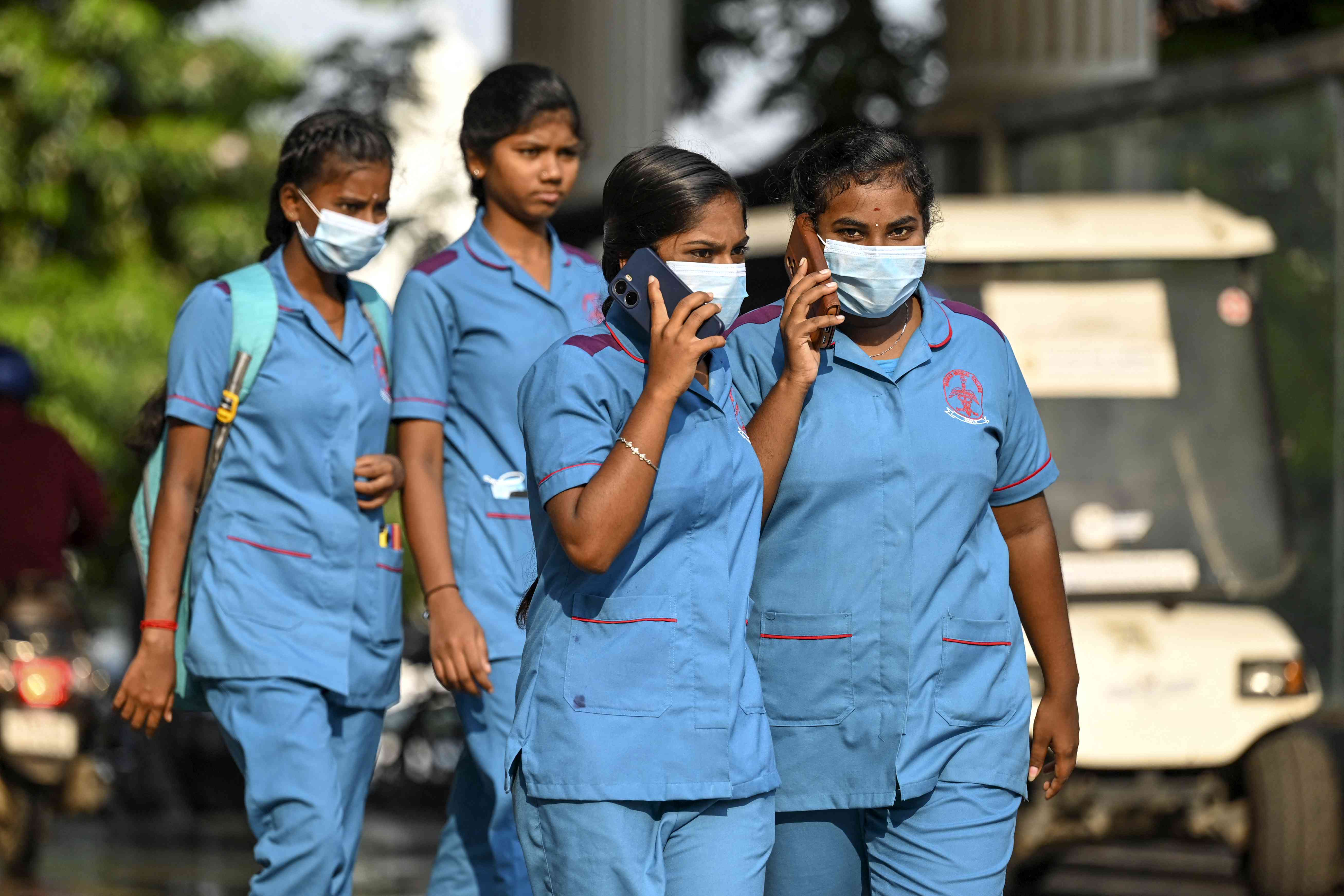
In the Indian context, the exercise of determining optimal doctor numbers is further complicated by the presence of several hundred thousand doctors of indigenous systems of medicine known as AYUSH doctors, as well as the widespread prevalence and public patronage of primary care practitioners with no formal medical qualifications, often called rural medical practitioners or RMPs.
For example, when we add the number of AYUSH doctors (who usually practice as primary care providers across India) to calculate the country’s overall doctor-population ratio, India can be said to have achieved the hallowed 1:1,000 target in 2007, when the government estimated the ratio to be 1:870.
However, subsequent ratio calculations excluded AYUSH doctors. In an ironic about-face, the government, after dedicating enormous resources to achieve the non-existent “WHO norm” of 1 biomedical doctor per 1,000 people, formally declared the achievement of that target in 2022 – but only through calculations that once again incorporated AYUSH doctors.
Shortage rhetoric
As of 2026, the official estimate of the combined doctor-population ratio is 1:811, not very different from what it was in 2007 (and probably even before). Nevertheless, the rhetoric on shortage continues, despite it being almost four years since the Union government announced the achievement of its own target.
Apart from the possible needlessness (in terms of public health) of this narrative, the consequent massive growth of medical colleges in India over a short time-span has been mind-boggling and raises many concerns about the quality of training that India’s future doctors are now receiving.
The government claims the increase to be from 387 to 780 colleges between 2013-’14 and 2024-’25 (an average of 2.9 medical colleges each month over the past decade). While India has thus added, on average, one medical college per 10 days for 11 years straight, it has, unsurprisingly, not been able to keep up the same pace in raising the input of the essential resources for medical training like teachers, cadavers, physical infrastructure, etc.
AIIMS -- top medical colleges in India -- have 37.4% vacant faculty positions out of 6,297 sanctioned posts, shows the government data.
— Sanjay Maurya (@MeSanjayy) February 11, 2026
Maximum 57.4% vacant posts at AIIMS Rajkot and minimum 22.8% in AIIMS Bhopal. #MedicalEducation https://t.co/vSo6BaY3O1 pic.twitter.com/jU5dBb2kN5
A section of public health experts in India has been urging policymakers to focus not on aggregate numbers and ratios of doctors, but on issues like geographic maldistribution and rural access. They have pointed out that many of the problems that we think will be improved by adding more doctors – eg, access to biomedical services and shorter waiting times – can be better resolved by addressing physician maldistribution and governmental neglect of public health services and infrastructure.
Indeed, the ignorance about the existing literature, which offers different ideas than the mainstream policy discourse, and the amnesia about the history of the discourse – at times claiming shortages, at other times asserting excesses – constitute major challenges in how policymakers and experts have approached the topic of optimal doctor numbers. The almost obsessive concern in recent times with raising the quantity of doctors has already led to anxieties about unemployment, even though one of the rationales behind building more colleges was to help young people find employment in the future.
All of these are worrying developments, and it is high time policymakers and experts took seriously the possibility that India presently has, and will have in the near future, an excess of biomedical doctors – or at least an absence of shortages. Every policy decision hereafter on healthcare and education in India needs to take into account these new potential realities.
Kiran Kumbhar is a CASI Postdoctoral Research Fellow.
This article was first published on India in Transition, a publication of the Center for the Advanced Study of India, University of Pennsylvania.
