



A man worked at a brick kiln in Lucknow for 20 years. In the summer of 2020, he lay wrapped in a blanket on a cart, sick with bronchitis, barely able to move and with no money to be treated at a hospital, as three men dragged him home to Sitapur, 80km away.
Around the same time, 15-year-old Jyoti Kumari had begun cycling, with her ailing father seated behind, from Haryana to Darbhanga in Bihar, a journey of 1,200 kilometres. A year later, Kumari’s father died of a cardiac arrest during the deadly second wave of Covid-19 in May 2021.
In Uttar Pradesh, at a Barabanki hospital, as the second wave approached its peak, an exhausted doctor recounted how all he dreamt of were falling oxygen levels, attendants charging at him after the death of a loved one, or people begging and pleading with him for oxygen cylinders.
As bodies burned day and night in the harsh summer heat along the ancient ghats of Varanasi, members of the stigmatised Dom caste who conducted the cremations also took on the role of priests, many of whom had abandoned their posts.
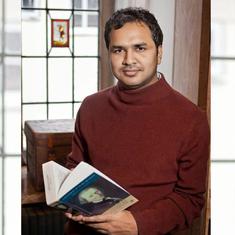
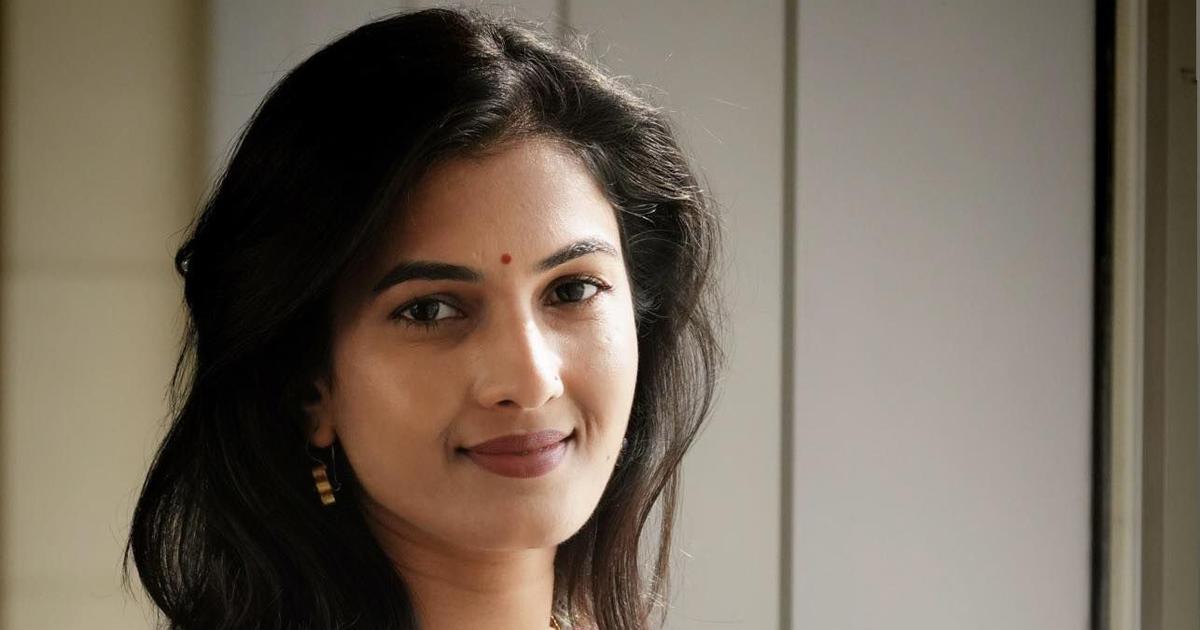
Through accounts like these, journalist Jyoti Yadav’s Faith and Fury: Covid Dispatches from India’s Hinterlands puts together a compelling account of the pandemic’s harshest months. This April marks five years since the terrifying second wave of Covid-19 tore through India.
The book brings together Yadav’s reports from the ground for The Print during 2020, when India went under one of the strictest lockdowns in the world, setting off the largest migration since Partition as migrant workers began returning to their homes – many on foot – from cities, and the summer next year when the Delta variant of the virus wreaked devastation. It is interspersed with more details and her reflections on reporting through the pandemic years in Uttar Pradesh and Bihar as a woman and a reporter out in the field.
Ear to the ground
The book especially shines where Yadav faithfully conveys the voices of the people she meets, their raw speech – with the Hindi original and translated English – resonating with grief and the rage of deep betrayal. In these voices, one reads of a complete collapse of the healthcare system and a people abandoned.
At a district hospital in UP, the frustrated relative of a patient, after arguing with the staff, yells, “Will you only examine him once he is dead? Why is this called an emergency ward when it should be called a death ward?”
At the Patna Medical College and Hospital, where garbage was piled up and toilets overflowed into the corridors, a weeping 28-year-old man’s grief over his father’s death turns to anger. “I’ll have to check if they took out some part, stole his kidney. What if they (doctors at the hospital) killed my father?” Relatives were barred from the Covid ward and the three screens outside meant to help with communication were not working.
Another man at the hospital, mourning his mother, tells Yadav, “I could hear her sobs over the phone. No one was attending to her or even feeding her. It is better to take her home…at least she will die surrounded by loved ones. This Covid ward is like a jail.”
At Patna’s Baans Ghat, Yadav meets a Dom family – the father had fallen sick after working 24 nonstop for hours. As he lay on a cot in the one-room tin hut, the man’s wife tells Yadav, “He burned so many bodies that his arms hurt.”
Yadav’s writing is plain and unsentimental but hits hard with its straight observations, like where she describes a district hospital in Ballia in Uttar Pradesh in April 2021: “The ward had only two stretchers – one had been claimed by the dead man. His blue slippers lay beside the stretcher. His abdomen was distended, his legs dangled over the edge of the stretcher, one hand hung by his side and his mouth was open.”
In the ordinary details of people and their lives, Yadav puts many human faces to the countless, unwritten deaths during the pandemic years. Where she is able to, Yadav follows up on past reports to find out what happened to the people she met, showing how the living grapple with life long after the pandemic dead are gone.
A story that particularly affects her is that of an eight-month pregnant assistant teacher who died two days before her third wedding anniversary after she was threatened with FIRs if she refused to go on panchayat poll duty in Uttar Pradesh. Her inconsolable father tells Yadav, “I educated her so she could achieve something in life, but what did the system give us? Death.”
For years after the teacher’s death, her husband did the rounds of government offices seeking a compensatory job as promised. But a Supreme Court verdict rendered the BEd degree he had recently pursued useless and by then he had exceeded the age limit to apply for the only valid qualification, a BTC degree. He settled for a peon’s job. “It is better than being unemployed,” he said.
A journalist at work
Yadav’s book also puts forth the basics of journalism and especially on reporting in rural India in the midst of a pandemic. While reading, one gets a sense of watching her stories evolve as she follows leads and strikes up conversations with people. She writes unassumingly of spending hours at cremation ghats, inside hospitals, outside the offices of state and local officials, at times wearing down the hostility of the guards posted there to gain useful insights.
Her meticulous gathering of details reveals how assumptions, carelessness and sheer ineptitude made the tragedy that the second wave was. For instance, her enquiries show that in Jaunpur village in UP, a massive surge in cases was the combined result of migrant workers returning for Holi, the panchayat elections – which were held after being postponed due to the pandemic in 2020 – and the complete absence of government directives to screen the returning workers.
Similarly, her observations from spending days inside hospitals and healthcare centres uncovers years, if not decades, of utter negligence – from the shortage of essential workers and non-functional medical equipment to an absolute disregard for basic facilities. It is no surprise that the healthcare system crumbled from the immense pressures of the pandemic.
Everywhere she travels, Yadav touches base with the bureaucracy, seeking out district magistrates, collectors, and police officials for crucial information, like the contacts of village heads, and help with finding a place to stay in the middle of curfews and restrictions.
In some cases, it keeps her safe as a lone woman journalist.
While travelling to Bishanpur in Bihar’s Begusarai to meet children orphaned by the pandemic, Yadav’s vehicle was suddenly surrounded by young men who began threatening to drag the driver out of the car. Terrified, she called the district magistrate who was able to send police personnel while her driver managed to drive away from the mob.
At times, the loneliness and despair of the pandemic weigh on her. Deep in the middle of reporting on the second wave in Uttar Pradesh, she writes, “My phone gallery now had over 1,000 photos of cremation grounds, dead bodies strewn in hospitals and grieving families.” Like the doctor in Barabanki, her dreams are nightmarish, haunted by the dead and the living: “I saw only dead bodies, SOS messages and hospitals.”
In Patna, at a circuit house on the banks of the Ganga, she reflects upon a month-and-a-half spent on the road. “All I had encountered was death and despair.” In that brief moment, she finds the strength to return to work.
Yadav’s incredible efforts as a reporter and journalist are let down by the often careless editing of the book. At times, it felt like reading an excellent first draft. Some information feels tangential or unnecessary, like minute details of cases, tests carried out and deaths, given that no one is closely following Covid cases like they did during the peak of the pandemic. The book is largely a chronological account of Yadav’s reports, but there are some jumps back and forth which can feel confusing.
A more deft hand might have focused more on the potential of the voices and people Yadav meets. It is not often that voices from rural India find their way into the mainstream news, even less these days. The book could also have benefited from situating two years of reports within a broader perspective of the pandemic
Six years on, the world has all too willingly moved on from the pandemic, the isolation of lockdowns, the panic of rising cases and the constant fear of an unseen virus. The post-pandemic world has been permanently altered but one almost wonders, did it really happen?
I finished reading Yadav’s book only days before, five years ago, when I caught Covid-19 during the second wave. Reading her accounts of patients for breath was an unsettling reminder of the blazing, numbing and exhausting fever that took hold of me for three days straight as I lay in bed under thick quilts in an isolated room upstairs in the April heat.
My 90-year-old grandmother, who caught Covid-19 from me, survived, only just. We spent the next three weeks anxiously caring for her, being turned away from hospitals as her oxygen levels plummeted. Just when everything seemed hopeless, a small hospital took her in and immediately put her on oxygen. After 10 harrowing days, we brought her home days before her 91st birthday.
In Yadav’s testimonies of many Indians, I saw myself too and so should we all – to remember what we went through and how easily it could happen again.
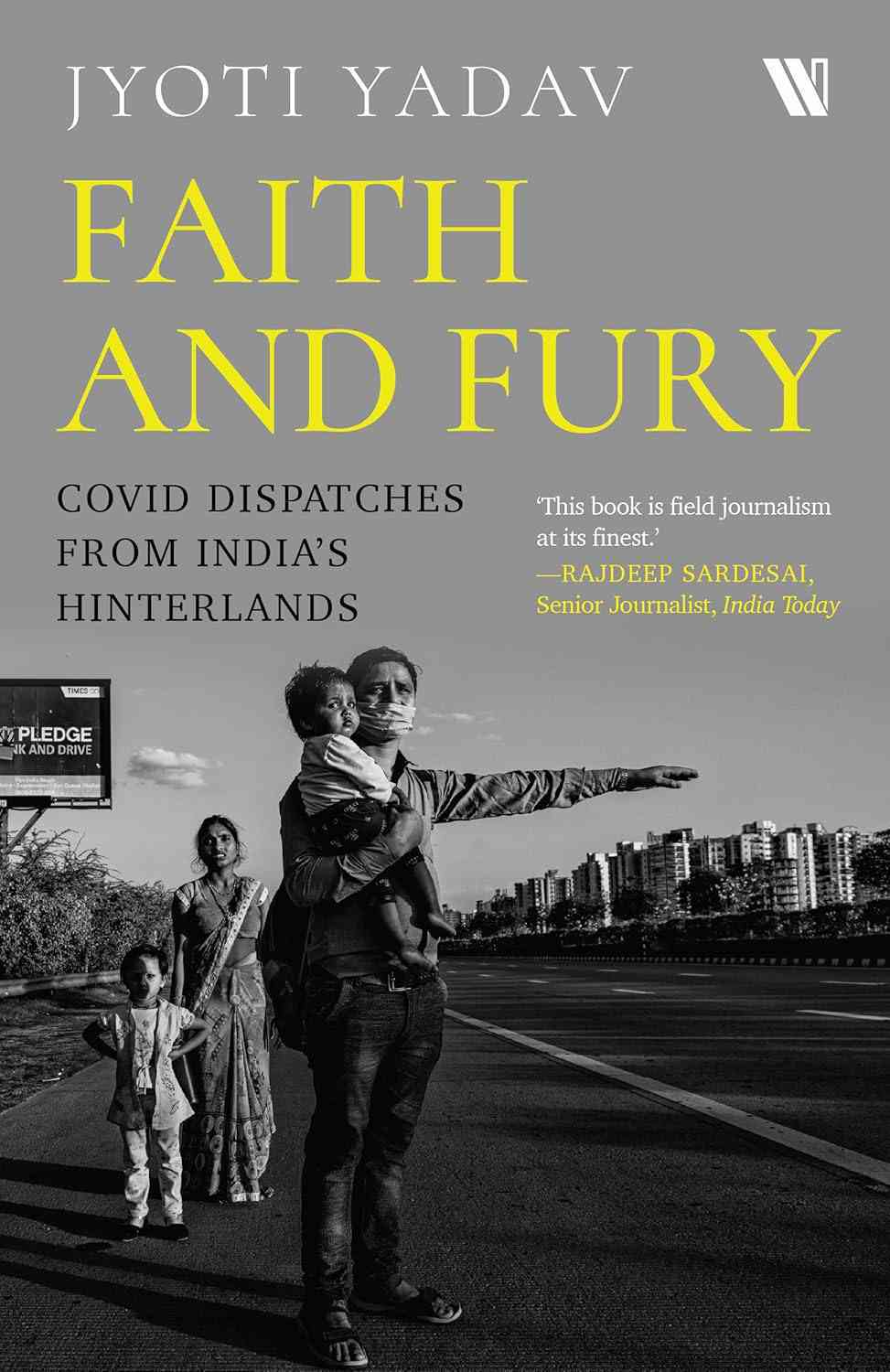
Faith and Fury: COVID Dispatches from India’s Hinterland, Jyoti Yadav, Westland.
