

As history teachers compete with WhatsApp forwards and Instagram reels, how can scholars of history make the subject accessible and interesting for young audiences, and give them an alternative to half-baked truths, bigotry, and falsehoods?
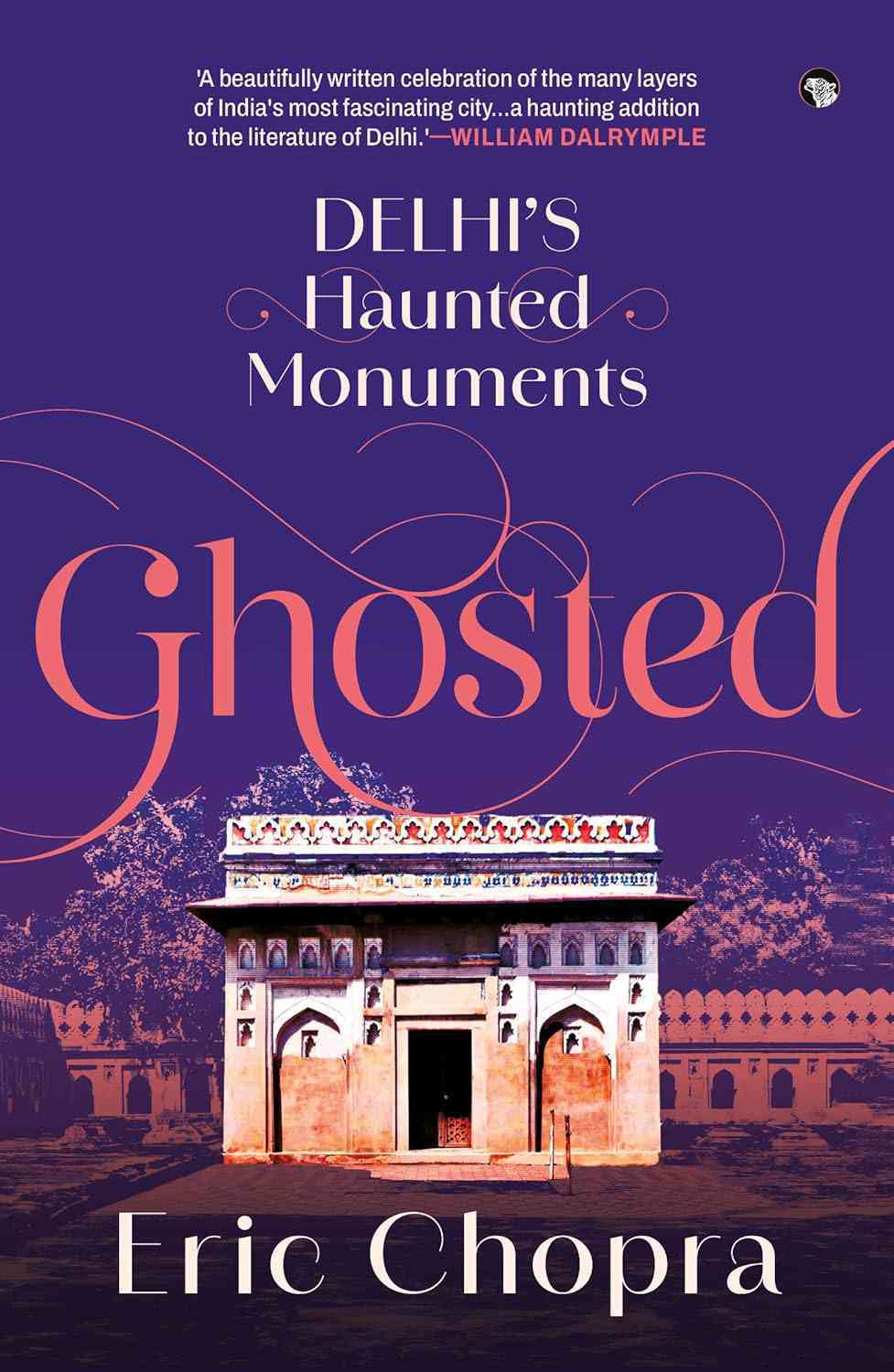
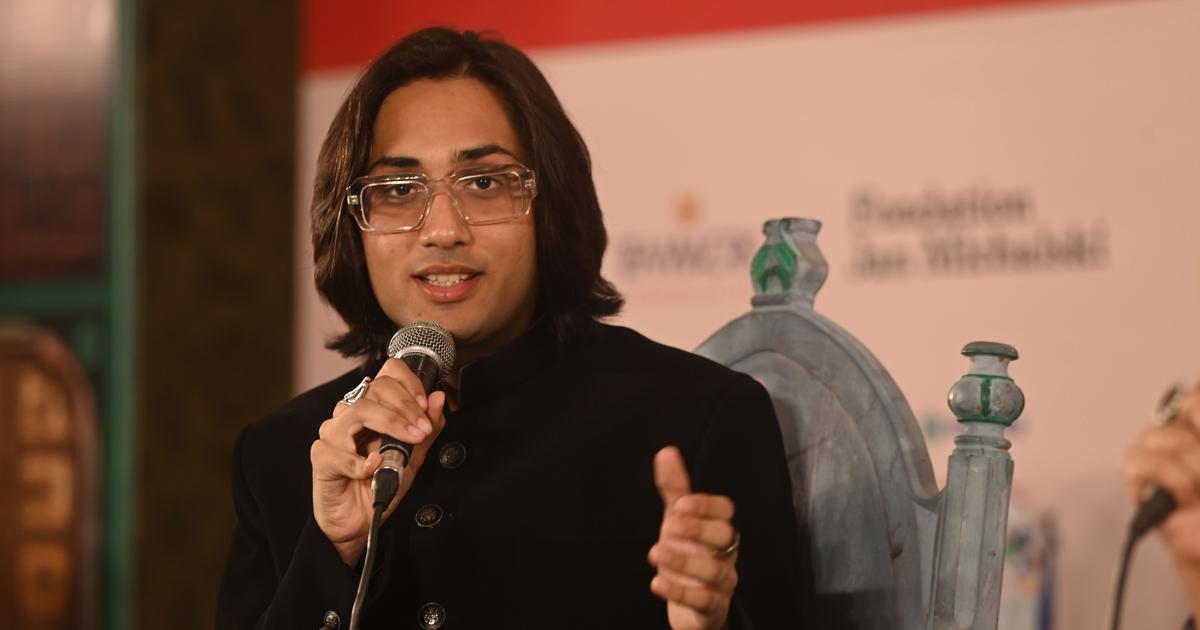
Eric Chopra, author of Ghosted: Delhi’s Haunted Monuments – and the founder of Itihasology, a platform that talks about Indian history and art – is well-suited to answer this question.
He describes his book as “an entire history of Delhi, from its rocky and prehistoric beginnings in and around Mehrauli to its various cities built over the years: from the Tomars and Chauhans to the Sultans, Mughals, and the British…told through the lens of five ‘haunted’ monuments: Jamali-Kamali, Firoz Shah Kotla, Khooni Darwaza, Mutiny Memorial, and Malcha Mahal”.
In a conversation with Scroll at The Sacred Amritsar festival, Chopra spoke about his fascination with horror, navigating queerness in history, making history fun, and more
How did you decide the sites you wanted to feature in Ghosted? You seem to have a personal relationship with almost all the spaces that you write about.
Thank you for noticing that. When I began, it was because I was fascinated with one monument, which was Jamali Kamali in the Mehrauli Archaeological Park. And my fascination was not so much with the supernatural world but with the mystery of who Kamali was, and whether Jamali and Kamali were possibly lovers. There are no definitive answers yet.
I have been conducting heritage walks for a while and taking people to Jamali and Kamali’s graves. Initially, the flower sellers who sit outside advised me not to step inside at a particular time. The reason they gave was that, if I went in, djinns would slap me. Some even said that, if djinns found me pretty, they might come and sit in my hair. In fact, they said all sorts of things that were spooky but also got me very curious. Queer people are interested in horror!
To be honest, my fascination with horror predates my fascination with history. When I started taking people on heritage walks, they would ask me questions like “Are there ghosts or djinns here? Are those stories true?” This happened too often, and it intensified my interest.
When did you start conducting heritage walks?
I started Itihasology in 2019. But the Covid-19 pandemic happened, and there were lockdowns, so I had to wait until it was safe for people to gather and move about in groups. I began with museum trails. My Mehrauli walks began in 2023. They got me thinking about writing an entire history of Delhi through the various cities that were built in this region, and placing the monuments in a chronological order following the timeline of when they were built.
It was not difficult to come across haunted monuments. Delhi is filled with them. I wanted to pick out the most interesting stories, but include only the ones that spoke to me personally. Agrasen Ki Baoli, for instance, is a monument that, many say, is the most haunted. But the story did not really strike me, so I chose to not include it.
Going back to the Jamali-Kamali site that happens to be your favourite, there are vastly different interpretations of who was buried there. Some believe that they were lovers, others believe that they were siblings. What sources did you consult while trying to make sense of this mystery, and how have oral narratives deepened your understanding?
When I started writing this book, one of my fears was that I might come across as a paranormal investigator and not a historian because there is a public discourse around the question of who is a historian, and of academic history versus popular history. I have a BA in History from St Stephen’s College in Delhi. I have been interested in history since I was in school. I decided to pursue that in college, and then get into public history work with Itihasology.
I drew upon primary sources, oral histories, and personal experiences while writing this book. With the Jamali-Kamali site, the primary sources came from records that the last dynasty of the Delhi Sultanate left behind because Jamali was a court poet associated with the Lodhis. He was a man who knew his way around. His poetry took him places. Later, he got associated with the Mughals. The flattering poetry he wrote for Sikandar Lodhi, Babur and Humayun is a source.
Jamali was a wealthy and well-travelled man. He went to Persia and Sri Lanka. He did the Haj pilgrimage. Imagine somebody who wasn’t an emperor doing this in the mid-1500s! I had a great time as a researcher learning about Jamali because he is a well-documented figure as a poet, Sufi, a globetrotter, and a diplomat. The person we don’t know much about is the man buried next to him. Now this is where oral narratives come into the picture, and help us dig deeper.
Symmetry is of great significance in Islamic architecture. Because there is no figural representation, symmetry becomes a way of indicating perfection, harmony and the oneness of God. Keeping this in mind helped me while reading up about Jamali and Kamali. The only thing breaking the symmetry in Jamali’s tomb is Kamali’s grave. This has parallels with the Taj Mahal. Only Shah Jahan’s tomb breaks the symmetry of the monument he built for his wife.
Karen Chase wrote a fictionalised account of the romance between Jamali and Kamali in the form of a long poem. This is Sufi poetry that talks eloquently about love. I looked at the work of Catherine Asher as well. She is a historian who is an authority on the subject, stating clearly that, for Sufis, the path to God was through your lover. The work of Madhavi Menon, who writes about queer theory and desire, pushed me to think about why, when we do not know the identity of the person next to Jamali, it is always easier for us to assume that they were best friends or siblings, rather than somebody that this man wanted to spend an eternity with in the afterlife.
This reminds me of Ruth Vanita’s book Love’s Rite: Same-Sex Marriage in India. She documents cases of queer couples in Gujarat, Tamil Nadu, Maharashtra, West Bengal, and Chhattisgarh who ended their lives because society did not permit them to be together. They left suicide notes, asking to be cremated or buried together. What do you make of this?
I do not think it was Jamali’s choice to be buried next to Kamali. Another primary source plays a role here. We know that Jamali’s son, Gadai, became very important in court politics during the Mughal period. He was best friends with Bairam Khan, who was the regent for Emperor Akbar. I think it was Gadai’s choice to have Jamali buried next to Kamali. Jamali didn’t get buried next to his wife. Male graves always have a kalam daan or a pen box on them. This is precisely how we know that the person buried next to Jamali was a man.
Is the pen supposed to be a phallic symbol here?
I get what you mean. Well, it could be interpreted as one. But, in theology, the kalam is supposed to be the pen that writes on the takhti or blank slate of the woman. Graves of women did not have any pen boxes placed on them. I think that it is easier for many people to believe in ghosts than to believe that two men could have been in love. Though history tells us otherwise, these people still think that homosexuality came to India through colonisation or from elsewhere.
One of the reasons why queer folks are interested in history and legends is that they offer validation, a sense of being part of a continuum, and having queer ancestors. With marriage equality being denied legal recognition, people seek legitimacy for their relationships in other ways. As an author writing about historical monuments, you also have the responsibility to ensure that your interpretations are grounded in historical sources. How do you work through this, especially since you, too, identify as queer?
As people leading queer lives, it is very easy, even for ourselves sometimes, to forget that we are part of a larger and longer narrative that is being manufactured on the margins of society. The first thing we were taught as undergraduates was that the historian is made of the circumstance. Now, what is the circumstance? And is the circumstance only heteronormative?
This was one way for me to approach the story of Jamali-Kamali. The question, for me, was: Am I going to let my circumstances overwhelm my historical sensibilities? No. Can I say conclusively that they were lovers? No, because the information on Kamali is scant. But I do ask: What stops us from considering that possibility when, as historians, we consider everything else? As an author, I am inviting people into an inquiry rather than making definitive statements.
Let’s talk more about this process of interpretation. When you discuss Khooni Darwaza, which is believed to be the spot where Aurangzeb displayed the severed head of his brother Dara Shukoh, you mention that there is a tendency among many people to speculate on what the political destiny of India could have been like if Dara Shukoh had been the emperor instead of Aurangzeb. But then you also urge the reader to be wary of romanticising him because being a man of letters and a patron of interfaith dialogue does not necessarily equip one with the skills to rule an empire. While using social media to make history sexy, how do you make sure that you do not water down the complexity?
When you make Instagram reels, you think in terms of seconds, not minutes, because the platform is such that visibility depends on being able to grab attention quickly. When I began Itihasology, I made a clear decision that, even if I’d make a 30-second reel, the caption wouldn’t be without sources that have contributed to my understanding. This is important because we are living in times when history is getting infused with people’s fantasies.
The idea that Shah Jahan did not commission the Taj Mahal is being circulated through a movie called The Taj Story. But that isn’t true. Historians know, from primary sources, from official records and land deeds, that Shah Jahan acquired the site and got the structure built on it.
When history is being threatened by movies, it is important to think carefully about how to work with legends. I am queer and a hopeless romantic, but my responsibility to my historical training comes first. It is important to back beliefs and claims with evidence. Dara Shukoh was undeniably a man unlike anybody else at that time. He had encouraged interfaith dialogue in a way that very few people could have in that position. He was an aesthete and a man who wrote poetry in war-stricken times. But if you are writing poetry during war, do you have what it takes to be an emperor? Dara Shukoh was defeated each time Aurangzeb fought with him.
People who wonder what the political destiny of India could have been like with Dara Shukoh, rather than Aurangzeb as the emperor, must ask themselves: What would have happened if there had been a foreign invasion? Would the Mughal dynasty have crumbled under Dara Shukoh? I draw parallels with Bahadur Shah Zafar. He was a highly regarded poet and a patron of the arts.
I have also heard people claiming that the Partition of 1947 would not have happened if Aurangzeb hadn’t ruled. This is a very narrow understanding of the past. I don’t deny people the right to believe in a story, but my historical training requires me to ground claims in sources.
Academics writing about queer spectrality have pointed out how queer histories, like ghosts, tend to disrupt normative understandings of our past and present. You write about haunted spaces like Malcha Mahal, Feroz Shah Kotla, and the Mutiny Memorial, but your book also makes me think of how ghosts and queer people have to perform this strange dance between remaining hidden and asserting their presence. What do you think?
This is a deep but fun question. After having done public history work and being public about my sexuality, I have come to a point where I still struggle with understanding if my work is an extension of my queer expression and identity. My queer way of looking at life is inseparable from everything I do. That said, there is no singular way in which all queer people have grown up, or been marginalised and criminalised. We have different kinds of support systems and different ways of not only coming out but finding home in ourselves.
The ghost is as confused and lost in time and space as people who struggle with their identities and sexualities. The idea of queer spectrality points us towards this mismatch. I often think of how the Jamali-Kamali tomb is always kept locked, supposedly to protect it from damage. But it almost seems like a closet. When you open it and look at the beauty inside, it is surreal.
Back in the 1980s, when photographer Sunil Gupta was working on a project called “Exiles”, he went out and photographed queer people in historical monuments all across Delhi. There is a beautiful photograph of men lying on the grass, pretty close to the tomb of Jamali-Kamali.
Does the discomfort around queer interpretations of this monument’s story also come from the supposed tensions between Islam and homosexuality? The Queer Muslim Project, for instance, has been documenting stories of people who identify as Muslim and queer. They do not see these identities as incompatible. Would you say that the tendency to believe and insist that Jamali and Kamali were siblings is rooted in homophobia?
Homophobia is deeply entrenched in our society. Ill-informed people ask why we need to have a pride parade when Section 377 of the Indian Penal Code has been read down. They do not understand that anal and oral sex between men has been decriminalised, but this has not altered queer lives massively. People are fighting for marriage equality because the institution of marriage is the basis for granting legal rights and social security in our country.
I don’t think that homophobia is simply hatred. It is also misinformation in the minds of people who live at a distance from queer realities. They do not know what it means to be marginalised, to struggle to rent a house, to grow up outside heteronormative, upper-caste, upper-class bubbles.
If we look at this through the lens of fear rather than hatred, would we be able to get a better sense of how horror and ghost stories can become containers to explore fears?
Yes, this is what I was trying to do with my book. I have never seen a ghost but I have learnt to listen to the stories of people who have. And I have realised that the stories that circulate in popular culture are related to fears that people don’t want to come to terms with. Sometimes, when people come for the heritage walks that I lead, they wonder aloud if some places are haunted because they carry the wounds of 1857 or 1947. It’s worth thinking about.
How have historians responded to your interest in ghost stories? Academics and researchers are usually worried about not being thought of as objective enough or serious enough. This is a concern that actively haunts (pun intended, if I may) them. But since you don’t work at a university, does that free you to explore history in non-conventional ways?
I don’t think I’ve ever said this to anybody else but I do think my age has a huge role in how I am perceived. An honest confession here: I may look back at my work in 10 years from now, and completely rethink everything that I have done. But I do take a lot of liberty because I am in my early 20s right now, and I think that highly respected historians are being kind to me. But having discredited myself a bit, I also think that working outside of a university setting has given me the joy and the freedom to look at history as a discipline that helps us make meaning of our multifaceted human experience. It is far more interesting now than it was back in school.
Chintan Girish Modi has contributed to various anthologies, including 101 Indian Children’s Books We Love (2013), Borderlines: Volume 1 (2015), Clear Hold Build (2019), Fearless Love (2019), and Bent Book (2020). He can be found @chintanwriting on Instagram and X.