








The most corrosive feature of India’s current political landscape is not merely the overweening power of the ruling dispensation, but the fundamental collapse of the capacity to distinguish truth from fiction among those who seek to oppose it.
In a climate where truth is already a precarious commodity, a new and more insidious pathology has taken hold: a habit of suspicion that sees every stirring of civic life not as a sign of democratic vitality, but as a meticulously choreographed puppet show.
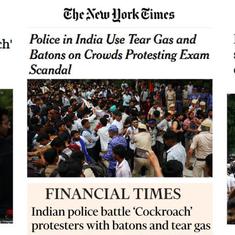
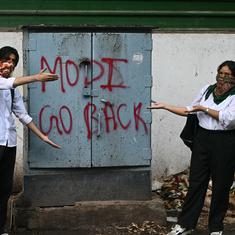
The discussions over the past few weeks about the emergence of the satirical Cockroach Janta Party and the hunger strike by Ladakhi activist Sonam Wangchuk provide a clinical study in this self-inflicted paralysis.
Rather than engaging with the substance of these mobilisations, a significant section of liberal opinion-making has retreated into a hall of mirrors. By framing these movements as “staged” or as “false flag” operations engineered by the state, the Opposition’s intellectual vanguard is committing a double error. It is alienating potential allies and, more tragically, it is undermining the very possibility of political action.
The tragedy of contemporary Indian liberalism is its transition from a project of institutional defence to a project of conspiratorial narcissism. There is a seductive comfort in believing that everything is a ruse. It relieves the commentator of the hard work of organising and it protects the ego from the messiness of unpredictable political outcomes.
If every protest is a plant, then the failure to mobilise need not be explained.
But this “narrative suspicion” has costs. In any healthy democracy, spontaneous civic dissent is a bridge that provides the raw material political parties must refine into institutional pressure.
When influential voices preemptively dismiss these movements as “engineered”, they do the ruling party’s work for them. They create a vacuum where there should be an alliance. They signal to the public that no one – not even the ascetic or the aggrieved student – can be trusted.
This does more than just critique the state: it inadvertently validates the state’s claim that all dissent is manufactured and illegitimate.
As young protestors took Delhi by storm, police action continued at iconic Connaught Place even into the evening, while areas near Jantar Mantar looked deserted.
— Scroll.in (@scroll_in) July 20, 2026
📷 @ShoaibDaniyal/ Scroll pic.twitter.com/AQzIvAd8f7
Political judgement is being turned into a personal performance for social media platforms. Driven by the incentives of the attention economy, pundits now prioritise the “sharp take” over the patient gathering of evidence. There is a status-seeking dimension to this scepticism. To be the one who sees through the charade offers a sense of intellectual superiority that a more cautious, evidence-based approach lacks.
Yet, this is a hollow victory. While the commentator gains followers, the political movement loses its footing.
The consequence is a demobilisation. Opposition parties, already hesitant and strategically adrift, are further spooked by these whispers of sabotage. They recoil from engagement, fearing they might be the dupes of a grander malign scheme.
This fragmentation of the anti-establishment discourse ensures that civic energy, rather than being channeled into a coherent challenge to power, is dissipated in a series of internecine squabbles over authenticity.
If Opposition politics is to regain any semblance of traction, it must first recover a sense of democratic faith. This does not mean a naive acceptance of every claim. Scepticism is a vital democratic virtue. But scepticism must be a tool for uncovering truth, not a shield for avoiding the responsibility of political engagement.
Responsible critics must move away from the sensationalist shortcut and toward a more demanding standard of verification. They must learn to distinguish between the presence of suspicious actors (who exist in every movement) and the underlying legitimacy of the grievance. To treat every protest as a tactical feint by the regime is to grant the regime a degree of omnipotence it does not possess.
Democracy thrives on the unpredictability of the street and the courage of the individual actor. By drowning these in a sea of conspiracy, the liberal intelligentsia is not protecting the republic – it is ensuring its own irrelevance.
The task of the critic is not to unmask every movement until nothing remains, but to provide the intellectual architecture that allows genuine dissent to stand. Without that, the only thing being eaten by conspiracy is the possibility of a democratic future.
Milind Murugkar writes on economic and political issues.
