










At dawn in Gujarat’s Banni grasslands, the earth smells faintly of salt and wet dung. Buffaloes shuffle through silver grass under a pale orange sky while tiny black bees hover over flowering shrubs that survived the harsh summer. Herders of the Maldhari community move slowly with their animals, reading the land like memory: where water remained after winter, where grasses flowered early, where acacia trees are likely to bloom.
Hundreds of kilometres away in Rajasthan’s Thar desert, Raika camel herders walk across sandy commons dotted with khejri and ber shrubs. Their camels browse lightly, never staying too long in one place. After the first monsoon showers, wild flowers erupt briefly across the desert floor, drawing bees in clouds of gold and brown.
These scenes rarely enter conversations about conservation. Yet across India, pastoralist communities are the country’s quietest custodians of wild pollinators.
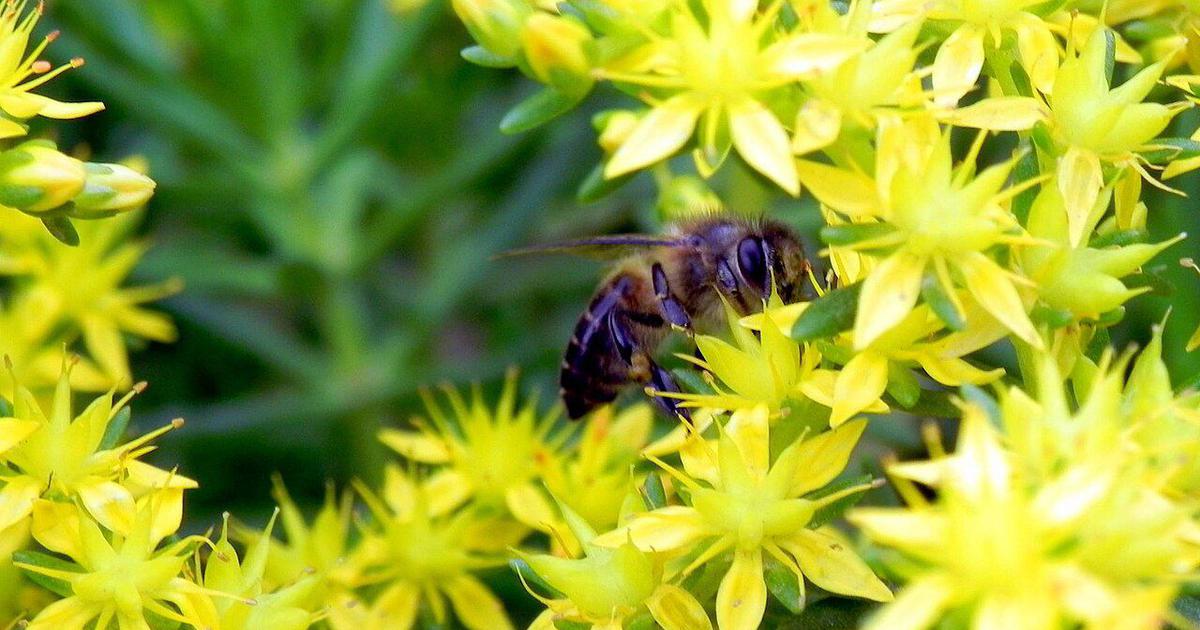
On World Bee Day, observed on May 20 every year, discussions usually focus on honey production, commercial beekeeping or pesticide-driven bee decline. But scientists and grassroots organisations are increasingly recognising another reality: in addition to forest and farms, wild bees also depends on living pastoral landscapes; grasslands, grazing commons, scrub forests and migratory routes maintained by herding communities for centuries.
Landscape management
India hosts more than 700 species of wild bees, including the giant rock bee, Indian honey bee, stingless bees, carpenter bee and bumblebee. Unlike managed honey bees, these pollinators survive in uncultivated habitats: hedgerows, forest edges, native grasses, flowering shrubs and open commons. Many pastoral landscapes provide exactly these conditions.
Traditional grazing systems create landscapes where grazing, trampling and seasonal movement prevent ecological stagnation and encourage plant diversity. Diverse plants mean diverse flowering cycles. And diverse flowers sustain wild pollinators across seasons. Pastoralism, in this sense, is beyond livestock rearing. It is landscape management.
In western Rajasthan, commons known as orans and gochars historically supported both livestock and biodiversity. Studies on Rajasthan’s grazing commons show that community-managed grazing systems once allowed landscapes to regenerate through seasonal resting periods and rotational access. These landscapes are often dismissed as wastelands, but they are ecologically productive spaces. For pollinators, grasslands can be as important as forests.
Ecological web
The relationship between livestock and bees may appear unlikely at first. But healthy grazing systems support pollinators in several ways.
Animal dung enriches soil microbes and improves nutrient cycling, allowing native grasses and flowering herbs to regenerate. Moderate grazing prevents aggressive shrubs from overtaking open habitats, helping sunlight reach flowering plants. Seasonal mobility prevents overgrazing and gives landscapes time to recover.
Most importantly, pastoralism often protects uncultivated spaces that industrial agriculture eliminates.
Wild bees do not survive on crops alone. They need nesting grounds, native vegetation, flowering weeds and forest edges. In monoculture landscapes saturated with chemicals, these habitats disappear rapidly.
Pastoral landscapes retain them.
In Gujarat’s Banni grasslands, among Asia’s largest tropical grassland ecosystems, Maldhari pastoralists have evolved mobile grazing systems adapted to droughts and erratic rainfall. In Uttarakhand, Van Gujjar pastoralists moving through forest corridors depend on flowering trees such as sal, jamun and semal, the same species that sustain bees and birds.
In Maharashtra, Dhangar shepherds traditionally graze across semi-arid grasslands rich in seasonal wildflowers. In Karnataka, Kuruba pastoralists maintain mixed-use forest landscapes that support both livestock and pollinator diversity.
Commons under threat
Yet these ecosystems are vanishing.
Over the past few decades, India’s grazing commons have shrunk due to industrial projects, fencing, mining, monoculture plantations, highways and urban expansion. Pastoralists increasingly describe losing their “right to roam”.
This fragmentation affects not just livelihoods, but ecological continuity itself.
When commons disappear, landscapes become simplified. Diverse flowering plants are replaced by monocultures. Seasonal grazing cycles collapse. Pollinator habitats shrink.
The consequences are already visible.
Globally, pollinators are declining due to habitat loss, pesticides, climate change and intensive agriculture. India has no comprehensive national assessment of wild bee populations yet, but researchers increasingly warn about declining pollinator diversity in heavily industrialised agricultural zones. Ironically, policies continue to treat grasslands as “degraded” lands.
Across many states, commons are diverted for solar parks, plantations or infrastructure projects because they are officially classified as “wastelands”. Conservation policies too sometimes exclude pastoralists in the name of protecting forests and wildlife, despite evidence that mobile grazing systems can coexist with biodiversity conservation.
This policy ignorance has deep colonial roots. British forest governance often viewed pastoralists as encroachers rather than ecological stewards. That mindset still persists in parts of India’s conservation bureaucracy.
Rethinking conservation policy
There are signs of change, though progress remains uneven.
The Forest Rights Act, 2006, opened pathways for recognising community rights over grazing landscapes. Pastoralist groups across Rajasthan, Gujarat, Maharashtra and Telangana are also demanding legal recognition of migratory routes, seasonal grazing access and commons governance.
Rajasthan has experimented with decentralised commons governance, while several civil society organisations are documenting how pastoral systems contribute to biodiversity conservation and climate resilience.
Environmentalists argue that pollinator conservation policies must move beyond bee boxes and commercial apiculture. Protecting pollinators requires protecting landscapes, especially grasslands and commons that fall outside traditional forest conservation frameworks.
This is particularly important in the era of climate change. Pastoral systems evolved precisely to cope with uncertainty shifting rainfall, droughts and seasonal variability. Mobility allows both livestock and landscapes to adapt. In contrast, industrial systems dependent on uniformity often collapse under ecological stress.
As evening falls over Banni, bees retreat into cracks of bark and dry earth while buffaloes gather near temporary settlements. The Maldharis prepare tea. Somewhere in the dark, bells from grazing animals echo across the grassland.
These sounds belong to an older ecological rhythm, one in which humans, animals, grasses and pollinators move together across shared landscapes.
Saving bees, then, may require looking beyond apiaries and honey bottles. It may require protecting the pastoral communities whose movements still keep India’s living landscapes open, and flowering.
For centuries, pastoralists have moved livestock across India’s landscapes, carrying with them the ecological knowledge that keeps these ecosystems alive. If India hopes to protect its wild pollinators in an age of climate breakdown and ecological collapse, it may first need to recognise pastoralism as a living model of coexistence.
World Bee Day is observed every year on May 20 to raise global awareness about the critical role bees and other pollinators play in sustaining ecosystems, ensuring food security and supporting biodiversity.
Abhijit Mohanty is a Bhubaneswar-based independent journalist who reports on sustainable food, livelihood, women’s leadership and climate change with a special focus on Adivasi and marginalised Indian communities.
