






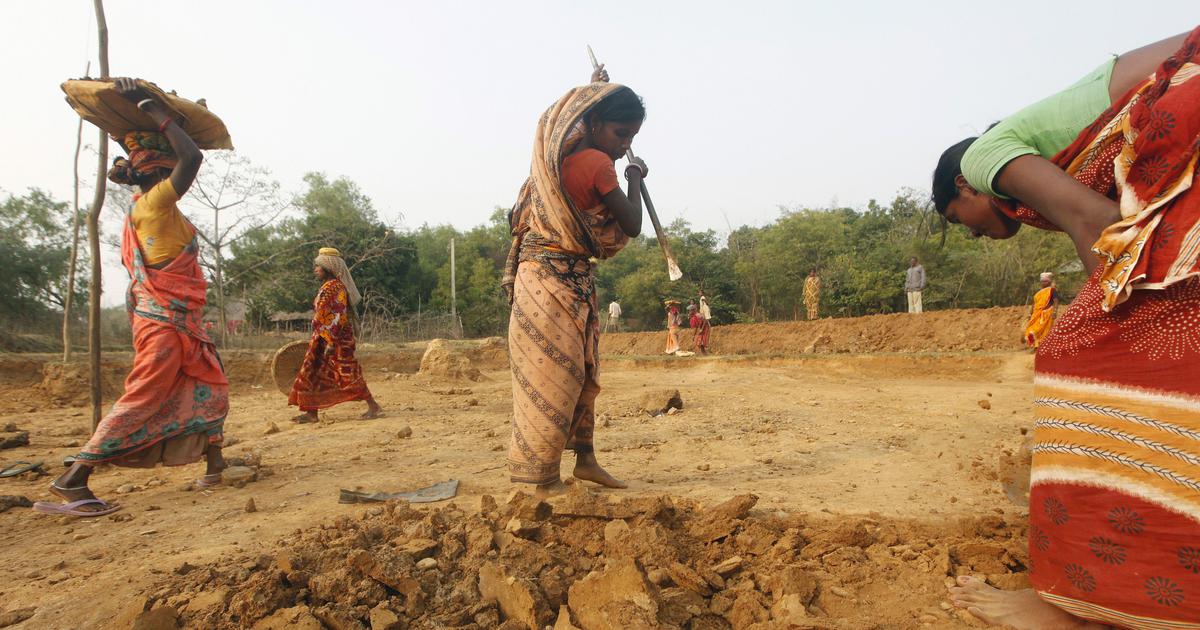
In May 2025, Maini Oraeen fell sick while she was working in searing heat in her village of Murkuni, in Jharkhand’s Ranchi district. The 51-year-old was unwell for a week, and then died.
Oraeen had been allocated the work of building wells under the Mahatma Gandhi National Rural Employment Guarantee Act. “My mother used to do MGNREGA work every year,” said her only son, Vishwanath Oraon. “The work she did was a lifeline for us in the summer months, where there is not much else we can do.”
He added, “It was not her time to die yet.”
Oraon’s description of the work as a “lifeline” despite the fact that his mother fell fatally sick while engaged in it is a poignant reminder of just how much rural India relies on the programme.
This reliance has come into even sharper focus in the months since December 2025, when the union government passed the Viksit Bharat Guarantee for Rozgar and Ajeevika Mission (Gramin) or the VB-G RAM G act. The new law replaces MGNREGA, which was enacted by the United Progressive Alliance government and has been operational since 2006.
The shift has activists, experts and workers worried – they fear that it will be accompanied by an overall reduction in the allocation of work to those who live in India’s villages. In Jharkhand, one of the most economically marginalised states in the country, they cite the fact that the first month of the current financial year saw a dramatic drop in work allocated under the original act.
In the state, the total number of persondays generated in April under MGNREGA this year fell by a staggering 92.8% compared to last year, from around 1.4 crore persondays to just over 10 lakh persondays.
The decline in April was reflected on the ground in Bishakhatanga panchayat, in which Murkini falls. The panchayat had a population of around 3,300 according to the 2011 census, but data shows that in this financial year, only 169 individuals and 156 households have been allocated work under MGNREGA so far.
Vishwanath has been looking for employment under the programme, but there is little to no work being allocated in the village. “There is some work going on, like mango plantation, but it is very less compared to previous years,” said Sneha Ekka, the mukhiya of the Bishakhatanga panchayat, under which Murkini falls. “The fact is very little funding has been made available for MGNREGA work this year. We are now awaiting VB-G RAM G.”
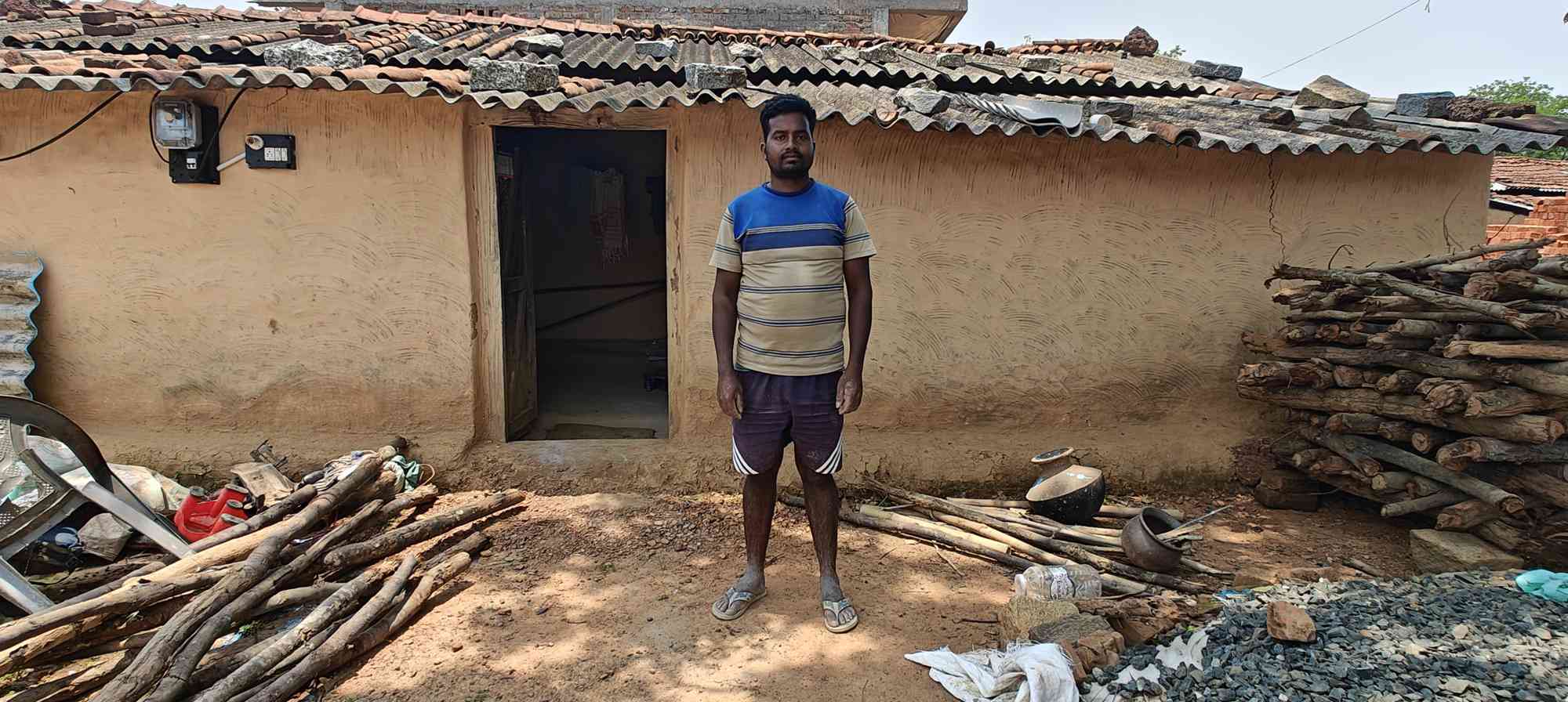
Like other states, the Jharkhand government has a provision to compensate MGNREGA workers in case of accidents and deaths. Vishwanath is thus entitled to compensation of Rs 2 lakh for his mother’s death. But, he has not received any money yet – and now that a transition is underway between the two programmes, he is unsure if he will receive any. “I found out about this provision quite late, so I only submitted the application in January,” he said. “Now with things transitioning for the RAM G scheme, let’s see if the money reaches me.
A troubled transition
The union government has claimed that the transition to the new act will be smooth.
On May 11, when the government notified the implementation of the act from July 1, the ministry of rural development noted in a press release that “In order to ensure seamless, smooth and worker-centric transition, employment under MGNREGA shall continue uninterrupted till the date of commencement of the new Act.”
It noted further, “Ongoing works under MGNREGA as on June 30th shall be saved and carried over in the new framework seamlessly by ensuring consistency with the provisions of Viksit Bharat G RAM G.”
But activists are unconvinced. A report prepared by LibTech India, a non-profit which studies rural social policies, compared data from financial years 2024 and 2025.
The report found that there had been a drop of 21.5% across the country in the total number of persondays generated under MNREGA between the two years, from 268.44 crore persondays to 210.73 crore persondays. It also found that there had been a 40.5% drop in households that completed 100 days of employment between the two years, and a potential wage loss of Rs 15,408.57 crore in the second year.
This widespread decline has left them alarmed despite the fact that in the previous financial year, some states saw a rise in the number of persondays of work generated – Jharkhand, for instance saw an increase of nearly 13%.
“The alarming figures on MGNREGA reflect an employment crisis for unskilled workers and demonstrate the state’s anti-labour stance,” said activist James Herenj, the Jharkhand convenor of MGNREGA Watch, a network that works on the act and its implementation.
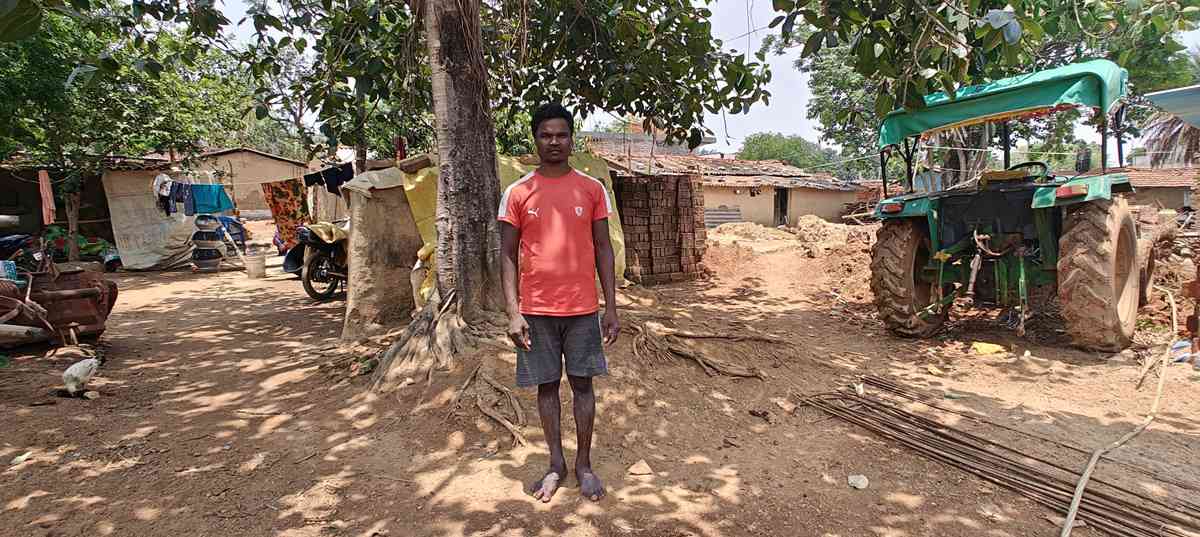
In Murkini, Vishwanath’s neighbour echoed this finding. “Work under MGNREGA has just dried up,” said the neighbour, Dulle Oraon, who has been taking up MGNREGA work for the past decade or so.
This threatens to inflict a serious blow on locals’ livelihoods. “Our area doesn’t have irrigation facilities, so money really dries up in the summer months,” Dulle said. “When we had MGNREGA work, we had a lifeline in the summer before paddy season, and we earned between Rs 15,000 and Rs 20,000 between January to May to spend on agriculture.”
Dulle noted that in fact, some villagers preferred to migrate in search of other work, because they felt the MGNREGA wages were too low – the average wage rate under the programme in Jharkhand is Rs 254 so far in 2026 this year. “Many people from our region migrate seasonally to earn money,” he said.
The current decline of work under the programme has exacerbated this trend. “With almost no MGNREGA work available in the past few months, even more people have had to find work outside,” said Dulle.
Activists have also criticised what they say is the heavy-handed way in which the old programme was replaced. “MGNREGA was the response to decades of workers’ movement demanding their right to work,” said Herenj. “It was implemented after a lot of consultations. The new VB-G RAM G was introduced without any stakeholder consultation.”
Further, they have criticised specific changes in the framework of work allocation – for instance, while work was an entitlement under the old law, its allocation is subject to several forms of administrative discretion under the new law. For instance, Herenj noted, “The centre will play a bigger role in this act by notifying the areas where the right to work is applicable. It remains to be seen how all of this will play out.”
Growing disillusionment
Though researchers are wary of the new act, on the ground, workers have been far from satisfied with the old one.
At 7.30 am on May 15, daily wage women workers started gathering at Ranchi’s Lalpur Chowk, hoping to be hired for the day. While a few of those who had gathered lived within Ranchi itself, most had travelled from the rural areas of Ranchi district.
Most women said they came to the chowk almost daily, and were hired two or three times a week, depending on their luck. For eight hours of work as labourers, they earned a daily wage of Rs 600, while for catering and other work in events, they earned Rs 700. “Prices keep rising and there is never enough work for everyone,” said Choti Devi, a worker from Angara village, around 40 km from the city.
When I asked the women about MGNREGA work, many of them scoffed at the mention of the programme. “All of us who come here daily looking for work are mostly from villages,” Choti said. “If MGNREGA work was widely available and paid well back home, why would we wake up at 4 in the morning and come to look for work in the city?”
Part of the reason for workers’ hesitation was their experience of poor implementation of the programme.
Choti herself had worked on building a cowshed around two years ago, but had never been paid for it. “I worked for some 15-20 days and I never got a rupee for it,” she said. Under the programme, Choti should have received payment for her work directly into her bank account, but as researchers have noted, there have been inordinate delays and hurdles in the payment of wages in the last mile.
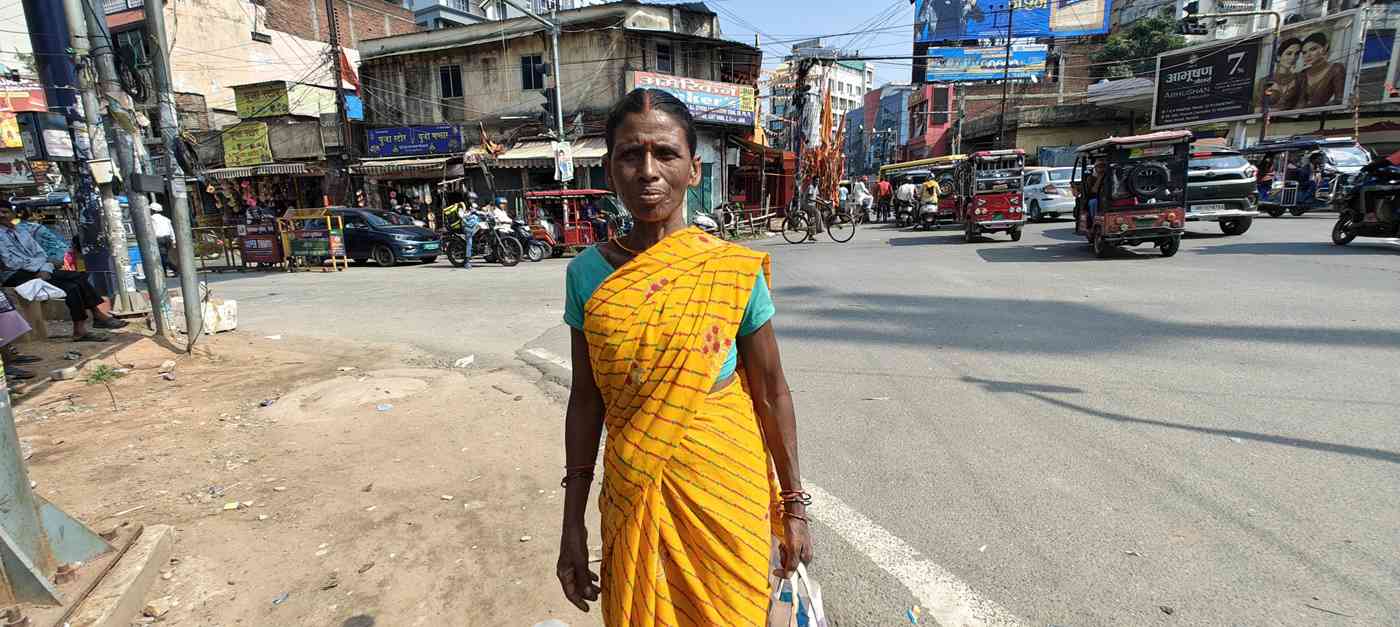
Other women voiced other complaints, such as that the programme did not function in their villages, that work was not usually available for the guaranteed hundred days, that they faced obstacles in recording attendance with the National Mobile Monitoring Software app, and that wages were often delayed or not paid at all. Many of the younger women present at the chowk had not seen MGNREGA work being carried out in their villages at all.
But this did not translate into optimism for the new act – in fact, most of the women had not heard of it at all.
When I explained it to them, most workers said they had little hope from the new programme – some argued that the problem ran too deep to be fixed by the shift. “With MGNREGA there were a lot of issues in implementation, there was so much corruption that many people never received their wages,” said Laxmani Kumari, a worker from the neighbouring district of Ramgarh. “Unless and until the government fixes that corruption at all levels, any new scheme or programme will fail the workers yet again.”
