





As sections of the media have reported, a new “jihad” has been unearthed.
Earlier this week, the Uttar Pradesh Police invoked the Gangsters Act and the Anti-Social Activities Prevention Act against 10 gym owners in Mirzapur, accusing them of waging “gym jihad”.
They were arrested in January and February for allegedly persuading Hindu women to train at their facilities, establishing physical relationships with them, recording compromising photographs and videos, and then using the images to pressure their targets into converting to Islam.
The police claim that the accused had ensnared more than 50 women between them. The authorities claimed that there are “sufficient grounds” for action to be taken against the Muslim men under the stringent Gangsters Act, which allows the authorities to seize properties.
But what are these grounds? Have the police found evidence against the gym owners, such as the objectionable photos and videos? Do they have statements from the 50 women?
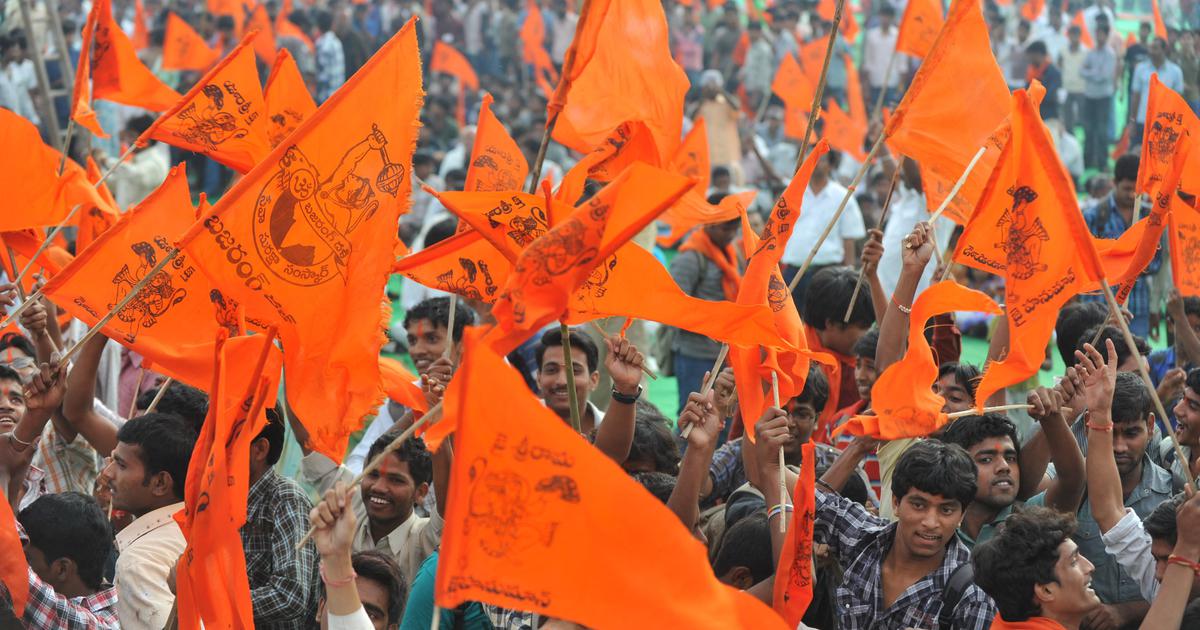
These questions can only be answered through an impartial investigation. Establishing the facts takes some time. But that has not stopped Hindutva groups from adding another “jihad” to the ever-growing list of strategies Indian Muslims are claimed to have adopted in a “holy war” on Hindus.
The most prominent among them, of course, is “love jihad” – the purported campaign under which Muslim men are alleged to lure unsuspecting Hindu women into romantic relationships merely so that they can force them to convert to Islam. In 2020, the Union home ministry categorically told Parliament that Indian law has no provision defining such a term. Despite this, several Indian states have passed what are known as “anti-love jihad” laws.
Scroll has detailed how consensual relationships between adults have been labelled as “love jihad” by relatives opposed to a daughter or sister in an interfaith union. It does not take long for Hindutva groups to jump in. We have also reported on how cases filed under the anti-love jihad laws rarely stand up in court.
And yet, like Raktbeej – a mythological demon king who spawned a new clone every time a drop of his blood hit the battleground – these conspiracies are resurrected over and over again.
Here are some of the so-called jihads that Hindutva supporters have invented since 2014, aimed at whipping up the fear that Hindus (who form nearly 80% of India’s population) are under siege from the country’s Muslims (who form 14.2% of the population).
*Land jihad: The claim, as Scroll has reported, “that Muslims build shrines on public land and then refuse to vacate, thereby taking land away from the public”.
*Cow jihad: Muslims are stealing bovines and spiriting them away in cars.
*Organ jihad: A conspiracy by Muslims and Christians to donate organs that will be transplanted into Hindus – and presumably contaminate them.
*Thook jihad: Muslim fruit vendors spit on their wares to spread disease.
*Fertiliser jihad: An allegation by Assam Chief Minister Himanta Biswa Sarma that Muslim farmers are harming the health of consumers by growing crops that use excessive amounts of fertiliser and pesticide.
*Flood jihad: Another claim from Assam, asserting that Muslims deliberately break river embankments in order to cause water inundation.
*Jeans jihad: A conspiracy theory that Muslims had been starting jeans manufacturing units in a Delhi neighbourhood so that they could change the demography of the area by forcing out Sikhs and Hindus.
Like the notion of gym jihad, at the core of many of these imagined jihads is the patriarchal anxiety that Hindu women are vulnerable and incapable of exercising free will.
Before gym jihad, news channels had reported on “mehendi jihad”. In October 2024, Zee News claimed that Muslim mehendi workers at pre-wedding festivities conceal their identities, exchange numbers with Hindu women, fraudulently marry them and coerce them to convert to Islam.
During the Hindu festival of Navratri every year, Muslim men are accused of orchestrating “garba jihad”, according to some television channels. Their alleged modus operandi involves entering venues at which participants engage in the traditional dance form to meet Hindu women who could be potential “love jihad” targets.
More recently, allegations of sexual harassment at a Tata Consultancy Services facility in Nashik sparked the suggestion that “corporate jihad” had been unleashed – that Muslims were targeting their Hindu women colleagues in offices to force them to convert to Islam.
As “gym jihad” became a buzzword this week, many are asking on social media where women can find safety anymore. In a week when at least three alleged dowry-related deaths were reported, that is perhaps a good question to ask.
Here is a summary of last week’s top stories.
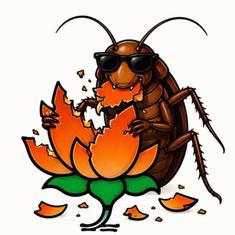
World’s largest democracy. The X account of satirical political campaign Cockroach Janta Party was blocked in India “in response to a legal demand”. The social media campaign, which began on May 16 in response to comments made by Chief Justice Surya Kant, describes itself as a “political front of the youth, by the youth, for the youth”.
It was created by Abhijeet Dipke, a 30-year-old political communications strategist from Pune. Dipke was part of the Aam Aadmi Party’s social media team. The campaign had garnered 21.9 million followers on Instagram as of Saturday morning, more than twice as many as the ruling Bharatiya Janata Party’s 9.2 million.
On Thursday, Dipke asked if the page had been withheld because the campaign had sought the resignation of Union Education Minister Dharmendra Pradhan over the National Eligibility cum Entrance Test for medical college admissions being cancelled following a paper leak. He described the blocking order as an “own goal” by the authorities.
Also read: Cockroach Janata Party founder says Instagram account hacked, backup handle taken down
TMC candidate backs out. The Trinamool Congress’ candidate in West Bengal’s Falta withdrew from repolling there, two days ahead of voting. Jahangir Khan said he was doing so for the constituency’s “development and the public good”, citing a special package announced by the Bharatiya Janata Party government.
The TMC said that the withdrawal of the candidature was Khan’s personal decision and not that of the party.
On May 4, the BJP defeated the TMC in the state polls, ending the 15-year rule of the Mamata Banerjee-led party. While voting in Falta was held on April 29, the Election Commission on May 2 ordered repolling in the constituency, alleging that the democratic process had been subverted there. Repolling was held on Thursday and the votes will be counted on Sunday.
Bail for Umar Khalid. Activist Umar Khalid was granted a three-day interim bail by the Delhi High Court in the 2020 Delhi riots conspiracy case. A division bench ordered Khalid to be released from June 1 to June 3.
He had sought an interim bail for 15 days to attend the Chehlum ritual marking 40 days since his uncle’s death, and to take care of his mother. Khalid had moved the High Court after a session court on Tuesday rejected his plea, holding that the grounds cited in his plea were unreasonable.
Khalid was denied bail by the Supreme Court in January. However, on Monday another bench of the Supreme Court criticised the January verdict, saying that it ignored legal precedent.
Questions for PM Modi. Prime Minister Narendra Modi’s refusal to answer a question from a Norwegian journalist during a joint press meet with his Norwegian counterpart sparked a debate online about the media’s role in democracy. Helle Lyng Svendsen, a reporter in Oslo, faced a barrage of criticism online after she asked why Modi had declined to take questions from the media.
On social media, Bharatiya Janata Party supporters claimed that Svendsen had acted inappropriately and some others were more intemperate in their criticism. Some accused her of being a spy.
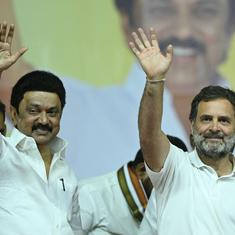
But Modi’s opponents saw this as just another instance of the prime minister’s evasions. Congress leader Rahul Gandhi said that Modi “running from a few questions” had undermined the country’s image.
Also on Scroll last week
- One mostly Muslim booth flipped a controversial Bengal seat – 97% of its vote went to BJP
- Why BJP is dismantling OBC reservations in Bengal
- How Big Tech is harnessing the data of Indian factory workers to train robots
- Why Sikh religious leaders are alarmed by AAP’s anti-sacrilege law
- Why many villages oppose a programme that rewards companies that plant trees
- Three reasons why West Bengal’s SIR exercise was unconstitutional
- A proposed seed law may be a new flashpoint in Indian federalism
- Was Nataraja inspired by the stars?
- ‘Drishyam 3’ review: Give it a rest, Georgekutty
- ‘System’ review: Legal drama maintains poise and purpose even after losing its brief
Follow the Scroll channel on WhatsApp for a curated selection of the news that matters throughout the day, and a round-up of major developments in India and around the world every evening. What you won’t get: spam.
And, if you haven’t already, sign up for our Daily Brief newsletter.
