


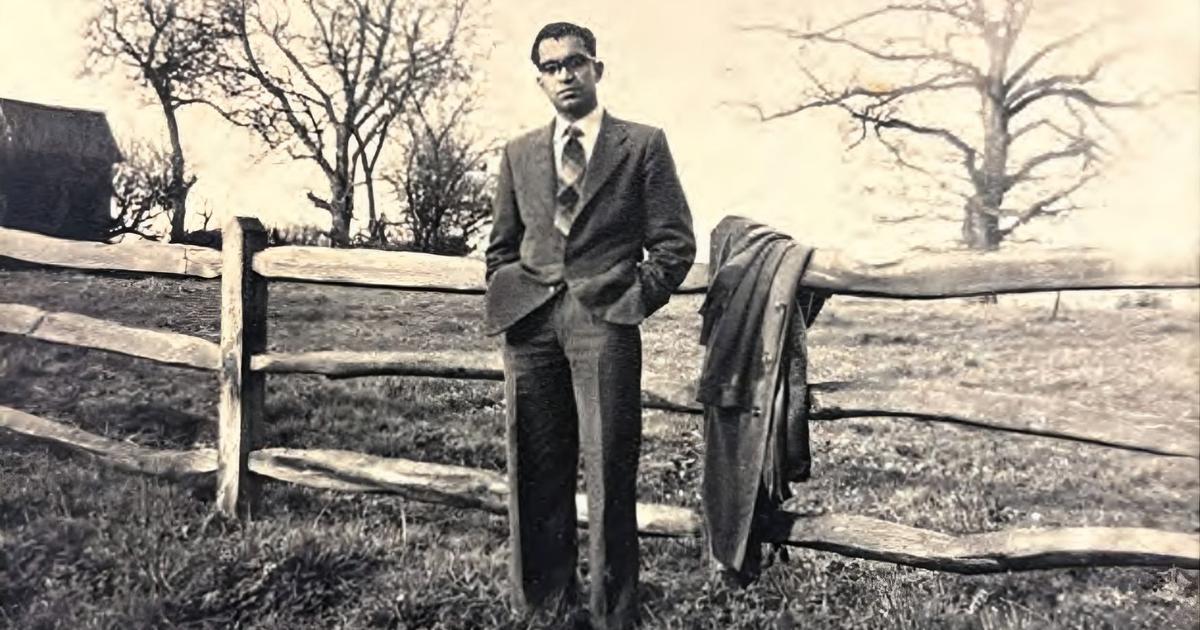
June 1975. Inside the medieval black-lava stone Gothic cathedral that soars over the skyline of the industrial town of Clermont-Ferrand, one of France’s oldest urban settlements, an unlikely visitor sat motionless in a front pew. It could be that the bespectacled, 40-something man, incongruous in his brown skin, was taking refuge from the oppressive summer heat, but there was something in the attenuated way he held himself that suggested he was there as a supplicant. Neither the church deacons nor the groups of tourists slowly making their way around the nave, however, could have guessed what the man was praying for.
It was true that Maruti Vinayak Gokarn (MVG), for that was the man’s name, was more than a little anxious. Over the past several years, he had nurtured a dream of setting up his own engineering company in India to manufacture tyre valves, a critical component in motor vehicles. And now that dream had reached a critical juncture.
MVG had his reasons for choosing tyre valves as his project. At that time, only one Indian company, a joint venture between the world leader, Schrader Scovill Duncan Ltd, and the JP Goenka Group, manufactured the component, so there was ample room for a competitor. The trouble was, the path to setting up a manufacturing facility for the tiny widget was strewn with seemingly insurmountable obstacles.
But MVG was adamant. A mechanical-electrical engineer raised in a middle-class Saraswat family in Karwar, on Karnataka’s western coast, he combined an entrepreneur’s never-say-die persistence with a marketer’s instinct to spot a trend before it became one. Now he had sensed an opportunity and was raring to go after it.
The first Indian-manufactured car, the Morris Oxford (which was later rechristened the Ambassador, and became the much-loved family car of India), was built by Hindustan Motors in collaboration with Morris Motors of Britain, and hit the road as early as 1942. Two years later, Premier Automobiles Ltd, established by Bombay businessman Walchand Hirachand Doshi with the help of Mysore’s great engineer-statesman, M Visvesvaraya, partnered with the American company, Chrysler Motors, to build Plymouth cars and Dodge trucks, which were rolled out in 1949 to great excitement. In the decades since Independence, however, the sheen had dimmed; the automobile industry, crippled by import restrictions meant to protect domestic manufacturers, had become decidedly sluggish.
Until, in the early 70s, something changed. By that time, most of the foreign collaborators for cars and trucks had ended their licence agreements with their Indian partners. However, the option to continue manufacturing the products under different branding was still open, and the more robust Indian manufacturers happily snapped it up. Around the same time, price controls were lifted, injecting some healthy competitiveness into an oligopoly comprising Hindustan Motors and Premier Automobiles. Alongside, urban centres began to see a rise in demand for scooters, the pert workhorses that ferried nuclear families from home to school to work, and became a metaphor for a young, ambitious India unburdened by the baggage of colonialism.
The biggest growth story, however, was developing in the commercial segment. In the mid-60s, reeling under food grain shortages and nationwide famines, the result of consecutive droughts and an overdependence on traditional farming practices, the Indian government launched the Green Revolution, a comprehensive program to modernise agriculture and increase food production. That modernisation involved an increased demand for transport vehicles and farm vehicles like tractors.
All those vehicles had tyres, and all those tyres would require valves. MVG was determined to be the one supplying them.
It wasn’t going to be easy, however.
For one thing, tyre valve technology, especially the tech involved in the crucial metal-to-rubber bonding, was a closely held secret across the world. For another, tyre valves were hitech, high-precision products involving sophisticated, custom-built machines and processes not quite commensurate with their low unit cost. Most importantly, the automobile market in India, far from being a vast one, was entirely dominated by the big kahuna Schrader Scovill, making it almost impossible for a new, bootstrapped company to find purchase.
Despite his best efforts, despite reaching out to every tyre valve manufacturer on the planet over many months, MVG had not managed to convince any of them to collaborate with him on the all-important technology transfer. Some did not respond to his letters, and others rejected his proposal outright. A couple of months earlier, just before his wedding, he had received a call from a family-run Italian firm he had been chasing, Wonder Italia, inviting him to their headquarters in Cremona for a meeting. Taking the next possible flight out, MVG had had an excellent interaction with Wonder, and they had even shaken hands on the deal. Inexplicably, no sooner had he returned home, jubilant, than Wonder pulled out, offering no explanation for the volte-face.
Gutted, but far from defeated, MVG took himself to his local post office, where he shot off a telegram to the last potential collaborator on his list, another family-run enterprise called Pingeot-Bardin SA. As he spelt out the name of the French town where P-B was based for the postal clerk – C-l-e-r-mo-n-t F-e-r-r-a-n-d – MVG felt a little thrill of excitement; it was in that very town, in 1889, that brothers Edouard and Andre Michelin had founded their eponymous, legendary tyre company.
To MVG’s surprise and delight, Pingeot-Bardin responded promptly and positively, asking him to come and visit them. Maybe this was a sign? From the Michelin gods, if no other? With hope in his heart, MVG set off again to Europe, on another trip he could barely afford.
What MVG did not know at the time was that the brothers Pingeot, who ran the business, had very little English and had entirely misunderstood his request – they thought he wanted to collaborate with them on their gas supply regulation valves. That technology was hardly proprietary, which was why they had so readily agreed to discuss it.
What he did know was that he himself did not even have enough French to pronounce the name of the company correctly. How in heaven’s name would he be able to negotiate a partnership deal, his very last shot at his audacious dream, without offending or otherwise frustrating the elderly Pierre Pingeot?
In the cathedral at Clermont-Ferrand that June morning, MV Gokarn was praying for a miracle.
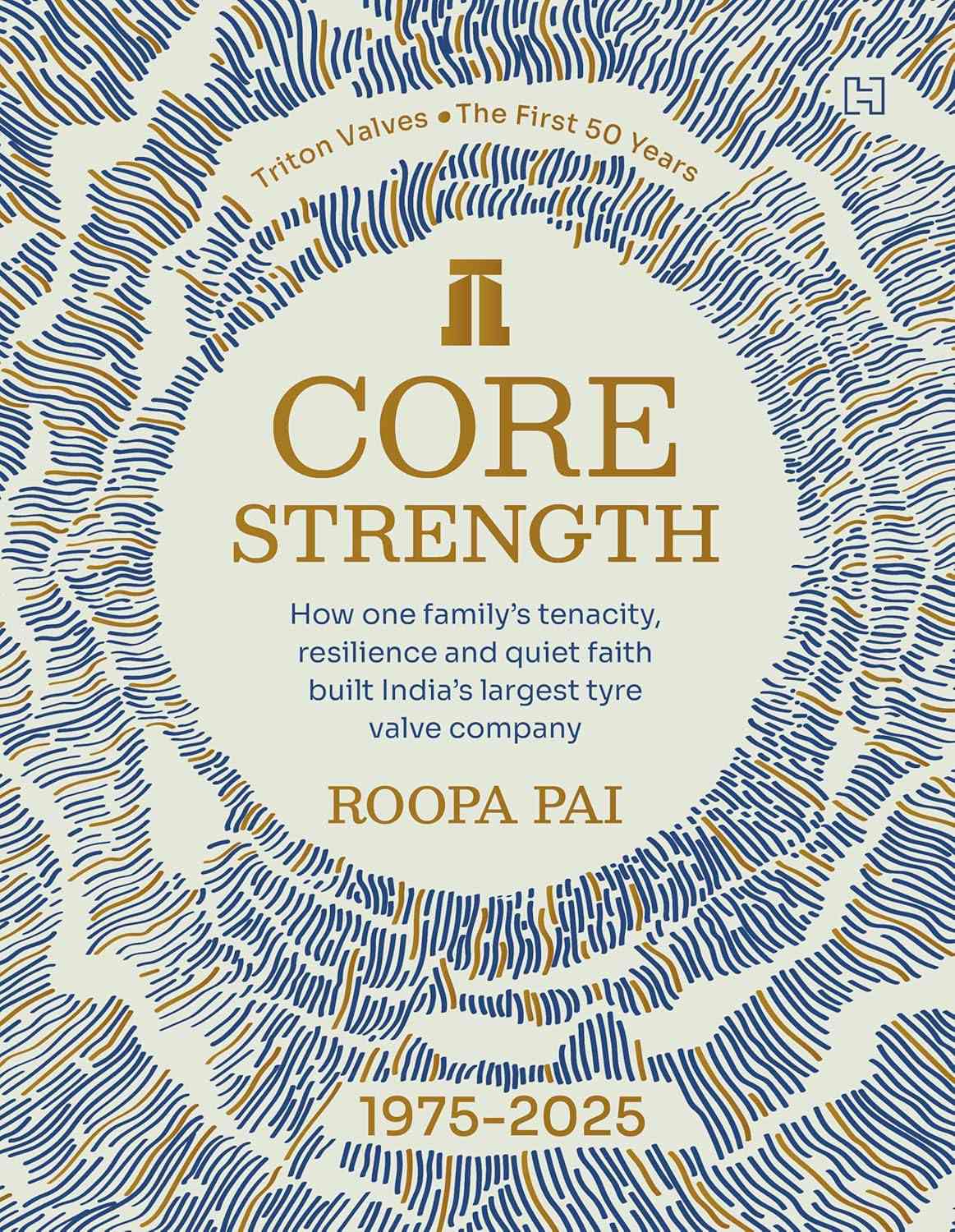
Excerpted with permission from Core Strength: How One Family’s Tenacity, Resilience and Quiet Faith Built India’s Largest Tyre Valve Company, Roopa Pai, Hachette India.
