










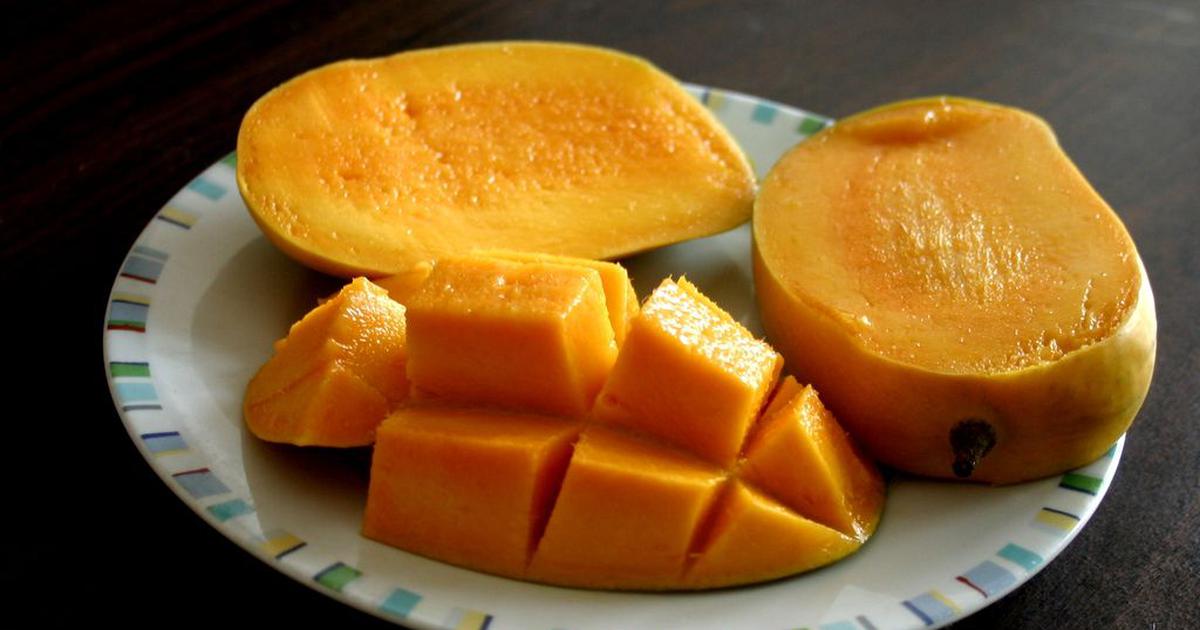
When George W Bush bit into an Alphonso mango during his 2006 visit to New Delhi when he was US president, he reportedly turned to Prime Minister Manmohan Singh and said, “This is a hell of a fruit.”
The following year, the US lifted its long-standing ban on Indian mango imports, permitting entry of mangoes treated with irradiation. It was the start of the prized fruit’s foray into the US market.
Nearly two decades later, there are signs that the market is finally picking up – Indian mangoes are available at retail outlets such Costco for the first time. Earlier this month, a headline in The Wall Street Journal declared. “Americans Will Do Anything to Get Indian Mangoes.”
Behind the surge in the demand for the fruit seems to be a switch from promoting the Alphonso variety to the kesar.
Americans are going to extraordinary lengths to get their hands on Indian mangoes. “I literally stop whatever I'm doing.” https://t.co/Xc53LYQtMV
— The Wall Street Journal (@WSJ) May 23, 2026
India produces roughly 40 % of the world’s mangoes, according to the Food and Agriculture Organization of the United Nations. The fruit’s primary export destinations have been the United Arab Emirates, the United Kingdom, Kuwait and Qatar.
The US receives around 4,000 tonnes of Indian mangoes a year, according to Kaushal Khakhar, the CEO of Mumbai-based Kay Bee Exports, the largest exporter of Indian mangoes in the US.
“We handle between a quarter and a third of Indian mangoes that arrive in the US,” he said.
Khakhar is aware of the headlines the fruit has been generating in this summer season. “The market is real and it is growing but we are very pragmatic that the growth has been par for the course,” he said.
During the Covid-19 pandemic, exports to the US came to a halt for two years. Since they resumed in 2023, exports have grown from an estimated 2,500 tonnes to around 4,000 tonnes today, Khakhar said.
The news coverage about the demand for Indian mangoes is driven in part by the Indian consulate in Seattle announcing on social media this month that Indian mangoes were available at Costco with a box of four mangoes selling for $19.99.
Kesar mangoes from India arrive in Greater Seattle region from 15th May !
— India In Seattle (@IndiainSeattle) May 12, 2026
As a follow up to the Consulate's Indian mango promotion event organized on 10 July 2025, Kesar variety of Indian mangoes will be available, at select Costco locations in Greater Seattle.
More details as… pic.twitter.com/Vri3DbLz0M
An official at the consulate told Scroll that there had been a year-long push to expand the market for Indian mangoes in the US. Last year, the consulate hosted a mango promotion event in Seattle that brought together Indian exporters and American retail representatives.
Part of the push involved promoting different varieties of Indian mangoes in the US. Kesar mangoes from Gujarat now account for more than 50% of Indian mango exports to the US, said Khakhar.
The Alphonso, harvested in Maharashtra’s Ratnagiri coast, is more prone to spoilage in transit.
Every mango exported to the US must be irradiated at one of four certified facilities in India, cleared by a US Department of Agriculture officer stationed there, and flown on passenger jets, all roughly within a week.
“Of all the Indian varieties, the Alphonso has the thinnest skin,” said Khakhar. “That means it respires faster, warms up faster, and that warmth causes spoilage.”
The switch to kesar appears to be working for now even though Indian mangoes are priced four times higher than mangoes from Mexico.
In addition, new direct flight connections to smaller cities in the US are helping reach diaspora communities that previously did not receive Indian mangoes. Kay Bee currently ships to around 15 to 20 American cities – New Jersey, San Francisco and Dallas the largest, with Minneapolis and Denver among the more recent additions.
“Our aspiration is to take the flavour of Indian mangoes to a wider community,” Khakhar said.
The Embassy of India hosted a vibrant Mango Tasting Fest at Dupont Circle Park! 🥭🇮🇳
— India in USA (@IndianEmbassyUS) July 12, 2025
Visitors got a taste of fresh, flavorful Indian mangoes and a slice of Indian summer right in the heart of DC.#MangoFestDC #EmbassyOfIndia #IndianMangoes #DupontCircle pic.twitter.com/vIXnC00joa
