







There comes a moment when the gap between propaganda and reality becomes too large to conceal with slogans. India appears to have reached that moment with Narendra Modi’s recent appeal for austerity. Urging citizens to reduce fuel consumption, avoid foreign travel, work from home, and even postpone gold purchases, Modi invoked wartime sacrifice and recast economic hardship as patriotism in the face of the Iran war.
The oil shock is real. India imports nearly 85%-88% of its crude requirements, much of it through the Strait of Hormuz. Every $10 rise in crude prices increases India’s import bill by roughly $13-$15 billion annually, widens fiscal and current account deficits, weakens the rupee, and fuels inflation through transport, fertiliser, logistics, and food prices.
But the crisis Modi asks Indians to sacrifice for is not fundamentally a product of the Iran war. The war has only exposed India’s vulnerabilities. A structurally stronger economy could have absorbed an external shock far better.
Instead, India enters this crisis weakened by demonetisation, chaotic GST implementation, stagnant manufacturing, high unemployment, declining private investment, rising inequality, institutional erosion, and governance driven more by spectacle than economic strategy.
Serious trouble
The most politically damaging response to Modi’s austerity appeal came not from the opposition but from Surjit Bhalla, long regarded as sympathetic to the government and once part of its economic establishment.
Bhalla bluntly acknowledged that India’s economy is in serious trouble: private investment has weakened sharply, foreign direct investment has turned negative on a net basis, and repeated electoral victories have pushed the government into a “comfort zone” that discouraged structural reform. Most strikingly, he questioned the continued claim that India remains the world’s “fastest-growing major economy”.
What makes Bhalla’s intervention significant is that it validates what critics have argued for years: beneath the headline GDP numbers lies a structurally weakening economy sustained more by public expenditure and propaganda than productive private investment.
Capital outflows, weakening investor confidence, and the rupee’s sharp decline since the Iran war reflect not merely external shocks but the deeper vulnerabilities produced by over a decade of spectacle politics, institutional erosion and economic complacency.
Spectacle and slogans
The fundamental problem with the Modi government is that it never possessed a coherent economic strategy beyond spectacle and slogans. “Make in India,” “Startup India”, “Digital India, “Atmanirbhar Bharat”, and “Amrit Kaal” generated publicity but failed to transform the productive structure of the economy. Unlike East Asian developmental states that systematically built manufacturing capacity, technological competence and employment-intensive industries, the Modi regime relied heavily on image management while neglecting structural transformation.
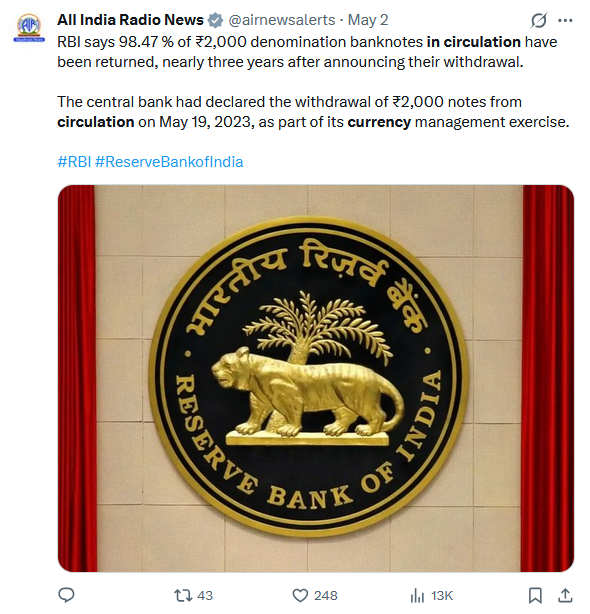
Indeed, almost every major economic intervention weakened productive capacities. Demonetisation in November 2016 was perhaps the most disastrous economic decision in independent India outside wartime disruptions. Nearly 86% of the currency in circulation was invalidated overnight in an economy where over 90% of employment depended on the informal sector and cash transactions.
The government claimed the move would destroy black money, counterfeit currency, and terror financing. None of these objectives materialised. The Reserve Bank of India’s data later showed that more than 99% of the demonetised currency returned to the banking system, demolishing the official justification.
As the original claims collapsed, the government shifted the goalposts toward the promise of a “cashless economy”. But here too the evidence exposes the hollowness of the claim. Currency with the public stood at around Rs. 17.97 lakh crore before demonetisation in 2016. By early 2026, it had crossed Rs 40 lakh crore – more than double the pre-demonetisation level. Digital transactions expanded, but cash usage expanded simultaneously because the regime fundamentally misunderstood the structure of the Indian economy. Digital payments supplement cash; they do not eliminate dependence on cash in a highly informal and unequal society.
The economic damage, however, was immense. The Centre for Monitoring Indian Economy estimated that nearly 1.5 million jobs were lost soon after demonetisation. Informal enterprises collapsed, small traders shut down, migrant labour was disrupted, and rural consumption weakened sharply. Many sectors of the informal economy never recovered fully. Yet the regime transformed this economic disaster into a nationalist spectacle where suffering itself became proof of patriotism.
The Goods and Services Tax introduced in 2017 compounded the damage. A tax reform of such magnitude required careful transition and administrative preparedness. Instead, GST was implemented chaotically with multiple slabs, technological instability and enormous compliance burdens. Large corporations adapted because they possessed accounting infrastructure and financial buffers. Small and medium enterprises – the real generators of employment – were squeezed out. Formalisation occurred not through productivity gains but through the destruction of smaller competitors.
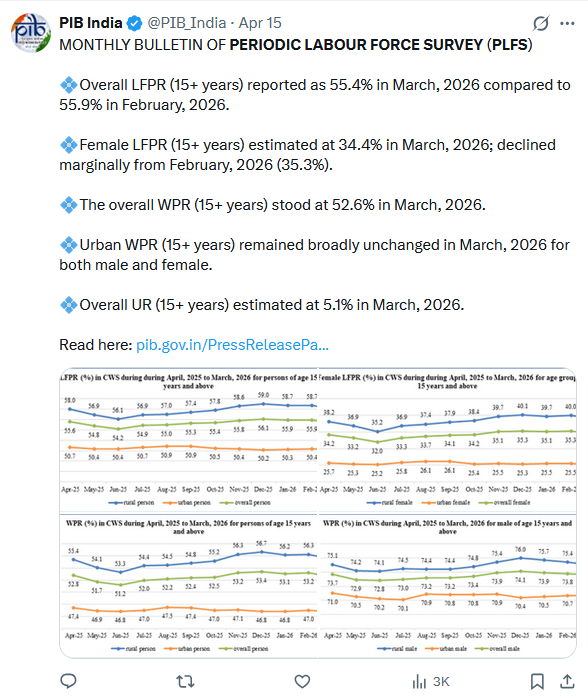
The consequences are visible in India’s employment data. The country faces one of the gravest employment crises in its history. CMIE estimates suggest youth unemployment among those aged 20-24 has hovered around 40%-45% in recent years. Graduate unemployment is even higher. Female labour force participation remains among the lowest in the world for a major economy.
Hollow ‘India Story’
The slogan of being the “fastest growing major economy” itself is a carefully manufactured propaganda phrase. The qualifier “major economy” excludes dozens of smaller countries growing faster than India while diverting attention from more meaningful indicators such as employment, wages, nutrition, and per capita income. India’s nominal per capita income remains barely around $2,800, below Bangladesh, according to recent estimates by the International Monetary Fund.
A country celebrated as an emerging superpower still has income levels comparable to some of the poorest regions of the world. Nearly 80 crore people continue to depend on free foodgrain support for survival. Growth concentrated among billionaires, metropolitan elites, and stock markets cannot be mistaken for broad social development.
The structure of growth itself reveals the hollowness of the “India story.” Manufacturing remains stagnant at roughly 15%-17% of the GDP despite repeated promises of industrial transformation. India prematurely became a service-dominated economy without building a broad manufacturing base capable of generating mass employment. Consequently, GDP growth increasingly coexists with stagnant wages, precarious employment, and collapsing employment elasticity. Growth without jobs is not development; it is statistical abstraction.
Private investment – the real indicator of business confidence – has also remained sluggish. Gross fixed capital formation has failed to sustain levels necessary for long-term high growth. Corporate India increasingly prefers speculative financial gains over productive investment. Foreign direct investment inflows have weakened significantly in recent years despite aggressive publicity campaigns because investors seek institutional credibility, legal predictability, and stable governance – not merely political slogans.
Jobs, Jobs, Jobs.
— शिक्षित बेरोज़गार (@kaul_vivek) February 1, 2025
"India will also need to create 78.5 lakh new non-farm jobs annually till 2030." -- Economic Survey 2024-25.
As per the government’s Periodic Labour Force Survey (2023-2024, from July 2023 to June 2024), the proportion of the labour force working in…
Agriculture presents another dimension of structural crisis. Nearly 45% of India’s workforce still depends on agriculture while the sector contributes barely 15%-16% of the GDP. This massive imbalance reflects hidden unemployment and chronic rural distress. Farm incomes remain unstable, input costs continue to rise, and climate volatility has intensified vulnerability. The historic farmers’ movement that forced the repeal of the three farm laws revealed a deeper crisis of legitimacy: large sections of rural India no longer trusted the government’s economic intentions.
At the same time, inequality has exploded. The top 1% now controls over 40% of India’s wealth while the bottom 50% owns barely 3%. Economic power has become increasingly concentrated among a handful of large corporate groups closely aligned with political power. Crony capitalism has deepened under the language of nationalism and development.
The deterioration is also reflected in the rupee’s long decline and rising fuel burdens on ordinary people. In 2014 the rupee traded around Rs 58 – Rs 60 to a dollar. It now hovers over Rs 95, representing one of the steepest depreciations among major emerging-market currencies during the period. A weaker rupee has increased import costs, inflationary pressures, and external vulnerability.
Ironically, even during periods when global crude prices declined sharply, Indian consumers rarely received proportional relief because the government repeatedly raised excise duties to compensate for fiscal stress. During some of these periods, fuel prices actually declined in neighbouring countries such as Pakistan, Sri Lanka, Bangladesh, and Nepal while Indian consumers continued paying historically high prices.
Where is our garrulous Finance Minister?
— Jawhar Sircar (@jawharsircar) May 25, 2026
Whenever I debated her Budget Proposals for 3 years as an MP,
— She would rudely grimace, mock and sneer at Opposition for bringing the Rupee Dollar exchange to ₹66 in 2013
— Taunting that India was a Fragile Economy.
What’s it NOW? pic.twitter.com/BPy7rCyerW
Economic cost of communal politics
More fundamentally, the regime’s communal polarisation has itself imposed enormous economic costs rarely acknowledged in mainstream discussions. Sustained attacks on institutional autonomy – whether in universities, research institutions, statistical systems, media, judiciary, or law enforcement – have weakened those foundations on which modern economic development depends.
Educational institutions increasingly shaped by ideological intervention undermine the production of skilled human capital. Statistical opacity weakens policy credibility. A judiciary perceived as inconsistent or selectively responsive undermines investor confidence and contractual certainty. Law-enforcement agencies deployed for political intimidation rather than impartial governance distort the rule of law necessary for stable economic activity.
No major economy can sustain long-term growth while simultaneously degrading its institutional foundations.
The current Iran crisis therefore strikes an already weakened economy. If crude prices remain above $100 per barrel for a sustained period, India could face severe macroeconomic stress: rising inflation, widening current account deficits, rupee depreciation, fiscal pressures, and slowing growth. The danger is not merely recession but stagflation – a combination of slow growth and persistent inflation that simultaneously destroys employment and purchasing power.
More importantly, the global environment itself is changing. The era of easy globalisation that sustained post-1991 growth is fragmenting. Supply chains are being reorganised, protectionism is rising, and automation is reducing labour absorption globally. India needed a long-term developmental strategy focused on manufacturing, education, healthcare, scientific capacity, and employment generation. Instead, the regime prioritised media management, centralisation of power, religious mobilisation, and permanent electioneering.
The most astonishing feature of this period is therefore not economic decline itself but the political insulation of the regime from economic accountability. The answer lies in the transformation of Indian politics itself. Electoral outcomes are increasingly detached from material economic performance. Hyper-nationalism, communal mobilisation, welfare symbolism, digital propaganda, personality cults, and media capture have shifted politics away from livelihoods toward emotional and civilisational anxieties. Economic suffering no longer automatically produces political accountability.
Meanwhile, the Opposition remains fragmented, ideologically uncertain, and organisationally weak. It criticises policies episodically but has failed to present a coherent economic alternative capable of mobilising broad social majorities. This creates dangerous conditions. Economic crises in functioning democracies can generate reform and redistribution; under majoritarian-authoritarian conditions, they often produce intensified repression, communal polarisation, and further concentration of power.
That is the deeper danger before India today. The Iran war did not create India’s crisis; it merely exposed how fragile the economy had already become after a decade of governance that privileged propaganda over production and spectacle over structural transformation. The gravest threat is therefore not the immediate oil shock but the possibility that economic decline and political majoritarianism may continue reinforcing each other.
Societies can survive economic crises. What is far harder to survive is the convergence of economic decline, institutional decay, and unchecked political dominance. India today confronts that convergence.
Writer and civil rights activist Anand Teltumbde is a former CEO, Petronet India Limited and a professor at IIT Kharagpur and the Goa Institute of Management. His most recent book is The Cell and the Soul: A Prison Memoir.
