



In his 1936 Annihilation of Caste, the Dalit leader, philosopher, and lawyer Bhimrao Ambedkar turned to address the Indian Left. How, he asked, can “a socialist state in India … function for a second without having to grapple with the problems created by the prejudices which make Indian people observe the distinctions of high and low, clean and unclean?” Caste, Ambedkar argued, constituted the social order. The socialist “will be compelled to take account of caste after the revolution, if he does not take account of it before the revolution. This is only another way of saying that, turn in any direction you like, caste is the monster that crosses your path. You cannot have political reform, you cannot have economic reform, unless you kill this monster”. Rereading Annihilation of Caste after I had completed fieldwork in the South Indian state of Kerala, this passage stayed with me as the unresolved question for Kerala’s dramatic twentieth-century transformation.
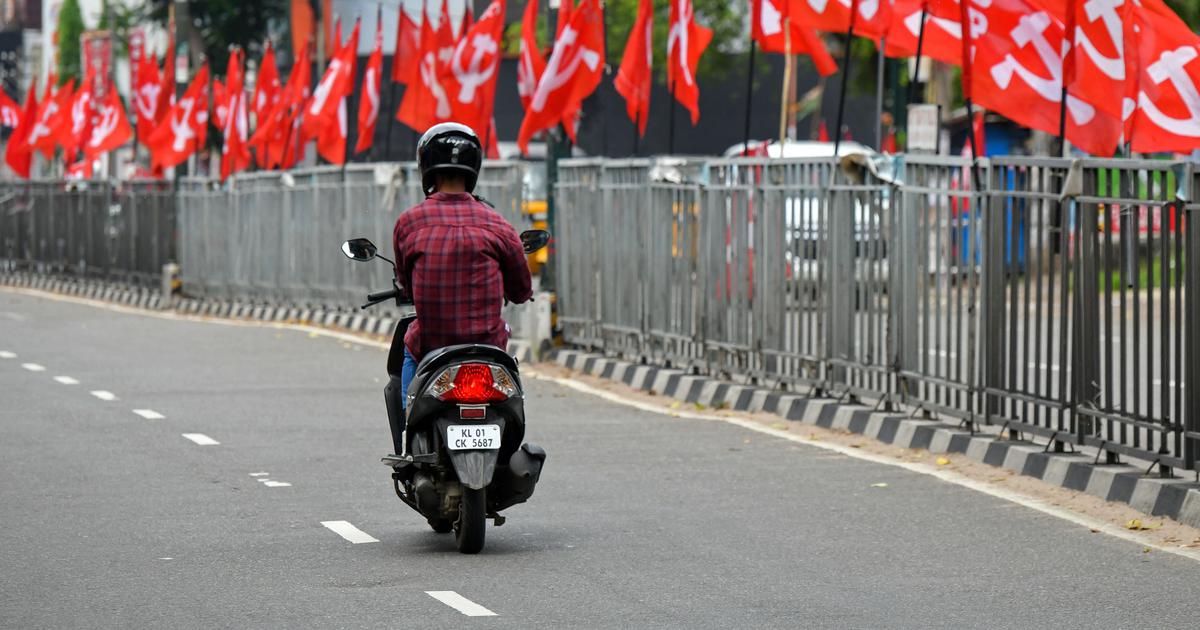
In 1957, the South Indian state of Kerala saw the first democratically elected communist government in the world. “Whenever you think of Kerala, you think of red,” one young woman told me in 2010, “even if it is light red.” Kerala is known for having the highest literacy rate and the most well-developed welfare state in India, in a region previously characterised by immense inequality and a highly structured and hierarchical caste system. Many analysts of its successful welfare state have attributed it to mass twentieth-century mobilisations of Keralans by the two dominant communist parties, the CPI (Communist Party of India) and CPM (Communist Party of India–Marxist).
Most would agree that communism in Kerala is far from just a political or social movement: It is often understood as a deeply Malayali cultural and personal ethic, aesthetic, and imaginary. In this narrative, Kerala, which was once characterised as one of the most caste-iniquitous places in India, had successfully banished caste through its successful Left movement. Caste relations in contemporary Kerala are characterised as the remnants of the past, out of sync with its newly modern citizenry. It is a ghost to be banished. Languages of class have replaced caste.
I went to Kerala as a Sri Lankan who had already worked for a decade on war, political violence, mobilisation, and familial relations in Sri Lanka. Kerala, I hoped, was the place to explore the kinds of socialist state and ideology I had not yet explored but was familiar with from my own childhood in Sri Lanka, also imbued with the ethos of the nonaligned world. I wanted to explore communism in South Asia as a cultural project that made everyday worlds. However, my own fieldwork in Sri Lanka had always pushed me to go beyond the claims of political movements. I also wanted to understand why, when I looked at the data on high social indicators from Kerala, these indicators had such differentiated outcomes for Dalit communities. Indeed, my fieldwork in the Palakkad region of Kerala presented me with a constant puzzle. In keeping with a standard communist narrative, most of the upper-caste men and women we met told us that caste was in the past. However, all the Dalits we met from different caste communities, men and women, told us that caste had changed but that it would never go away. My use of the term Dalit refers to those caste communities who were formerly categorised as untouchable and those who in everyday life often referred to themselves in Kerala as SC, “Scheduled Caste.”
From Dalit perspectives, it was nonsensical and offensive to say caste was just a trace of the past, given how much of people’s everyday lives continued to be about grappling with caste relations, grappling thus also with the disingenuousness of upper-caste denial. Caste is the theme of this book: how caste is inherited, imagined, inhabited, transmitted, and experienced. Looking at caste formations from Kerala, which is understood to be India’s great social and democratic success story, compels us to ask about the persistence, longevity, and structuring nature of caste identities and the humiliation embedded in a public culture that explicitly argues that it has banished caste. It returns us to Ambedkar’s question and warning. What does that monster, caste, still crossing our paths, look like long after the revolution?
Caste has deep kinship with other historically deep structures of humiliation and inequality such as enslavement and contemporary racial formations. This book is an investigation into what Charles Tilly calls durable inequalities: “those that persist over whole careers, lifetimes, and organizational histories” and “that distinguish members of different socially defined categories of persons” (1998, 6). I ethnographically chronicle how such durable inequalities are lived for Dalit communities, how they described and discussed them, and what places and interactions made such inequalities durable. Thus, this book is also about global Left projects in the twentieth century and their promises of profound social and political transformation. Questions about how Left projects have had difficulty centering Dalit concerns is not for India alone. Asking how, and for whom, projects of massive social transformation are emancipatory is one of the burning global political questions of our time.
This book centres on the life of Dalit communities from the Palakkad district in Kerala. I arrived in Palakkad in June 2015. I was lucky to be able to employ as a research assistant Vinu Palissery, another new arrival, who also became a dear friend. While Vinu had no role in the scholarly take, research analysis, and writing, she was my companion and Malayalam interpreter (while I understood Malayalam, I found it difficult to speak Malayalam without turning it into a version of my own language, Tamil) throughout fieldwork, and I acknowledge her presence in fieldwork throughout the book.
Palakkad was new to both of us; formerly part of British Malabar, it had been known for its highly caste-structured and big landlord economy with large standing working populations predominantly drawn from formerly enslaved Dalit communities. The specific “Paraya” and various “Cherumar” communities whose lives I focus on were also enslaved as “chattel slaves” (Saradamoni 1980). Men, women, and children from these communities were sold, mortgaged, and rented in colonial Malabar individually rather than with the land. This coexisted with a transoceanic and subcontinental slave trade in Kerala. This history of enslavement is critical to understanding the ways in which caste is lived in Kerala.
Excerpted with permission from The Monster in Your Path: The Private Life of Caste in India, Sharika Thiranagama, Permanent Black in collaboration with Ashoka University.
