




Conversations on the Partition of 1947, its trauma, its memories and its legacy, especially through material culture, have gained momentum in the last decade or so (for instance, there are two Partition Museums in north India now). Mrinalini Venkateswaran’s Compelled to Collect: Museums and the Race for India’s National Past is timely, for it contributes to this conversation from yet another perspective.
The key questions addressed in this monograph are: how did objects and collections become essential to the nation-building during the Partition and the years following it? Who were the people who drove and participated in these processes? What context did they work in? How did they work? What motivated them and what were the results of their actions? The author particularly studies the collections in East Punjab, examining them not for their narrative value but for how they came into being. She traces the trajectory of important collections in East Punjab, including the government holdings (for example, the Government Museum and Art Gallery, Chandigarh), princely collections (such as those with the rulers of Patiala and Kapurthala).
Nationhood through art
In the first chapter, “Defining the Nation Through Contest and Collaboration,” the author notes that cultural issues between India and Pakistan were driven by a spirit of collaboration rather than by conflict, as it is commonly assumed. She further discusses the change in power relations among the former colonies of India/Pakistan and Britain and the slippery, contested nature of terms such as Indian, South Asian and their changing meanings post-1947 for the collection and display of art and artefacts. The manner in which these processes, negotiations and interactions unfolded was extremely important to the idea of the nation, both at the individual and the state levels. The author traces the activities of some of the most well-known names associated with the Indian archaeology and culture sector at this time, including Mortimer Wheeler and NP Chakravarti.
The following chapter, “East Punjab Must Not Lag Behind,” offers a detailed discussion of PEPSU (Patiala and East Punjab States Union), the competing interests among them and their cultural contribution to the Indian nation-building project. Venkateswaran highlights an interesting irony in the logic of nationhood and its expression through collections of art and artefacts: that a substantial part of the collection in post-1947 museums in East Punjab was contributed by the princely states, which were actually considered politically troublesome. An additional and lesser-known aspect of East Punjab collecting, which the author underlines, is that the occupation and seizure of evacuee (later, enemy) property (and its material wealth) was a major part of bringing together the independent Indian nation’s heritage. She questions the ethics of such museum practices and considers it an opportunity for us to rethink and acknowledge the history of our collections.
Shaping artistic heritage
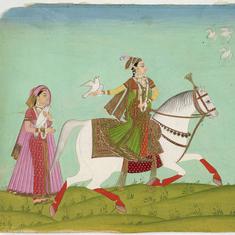
The subsequent chapters “Competing to Collect National Art”, “Collecting and Re-Collecting in the Punjab Hills” and “Discourse, Discernment and Building the Nation,” focus on the work of MS Randhawa (an academic, administrator and a household name in Punjab; often referred to as the sixth river of Punjab) and WG Archer (art historian) and the network of art connoisseurs that emerged around them. Venkateswaran carefully details the vision, motivations, biases and actions of these men. While Randhawa’s love of art and his work on Pahari miniatures are well known, the author brings to light the way he shaped the narrative on Punjab’s artistic heritage, especially the association of Pahari paintings as the pinnacle of Indian painting and the greatest achievement of Punjab. Randhawa, driven by his love for Punjab and his commitment to the nation-building project, strove to “rehabilitate [post-1047] Punjab’s shattered image” and succeeded in boosting its cultural stature in independent India.
Venkateswaran also highlights the lack of Islamic heritage of the region in this worldview of Punjab’s past and its implications for how the ideas of Punjab, the Indian nation and its cultural heritage have been defined. The author has effectively substantiated her arguments with archival sources from a number of repositories such as the WG Archer Papers in the British Library, the MS Randhawa papers in the Government Museum and Art Gallery, Chandigarh, the art journals published in India including Roopa-Lekha by AIFACS (All India fine Arts and Crafts Society), the Himachal Pradesh State Archives, the Punjab State Archives, Patiala, to name a few.
Venkateswaran convincingly demonstrates the manner in which the actions of important people (men) in the years following Partition not only shaped the perception and value of Indian art history and Punjab’s place in it, but also how influential their ideas continue to be even now. These include Ganda Singh (eminent historian of Punjab, Director of PEPSU Archives), VS Suri and GL Chopra (East Punjab Museums and Historical Records Office) and then subsequently, MS Randhawa and WG Archer. She particularly emphasises the connections and the influence exercised by them to argue that it was the violence and loss of 1947 which inspired their search for heritage, and that this drive was shaped by an imagined (even, cherished) idea of Punjab (particularly, Maharaja Ranjit Singh’s Punjab, which included present-day Himachal Pradesh). She maintains that “[the] legacy of those decisions remains influential in how Punjab is perceived by itself and others today”, including the idea of Punjab’s “greatness” and its centrality to Indian history.
While the author refers to public opinion at several places, there is a lack of sources in languages other than English to support this. The author relies entirely on English-language administrative/official records and the networks of cultural and administrative elites. No doubt the author is aware of the dissatisfactions and counter-currents among other sections of society in Punjab. One such instance is, in fact, mentioned by the author, when a Punjabi translation of MS Randhawa’s work came under severe criticism (in 1963). There is much potential for looking at Gurmukhi, Shahmukhi, Urdu and Hindi sources (of which there are plenty available) to get a better sense of public opinion on matters of cultural heritage.
This is a very well-written and methodologically sound historical account which shows how material heritage remained important amidst the death, displacement and upheaval of the Partition. The coloured plates and a beautiful cover add to the strengths of the book. Compelled to Collect is a significant contribution to the field of Partition studies, South Asian art history and collections. It would be of interest to scholars as well as general readers for learning the ways our heritage is shaped.
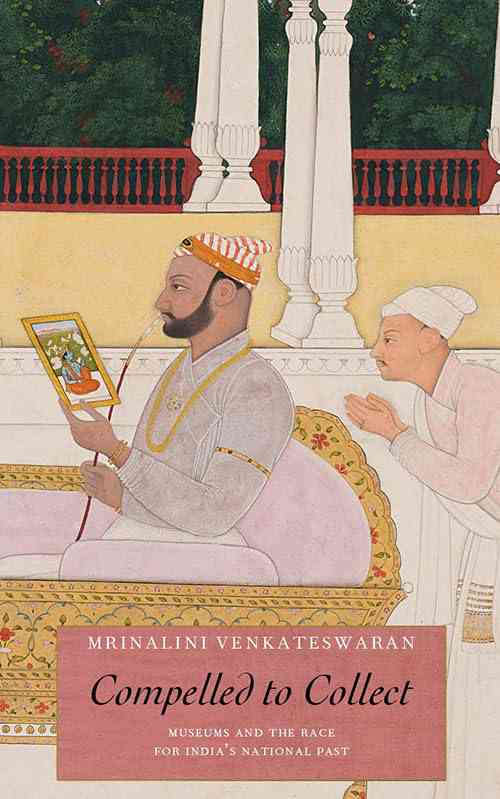
Compelled to Collect: Museums and the Race for India’s National Past, Mrinalini Venkateswaran, Permanent Black and Ashoka University.
