











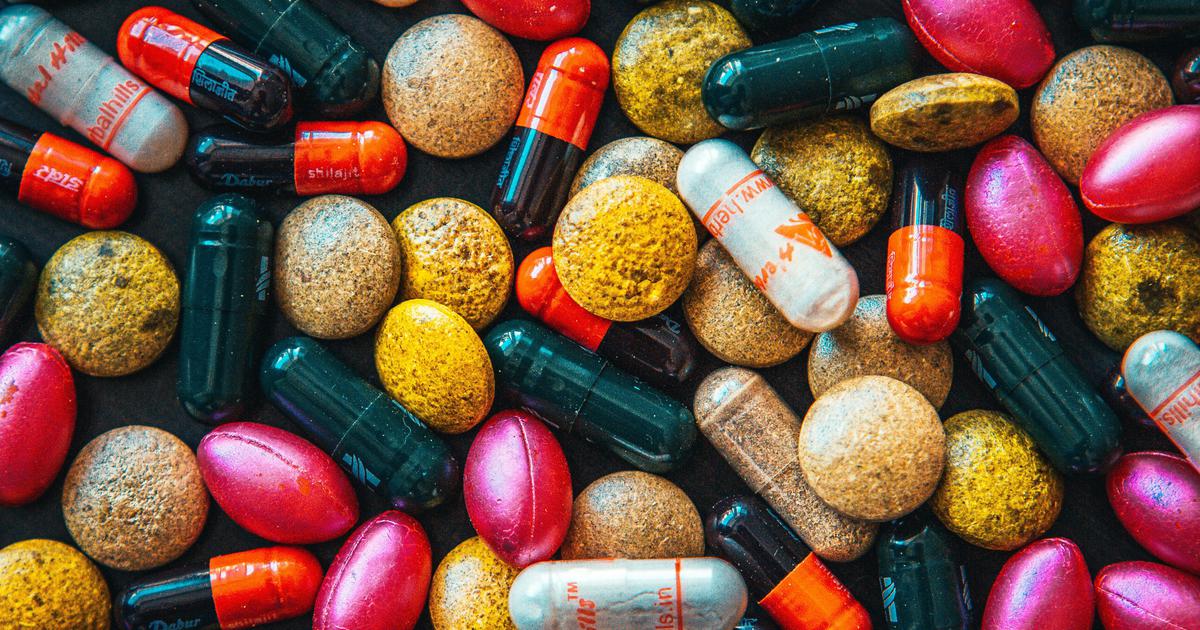
India’s supplement industry is booming. People now take so many things – multivitamins, detox tablets, liver cleansers, hair gummies, collagen powders, protein powders, magnesium, zinc, herbal boosters, fat burners, hormone balancers, memory enhancers … the list is endless.
Half of these are harmless. One-fourth are useless. Some are genuinely helpful. However, a small portion are deadly dangerous. This chapter cuts through the noise and tells you which of these actually work – not according to hyperbolic advertisements, but according to hard science.
Let me tell you about Rhea.
She’s 32 and works in IT. Her daily routine includes popping multivitamins, vitamin C, collagen, hair gummies, liver detox tablets and a “metabolism booster.” Still, she feels tired, her hair continues to fall out in clumps, her energy is low throughout the day, her skin is dull and her sleep is very poor.
The problem here is that Rhea was trying to out-supplement a bad lifestyle. She needed more sleep, better balanced food, more protein intake, less stress and some actual rest – serious things that colourful pills won’t fix. The golden truth is this: Supplements supplement. They do not replace.
Let’s break supplements into three categories:
Useful and evidence-based
Context-specific (useful only in some cases)
Useless or potentially harmful
But before any supplementation, remember the golden rule: Consult a doctor → Test → Confirm medically that you need a supplement → Confirm dosage and timing → Take.
Let’s be clear: avoid the list below at all costs. These are a combination of snake oil and snake poison.
Multivitamins: Expensive urine. Most contain tiny, ineffective doses of everything. Unless you are malnourished or elderly, specific targeting (D3, B12) beats carpet-bombing every single time.
Fat Burners: Dangerous. They often contain high doses of caffeine or unregulated stimulants. They raise heart rate and anxiety but burn negligible fat.
Hair Gummies (Biotin): The hype for this has been created entirely by marketing departments. Biotin deficiency is rare. Taking extra biotin won’t stop the hair fall caused by stress, iron deficiency or hormonal imbalance. Plus, they are full of sugar.
Collagen Powder: Pre-2015, the consensus was that your stomach acid breaks collagen protein down into amino acids anyway and that eating adequate protein (whey/eggs) would provide the same building blocks for much cheaper. However, newer trials (2019–23) show that hydrolysed collagen is absorbed to some extent and may improve skin elasticity by almost 10-15% after three months. You may decide if that minor upgrade is worth Rs 3,000 per month.
Detox Teas and Liver Cleansers: “Flush out toxins and flatten your belly in seven days” – is the marketing hook for detox teas. In reality, these teas are mostly laxatives (senna leaf ) and diuretics. They make you pee and poop, so what you are losing isn’t fat after all. Liver cleansers, on the other hand, are pointless. Your liver is a self-cleaning machine anyway and doesn’t need a “cleanse”; it just needs you to stop putting alcohol and fructose into it. Taking herbal cleansers can cause drug-induced liver injury (DILI) rather than cleansing the liver.
Herbal Weight Loss Mixes: Many of these unregulated powders are adulterated with sibutramine (a banned appetite suppressant) or diuretics. They work by dehydrating you or overstimulating your thyroid. The weight comes back the moment you stop, but the heart palpitations might stay.
Testosterone Boosters: Tribulus, fenugreek, mucuna – most “T-boosters” boost libido, not testosterone. You might feel more “in the mood,” but your actual serum testosterone levels barely budge. If you have clinically low testosterone, you need an endocrinologist, not a Rs 3,000 bottle of herbal hope. Good sleep and heavy squats boost testosterone better than any pill.
Anti-ageing Pills (Resveratrol/NMN): Molecules like resveratrol and NMN show incredible longevity results … in yeast and mice. Human trials are inconsistent and often show zero benefit for healthy adults. These are incredibly expensive. Until human data is solid, you are paying a “billionaire tax” for expensive urine. Spend that money on a gym membership instead.
How to spot a bad supplement in five seconds:
“Proprietary Blend”: If they hide the exact dosage of ingredients under a “blend,” they are under-dosing the expensive stuff and over-dosing the cheap fillers. Avoid.
The “Third-party” Seal: Look for “Informed Choice,” “Trustified,” or “Labdoor” certifications. In India, supplement adulteration is very real.
The Sugar Content: Gummies and vitamin chews often have more sugar than vitamins. Take pills and capsules, not candy.
Chronobiology of pills
Morning: B-vitamins (energy), vitamin D (mimics sun), iron (best absorption)
Post-workout: creatine, protein
With Lunch/Dinner: omega-3 (needs fat to absorb)
Night: magnesium (relaxation).
Note: Never take calcium and iron together (they compete for absorption)
Excerpted with permission from The 100 Year Blueprint: An Indian Doctor’s Guide to Longevity, Navin Gnanasekaran, Pan Macmillan.
