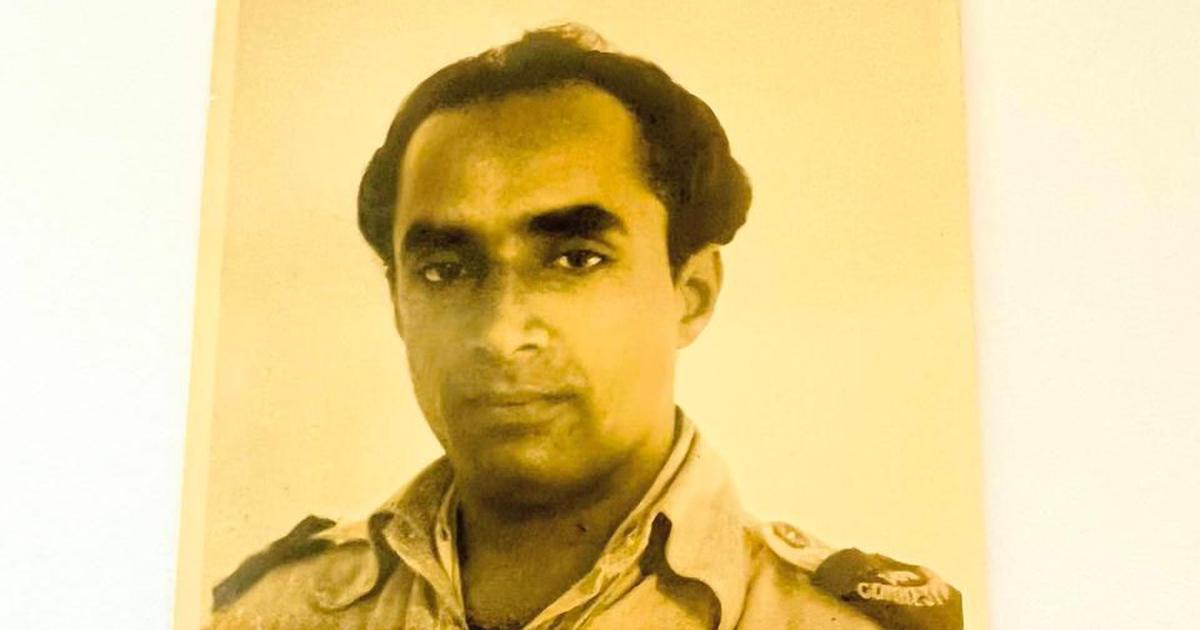
My father died in his sleep on August 24, 2011, in Bangalore. He was a formal man – not given to easy confession, conversations about difficult personal matters requiring what he called a “special sitting”. It was only after his death that I truly came to know him.
In the weeks that followed, my brother Ranjit and I sat in the room where he had passed away, a few meters from where our mother had died 15 years earlier, sorting through what remained. The house and its possessions had outlived them both.
My father liked to keep things. There were Savile Row suits he had somehow imagined we would wear one day, spectator shoes still polished to a mirror shine, ticket stubs, diaries, scrapbooks, government correspondence, and bank statements going back decades. There was even a Ministry of External Affairs permission slip authorising him to travel up the Yangtze River to Shanghai, a relic from some long-forgotten disruption to the rail network.
Discovering dispatches
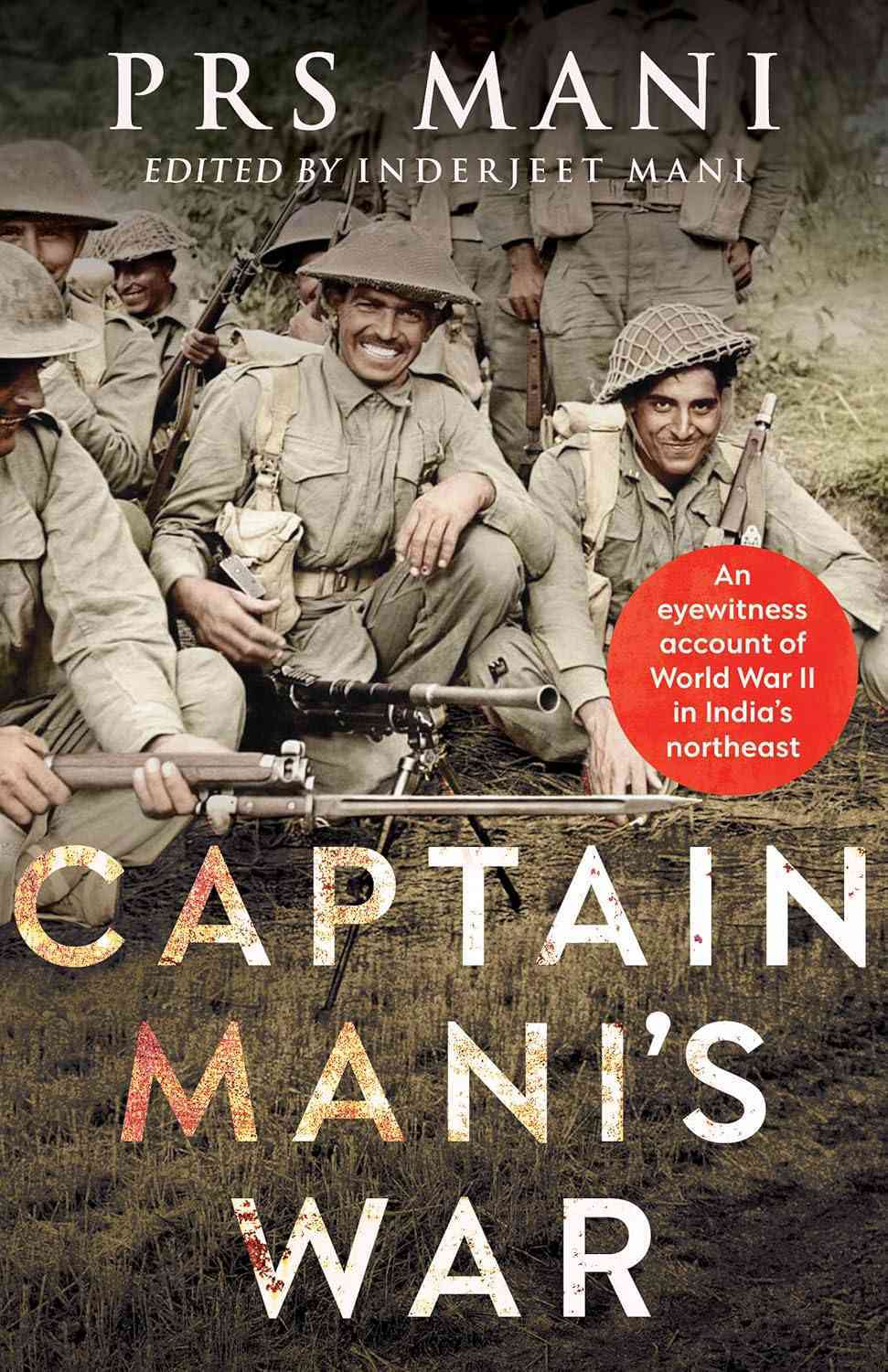
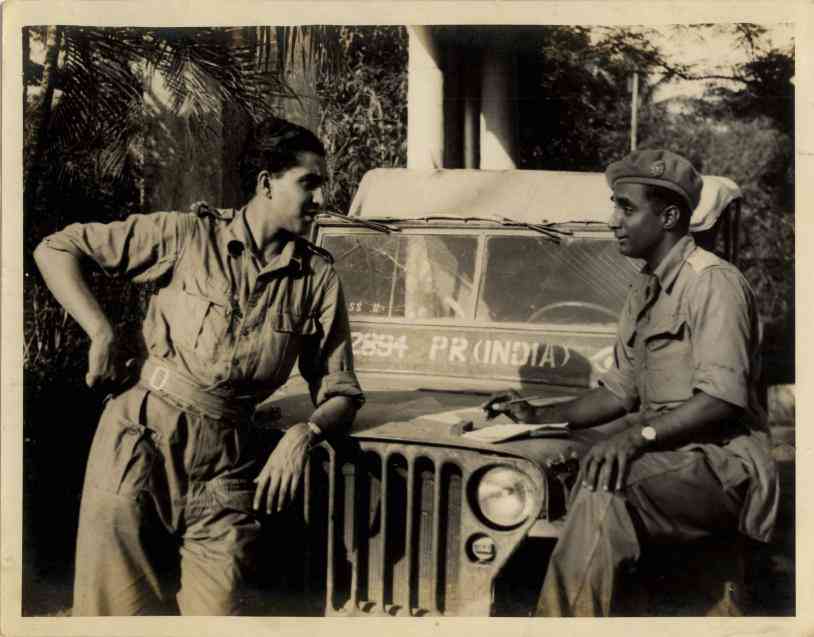
Ranjit, who lived in Washington, DC, was reluctant to cart back much. I was living in Chiang Mai, Thailand and had recently downsized. I discarded most of what we found, but then something made me hold on to his stack of files of typewritten dispatches. They were mostly from his period as a war correspondent embedded with the Allied 14th Army, covering the years 1944–46. He had reminisced now and then about a few specific incidents from that time, including his brief sojourn in an Indonesian prison, but I had never bothered to read the dispatches. I also decided to keep some of his personal diaries and newspaper clippings. I took as many as I could fit into my suitcase, along with some of his art books, and left the house for good.
On the way back, still reeling from his death and the rituals of cremation, I was also overwhelmed with gratitude. My father was always kind and attentive to my needs, no matter how busy he was. If his weekends weren’t free, he would still take me along to work-related events and even the golf course just so we could be together. Thanks to my parents, I had a privileged and utterly delightful childhood, stocked with books, music, chocolates, and carefully arranged playmates, until at eleven I was packed off to boarding school. Now, somewhere over the Bay of Bengal, I felt the old familiar guilt of a teenage son who had given his parents more than their share of worry. But I think he understood that too.
That October, sitting at my desk in Chiang Mai, I found myself Googling his name – PRS Mani – as if the internet might somehow conjure him back. Astonishingly, I came across his name on a scholarly newsgroup called the H-Asia Network. There I spotted this posting from 2009:
From: Kate Brittlebank
Author's Subject: H-ASIA: Inquiry about PRS Mani and his writing on Indonesia
Date Written: Sunday, Jul 19, 2009 13.04.23 +1000
H-ASIA
July 19, 2009
Inquiry about PRS Mani and his writing on Indonesia
From: Heather Goodall
Dear H-Asia researchers,
I'm undertaking research into the links between Indonesia, Australia and South Asia in the 1940s. An Indian journalist and later diplomat, writing under the name of PRS Mani, published a valuable book through the University of Madras (1986), in which he recalled his observations in Indonesia in the 1945-50 period. For some of this period, he wrote for the Free Press of Bombay.
Have there been any studies of Mani’s life and work? And is there an archive of his press publications or of his personal papers?
Heather
I stared at the screen for a long moment. Why had this never surfaced in my searches before? I wrote to Professor Heather Goodall immediately. My only regret was that I had not seen this a few weeks earlier, when my father was alive; he would have been pleased to be in touch with her. The rest, as they say, is history.
I sent everything I had to Professor Goodall right away. My father's dispatches, distributed by the Army’s Public Relations department and also relayed in Indian and international media at the time, were the only eyewitness accounts of the battles of the north-eastern campaign written by an embedded Indian war correspondent and now they have a second life right after his death. She digitised the dispatches and hosted them on a dedicated website at the University of Technology Sydney. Thanks to her efforts, India’s National Archives organised an exhibition of his work in Delhi in May 2013, which got coverage in the Indian press. His dispatches became a resource for scholars, including Srinath Raghavan, whose India’s War: World War II and the Making of Modern South Asia drew on the digitised materials, and Goodall herself, whose book Beyond Borders: Indians, Australians and the Indonesian Revolution, 1939 to 1950 (2018) brought this forgotten chapter into wider view.
Although I had read my father’s two books, one on Indonesia and the other being his short autobiography, it was only after reading Goodall’s book that I decided to explore his dispatches. What I found was a complete revelation. Here was a vivid firsthand account of the Japanese invasion of northeastern India in 1944. I learned for the first time about the brave souls, their names writ large, who saved India from occupation and then pursued the Japanese across Burma until the final surrender in Singapore.
The India connection
I had grown up on Western accounts of the Second World War, including children’s books and comics, stories of great escapes and blockbuster battle movies, and I now found myself reading not only about the feats of British soldiers but for the first time about those of my countrymen. As a reader, I couldn’t help admiring the everyday life and the valiant defence put up by Indian soldiers as well as mule drivers, medics, cooks, and mechanics, with their characters and doings described in such a vivid and humane way.
My father saw all of this and wrote about it in a way that was democratic and subtly anti-colonial. He named his subjects. He described not only their courage but their characters. He understood, long before it became fashionable to say so, that the battle over who gets to narrate history matters as much as the battles themselves.
I recognised him in those pages, and yet I didn’t. I could see my father sitting in the living room listening with a grave look to the news on his Grundig radio. When a government somewhere toppled, or yet another tyrant flexed his muscles, or war broke out somewhere, my father would parse the events for us, sharing his insights on what might be going on behind the scenes. He always said that controlling the narrative was the real prize. I understand now where that conviction came from.
In his dispatches and journals, I also discovered what a truly terrific writer my father was. His words carried another voice of a young man in his twenties, moving through smoke and mud and monsoon rain, watching something enormous unfold. I had never known that young man. Reading his dispatches felt like receiving letters from a version of my father who had been waiting quietly in a cabinet for years. It turns out relationships with the people we love can keep deepening long after we think they are finished.
Also read:
A new book brings an eyewitness account of Japan’s invasion of North East India during World War Two