











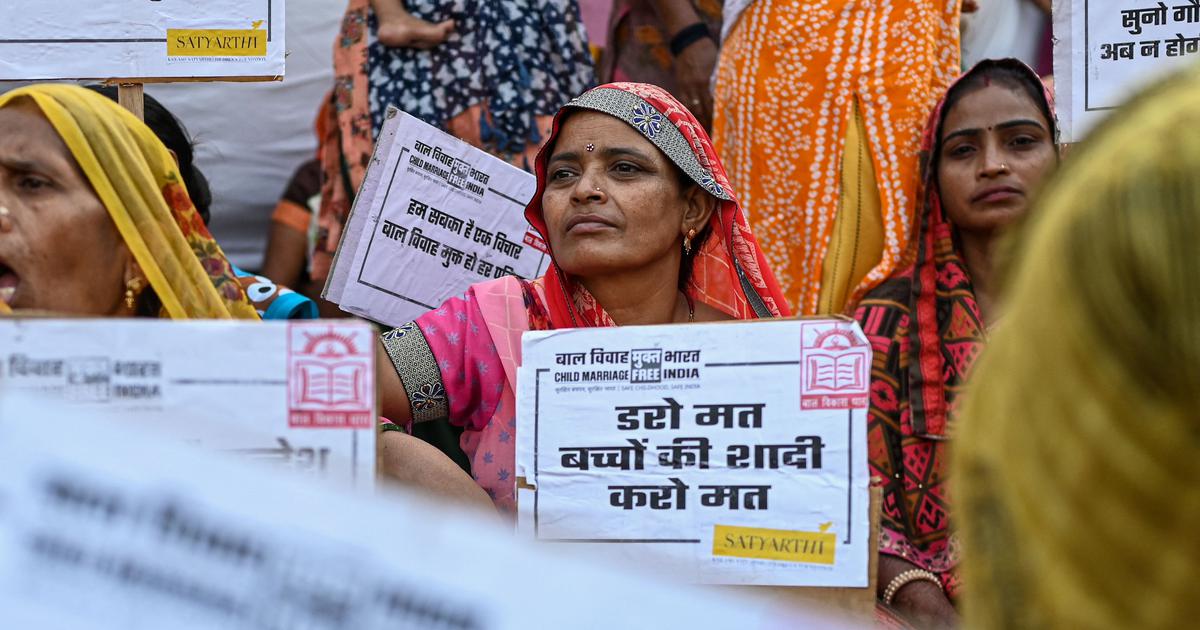
India has made notable progress in reducing child marriage in the past two decades, the latest National Family Health Survey indicates. But adolescent pregnancy has remained largely stagnant, indicating that some of the gains are a result of the legal age of marriage being 18 rather than changes in social norms.
The sixth round of the National Family Health Survey was conducted across 6,79,238 households in 2023-’24, and the findings were released in May. One in every five women, or 20.1%, between the ages of 20-24 were married before turning 18 in the NFHS-6, down from 23.3% during the NFHS-5, which was conducted between 2019-’21.
Long-term trends show that child marriage nearly halved from 47.4% in 2005-’06 during the NFHS-3 to 26.8% in 2015-’16, in the NFHS-4 findings.
Despite these gains, the scale of the problem is alarming. In terms of absolute numbers, millions of girls continue to enter marriage before reaching adulthood. The survey findings show that India’s target to eliminate child marriage by 2030 is far from reality, and the country will need to accelerate its efforts.
The negligible decline in adolescent pregnancy points to the continuing challenges of tackling child marriage: 6.7% of women and teenagers between the ages of 15-19 were already mothers or pregnant at the time of the survey, a negligible decrease from 6.8% in NFHS-5.
In some cases, marriages may be postponed until shortly after a girl turns 18, satisfying the legal requirement while preserving the expectation of early childbearing. As a result, girls may still leave school early, enter motherhood during adolescence, and experience many of the same disadvantages associated with child marriage.
Many varying dimensions
Child marriage is unevenly distributed across India, concentrated in specific geographical regions and shaped by poverty and social norms. The rural-urban divide is particularly striking. In rural areas, 23.3% of women were married before the age of 18, compared with 11.4% in urban areas.
State-level disparities are even more pronounced. West Bengal recorded the highest prevalence of child marriage in the country at 36.4%, indicating that more than one in three young women were married before reaching adulthood.
Bihar (34.6%) and Rajasthan (34.0%) follow closely, while Jharkhand (28.1%), Assam (25.3%), and Andhra Pradesh (25.1%) were also above the national average.
Better-performing states like Kerala report a prevalence of just 2.9%, Goa (6.8%) and Himachal Pradesh (7.9%).
Most states have recorded improvements since the fifth NFHS. Telangana, for instance, saw child marriage decline from 23.5% to 17.9% between NFHS-5 and NFHS-6. Uttarakhand reduced child marriage from 16.2% to 8.8%, while Karnataka registered a decline from 21.3% to 15.3% during the same period.
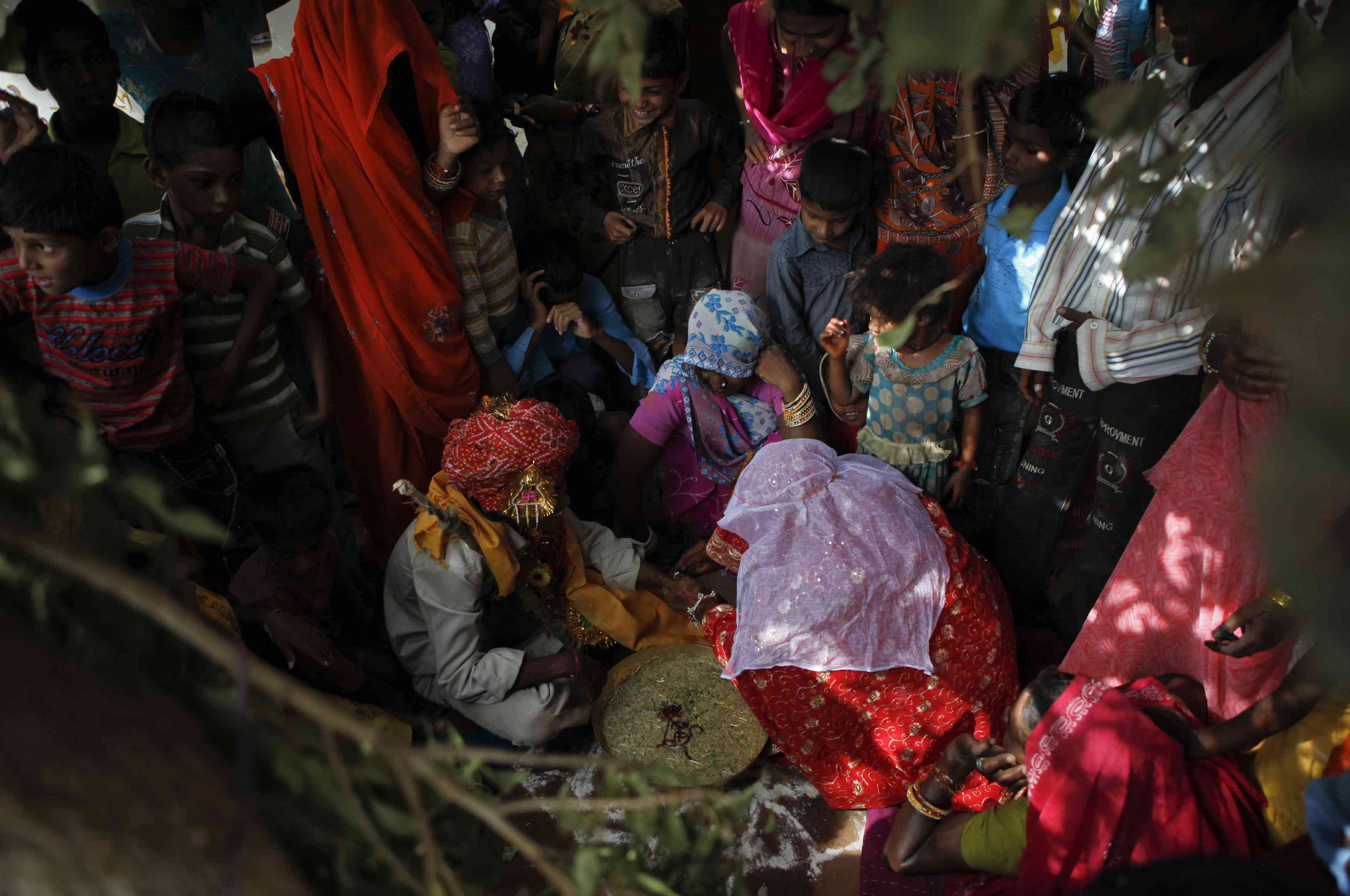
Even states with the highest prevalence have made measurable progress. In West Bengal, child marriage declined from 41.6% in NFHS-5 to 36.4% in NFHS-6. Bihar recorded a reduction from 40.8% to 34.6%, while Rajasthan saw its prevalence fall from 40.1% to 34.0%.
The latest data is also a warning sign that social and economic challenges can quickly erode progress. Some states that previously reported relatively low levels of child marriage have experienced reversals. In Punjab, child marriage increased from 8.7% to 10.2%, while Meghalaya witnessed a particularly sharp rise from 5.6% to 10.2%. Himachal Pradesh also recorded an increase, from 5.4% to 7.9%.
Economic uncertainty, disruptions to schooling, and the consequences of the Covid-19 pandemic years may have increased pressures on vulnerable households, prompting some families to revert to early marriage practices.
Shadow of adolescent pregnancy
Child marriage is closely linked to adolescent pregnancy, which increases the risks of related health indicators such as maternal morbidity, maternal mortality, adverse birth outcomes, and results in long-term socioeconomic disadvantage.
The burden of adolescent pregnancy is heavily concentrated in states where child marriage remains widespread. In West Bengal, 18% of girls between the ages of 15-19 were already mothers or pregnant, 11.7% in Jharkhand and 11.4% in Bihar.
Child marriage and adolescent pregnancy are a self-perpetuating cycle. Girls who marry early, enter motherhood soon after, discontinue their education, and face constrained economic opportunities throughout their lives. These disadvantages can carry forward across generations.
Efforts to reduce child marriage must also address social and economic pressures that continue to drive early motherhood and curtail the autonomy of girls.
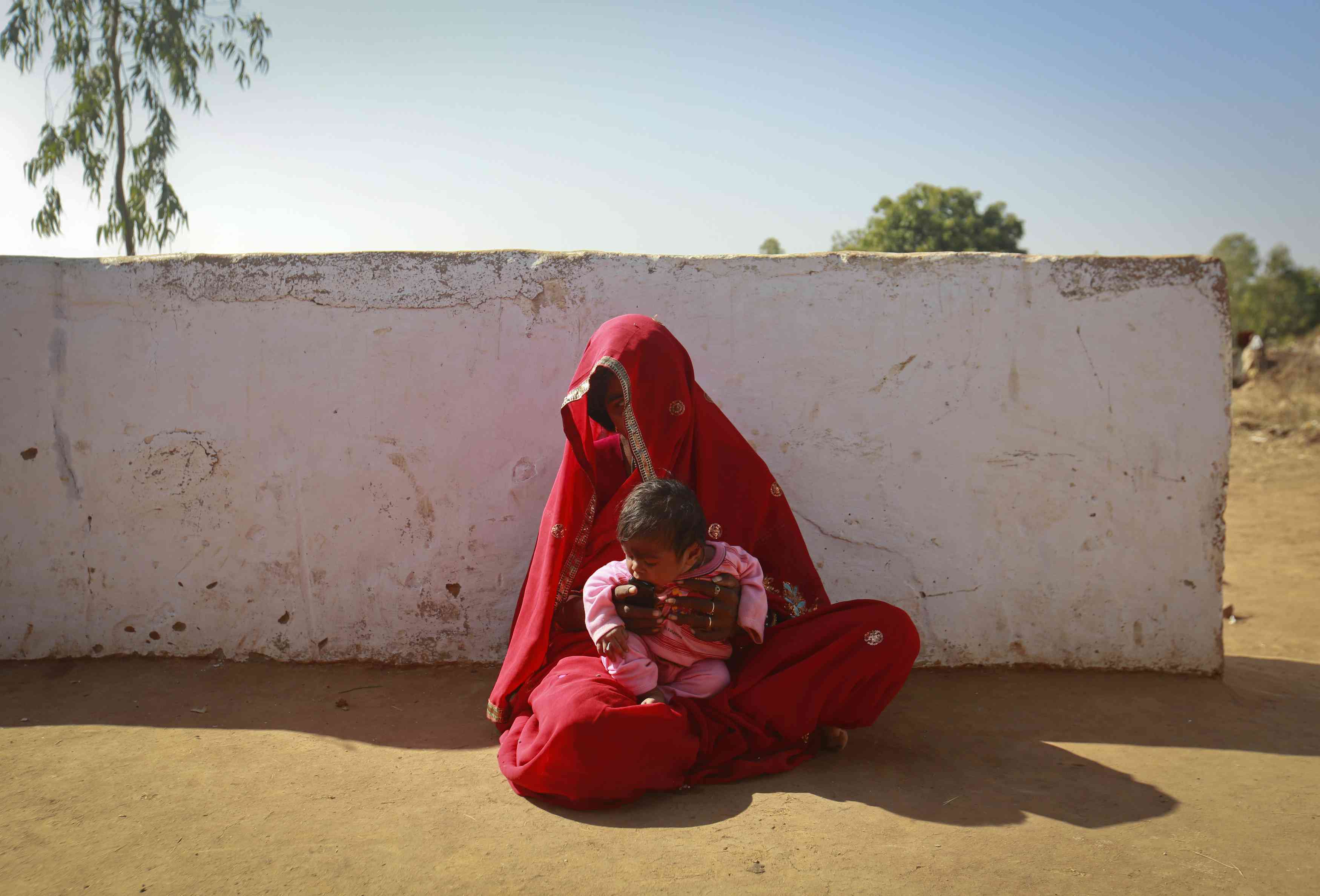
Education, the best catalyst
The survey reiterates the importance of education in reducing child marriage.
In states with the lowest child marriage rates, women with 10 or more years of schooling was high: Kerala (86.6%), Himachal Pradesh (72.1%), and Goa (66.5%). Nationally, women with 10 or more years of schooling increased slightly to 46.4% from 41% in NFHS-5.
States with high rates of child marriage recorded low secondary level education among women: Bihar was 33.1%, Rajasthan 33.7% and West Bengal 39.5%.
Girls with higher education are more likely to delay marriage, aspire for more than traditional gender roles and assert their autonomy. Completing secondary education also improves future employment opportunities, increasing the perceived economic and social returns to investing in girls.
Aside from awareness campaigns and enforcing the legal age of marriage, investing in the education of girls is crucial to reducing child marriage.
This means expanding access to secondary education, reducing financial barriers to continued schooling, and incentivising school attendance and completion. The fight against child marriage is a fight for girls’ education.
Limits of legal prohibition
In 2023, the government proposed raising the minimum age of marriage for women from 18 to 21 years, aligning it with men, by passing the Prohibition of Child Marriage Amendment Bill. The bill, however, lapsed with the dissolution of the 17th Lok Sabha.
But, as the latest survey shows, despite two decades of 18 being the legal age of marriage for women, one in five women between the ages of 20-24 was still married before the age of 18.
It means that legal reform is symbolically important but unlikely to be sufficient on its own. If the enforcement of the existing minimum age is incomplete, simply raising the legal threshold will have a limited impact among communities where early marriage continues to be socially accepted and economically driven.
Effective implementation of the law requires far more than statutory provisions. It depends on the commitment of district administrations, child protection systems, community surveillance, accessible grievance and reporting mechanisms, and coordinated action across education, health and social welfare departments. Equally important are support systems that enable girls and their families to resist social pressures to marry early without economic hardship or social exclusion.
Improving girls’ retention in secondary education must become a central policy priority, particularly in Bihar, Jharkhand, West Bengal, and Rajasthan. The focus should be on ensuring the successful completion of secondary schooling. India has made undeniable progress, but as the data shows, the challenge is to expand the capabilities and choices available to adolescent girls.
Pintu Paul is an Assistant Professor at the Indian Social Institute, New Delhi. His email ID is: pintupaul383@gmail.com.
