









Iran, US agree on roadmap to reach final peace deal in 60 days, say mediators
Ending Israel’s attacks on Lebanon will be the first ‘real test’, Iranian Foreign Minister Abbas Araghchi said.
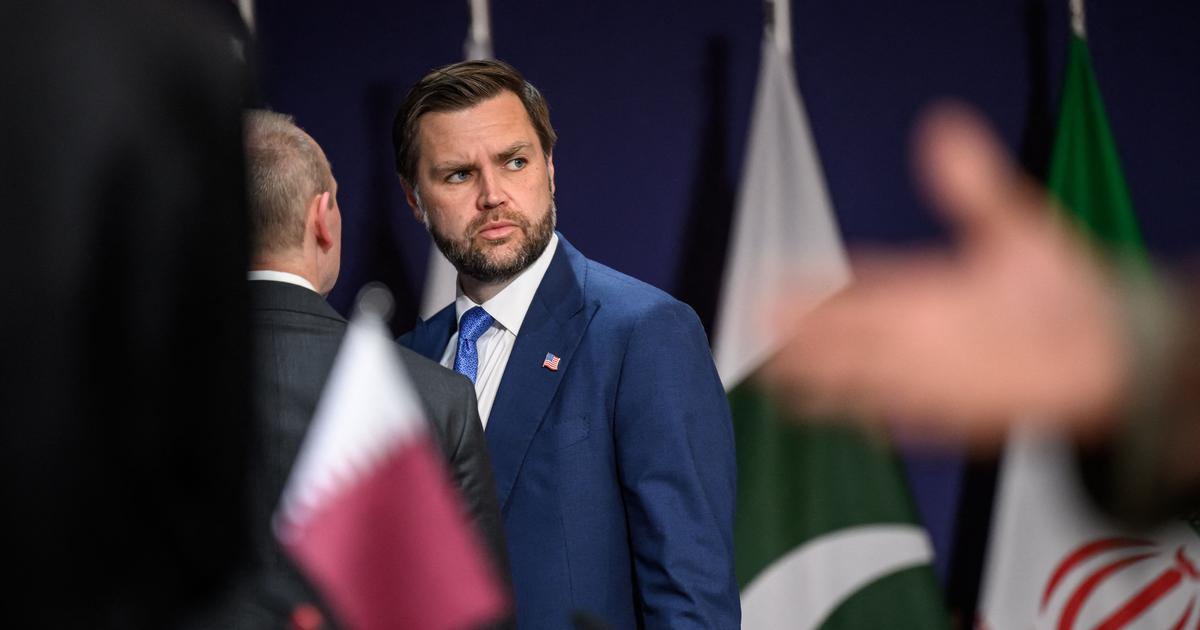
The United States and Iran have agreed to a roadmap to reach a final peace deal within 60 days, mediators Pakistan and Qatar said on Monday.
In a joint statement issued after the first round of talks held under the Islamabad Memorandum of Understanding framework in Switzerland, the mediators said that the meeting had been conducted in a “positive and constructive atmosphere”.
Washington and Tehran made “encouraging progress” in creating a mechanism for further technical talks, Pakistan and Qatar said. The negotiations will continue for the remainder of the week.
The US and Iran agreed to set up a high level committee that will provide political oversight on the mediation process, the statement added.
The chief negotiators will report to this committee and lead working groups focused on nuclear matters, sanctions and a monitoring and dispute resolution group to ensure implementation of the interim agreement reached on Thursday.
“The committee agreed upon a roadmap towards reaching a final deal within 60 days, laying the foundation for the immediate commencement of further technical talks,” the statement said.
A line of communication will also be set up between the parties “to avoid incidents and miscommunication with the aim of safe passage for commercial vessels” through the Strait of Hormuz.
Global oil prices fell following the positive outcome of the meeting. The benchmark Brent crude fell by 1.4% on Monday morning to trade at $79.4 per barrel. The price of Brent was $78 per barrel on February 27, a day before the war in West Asia started. It had reached as high as $114 per barrel on May 4.
The Lebanon front
The parties also agreed to create a deconfliction cell between them and Lebanon to ensure that military attacks there are terminated in line with the interim agreement.
Israel’s continued attacks in Lebanon had raised uncertainty about the outcome of the meeting. On Saturday, Iran’s top joint military command said that the Strait of Hormuz would be closed to commercial traffic, citing alleged violations of a ceasefire agreement by the US and Israel.
This came as Israeli strikes in Lebanon killed at least 32 persons.
The 14-point memorandum signed by the US and Iran on Thursday called for an “immediate and permanent termination of military operations” on all fronts, including Israel’s attacks on militant group Hezbollah in Lebanon. Israel is not a party to the agreement.
On Monday, Iranian Foreign Minister Abbas Araghchi said that the Pakistani and Qatari mediation had delivered “major progress to end [the] Lebanon war”.
Oil and petrochemical exports have been “waived, blockade lifted, some frozen assets released, and major reconstruction and development plan launched” for Iran, Araghchi said on social media.
The Lebanon deconfliction cell is the first “real test”, he added.
On Sunday, Israeli Prime Minister Benjamin Netanyahu said that the country’s military will remain in a “security zone” in southern Lebanon “for as long as it takes in order to protect the residents of [Israel’s] north”.
“Whatever the diplomatic developments may be, I will not allow Iran to arm itself with nuclear weapons,” Netanyahu said. “As long as I am the prime minister of Israel – this will not happen”.
The US and Israel launched an attack on Iran on February 28, claiming that Tehran’s action posed an existential threat to Israel. Iran retaliated by striking Israel and US military bases in the region, targeting major cities in Gulf countries and ships.
Since the conflict began, the Strait of Hormuz, the narrow waterbody connecting the Gulf to the Arabian Sea, had effectively been blocked for most international commercial vessels, triggering a global energy crisis. About 20% of global petroleum supply passes through the maritime chokepoint.
On May 21, International Energy Agency chief Fatih Birol said that a continued blockade of the strait and depleting fuel storage could push the global oil market into the “red zone” in July or August.
The peace talks between Iran and the US that were held in Islamabad, Pakistan collapsed on April 12, but the ceasefire in the region had largely held for nearly two months. Earlier in June, Israel-US and Iran exchanged several rounds of fire.
Israel has been claiming that Iran is close to obtaining a nuclear weapon, which could alter the regional security balance. Tehran has long maintained that its nuclear programme is for civilian purposes.
Written by Nachiket Deuskar. Edited by Sara Varghese.
